
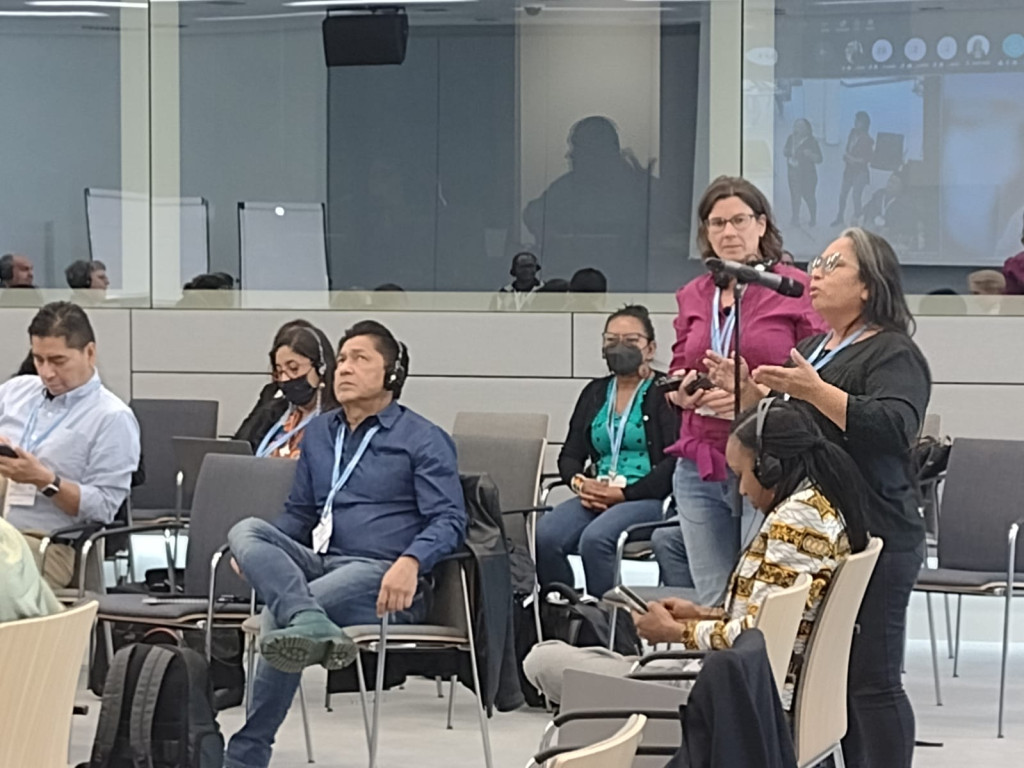
The coordinator of the Department of Territorial and Environmental Management of the Indigenous Council of Roraima (CIR), Sineia do Vale, is in Germany, where the leader of the Wapichana people participates in the VII Meeting of the Facilitating Working Group of the Platform of Local Communities and Indigenous Peoples (LCIPP), the United Nations Convention on Climate Change and the Bonn SB 56 Climate Conference. The event began on May 29 and ends on June 9.
The event is organized by the Amazon Cooperation Network (RCA) and the Native Amazon Operation. The meeting marks the 10th anniversary of the decree that instituted the National Policy for Environmental and Territorial Management of Indigenous Lands (PNGATI). The message about their strategic role for the world breaks borders through the participation of indigenous people who are at the Intersectional Climate Conference in Bonn.
Sineia do Vale, coordinator of the CIR's DGTA and CAR's indigenous focal point in the area of Climate advocacy in Brazil and former coordinator of the Technical Chamber of Climate Change of the PNGATI Steering Committee, highlighted the importance of the Territorial and Environmental Management Plans for Indigenous Lands, known as PGTAs.
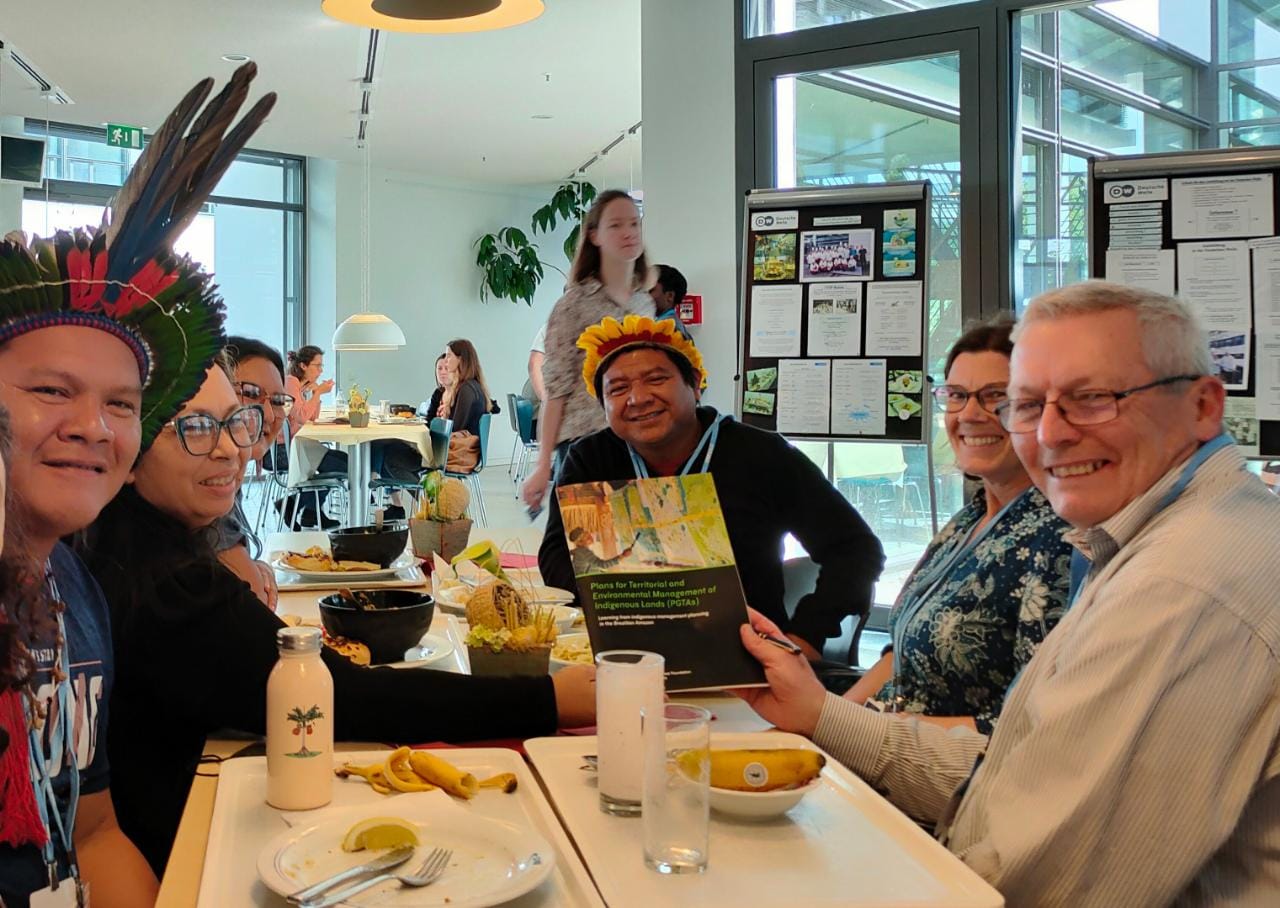
"The PGTAs are important in the management of indigenous areas, according to their ways of life and governance, which constitute mechanisms to guarantee their rights and safeguards in the management of territories," she said. She also delivered to the Rapporteur the RCA's publication on the elaboration of PGTAs in the indigenous lands of the Brazilian Amazon.
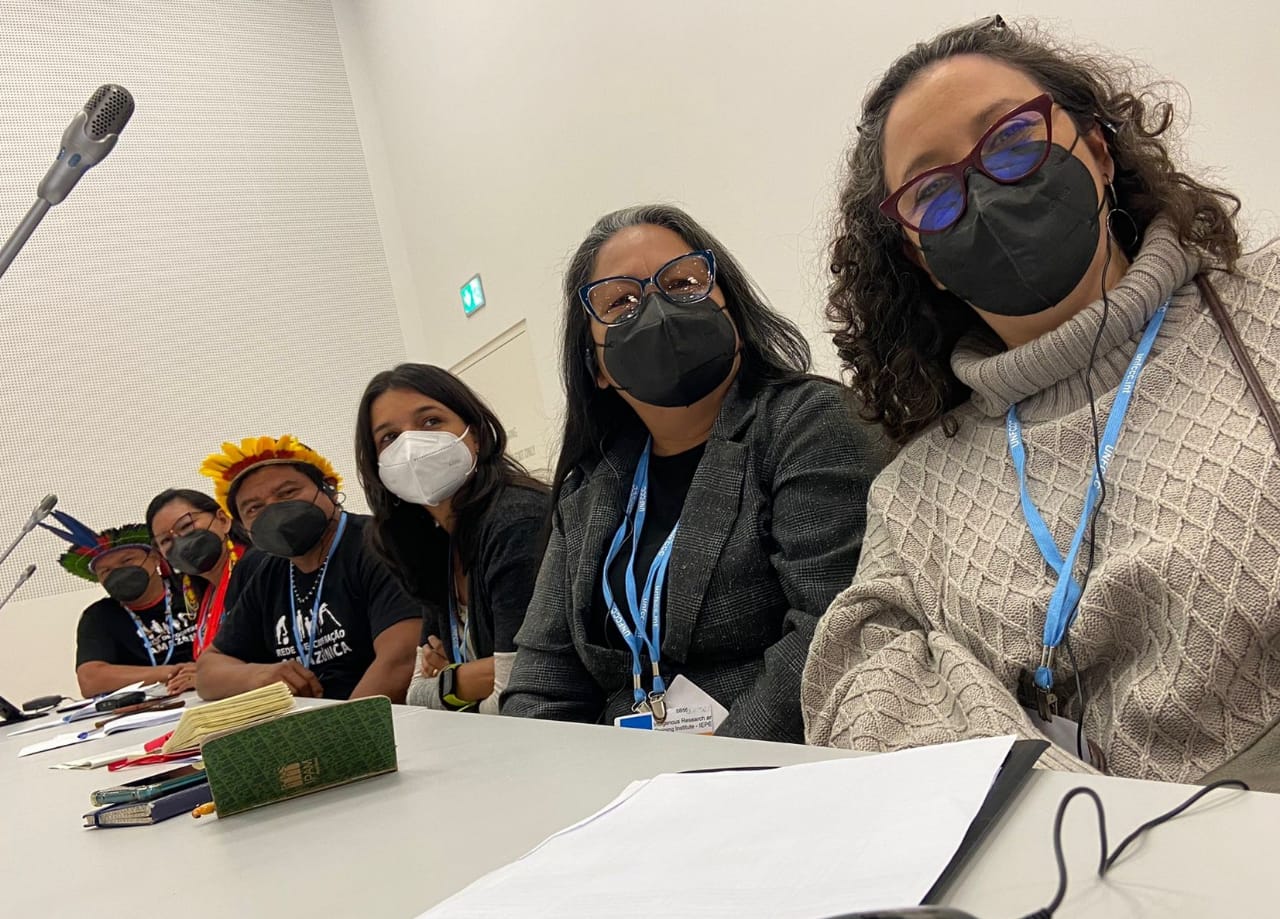
Also according to Sineia, PNGATI has an axis on climate change, in addition to dealing with rights and the management of territories.
"The whole climate discussion, whether it's about Article 6 of the Paris Agreement[which deals with the carbon market],Whether it's about agriculture, or valuing traditional knowledge, it has to do with the management of the territory as well. To make this incidence at the national and international level, it is necessary to work locally", says Sineia. This space was directly affected by one of the first acts of the current government, in 2019, which demobilized social participation for the implementation of this and other environmental policies in Brazil and, since then, it has not been able to be reactivated.
Since 2008, the CIR has carried out grassroots work with environmental agents and has in its curriculum nothing less than the only indigenous plan to combat climate change existing in Brazil so far. It has prepared seven Management Plans, four of which are being finalized and three others are in the planning phase.
Sineia Wapichana says that the idea is to ensure that, soon, all indigenous lands in the state have their plans prepared and implemented. "Management plans, or life plans, are in people's minds. We have to organize this in a document to discuss it from the inside out. The plans are, above all, tools for articulating the communities," she commented.
PNGATI resisted these first 10 years thanks to the efforts of civil society to implement it, even before the signing of its decree in 2012, when there were already management plans prepared by indigenous peoples in Acre, Amapá, Amazonas, Mato Grosso and other states. And, due to the care in its construction process, it continues to be strengthened at the grassroots.
PNGATI is responsible for territorial protection work, which is essential to ensure that 80% of the planet's biodiversity continues to be guarded by indigenous peoples in the world, which, in itself, is one of the most relevant contributions to maintaining climate balance. Actions to support food security, cultural safeguards, mitigation and adaptation are implemented based on the valorization of local knowledge, such as the formulation of networks and seed banks and the expansion of the capacities of indigenous brigades.
"Once we noticed that cassava from the fields in the Serra da Lua region, in Roraima, cooked underground. This is where the work of indigenous territorial and environmental agents comes in. They hold discussions about climate and begin to investigate and solve these challenges based on their own indigenous knowledge," explains Sineia.
In this sense, it is essential to have sensitivity to understand how each people perceives and deals with climate processes and to seek to relate what happens on these bases with the decisions made at the global level. Although it is enshrined in the terminology of climate policies, "adaptation" is not the best way to express what communities in Roraima do.
"Instead of discussing a plan to adapt to climate change, we prefer to work with a plan to cope in the context of the 'transformation of the weather'. In this way, we can move forward," he concluded.
The Brazilian delegation is made up of Sineia do Vale Wapichana, from the Indigenous Council of Roraima (CIR), Dadá Baniwa, from the Federation of Indigenous Organizations of Rio Negro (FOIRN), Yaiku Suya Tapayuna, from the Tapayuna Indigenous Association (AIT) and Maurício Ye'Kwana, from the Hutukara Yanomami Association (HAY).
*With information from Rede RCA and Andreia Fanzeres/OPAN