
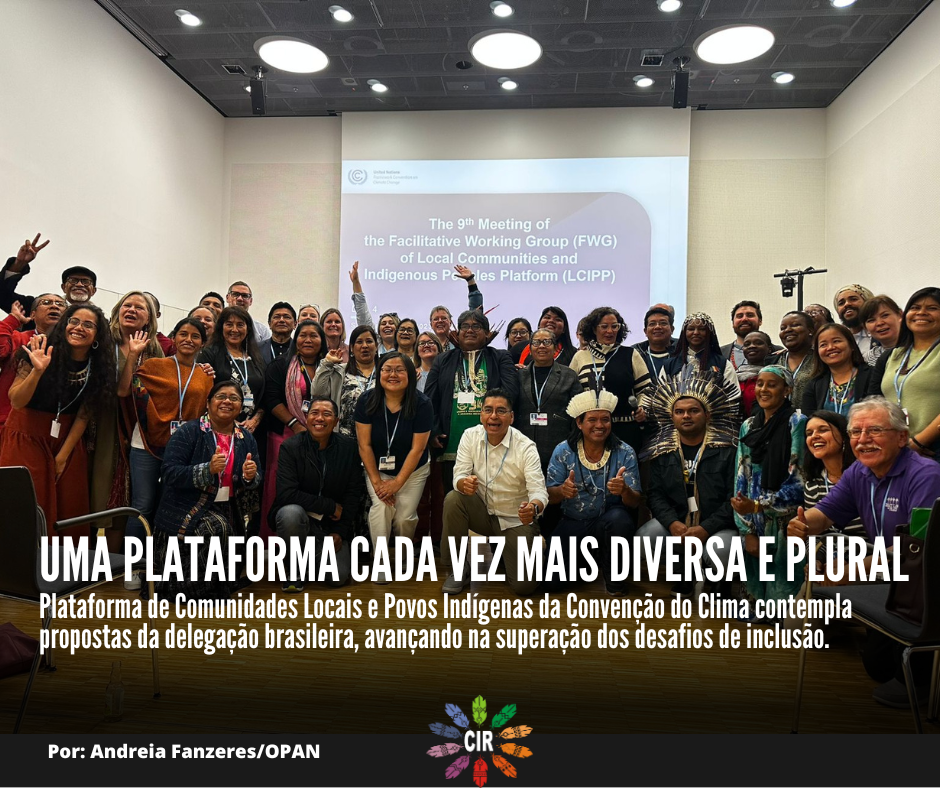
The Local Communities and Indigenous Peoples Platform of the Climate Convention incorporates proposals from the Brazilian delegation, advancing the overcoming of inclusion challenges.
By: Andreia Fanzeres/OPAN
Amid an increasingly challenging scenario for reversing the path that distances everyone from the global goal of limiting global warming to 1.5°C, indigenous peoples were once again recognized as global leaders for the longed-for transformation that would lead to achieving the goals of the Paris Agreement, in the opening speeches of the 9th meeting of the Local Communities and Indigenous Peoples Platform (LCIPP) Facilitating Working Group, which traditionally opens the activities of the Conference of the Subsidiary Body for Scientific and Technical Advice (SBSTA) of the United Nations Framework Convention on Climate Change (UNFCCC), in Bonn, Germany.
“Indigenous knowledge is crucial to addressing climate challenges, and we know that treating nature as a commodity doesn't work. The leadership of indigenous peoples is more important than ever,” said Simon Stiel, Executive Secretary of the UNFCCC.
Talking is easy, and in this case, this is the tone expected from those tasked with untangling the knots of 197 countries to drastically reduce emissions in less than seven years. Even so, considering the pace of climate diplomacy, and given the arduous path of indigenous peoples in building mechanisms for participation, what just happened in Bonn between May 31st and June 3rd, 2023, is a landmark, especially for the Brazilian indigenous delegation. They not only made precise technical contributions to the Platform's work, but also saw them reflected in the decisions and actions taken by this body, unique within the entire UNFCCC structure.
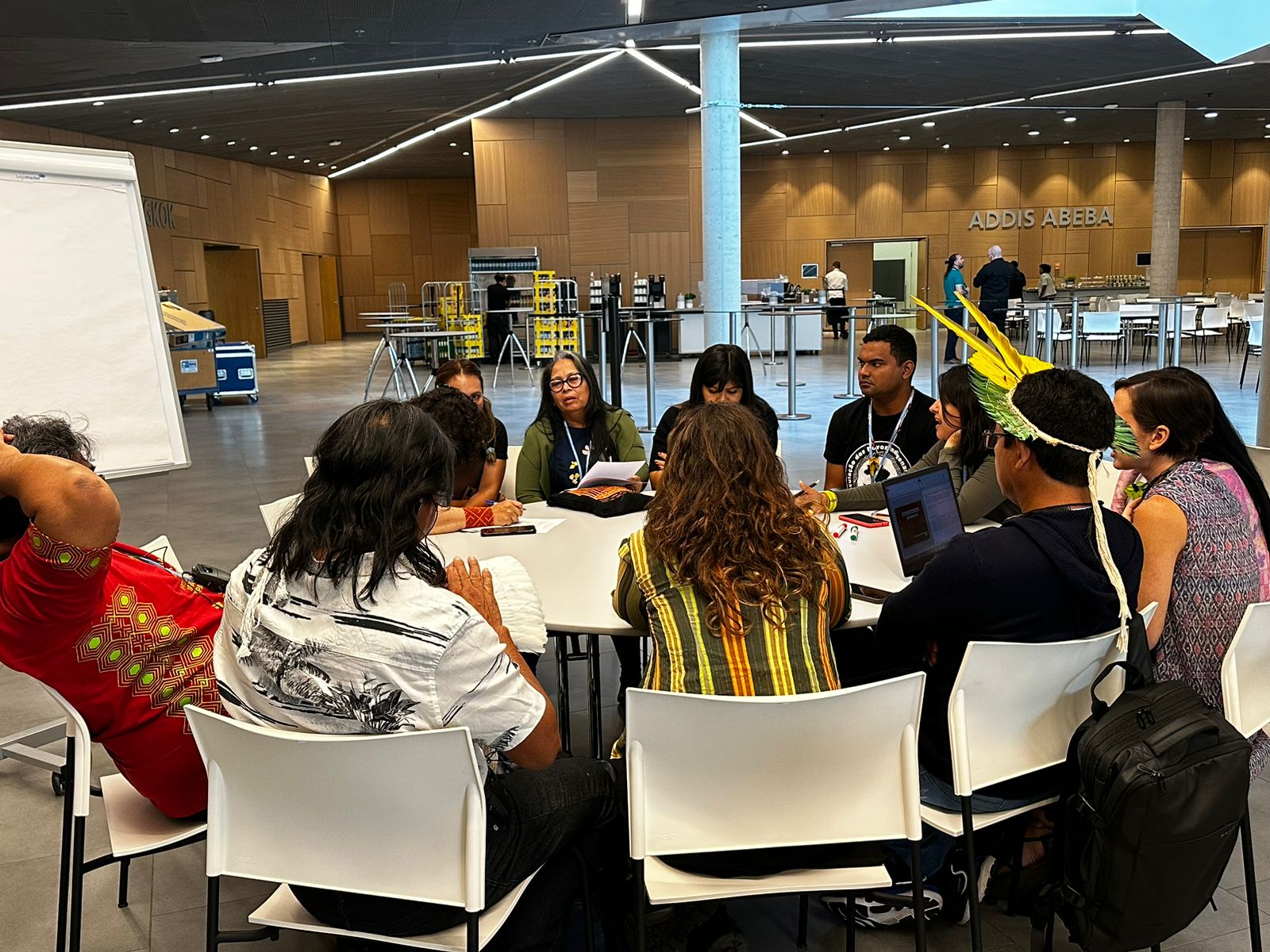
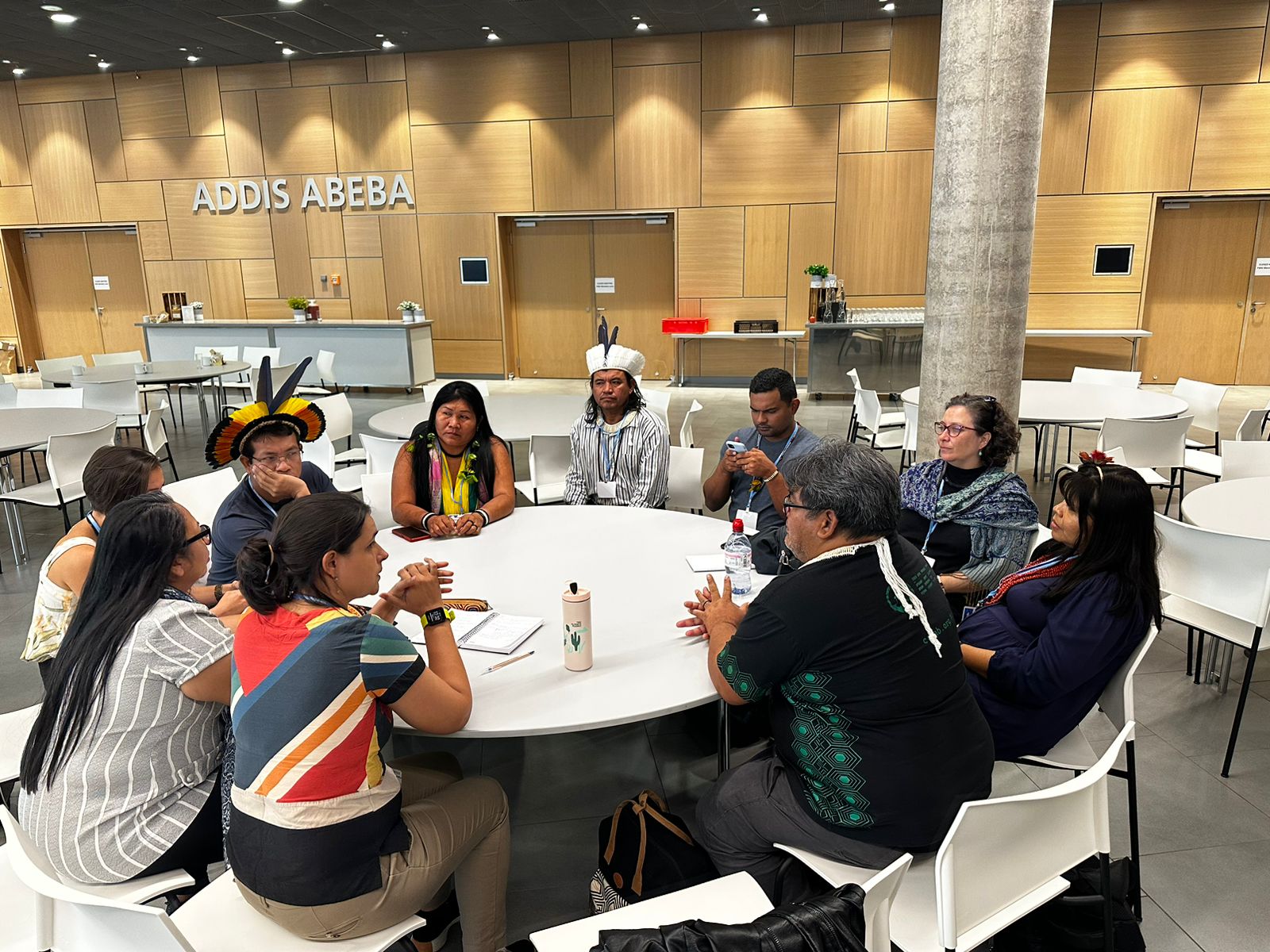
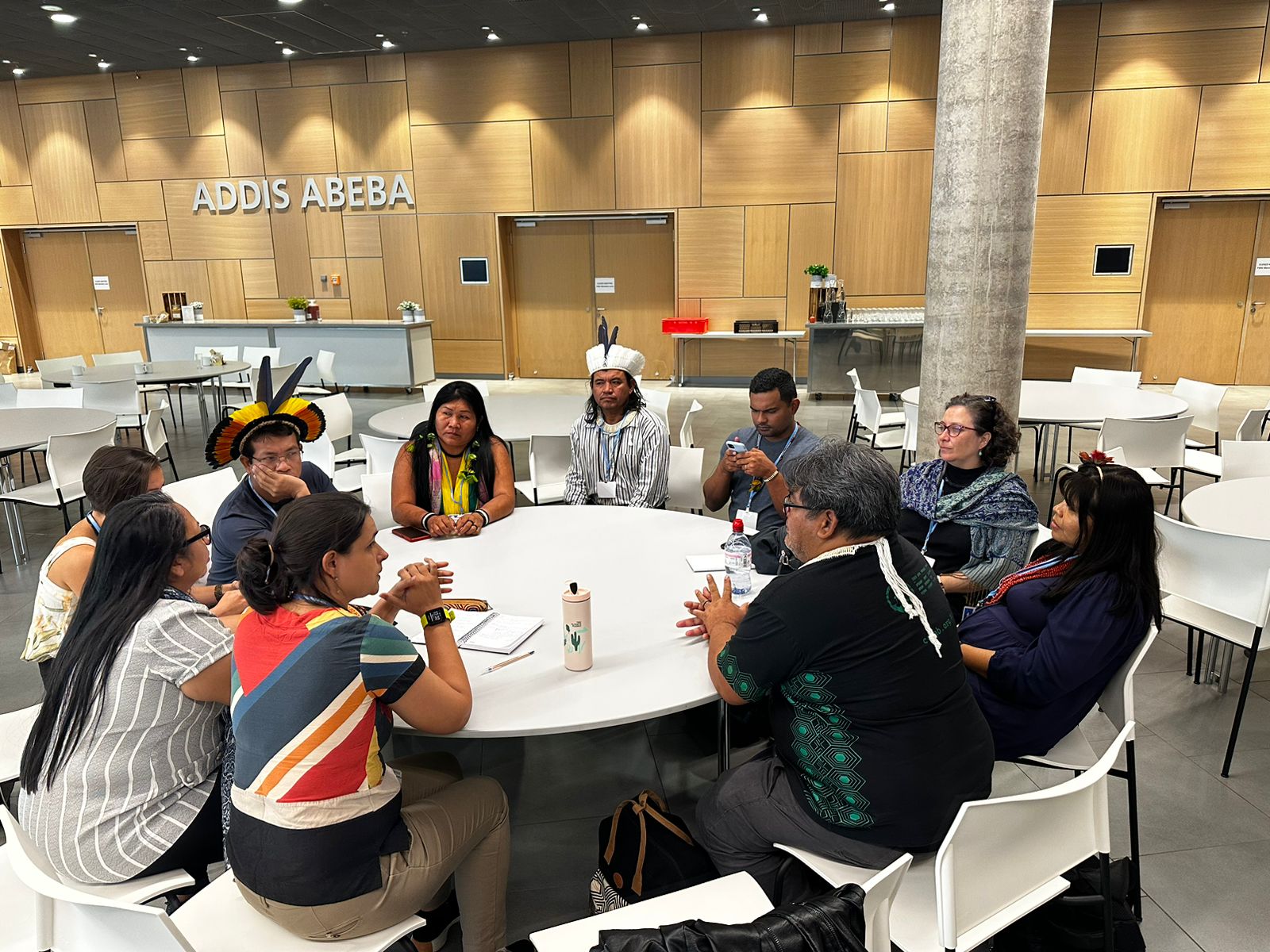
In Sharm el-Sheikh, Egypt, Brazilian indigenous people demanded better conditions for transparency and inclusion in the Platform, especially regarding the translation difficulties during their last meeting at COP27, since Portuguese is not an official language of the UNFCCC. This year something quite different happened, starting with the methodology of the meeting itself. Four group work sessions over four days of meetings represented, in practice, the confirmation of a model tested, albeit timidly, in Egypt to broaden the possibilities for participation of observers, both indigenous and non-indigenous, in the Platform's meetings. Brazil formed a group of Portuguese speakers who, in this way, were able to contribute to the adaptation agendas, the Global Balance, the activities at COP28 in Dubai, and the new 2025-2027 work plan.
Under the leadership of the newly elected co-chairs of the Platform, Gun-Britt Retter, representing the Indigenous peoples of the Arctic, and Tiana Carter, who is also Indigenous and acts on behalf of the Western European and Other Countries Group (WEOG), the meeting reviewed progress on each of the activities in the Platform's 2022-2024 action plan, including those aimed at providing greater engagement of Indigenous peoples and local communities with the processes and bodies of the UNFCCC and other bodies linked or not to the Convention with Indigenous issues.
Harry Vreuls, president of SBSTA, said he was impressed by the contributions of indigenous peoples to the topic of adaptation during the 5th Adaptation Workshop of the Global Adaptation Goal (GGA) Work Programme, held in March of this year, where initiatives related to the constitutional recognition of the rights of nature in Ecuador, the process of restoring coastal zones in the Maldives, and the implementation of fire management by indigenous peoples in Australia were presented. “You are leaders in your regions and are the ones who truly move climate policies forward with your experiences and knowledge,” he stated. He assured them that indigenous peoples can count on his commitment to supporting the Platform and achieving its goals.
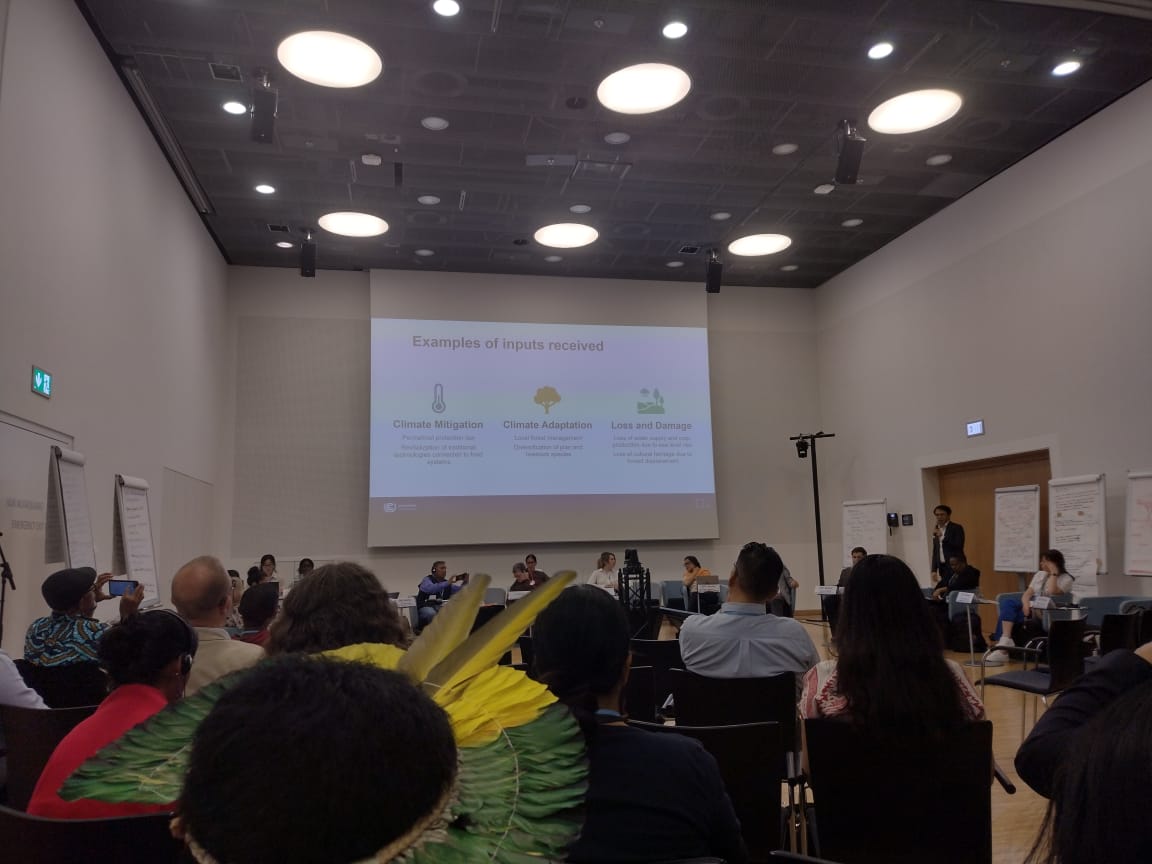
In Bonn, the Brazilian indigenous delegation briefly discussed the process of strengthening the adaptation agenda, using the example of the Indigenous Council of Roraima (CIR) in developing the first Indigenous Climate Change Response Plans in 2014, which influenced the National Adaptation Plan. They cited the case of the Manchineri and Jaminawa communities in the Mamoadate Indigenous Territory, Riozinho do Yaco, regarding the loss of corn, rice, potato, and cassava seeds, as well as fish in the upper reaches of the rivers, forcing the communities to adapt to a different (non-traditional) diet.
In the report of contributions to the Global Balance Sheet, the demarcation of indigenous lands and the appreciation of all biomes and peoples of the country were highlighted by the group as part of the measures necessary for Brazil, as the seventh largest global emitter, to meet its climate target. And, as illustrated through slides at the meeting, it will not be able to honor it if Bill 490 and the temporal framework thesis are approved.
Platform Review in 2024
The Platform, created by the Paris Agreement in 2015 and implemented following the establishment of a Facilitating Working Group in 2018 in Katowice at COP24, is a UNFCCC body with seven seats for indigenous members and seven for the Parties to the Convention, i.e., the States. There are also three more seats for local communities, but these remain vacant. It will be reviewed at COP29 in 2024. Therefore, the UNFCCC has already opened a call for evaluation of its work, focusing primarily on the results achieved and the representation of local communities, issues that have already proven to be quite sensitive.
Based on strong statements from both members and observers, it became clear that the Platform needs to gain more importance within the negotiation process and that mechanisms should be established to monitor decisions emanating from the Platform to other UNFCCC bodies, as suggested by Kimaren Ole Riamit of the Indigenous Livelihoods Enhancement Partners (ILEPA) organization in Kenya. “The Platform was not created to be a body disconnected from the system. This is worrying. We have to give life to the Platform's work because it's not enough to participate, but to influence decisions,” she proposed.
“People say the Platform has little relevance, but it is an achievement of indigenous peoples after many years of struggle, with a very important role as a safe space for discussion and forwarding decisions for the climate negotiation process through SBSTA,” assessed Sineia Wapichana, from the Indigenous Council of Roraima (CIR) and coordinator of the Indigenous Committee on Climate Change of Brazil (CIMC).
The adoption of culturally appropriate methodologies for indigenous peoples, considering the diversity of languages and levels of involvement with UNFCCC processes by the Platform in its next cycle of activities, was a contribution from Brazil included in the draft of the meeting's final document. Another crucial issue concerns the annual meeting of traditional knowledge holders and regional meetings, which should improve community engagement and enhance their mechanisms for transparency, inclusion, and support in the various existing sociocultural regions. This was also a point that is now being addressed as a decision of this body.
A national platform
As highlighted by Lapka Nuri Sherpa, focal point for Asia of the International Forum of Indigenous Peoples on Climate Change, known as the Indigenous Caucus, what was seen at COP27 was the largest representation of indigenous peoples among all UNFCCC events, and this is the result of a process of achievements. “At the same time, while we need to celebrate these advances at the international level, with greater visibility for important issues such as loss and damage, solutions stemming from indigenous knowledge, and a rights-based approach, we know that our challenge is to take this Platform to the territories, which is why I emphasize the work of each one, at the national and local levels as well,” said Sherpa.
In Brazil, the creation of a national platform is becoming an increasingly attainable goal, as conditions open up for the organization of indigenous peoples around the climate agenda through the recently relaunched Indigenous Committee on Climate Change (CIMC) and the Technical Chamber on Climate Change of the Management Committee of the National Policy for Environmental and Territorial Management of Indigenous Lands (PNGATI). “We have many experiences in Brazil that can contribute to the discussions. We need to communicate them and we will try to work on creating our platform,” says Toya Manchineri, general coordinator of COIAB.
According to Patrícia Zuppi, deputy secretary of the Amazon Cooperation Network (RCA), the progress seen in the Platform regarding the influence of Brazilian indigenous people in this technical action space on the climate agenda is the result of several years of work. “The efforts that are now expanding the possibilities for influence of Brazilian indigenous people include biannual training sessions for participation in the Platform, the organization of equipment and interpreters for the Portuguese language, and coordination with the UNFCCC secretariat and the Indigenous Caucus to influence changes in participation dynamics and the availability of documents in Portuguese,” she lists. “It was very important to have a prior alignment. We came better prepared. And this time we were able to communicate in Portuguese,” emphasizes Manchineri.
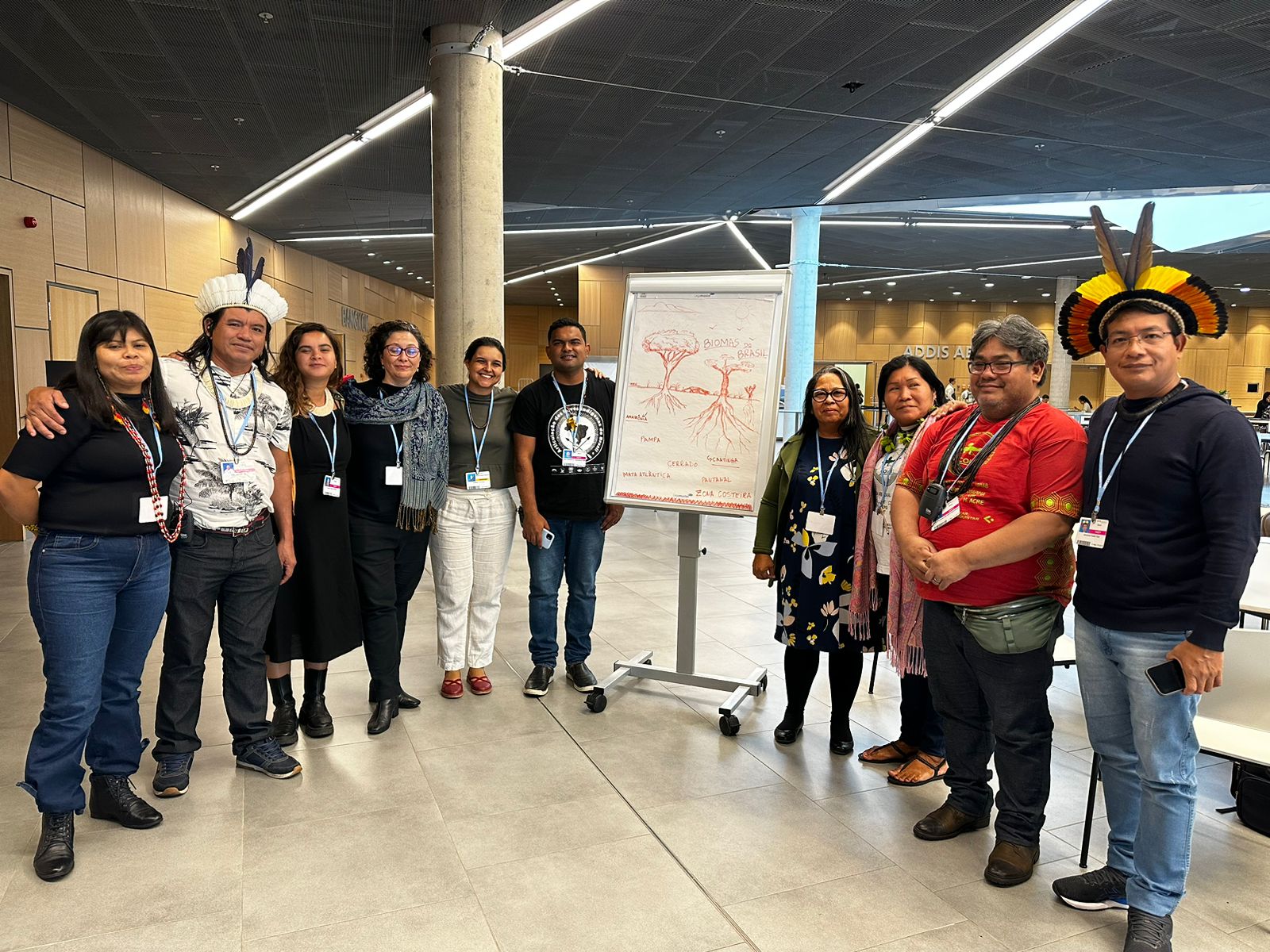
The Brazilian indigenous delegation in Bonn is composed of Sineia Wapichana, from the Indigenous Council of Roraima (CIR) and coordinator of the Brazilian Indigenous Committee on Climate Change (CIMC); Toya Manchineri, coordinator of the Coordination of Indigenous Organizations of the Brazilian Amazon (Coiab); Cassimiro Tapeba, coordinator of the Articulation of Indigenous Peoples of the Northeast, Minas Gerais and Espírito Santo (APOINME), representing the Articulation of Indigenous Peoples of Brazil (APIB) and member of CIMC; Ianukula Kaiabi Suia, president of the Association of Indigenous Peoples of the Xingu (ATIX); Eliane Xunakalo, president of the Federation of Indigenous Peoples and Organizations of Mato Grosso (Fepoimt); Eliel Rondon (Fepoimt); Kaianako Kamaiura (Coiab); and Dineva Maria Kayabi (Coiab and Rede Juruena Vivo), with support from the Amazon Cooperation Network (RCA). Operation Native Amazon (OPAN) and the Amazon Environmental Research Institute (IPAM).