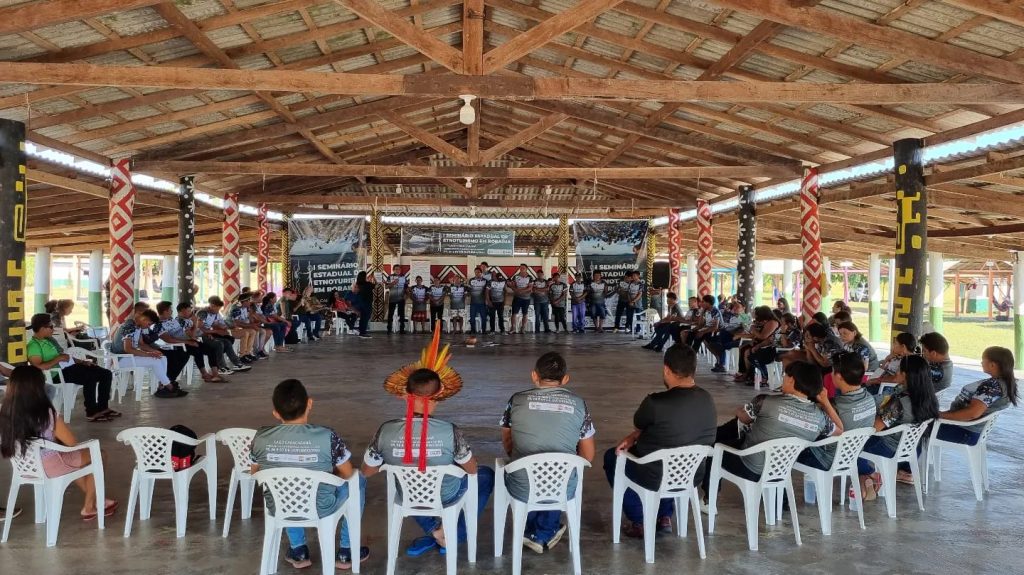
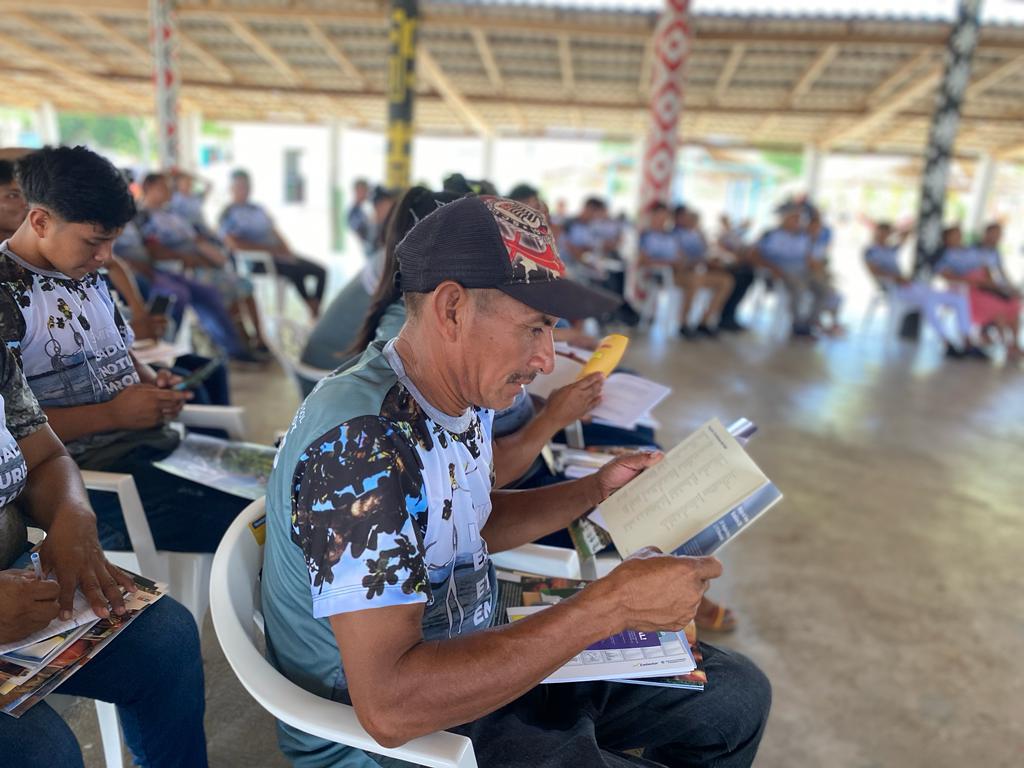
To bring knowledge to indigenous leaders, understand the negative and positive impacts, exchange experiences and clarify doubts about various types of tourism, the Indigenous Council of Roraima (CIR), started this Thursday (5), the I Seminar on Ethnotourism in Roraima, at the sacred Lago Caracaranã Regional Center, in the Raposa region, in the Raposa Serra do Sol indigenous land, municipality of Normandia.
Promoted by the CIR's Legal Department, the event brings together approximately 80 participants from various regions of the State, as well as representatives of indigenous institutions and organizations.
For three days, participants will be focused on debating agendas such as negative and positive impacts, regulation and indigenous rights, public policies and government actions, and experiences on community-based tourism. The event seeks to bring information and clarification, and not to authorize the activity in the indigenous lands of Roraima.
After the process of demarcation and homologation of indigenous lands in Roraima, based on the need to clarify the matter, it is the first time that the organization has put the debate on the agenda.
The technical consultant in tourism at the Indigenous Council of Roraima (CIR), Enoque Raposo, who coordinates the Community-Based Tourism Project in the Raposa community, the first in execution in the State, presented the process of elaboration, participation and collective execution of the initiative.
Raposo used as a reference in the implementation of the activity in indigenous lands, the National Policy for Environmental Management of Indigenous Lands (PNGATI), instituted by decree 7,847 of 2012, and Normative Instruction No. 03/2016 of the National Foundation of Indigenous Peoples (Funai), which establishes rules and guidelines related to tourist visitation activities on indigenous lands.
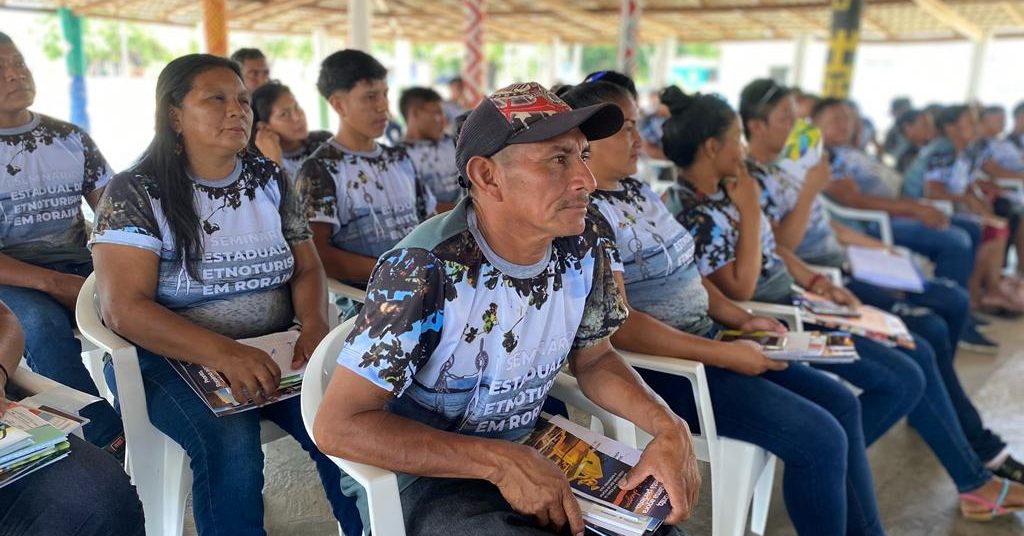
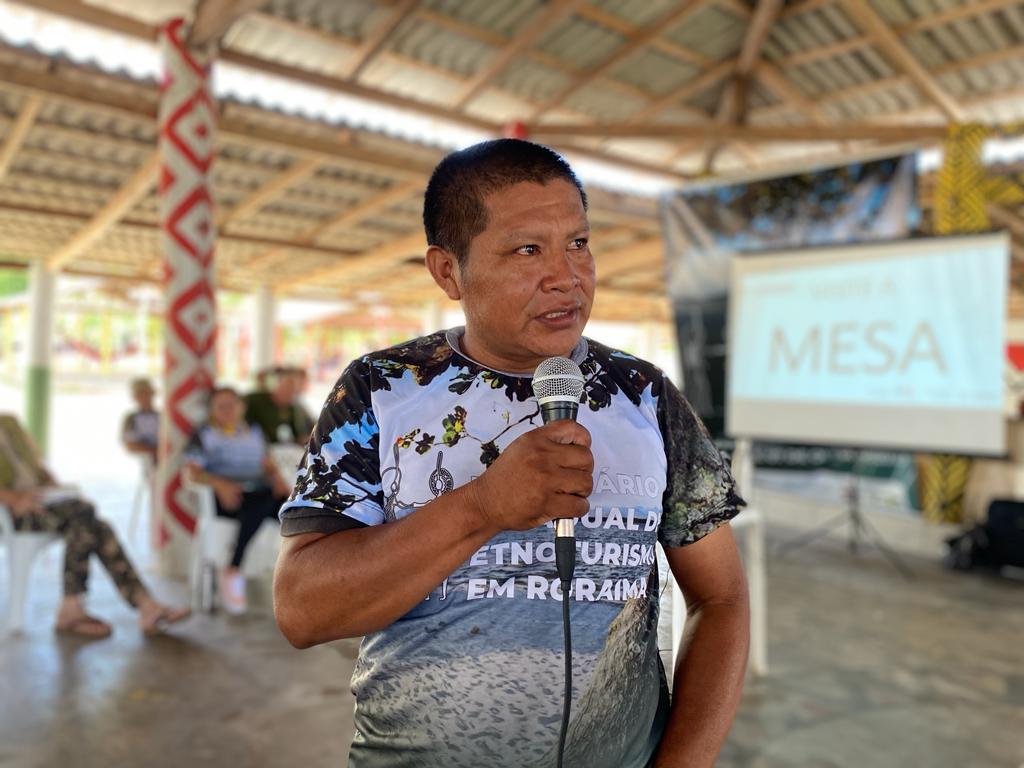
When presenting the process of elaboration of the Community-Based Tourism Project in the Raposa community, Enoque, highlighted as one of the main ways for the elaboration and execution of the project, the participation and collective construction of the community. He stressed that the event is a lesson for indigenous leaders.
"The intention is to bring this knowledge to the indigenous leaders who are here to have this class on what tourism is and reach an understanding, to then think about developing this activity as an economic alternative," he said.
The action also involves the participation of indigenous women. The tuxaua of the Morcego community in the region, Leirijane Nagelo, stressed the importance of having knowledge about tourism.
"You can't do tourism without first knowing what you can and can't do, respect for our belief and our culture, especially us indigenous peoples, because there are places that are sacred to us," said Leirijane.
By clarifying that the seminar is a first step to dialogue about ethnotourism, considering all cultural, political, economic, social and environmental aspects of the communities, the general coordinator of the Indigenous Council of Roraima (CIR), Edinho Batista, highlighted the role of the peoples in the management of this activity, if it is accepted, maintaining the collective benefit.
"The main objective is to actually bring so that our population actually has the leading role in managing our own tourism company and that we can actually understand and feed our people in this sense of collective economic vision", said the coordinator about the objective of the activity.
"Doing tourism is not just carrying a tourist bag, but having the ability to manage tourism", concluded Edinho.
The agenda "negative and positive impacts of tourism", also had the participation of the professor of the State University of Roraima (UERR), Bruno Dantas, pointing out experiences of tourism activity in various places and associating the activity in indigenous communities.
The role of public institutions
The prosecutor of the Federal Public Ministry (MPF), Allyson Marugal, participated in the agenda "Community-Based Tourism, Regulation and Indigenous Rights", highlighted the role of the institution to dialogue and mediate the divergences around the visitation plan, and the main thing to supervise the public policies executed by the Brazilian State.
Marugal shared the visitation plan actions that he follows in Roraima and stressed that the most important thing is that there is consensus in the preparation and execution of the plan, in addition to applying the right to consultation.
"That all communities are in agreement with the plan, because they are all affected by the entry of people. Another point is to apply the right to consultation," he said.
He informed that the first procedure carried out by the MPF when receiving any complaint about the visitation plan is official to Funai to verify that all the rules are contemplated in the plan. The action is to ensure that the rules are met.
The representative of the General Coordination of Ethnodevelopment (CGETNO) of the National Foundation of Indigenous Peoples (Funai), Wagner Senna, made an analysis of the experiences monitored by the indigenist agency, fundamental points regarding the preparation of plans and information on Funai's Normative Instruction No. 03/2016.
Wagner informed that Funai issued 32 letters of consent, 17 are in full operation, 01 in Roraima, referring to the visitation plan of the Raposa indigenous community and 04 under study, and 08 being analyzed by CGEtno/Funai.
He warned that tourism activity in indigenous lands is complex and not easy, it needs to have the will, willingness and in-depth training to make it happen in indigenous communities.
He stressed that the rights over indigenous lands are collective and that, therefore, Funai acts to ensure that the standards are met and cultural, environmental and other rights are safeguarded.
He shared the experiences of tourism in other regions of Brazil, such as Bahia, made by the Pataxó people, a region that was impacted by this activity.
Leadership's vision
The first day ended with a debate and the manifestation of indigenous leaders, such as Arizona Menandro, deputy regional coordinator of Surumu, in the Raposa Serra do Sol Indigenous Land, expressing concern about the tourism that already works. "There are social impacts within the Indigenous Land, mainly due to conflicts between organizations wanting to force regulation without consultation and information about tourism, knowing that the goods are collective," he said, considering that the event is a first step to debate the subject.
Other leaders also consider that the debate is important to learn more about tourism and its various modalities, but also warn of the risks and threats of new or old invasions of indigenous lands.
The activity is a first step to discuss and expand the debate on tourism, especially to reinforce that the protagonist in this action are the indigenous peoples, according to their cultural ways and customs, preserving the beauty and natural wealth in the territories.
Representatives of institutions such as the Federal Public Ministry (MPF/RR), National Foundation of Indigenous Peoples (Funai), Ministry of Tourism, Socioenvironmental Institute (ISA), and indigenous organizations, Federation of Indigenous Organizations of the Rio Negro (FOIRN), Coordination of Indigenous Organizations of the Brazilian Amazon (Coiab), Organizations of Indigenous Women of Roraima (OMIR) and other organizations in Roraima were invited to the event.
With the support of the Ford Foundation, the event continues until Saturday, 7, exposing the expectations of indigenous communities and organizations about ethnotourism.