
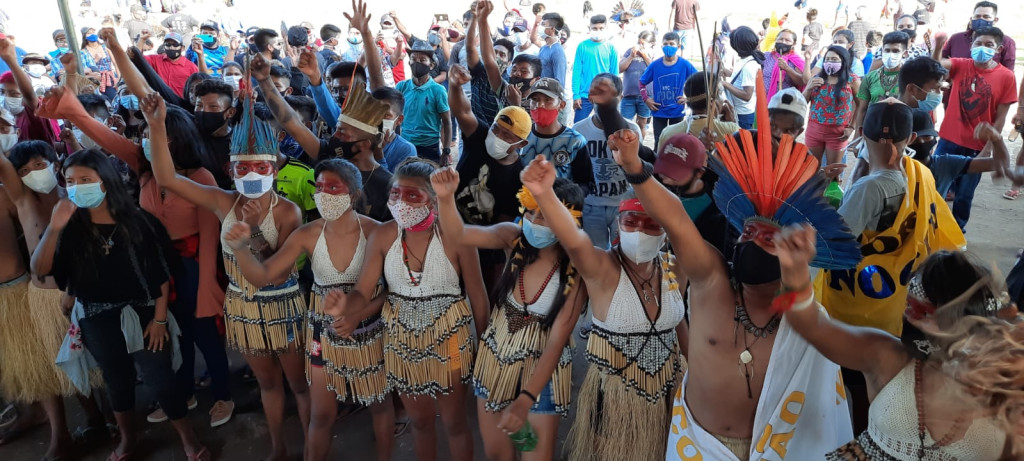
Photo: Isabela Pimydy/ Wakywai network
With the suspension of the trial of the "time frame thesis" in the Federal Supreme Court (STF) and after 25 days of mobilization in the São Marcos indigenous land, a Sabiá community, the Indigenous Movement of Roraima ended last Thursday (16) the II Free Land Camp (ATL/RR) "fight for life".
The mobilization was organized by the indigenous communities and, for the first time, held in an Indigenous Land. It was attended by more than 2,500 people, from the Wapichana, Macuxi, Taurepang, Ingarikó, Patamona, Sapará, Wai-Wai, Y'ekuana peoples, including leaders, women, men, teachers, young people, children, indigenous health agents, the Indigenous Territorial Protection and Surveillance Group (GPVTI), teachers and tuxauas to follow the judgment in the STF.
These were days of great struggle and resistance for the indigenous movement of Roraima. Video: Ascom/ CIR
In addition to the demonstration against the time frame thesis, indigenous peoples repudiated the attacks of anti-indigenous parliamentarians who proposed PL 490/2007, PDL 28/2019, among other legislative measures that encourage invasions of indigenous lands.
Indigenous peoples marched with one voice. Video: ASCOM/CIR
The Indigenous Movement has also drawn society's attention to the damage to the environment caused by illegal mining in indigenous lands, and has been leaving irreversible damage to the main rivers of Roraima.
"We are finalizing ATL, but the struggle is permanent and we make a point of caring for and honoring this, this is called the indigenous movement. We never stop, the struggle is always continuous", highlighted the deputy coordinator of the CIR, Enock Taurepang.
The tuxaua Lázaro Wapichana, from the Pium indigenous community, Serra da Lua region, said that the II ALT in Roraima was a historic milestone. "The ATL was a historic milestone. When we indigenous peoples make the call of the indigenous people, of shamans, children, women, men, leaders, they are always active to defend our rights. We will not be silent, we will not give up in the face of this misgovernment that only wants to end us. Before the Brazil of the crown, there was already the Brazil of the headdress that we are the original peoples of Brazil", he highlighted.
With the delay in the Supreme Court to decide the future of indigenous lands in Brazil, indigenous leader Tereza Pereira, from the Macuxi people, from the Raposa Serra do Sol Indigenous Land, asked the ministers for urgency about the judgment. "In the indigenous peoples, we ask the ministers with great respect, the urgency of the judgment and that it be judged in our favor."
Understand the trial
The judgment is tied, one vote in favor of the indigenous peoples and one vote against. The rapporteur of the process, Edson Fachin, in his vote reaffirmed the fundamental character of indigenous constitutional rights. He also recognized that the right of indigenous peoples over their lands of traditional occupation is an original right, that is, prior to the formation of the Brazilian state itself.
Minister Nunes Marques, the second to vote, took a stand against indigenous constitutional rights and in favor of the ruralist thesis of the time frame, opening a divergence with the rapporteur, Edson Fachin.
According to the legal advisor of the Indigenous Council of Roraima (CIR) Junior Niccácio, with a request for review by Minister Alexandre de Moraes, the date of return of the trial is uncertain. "According to the internal regulations of the court, after the process is returned by Alexandre de Moraes, it later needs to be put back on the agenda by the president of the court, Luiz Fux. Then a period of 30 days is established for the return of the process in sight, extendable for another 30 days", he explained.
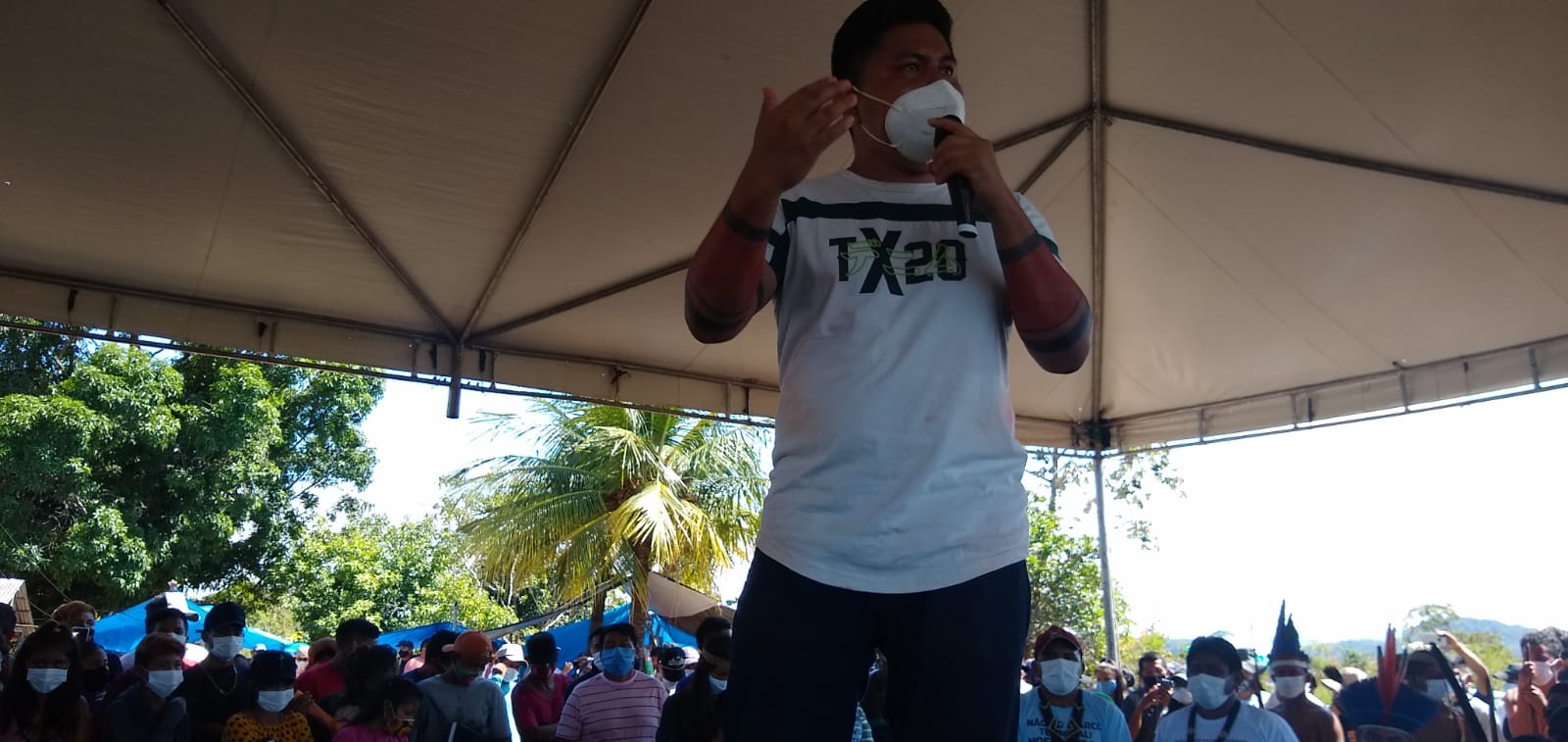
CIR's Legal Advisor, Junior Niccacio in plenary explained about the next steps of the trial. Photo: ASCOM/CIR
The Court analyzes the repossession filed by the Santa Catarina Institute of the Environment (IMA) against the Xokleng people, referring to the Ibirama-Laklãnõ Indigenous Land. In 2019, the case gained the status of "general repercussion", which means that the decision will serve as a guideline for the federal administration and all instances of Justice with regard to demarcation procedures.