
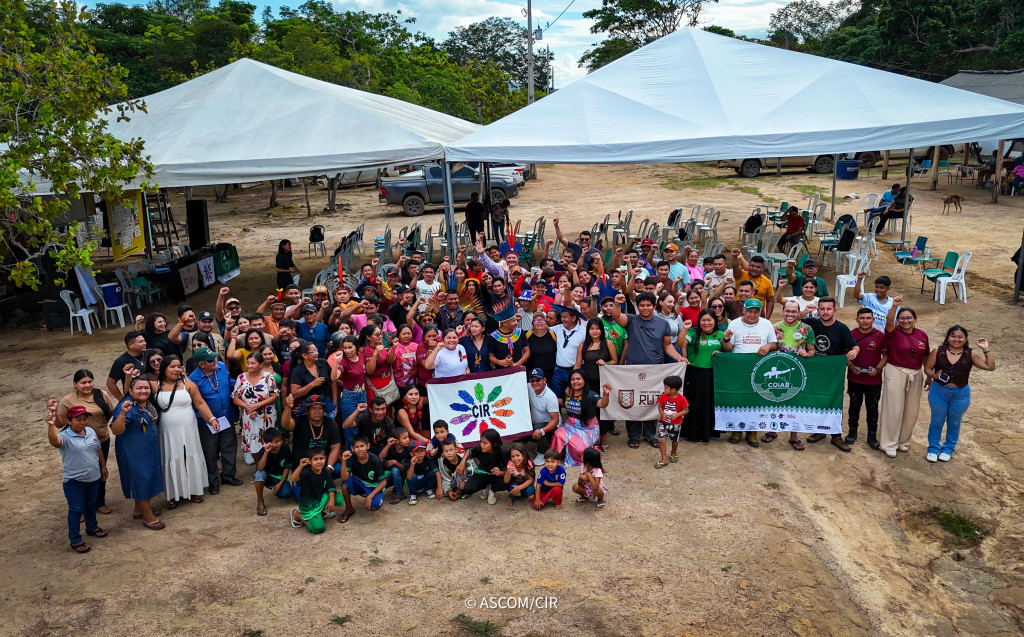
The meeting seeks to define the political and strategic directions of the Indigenous Council of Roraima.
The First Meeting of the Expanded Deliberative Coordination of the Indigenous Council of Roraima (CIR) of 2026 takes place, for the first time, in the Anzol Indigenous Community, Murupu region, in the municipality of Boa Vista. The meeting is one of the main deliberative bodies of the organization, responsible for bringing together representatives of the communities to evaluate the actions developed by the CIR in the indigenous regions and communities, debate the demands of the territories and collectively define the next political and institutional directions.
"We are here to strengthen the struggle of indigenous communities, especially here in the Anzol community, which is in this demarcation process. We believe that the indigenous movement continues in the struggle in defense of the rights of indigenous peoples", explains the General Tuxaua of the CIR, Amarildo Macuxi.
With the theme "Indigenous Governance, Territorial Protection and Autonomy: Strengthening the union and struggle of the indigenous peoples of Roraima", the Ampliada takes place between July 1st and 5th and brings together indigenous leaders from the 11 ethnoregions of the state, bases of the CIR. During three days of programming, the departments present the actions developed since the last meeting, while the leaders share the challenges faced in the territories.
In addition, topics will be discussed in the areas of health, education, protection and territorial governance, legal and political advocacy (regional, state, national, Amazon, and international), autonomy of indigenous peoples, among others. The exchange of information allows for the identification of priorities, the evaluation of ongoing policies, and the construction of solutions collectively.
"The Ampliada is a very important body because it looks more inside the CIR, at the institutional part. It makes an assessment of the political issues in which the state finds itself and also of the national situation. It is a body that brings together only 37 regional councilors, who have the right to voice and vote and are the bases of the CIR",highlights the coordinator of the Legal Department of the CIR, Júnior Nicácio Wapichana.


The meeting also seeks to bring institutional decisions closer to the reality experienced in the communities, especially those located in more distant regions and who often face long distances to attend the meetings.
"Sometimes the coordinators are not able to come to represent their people, but the challenge is also when we go to the territory of difficult access, where it makes it difficult for other leaders to move to the territory", comments the General Tuxaua.
Held twice a year, the meeting functions as a permanent space for dialogue between the CIR, the leaders and the indigenous communities. The executive coordination, regional coordinators of tuxauas, women and youth, community leaders, partner institutions such as COIAB and the technical team of the CIR participate, which together build strategies to strengthen the defense of the rights of the indigenous peoples of Roraima.
Advances and achievements
Over the past few years, several debates and deliberations made at the Extended Meeting have resulted in initiatives that are now part of the permanent performance of the CIR.
Among them is the strengthening of indigenous education, with the delivery of the Plan for the Technical Course in Agriculture Integrated with High School and the Pedagogical Project of the Raposa Serra do Sol Indigenous Center for Training and Culture (CIFCRSS), aimed at training indigenous leaders. Another advance was the approval of the Rutî Indigenous Fund, which strengthens the autonomy of indigenous peoples by supporting regional, community and family projects.
Plans are also defined aimed at the defense of indigenous territories and the construction of public policies related to education, health, food security, environmental preservation and indigenous autonomy. It is at the Expanded Meeting that the names of the leaders are indicated and approved to run for the positions of General Tuxaua, General Vice-Tuxaua and General Tuxaua of the Indigenous Women's Movement, responsible for conducting the organization's political action.
The complaints presented and the decisions taken during the three days of the First Meeting of the Expanded Deliberative Coordination of the Indigenous Council of Roraima (CIR) will be recorded in the Expanded Letter, collectively constructed and forwarded to the competent bodies for the necessary measures.
Text: Allyne Bentes (ASCOM/CIR).
Proofreading: Helena Leocádio and Charles Taurepang (ASCOM/CIR).
Photos: Maciel Macuxi (ASCOM/CIR).