
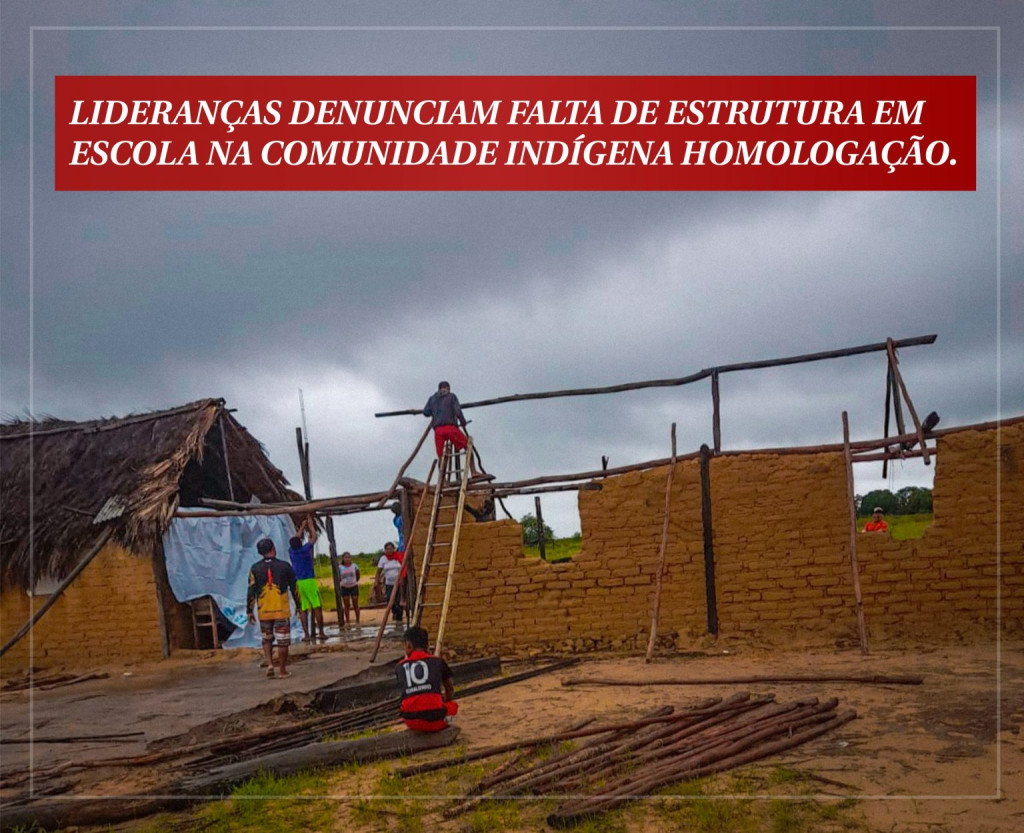
The precarious state of the construction of the municipal and state school of the Homologação Indigenous Community, Raposa Serra do Sol Indigenous Land, in the municipality of Normandia, demonstrates the absolute neglect of the public authorities with the indigenous peoples. It is nothing new that indigenous school education in Roraima has been forgotten and abandoned by the state and municipal public authorities. The lack of structure in schools is a reality, which puts at risk the teaching and learning of students and the health of students, teachers and support staff.
Most of the schools were built by the residents of the community themselves, as is the case of the school in the Homologação community, located 120 km from the capital Boa Vista, in the Raposa Serra do Sol Indigenous Land, in the municipality of Normandia. In this rainy season, the only house that serves students from the municipal and state network, the wall collapsed, further hindering the progress of classes. The students were transferred to a room at the health center, which will serve students from the municipal network from 1st period to 5th grade and from the state network from 7th grade to high school.
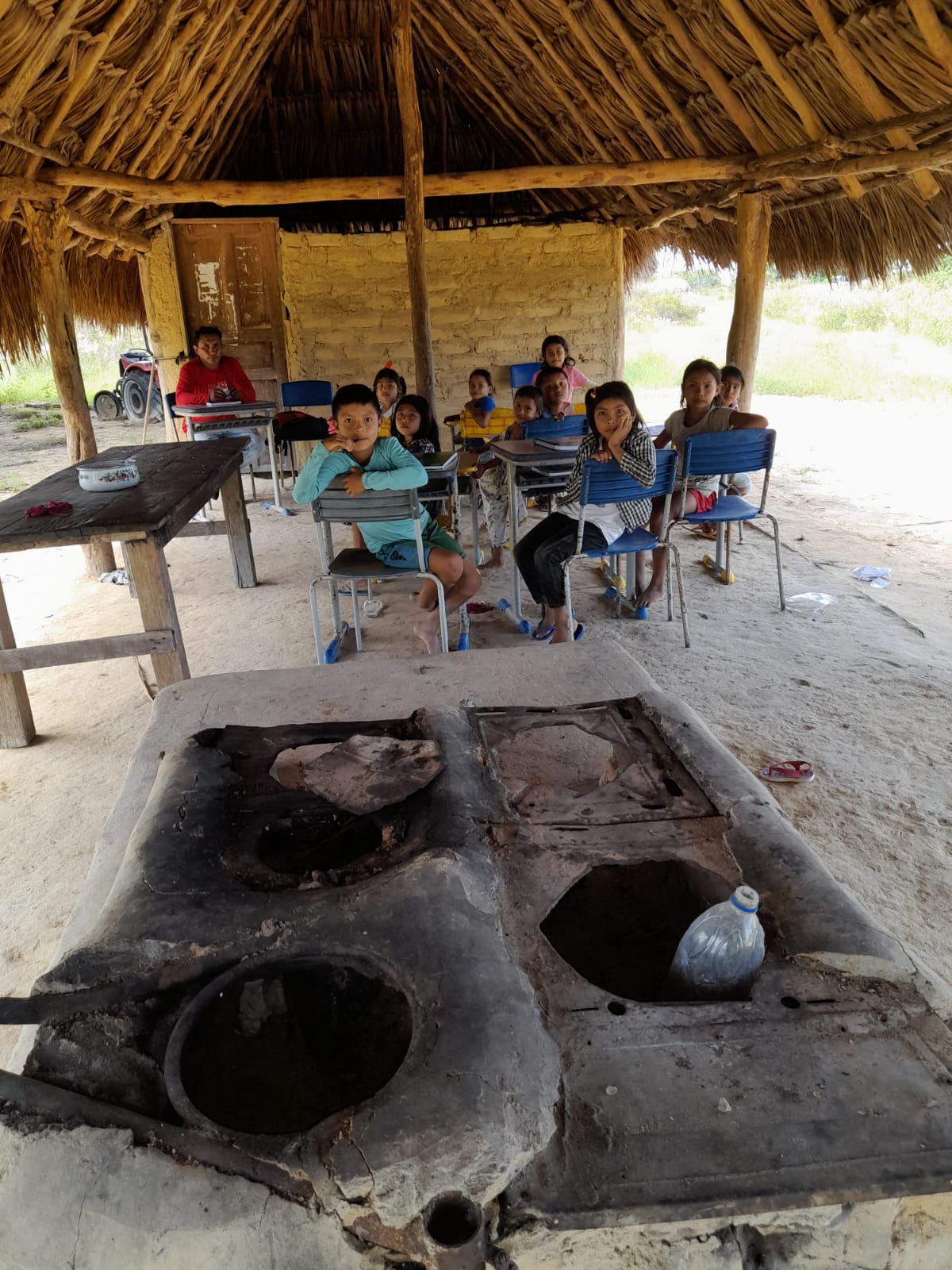
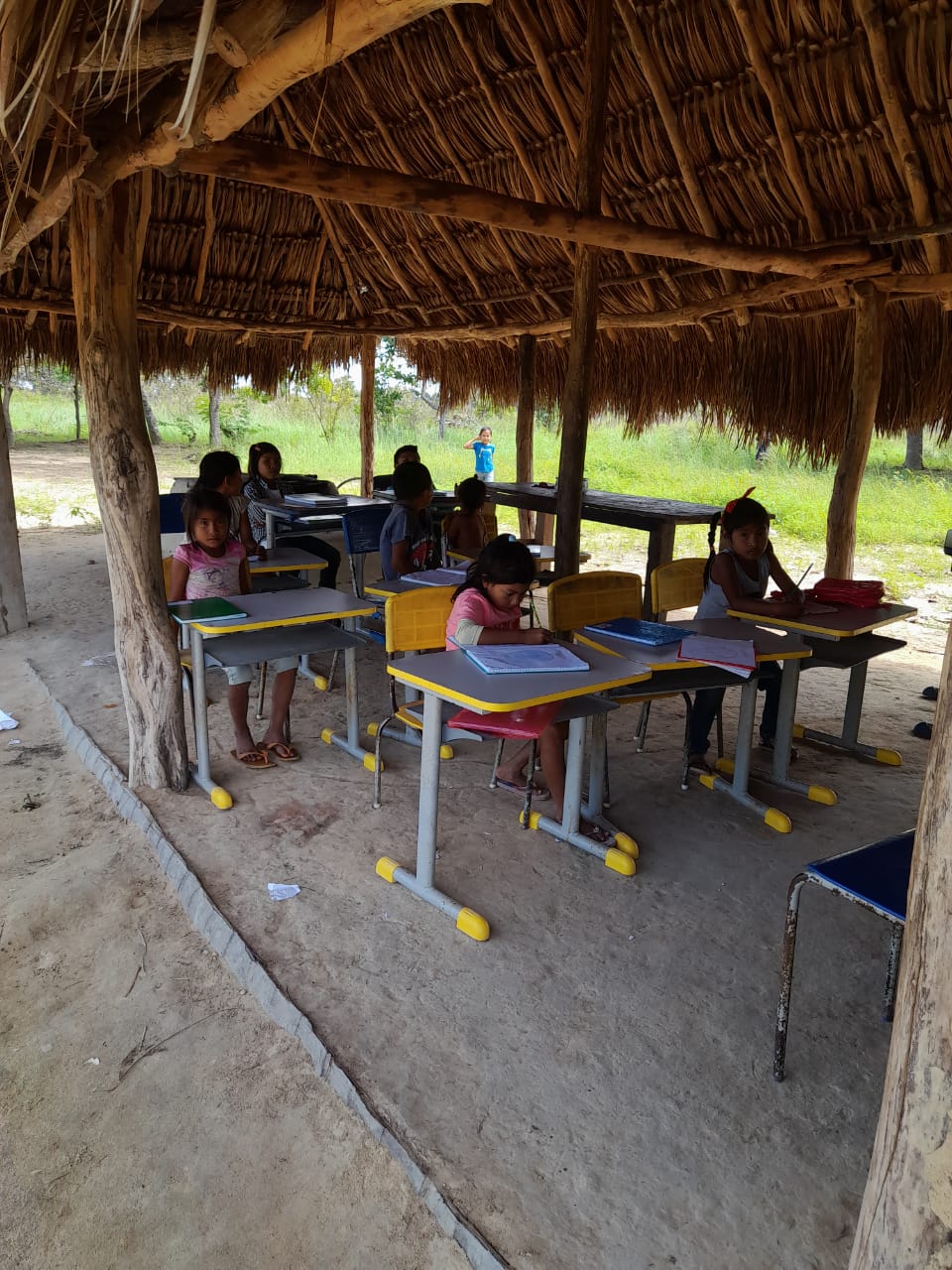
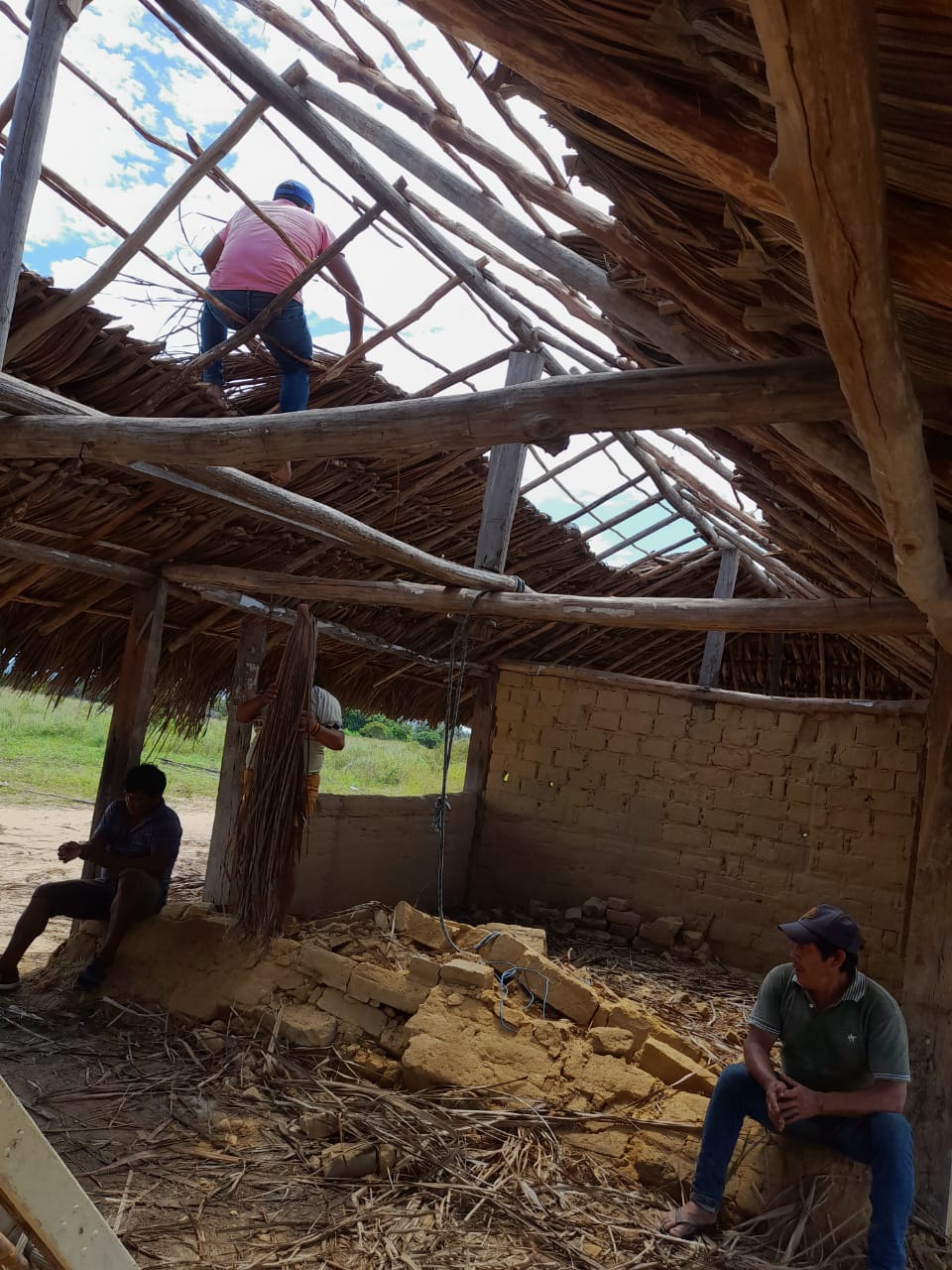
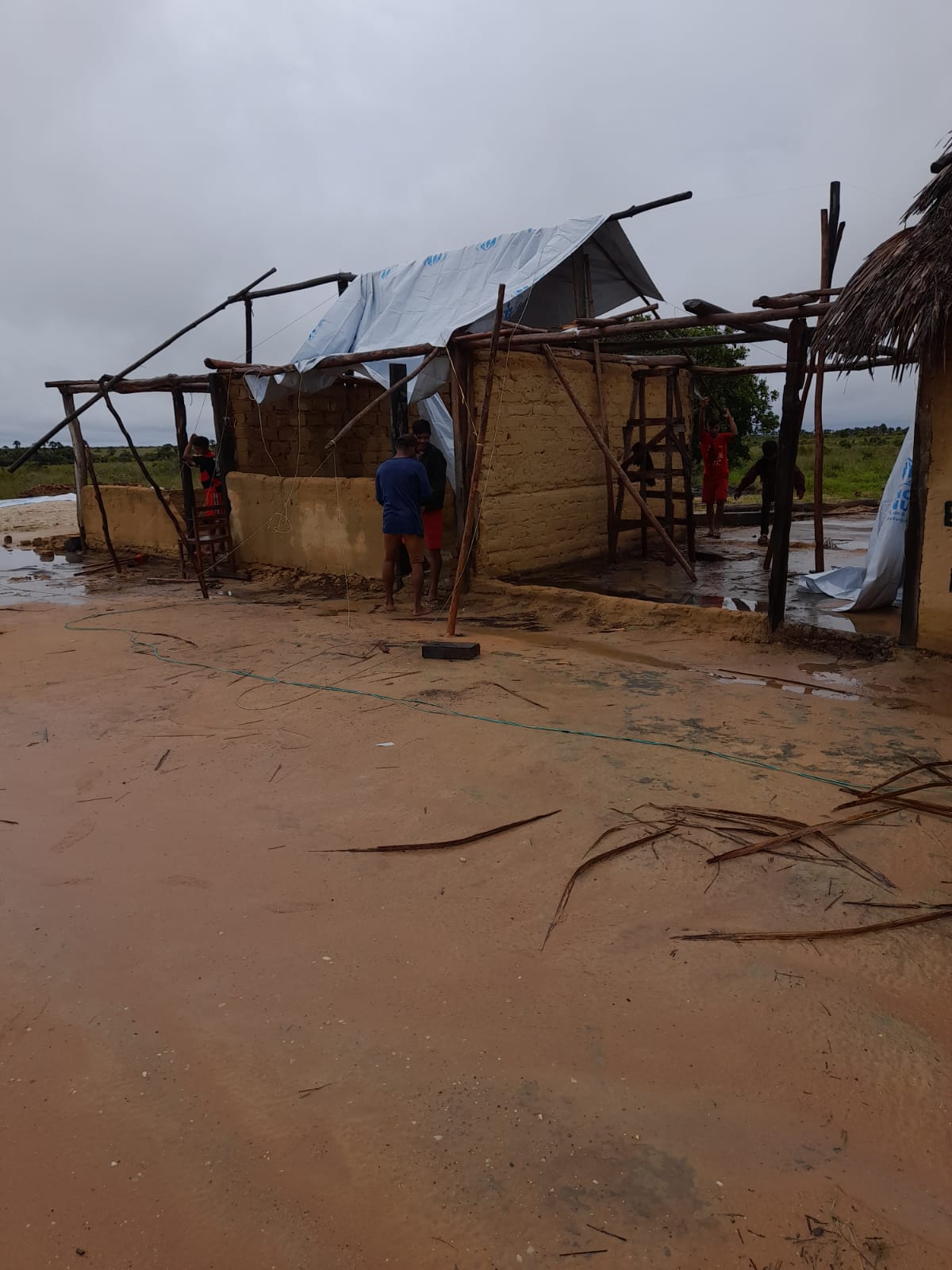
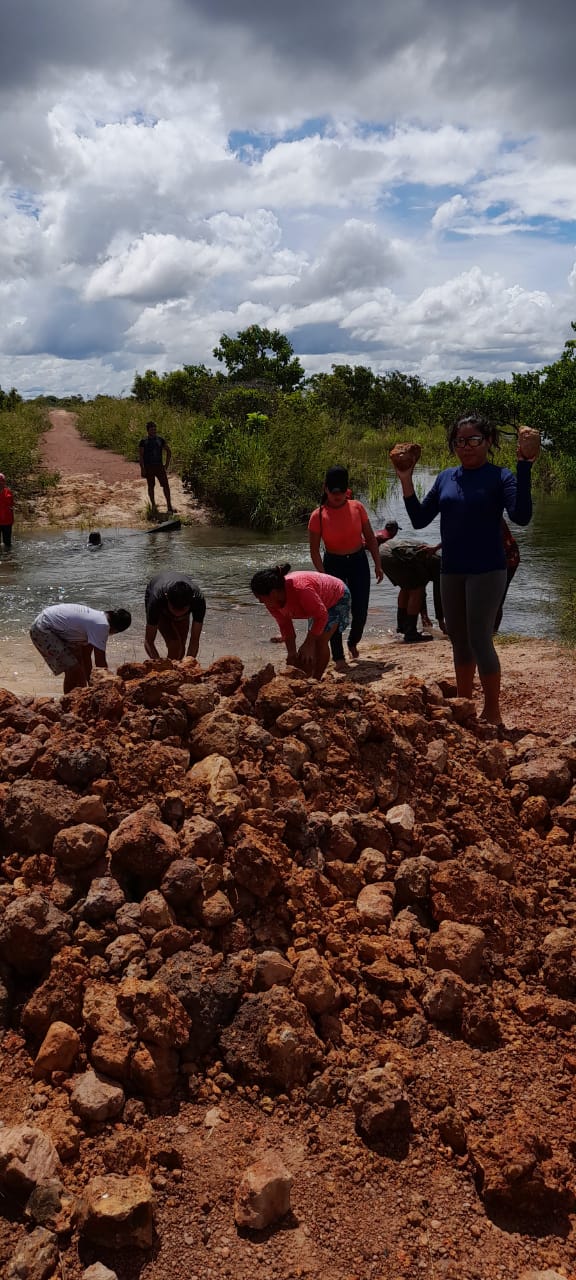
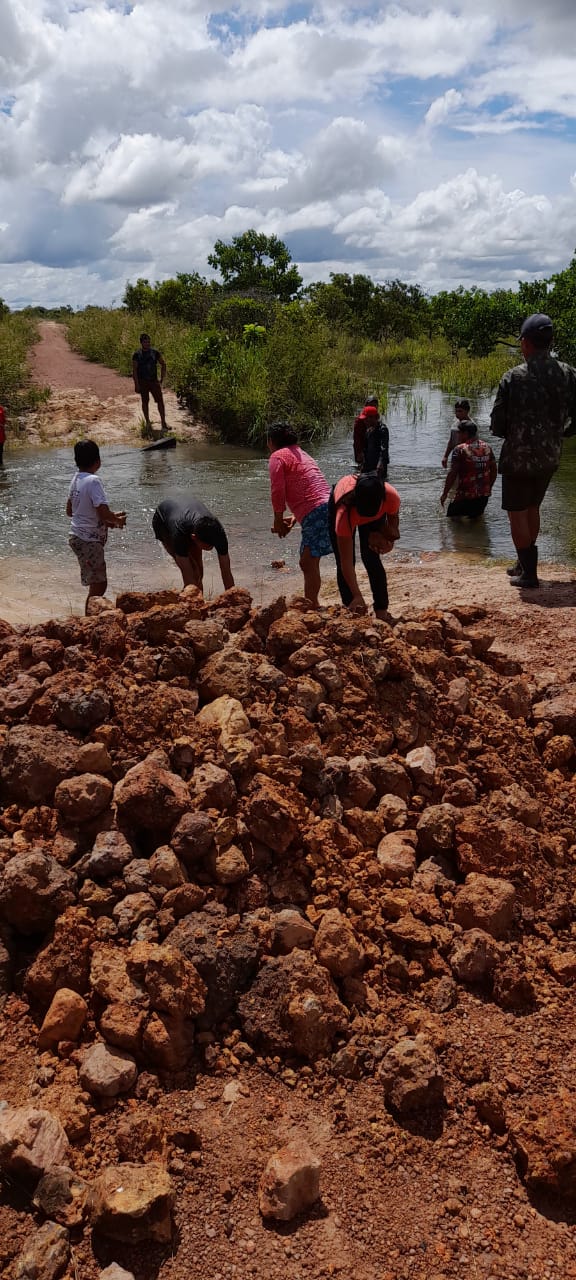
The tuxaua Nelino Galé, recorded the situation of the school and the access to his community. In addition to building the school itself, residents have also tried to improve access to the community by placing stones so that vehicles do not get stuck in the passage through the creek and thus help students from neighboring communities. However, even in the face of so many efforts, this has not been enough and therefore demands an urgent solution.
"Our situation is very difficult, we have the state and municipal schools in the same place. There are several improvised places where teachers are teaching, whether from the state or the municipality. Where is the resource destined for the construction of schools?" questioned tuxaua Nelino.
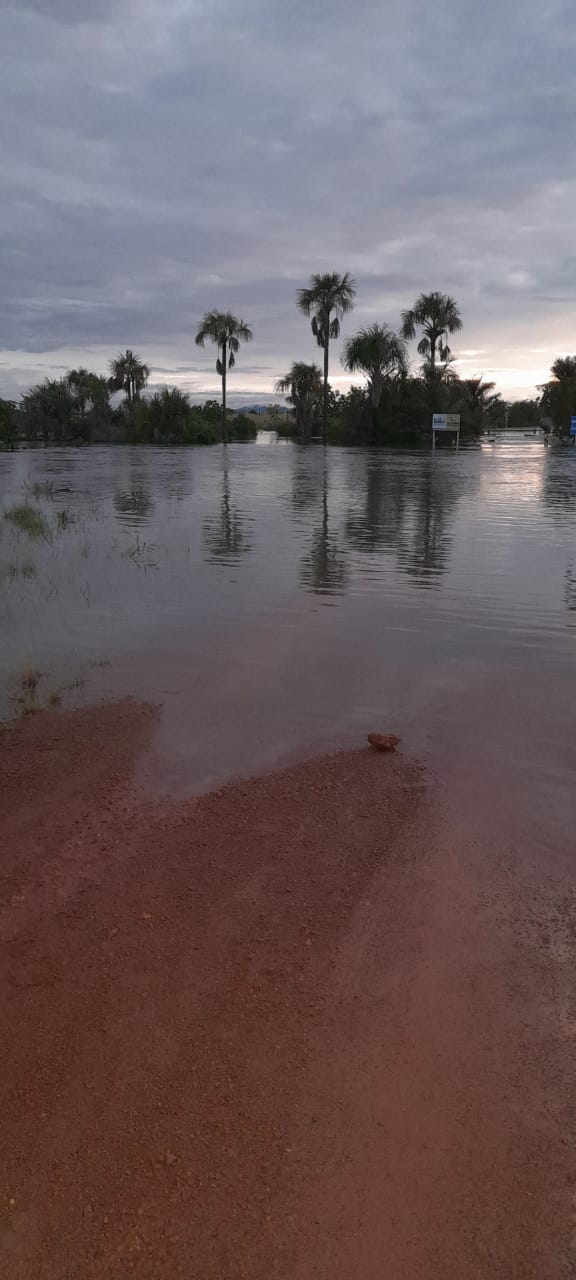
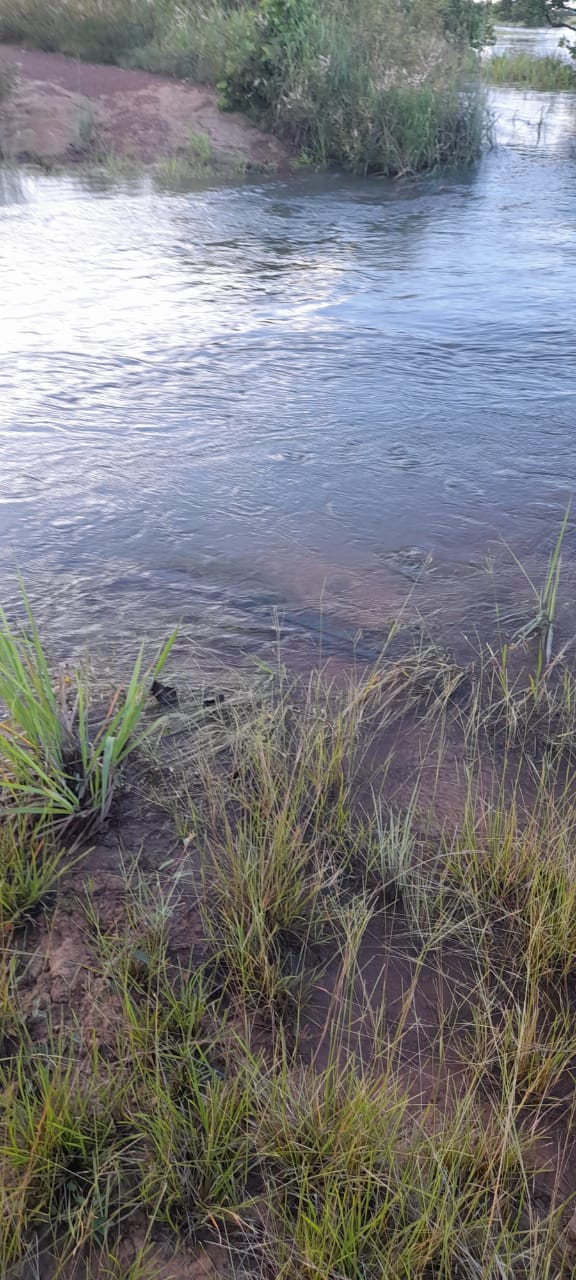
A teacher since 1993, Telmo Ribeiro, from the Macuxi people, and a reference in indigenous education, said that the situation of this school is the lack of commitment of the public power. "In the same way there are dozens and dozens of schools that go through this situation. But in the media, the state public manager says that education is a priority, it is of quality, the facts show that it is not so," he declared.
In the midst of the neglect of indigenous school education, the parents of students get together and build small houses so that the teacher can perform his or her function. "In all these years we have shown resistance to this neglect of our children and everything here wants to be good for the good of the children resists and we are facing the challenge. As long as there is hope, there will be resistance", concluded the teacher.
The Arlindo Gastão de Medeiros Indigenous State School serves 49 students from the 6th grade of elementary and high school. The Damásio José Raimundo Indigenous Municipal School also serves 49 students from the 1st to the 5th grade. Both need urgent measures so that children and adolescents can continue studying in formal education and have their right to education, dignity and citizenship respected.