
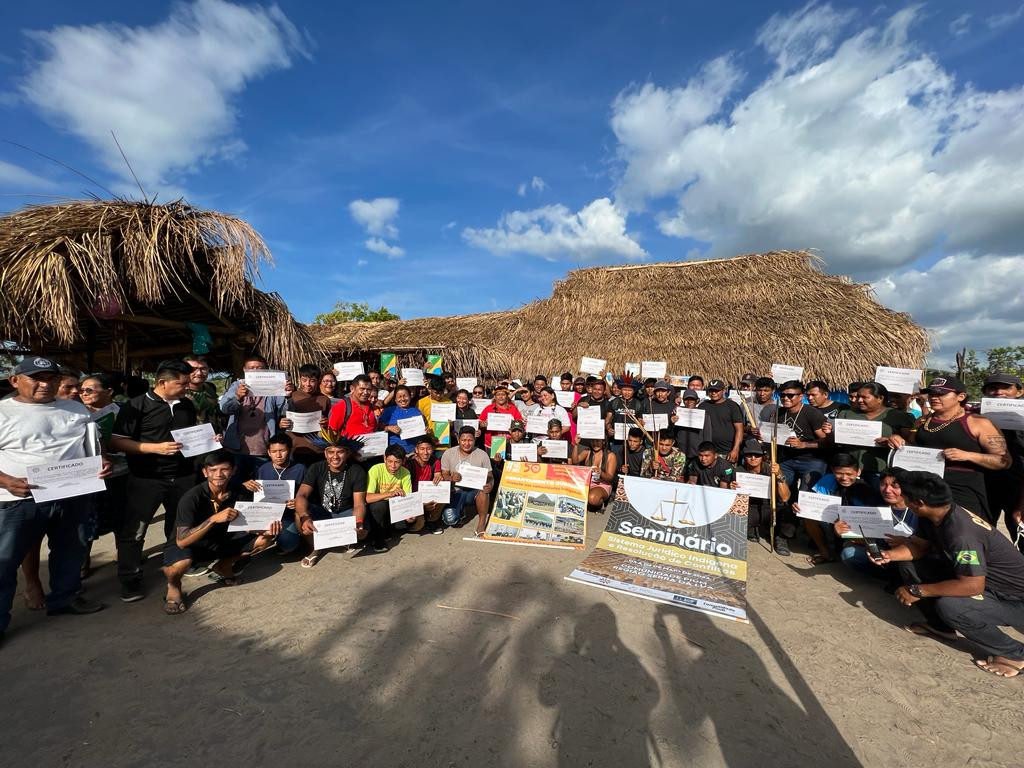
Indigenous legal systems are traditional methods of conflict resolution that indigenous communities exercise and practice within their territory, and have been increasingly discussed by leaders seeking to strengthen the social organization of their communities through these mechanisms guaranteed in the Brazilian Constitution.
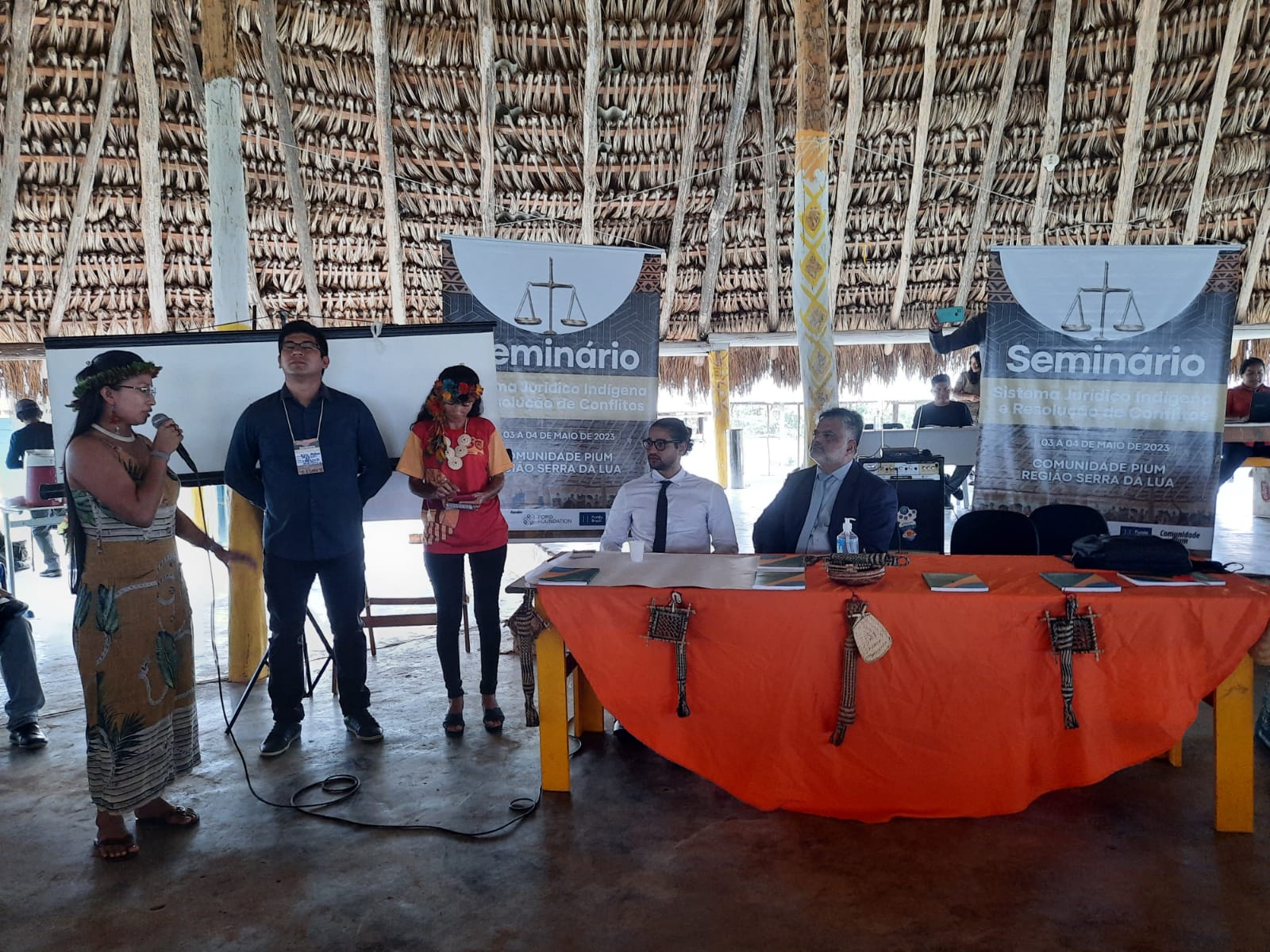
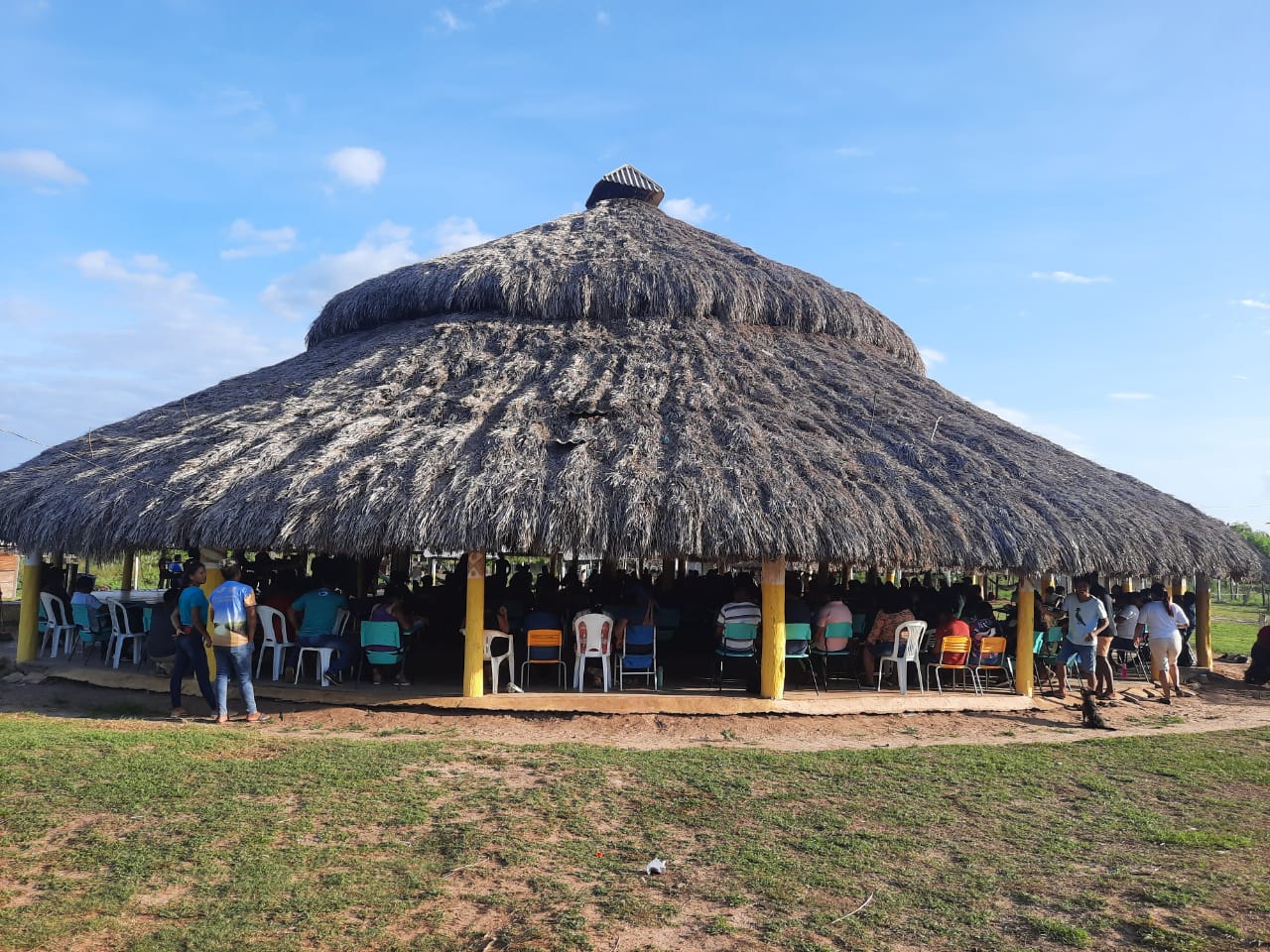
To provide more information, knowledge, and exchange of experiences, the legal department of the Indigenous Council of Roraima (CIR) held a seminar on "Indigenous legal system and conflict resolution" on the 3rd and 4th of this month in the Pium community, within the Manoá-Pium Indigenous Territory.
The event was attended by over 100 participants, including indigenous leaders, legal professionals, and the Indigenous Territorial Protection and Surveillance Group (GPVTI). It also included regional representatives from Amajarí, Serras, Surumú, Murupú, Serra da Lua, Baixo Cotingo, Raposa, Tabaio, Alto Caumé, students from the Raposa Serra do Sol Indigenous Training and Culture Center (CIFCRSS), and São Marcos.
Junior Nicacio, legal advisor and coordinator of the CIR Legal Department, from the Wapichana people, emphasized that the meeting was for the exchange of experiences with various peoples, mainly regarding internal experiences within their communities, how they resolve conflicts, mediate and reconcile, and how they envision the future of their communities based on these cultural practices, which are the regulations or whatever other name they (the community) give to this system. And to guarantee a system that strengthens the autonomy of the indigenous community.
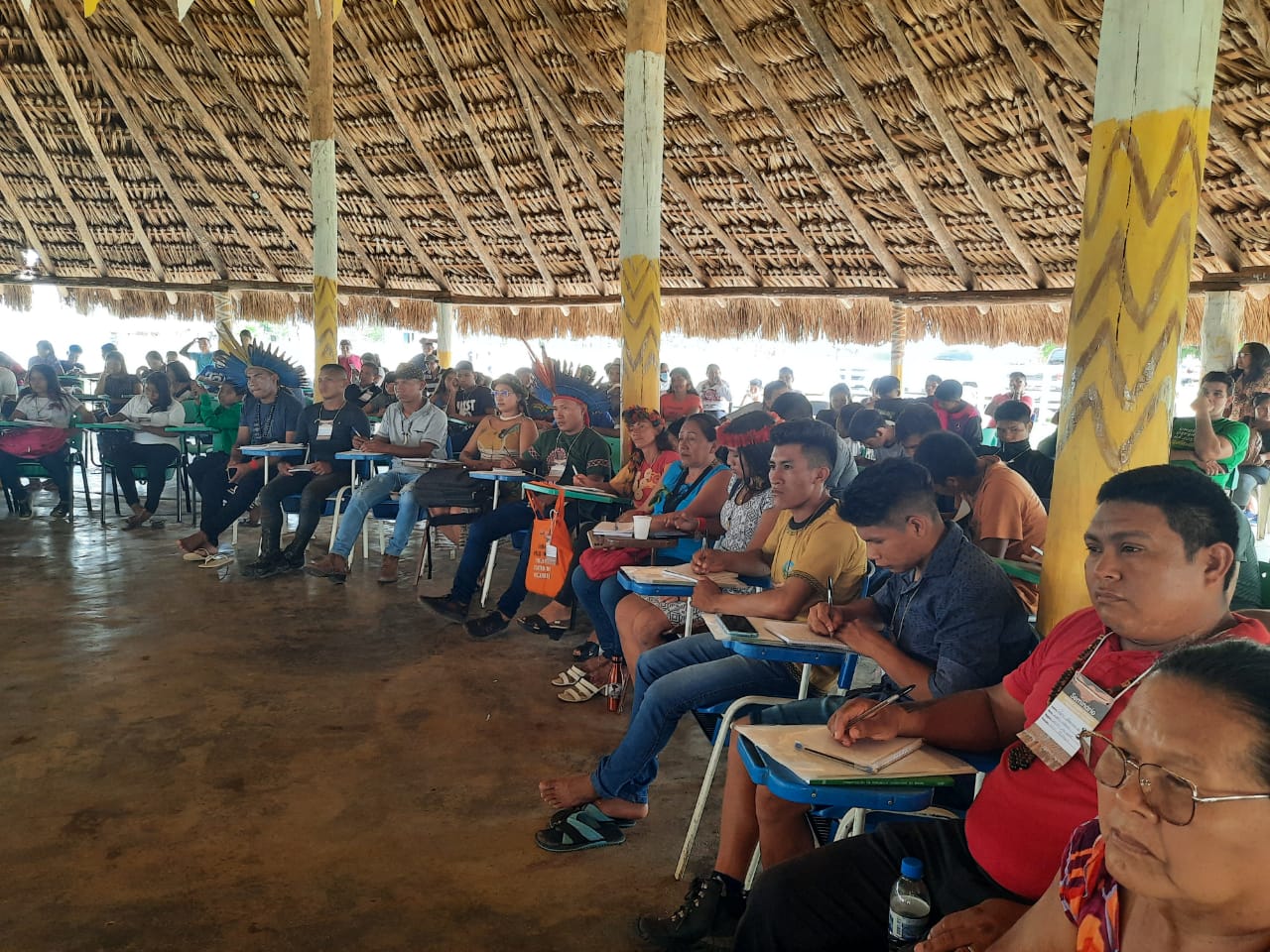
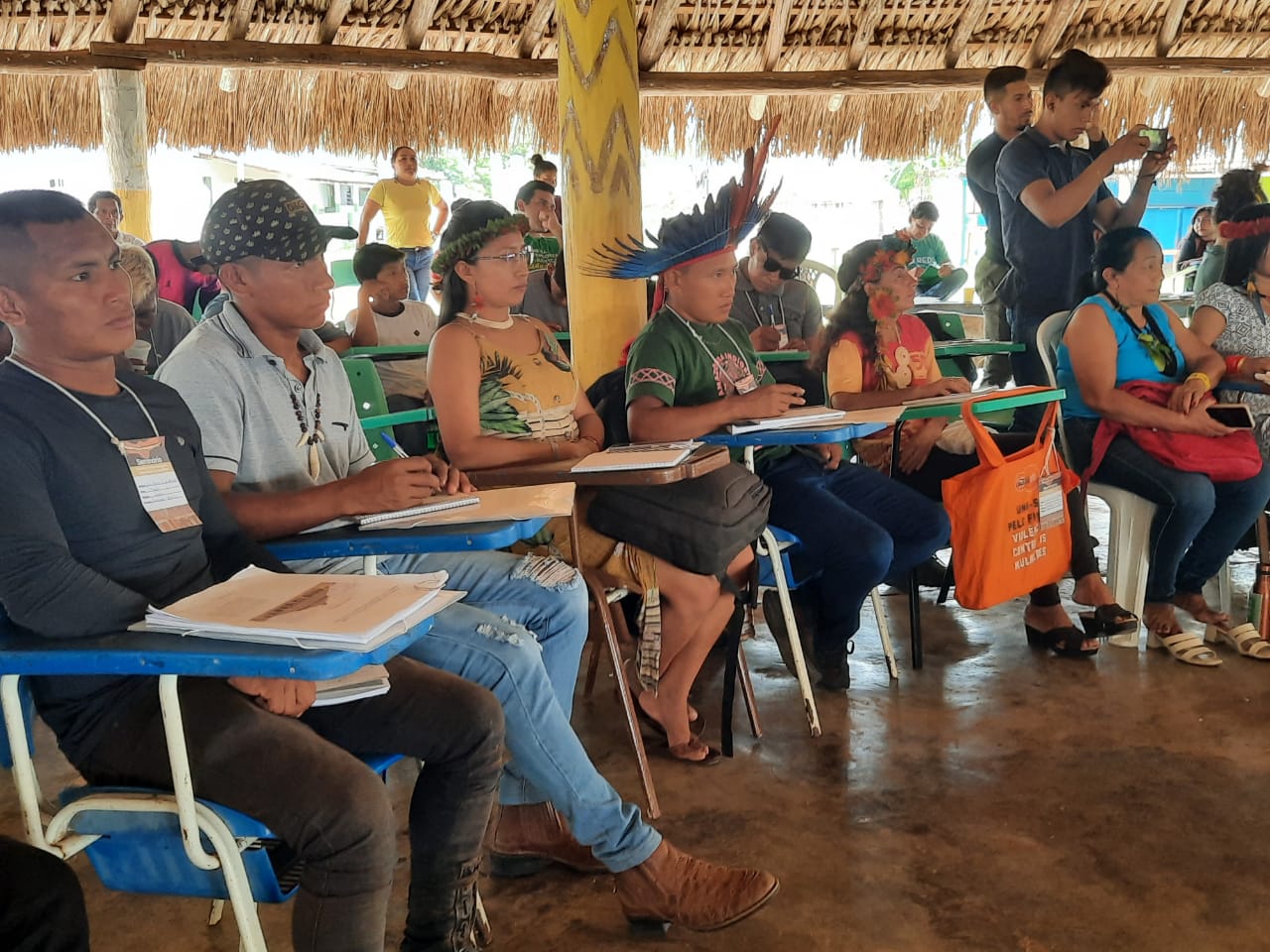
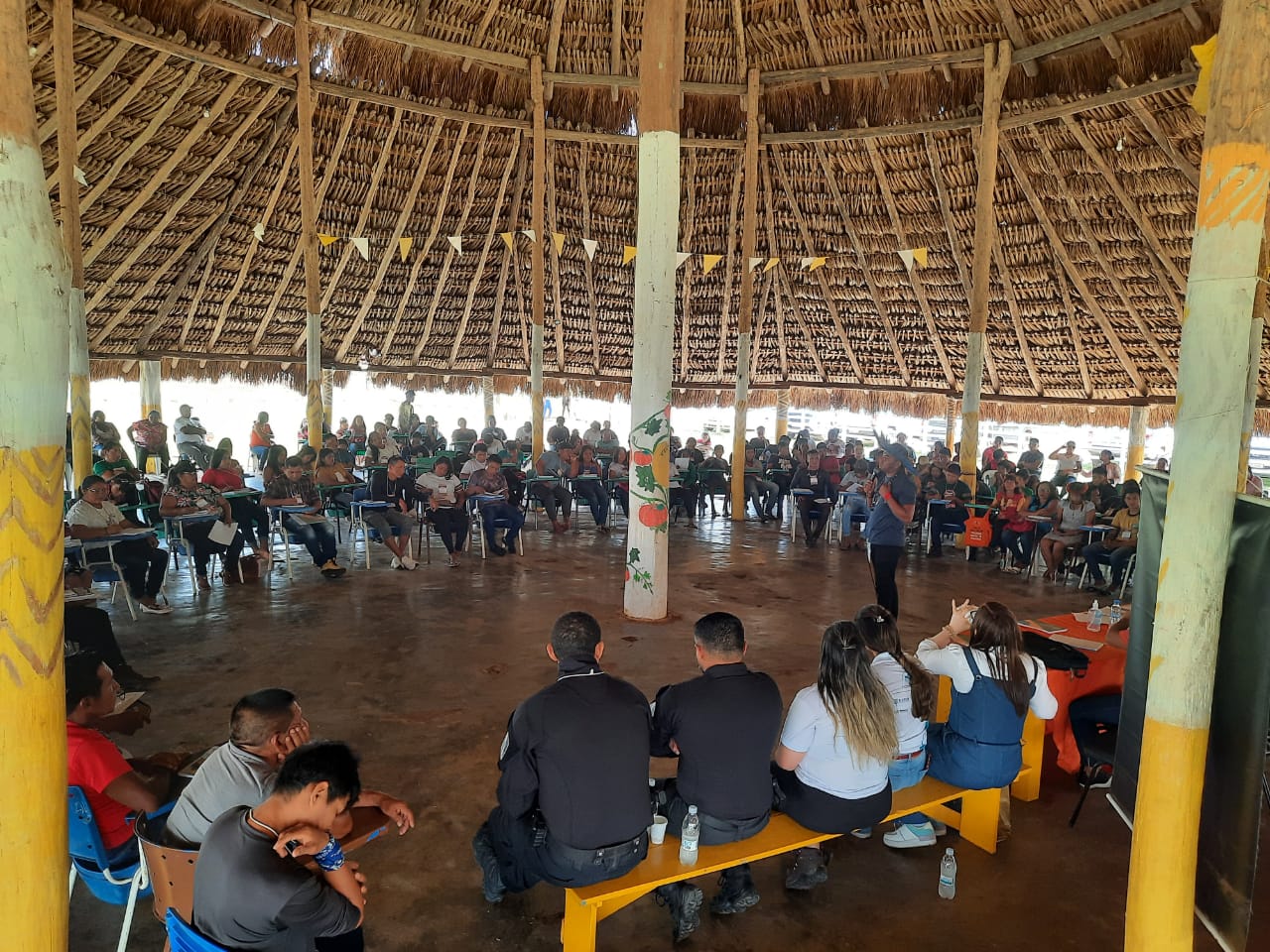
The event was attended by over 100 participants, including indigenous leaders, legal professionals, and the Indigenous Territorial Protection and Surveillance Group (GPVTI).
“The topic deals with conflict resolution, a traditional practice that communities develop in their territories. It is one of the main foundations of indigenous law, which is the indigenous legal system, encompassing the right to identity, autonomy, and land, guaranteed by the 1988 Federal Constitution, as well as various international instruments. Over the years, communities have been improving, now with the codification of normative texts, which were previously practiced orally, that is, passed down from generation to generation. Some communities have begun to write their own norms, adapting them to the reality of each community. We have cases where communities have applied their norms and the judiciary has recognized these cultural practices in the communities,” Junior highlighted.
On the first day, topics such as the following were discussed: Experiences in resolving internal conflicts, with indigenous leader Lázaro Wapichana, from the Pium community, and Mara Teixeira Macuxi, from the Pedra Preta community in the Serras region, sharing their experiences on conflict resolution. The role and function of the Public Prosecutor's Office and the Public Defender's Office were also addressed, with public defenders Dr. Natanael Ferreira and Dr. Edmar Alves, from the Bonfim district. Ilana Dominice, from the Social Office of the National Council of Justice (CNJ), explained the role and functions of the office. The prison system and the indigenous issue were also discussed. Finally, Leia Ramos Macuxi, a doctoral candidate at the University of Brasília (UNB) who studies indigenous people in the Roraima prison system, shared her academic experience on the issue of indigenous people in the prison system.
According to the Deputy Public Defender of the State Public Defender's Office (DPE), Natanael Ferreira, the legal system consolidates the culture and internal values of indigenous communities. “The importance of this lies in consolidating the culture, customs, and internal values of the community when it itself begins to manage these conflicts. Therefore, it is very important that the solution is reached according to the values of understanding and the extent of the conflicts. And nothing is better than the indigenous people themselves understanding these conflicts,” said Natanael, thanking the organizers for their participation in the event and offering the agency's support to assist and consolidate human rights.
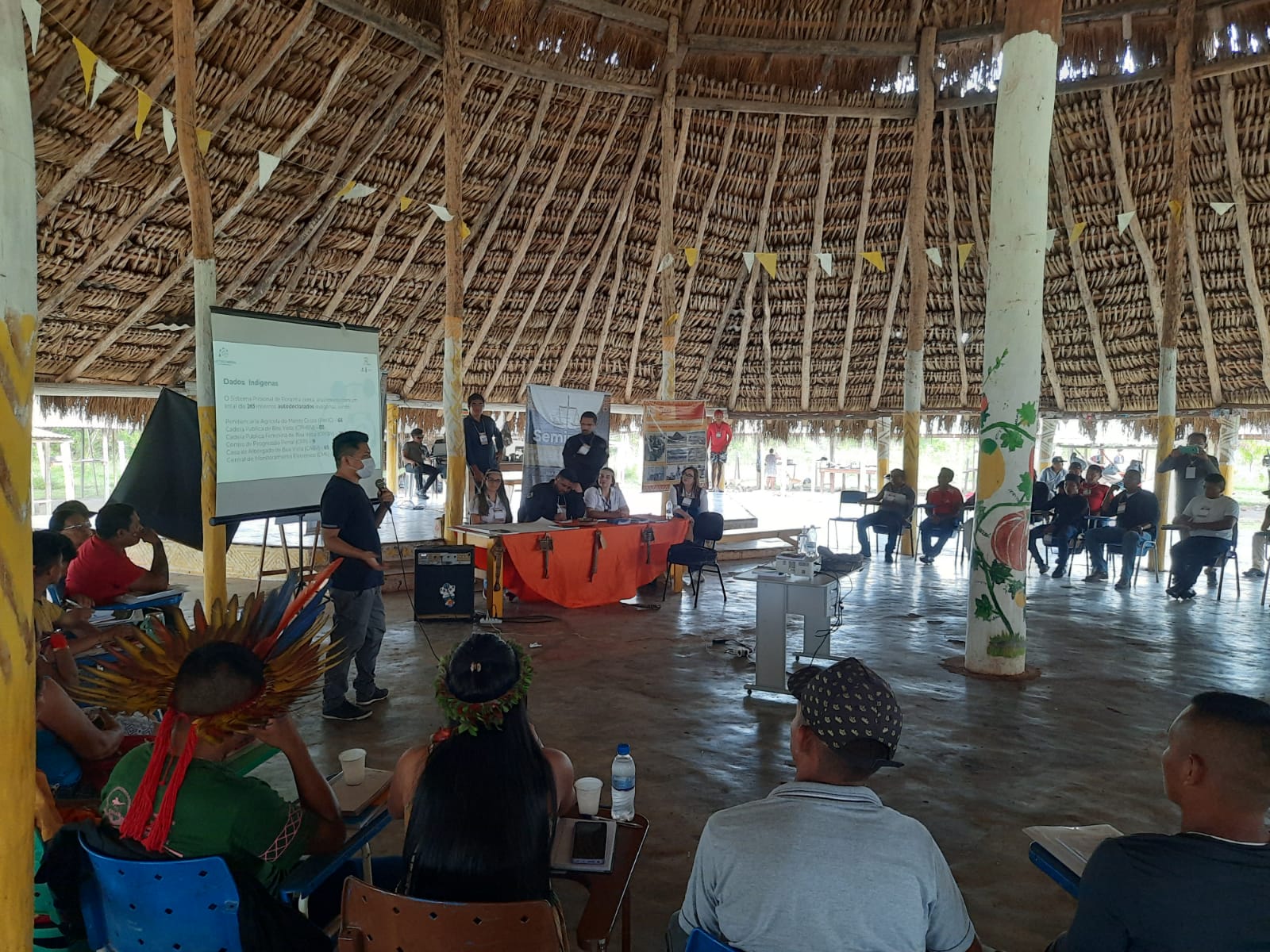
As one of the instruments for strengthening the community, the Internal Regulations were approved and the Leadership Council was created. The council is made up of traditional leaders including women, facilitators, teachers, elders, watchmen, and young people who comprise the administrative body. Its mission is to resolve internal issues and refer cases to the assembly, after which the community makes the final decision.
Lázaro Wapichana, chief of the Pium community, has been the vice-coordinator of the Serra da Lua region for three years and four months. The internal regulations have been helping the community, not only in terms of internal conflicts, but also in addressing domestic violence, which is the most frequent issue. “The internal regulations were created to help the community, to help us chiefs, and to guide what needs to be done within the community. These relatives often don't serve long sentences. The less serious ones are one to five months. The most serious ones are 30 years or more, which they serve here. There's a process for everything. They have a daily attendance list. If they fail to comply, we increase their sentence. For the most serious crimes, we refer them to the justice system, but they serve their sentences within the community.”
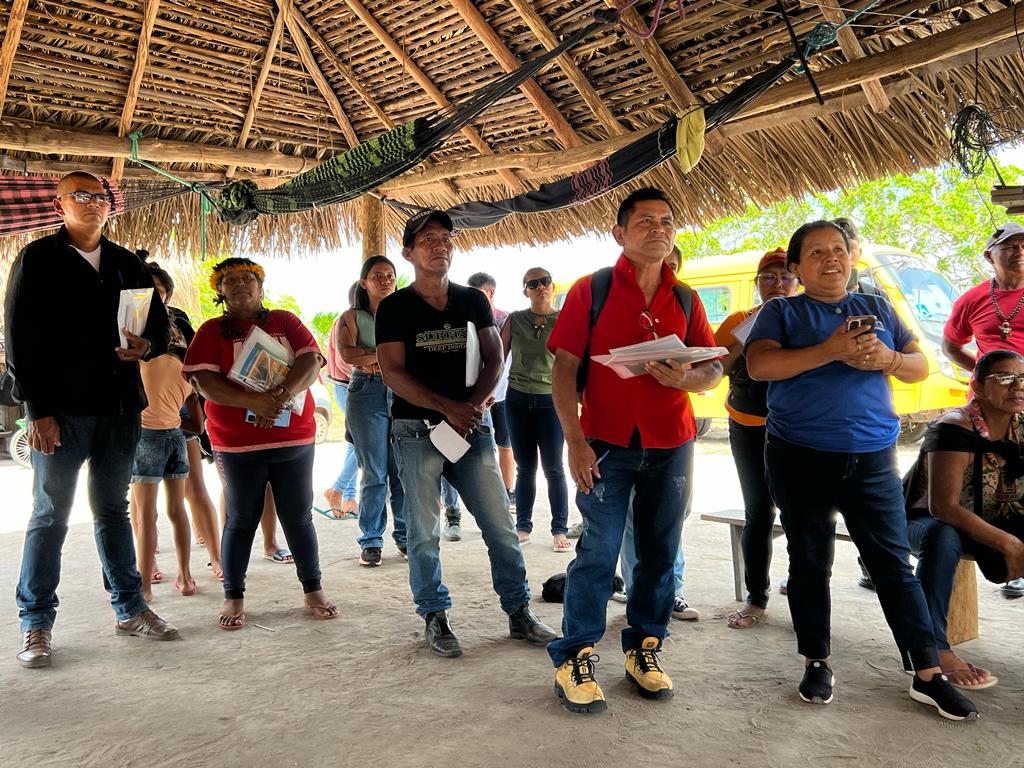
On the final day, participants discussed self-determination and Indigenous laws: regulations, protocols and cultural customs, Brazilian legislation and international instruments, and the protection of Indigenous institutions, learning about the Brazilian penal system, provided by the CIR's legal advisors.
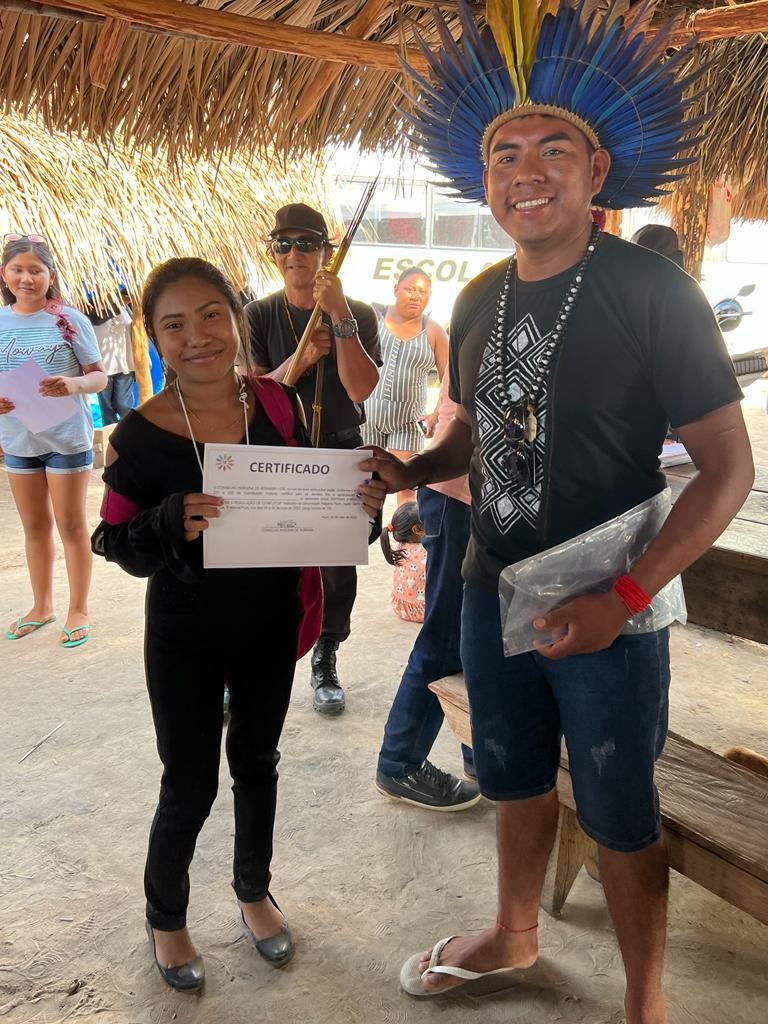
As part of a methodology for understanding the local reality, a visit was made to the community center for conflict resolution and to the area of reclaiming ancestral territory. The seminar concluded with the awarding of certificates.