
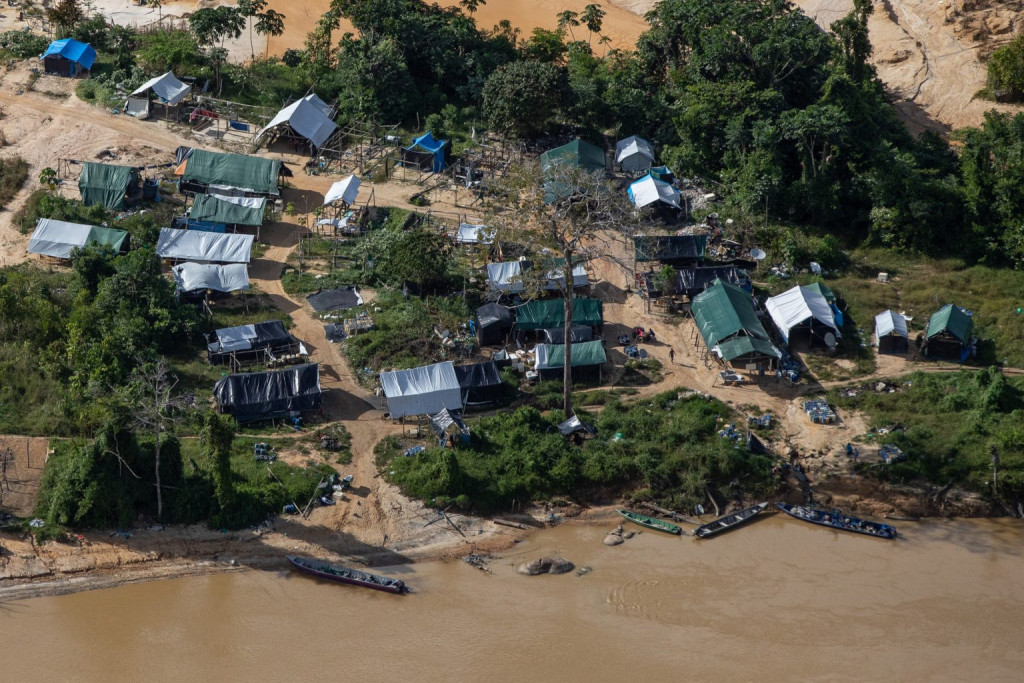
The Hutukara Yanomami Association launched this Monday (11), a new report with the theme: "Yanomami Under Attack: Illegal mining in the Yanomami Indigenous Land and proposals to combat it". An overview of the advance of mining destruction in the largest indigenous land in the country.
The document highlights that mining grew 46% in 2021 in Yanomami Land. More than half of the Yanomami (56%) are directly impacted by mining. With the growth of malaria cases in the regions affected by mining, they exploded from 2017 onwards. Reports indicate that miners are exploiting indigenous women and children, the document points out.
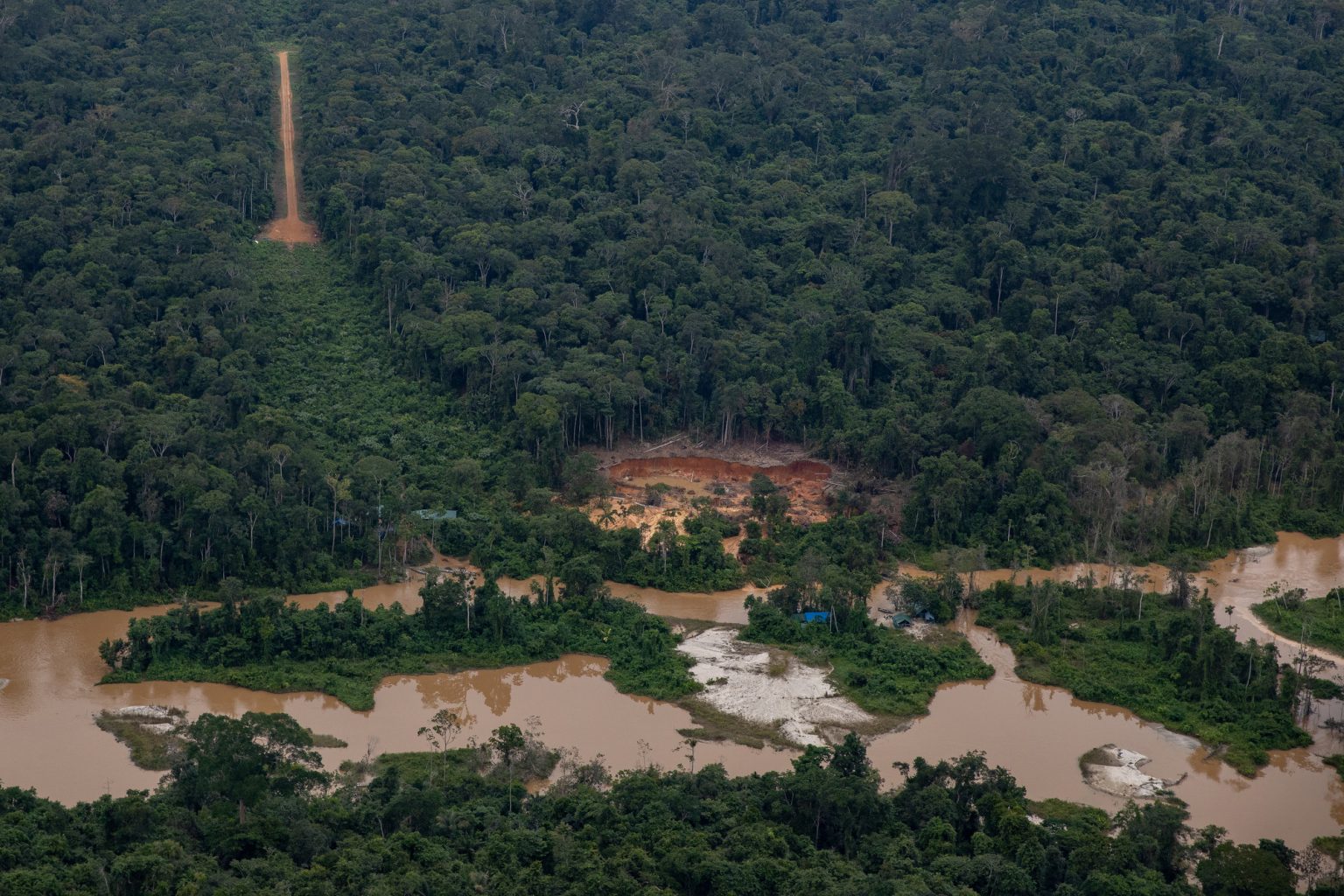
With an area equivalent to the country of Portugal, distributed between the states of Roraima and Amazonas, the Yanomami Land completes 30 years of demarcation on May 25, 2022. At the time of the decree, the territory was taken over by illegal mining.
Today, the executioners remain the same. However, with a much greater power of destruction. "The attack on the peoples of the Yanomami Indigenous Land already occurred in the 1980s, with the invasion of more than 40 thousand miners. Today, in 2022, history repeats itself. This is very serious," warns Dario Kopenawa, vice president of Hutukara.
Due mainly to the increase in the price of gold on the international market and the government's support for illegal activity, mining advances rapidly, bringing deforestation, disease and death wherever it goes within the Yanomami Indigenous Land.
The document denounces several attacks by criminals against indigenous communities and provides a complete chronology of the harassment of the Palimiu community in 2021. A region where there is a strong presence of the faction group, the first Capital Command (PCC).
According to data extracted from the report, in 2021 alone, illegal mining advanced 46% compared to 2020. Last year, a 30% jump had already been recorded compared to the previous period. From 2016 to 2020, mining in the TIY grew by no less than 3,350%, according to the Hutukara study.
Also according to the document, the number of communities directly affected by illegal mining totals 273, covering more than 16 thousand people, that is, 56% of the total population. There are more than 350 indigenous communities in the Indigenous Land, with a population of approximately 29 thousand people.
"The illegal extraction of gold [and cassiterite] in Yanomami territory has brought an explosion in cases of malaria and other infectious diseases, with serious consequences for the health and economy of families, and a frightening resurgence of violence against indigenous people," says Hutukara.
In fact, as the report shows, malaria has exploded in areas with strong mining activity, such as in the regions of Uraricoera, Palimiu, and Waikás. In Palimiu, in 2020, there were more than 1,800 cases.
"It is noteworthy that the total population of Palimiu in the same year was just over 900 people, that is, the data point to an average of almost two malaria [contaminations] per person," the text points out.
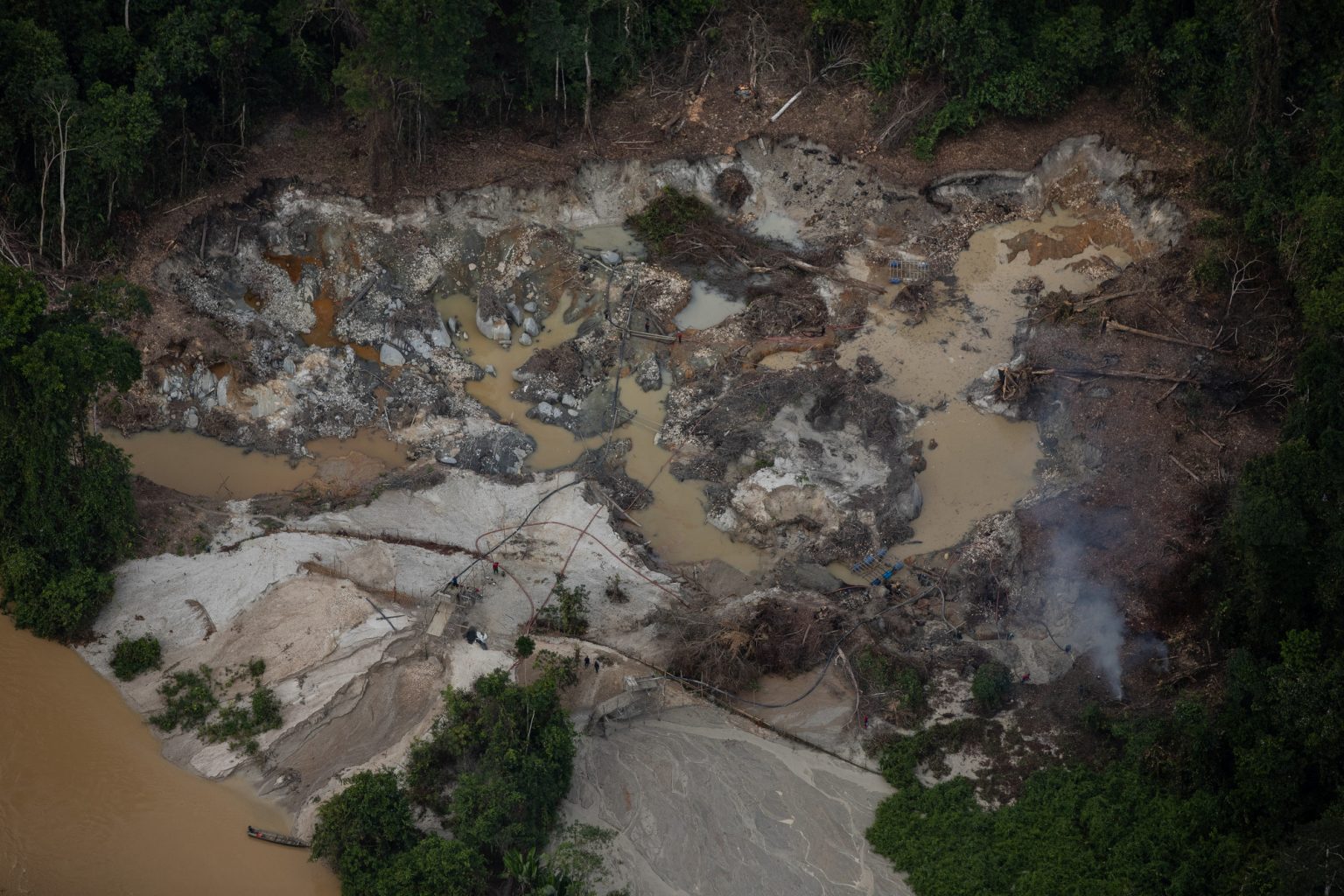
At the beginning of the monitoring, in October 2018, the total area destroyed by mining totaled just over 1,200 hectares, with most of it concentrated in the Uraricoera and Mucajaí rivers.
Since then, the impacted area has more than doubled, reaching a total of 3,272 hectares in December 2021.
The growth was accentuated mainly from the second half of 2020, coinciding dangerously with the resurgence of the Covid-19 pandemic. In 2021 alone, there was an increase of more than a thousand hectares.
According to the document, of the 37 health centers in the Indigenous Land, 18 have a record of deforestation related to mining.
A recent photo, taken by the vice president of Hutukara, of the structure of the Basic Indigenous Health Unit (UBSI) of Homoxi being swallowed by a crater caused by mining, generated great repercussions in the press and social media.
Aerial records made by Hutukara for the report, at the end of January 2022, also show the increasing proximity of mining to indigenous communities. In addition to immense scars in the forest, pollution of rivers and the flagrant of aircraft, helicopters and other equipment of very high value used in illegal activity.
"The government needs to evaluate its actions, as many operations to combat mining have not had any effects. This document shows the reality we are living and its consequences, of great violence and vulnerability. My people are suffering. We ask for the support of the population to join our cry for help for the immediate removal of miners from our territory," said Dario Kopenawa.
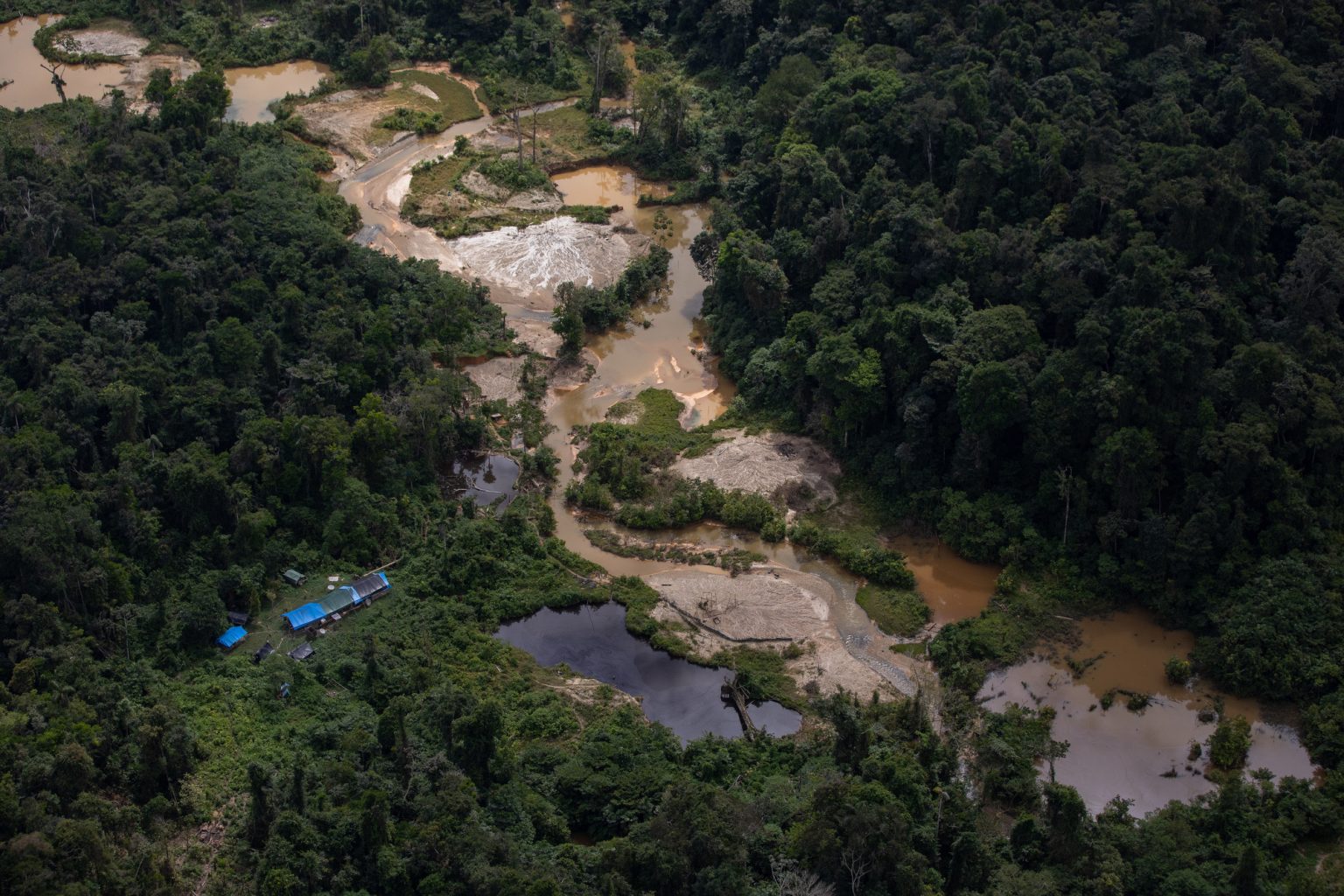
The document ends with a series of recommendations to the Government and highlights that mining is not an unsolvable problem. But it requires political will to ensure efficient and coordinated action by the State and the articulation between the responsible agencies and agents.
Main factors for the jump in illegal mining in Yanomami Land
- Increase in the price of gold in the international market.
- Lack of transparency in the gold production chain and regulatory failures that allow fraud in the declaration of origin of illegally mined metal.
- Weakening of environmental policies and protection of the rights of indigenous peoples and, consequently, of the regular and coordinated inspection of illicit activity in Indigenous Lands.
- Worsening of the economic crisis and unemployment in the country, producing a mass of cheap labor to be exploited in conditions of high precariousness and dangerousness.
- Technical and organizational innovations that allow illegal mining structures to communicate and move around much more quickly.
- The current government's policy of insistent encouragement and support for the activity despite its illegal nature, thus producing the expectation of regularization of the practice.
Reports
The report also brings impressive accounts of the violence suffered by women and children by miners. According to the testimonies, collected by indigenous researchers, miners would be sexually abusing them after getting people from the harassed communities drunk.
Read excerpts from the report recorded by one of the indigenous researchers:
"After the Yanomami ask for food, the miners always counter. (...) 'You don't ask for our food for nothing! Of course you didn't bring your daughter! Only after lying down with your daughter will I give you food!'
"If you have a daughter and give her to me, I'll land a large amount of food that you'll eat! You'll feed yourself!"
The [miners] say: 'This girl here. This daughter of yours who is here, is very beautiful!'. Then the Yanomami answer: 'It's my daughter!'. When they talk like that, the miners grope the girls. Only after groping do they give them some food.
"The miners have a relationship only with the women who drank cachaça. The miners cannot do it with the women who did not drink cachaça."
In the view of most indigenous women, the report states, the miners represent a terrible threat. They are violent, producing a climate of terror and permanent anguish in the villages.
This is how an indigenous researcher records from an interview with another Yanomami woman:
"When people said they were approaching, I was afraid. That's why, since I hear about the miners, I live with anguish.
In fact, people now think: 'After the gold miners ruined women's vaginas, they made them sick.' That's why women are now dying, because of the lethality of this disease. So much so that, in 2020, three girls, who were only around 13 years old, died.
They were young, having only had their first period. After the miners caused the death of these girls, the Yanomami protested against the miners, who moved away a little. The leaders told them that being so close, they behave very badly."
Residents of the Apiaú River region told Hutukara that a miner who works in the region offered drugs and drinks to the indigenous people and, when everyone was already drunk and inert, raped one of the children in the community.
In another complaint, an arranged "marriage" of a Yanomami teenager with a miner is narrated through the promise of payment of goods, which was never fulfilled.