
Uncontrolled growth of illegal mining in the midst of Covid-19 threatens the lives of the peoples of two territories considered one of the largest in Brazil.
Illegal mining within the Indigenous Lands of Roraima is a "virus" that only proliferates, causing harmful consequences to the indigenous people and the environment. The advance of this mining activity with each passing day brings great impacts to those who live nearby and are directly affected. As if the diseases were not enough, today the contamination of rivers and streams by the excessive use of mercury is killing the indigenous population. In addition to the total destruction of the forest.
In the midst of the Covid-19 pandemic, invasion and devastation have practically doubled. The Hutukara Yanomami Association (HAY), in a recently published note, "until September 2021, the accumulated area of forest destroyed by illegal mining in the Yanomami Indigenous Land exceeded the mark of 3 thousand hectares, an increase of 44% compared to December 2020".
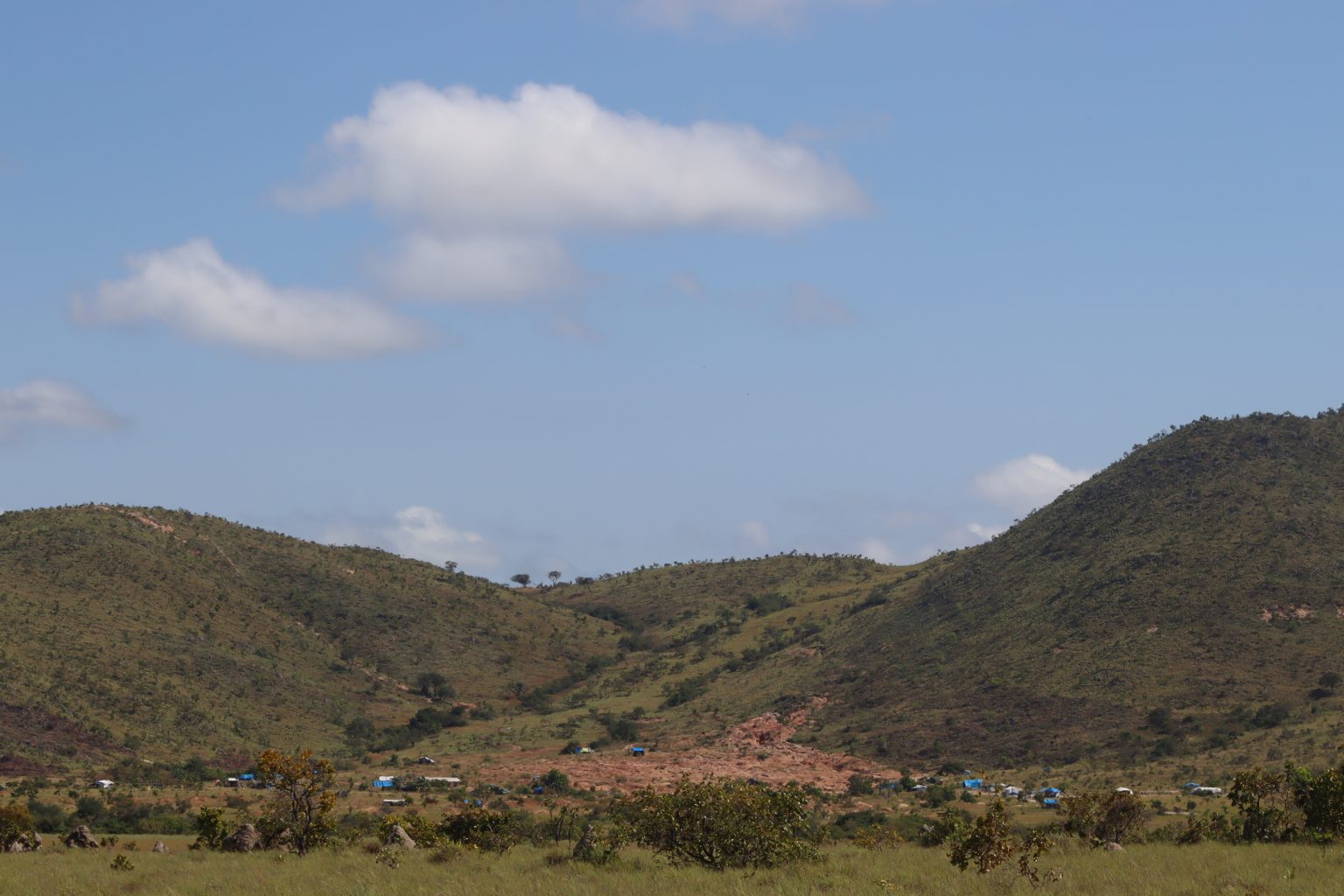
Garimpo T.I Raposa Serra Dol Sol
The gold rush is consuming the forests within the Yanomami Indigenous Land. Before, what was seen in the immense Amazon forest were trees, but today, you can see large craters. This invasion is throughout the Yanomami territory, even threatening isolated indigenous people.
On a daily basis, two of the largest Indigenous Lands in Brazil are invaded by several miners. The Yanomami Indigenous Land, for example, in the north of Roraima, which has a total area of 9,419,108 hectares, is the most affected by this illegal activity. The Raposa Serra do Sol Indigenous Land, located in the Northeast region of the state, with an area of 1,743,089 hectares, is another region that is impacted by the invasion that only expands every day.
Mining gained more strength on February 8, 2021, when the governor of Roraima, Antônio Denarium (PP), approved State Law No. 1,453/2021 in which it legalized mining with the use of mercury. But in September, the Federal Supreme Court (STF) overturned the project. The Supreme Court's decision is considered a victory mainly for indigenous peoples. Because practically, all mines are within indigenous lands.
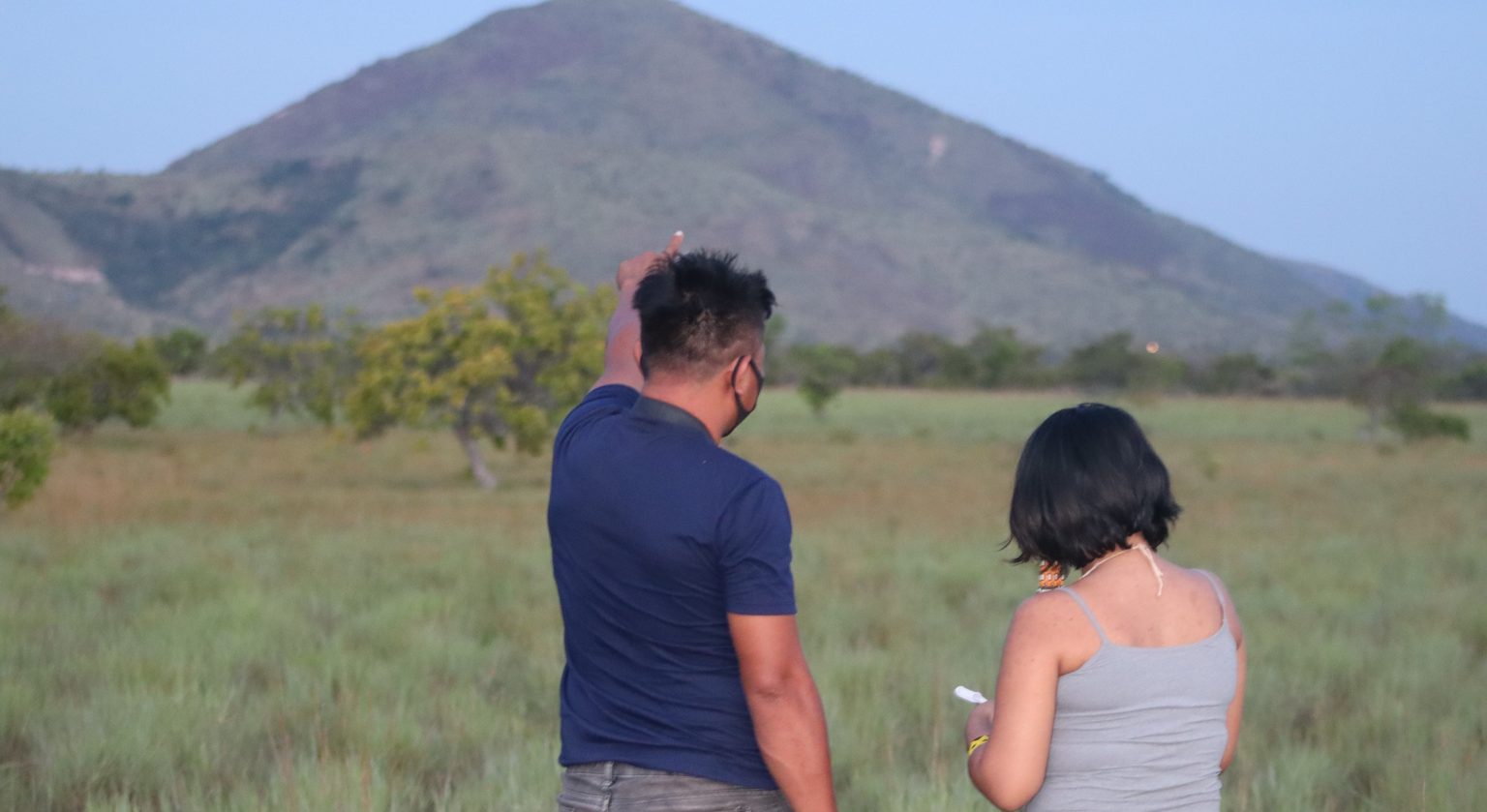
Mining in Raposa
It is notable that illegal mining in indigenous lands did not end the veto of the Bill. Meanwhile, diseases such as malaria, pneumonia and especially the coronavirus, put everyone in danger. Not only the lives of the Yanomami people, but also of the Macuxi people who suffer from illegal mining in the Raposa Serra do Sol Indigenous Land, more precisely in the Raposa region.
Raposa Serra do Sol Indigenous Land
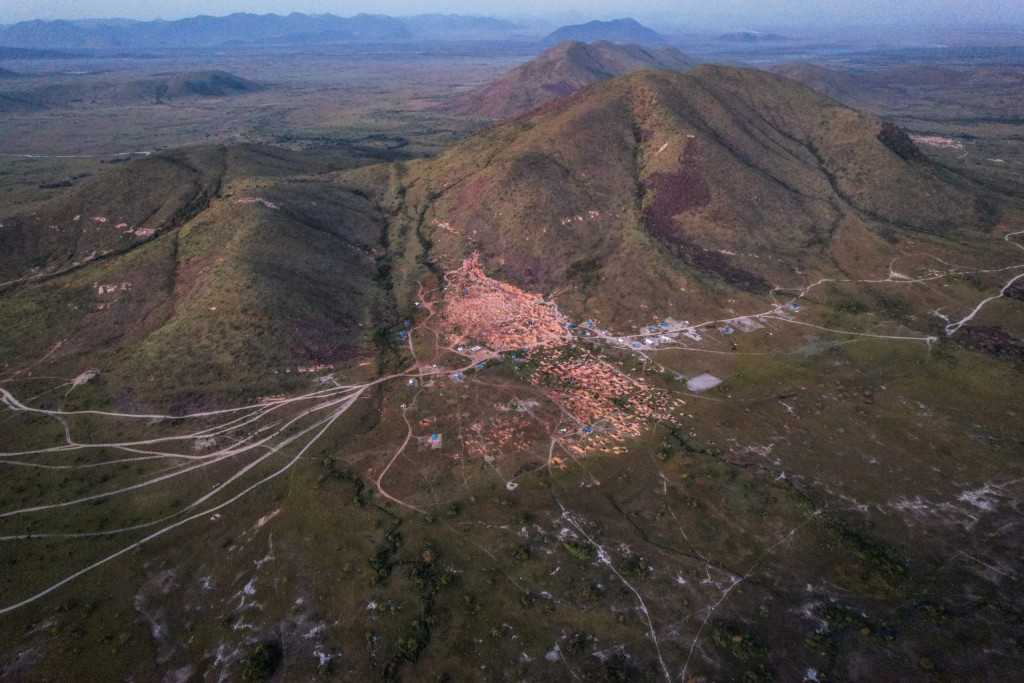
In the Raposa region, in the Municipality of Normandia, mining is concentrated in the vicinity of the Raposa 1 and 2 indigenous communities, in Serra do Atola. There are four mines in the area, with mining names 1, 2, 3 and 4. Residents say there were five, but one was deactivated. On the outskirts, at the foot of the mountain, it is possible to see many shacks that, looking at the captured images, resemble a real favela. People in the region estimate that there are more than 5 thousand miners working from various parts of the state and Brazil.
Because of this proximity, the miners work mainly at night. From the Raposa 2 community, it is possible to notice this performance, cars, motorcycles and trucks throughout the night transport the stones in the "borocas" to the mills. Boroca is the name they give to each bag filled with stones extracted from the mountains.
Residents near the mining site fear for their lives because of death threats, especially indigenous leaders in the region. A resident of the Raposa 2 community who prefers not to be identified, reports that she also fears for the proliferation of diseases, violence, drugs, prostitution and alcoholic beverages.
'I went there to the mine, but I didn't go to work. I went to witness the real situation up close. Things are very ugly there, a lot of destruction, they are destroying the mountains. There is also a lot of contamination. I saw people from different regions working there, including many I know. I went there before the pandemic, I told them about the diseases they could catch in the mines. I talked about Covid-19, which had not yet arrived in Roraima and soon after arrived. So I fear that this will increase again, there were many cases of malaria there. I am afraid that the pandemic will not end as long as this mining is increasing. The community health center sometimes cannot handle the patients who come from mining. Sometimes people there are threatened, the nurse was threatened several times for not providing medical care to them. But it will not only increase diseases, but also many other things such as violence, for example," he commented.
For another resident of the Raposa 2 community, who also prefers not to be identified because he has already suffered several threats, he points out that mining in the region has existed for more than 20 years, however, from 2017 onwards it has intensified. He points out that before the person who discovered the point in the Serra do Atola, worked in an artisanal way. Today the miners break the stones manually or with a hammer. There are still no heavy machines for extracting the rocks from the mountain. But there are the mills, which is where the stones are taken and crushed. He also comments that complaints have already been made so that the competent authorities take the appropriate measures, however, nothing has yet been done. We know that there are businessmen financing mining, especially with the mills.
The Federal Police together with the Army carried out an operation in March 2020 in the Napoleão Community, within the Raposa Serra do Sol Indigenous Land, in the action 1,000 miners were found.
The indigenous leaders of the locality have been constantly threatened since their denunciations made the PF deactivate one of the mines. One of the indigenous leaders in the region, who because of the threats preferred not to be identified, reported that there is always an army presence in the locality. But the miners maintain direct contact with people linked to someone very influential who always knows when they go to the mining site and reported that when the army or Federal Police arrive at the site, they leave only indigenous people in front to say that it is only they who are there and work artisanally.
"They know when there is an operation, there are very rich people behind it, they use some relatives to say that it is artisanal, but when the Army or Federal Police leaves, the non-indigenous people come back and the number of people is increasing, we have already sent several letters to the agencies and mining only increases" concluded the indigenous leader.
We were inside the Raposa Indigenous Land for 2 days, we observed a greater movement of motorcycles and trucks from 6 pm. Residents claim that there is the presence of many fugitives inside the mine, putting the entire population of the region at risk.
The Legal Advisor of the Indigenous Council of Roraima (CIR), Ivo Cípio, from the Macuxi people, pointed out that in 2021 alone, two Letters were sent denouncing illegal mining to IBAMA, MPF and the Federal Police.
"The Atola Mine, located in the Raposa Region, was deactivated in 2020, but what we know is that it continues, several other mining points have even emerged, on March 1, 2021 (we sent the Official Letter denouncing the Piolho Mining - Serras region) and on February 3, 2021 it was forwarded to the MPF, about the same mining that continues, it has never stopped" concluded Cípio.
Yanomami Indigenous Land
Meanwhile, in the largest Indigenous Land in Brazil, if you fly over the area it is possible to notice craters in the middle of the forest. The forest that should be fully preserved, in the middle of it there are shacks made by miners transforming the place into a favela in the middle of the Amazon forest. The Uraricoera River is one of the main routes and it is from it where several rafts operate to remove the gold, contaminating the water and the indigenous people. In addition to the Catrimani, Apiaú, Parima and Mucajaí rivers that also suffer from pollution and are routes for miners.
In addition to transport along the rivers by boat, there are also routes by air, through planes and small helicopters. The sky over the Yanomami Indigenous Land is already considered lawless. Several clandestine airstrips were identified within the Indigenous Land, some of which were destroyed in operations by the Army and Ibama. But soon the miners rebuilt and used it again. The illegal activity moves about R$ 100 million per year.
This invasion has generated several complications. There have been attacks on indigenous people several times. Because of all this, communities end up without medical care. Teams that are assigned to assist the Yanomami people are no longer going to the areas where conflicts occurred. There was the death of an indigenous person hit by a plane on a clandestine airstrip. This is just one of several cases that have occurred. The most recent case was the death of two children aged 8 and 5 who died while playing in the river near a mine.
The deaths occurred in the Makuxi Yano community, in the Parima region. The children were playing in the river and were sucked into the middle of the river and sucked into the middle of the river and carried away by the currents. The denunciation of the deaths was made by Hutukara Yanomami Association.
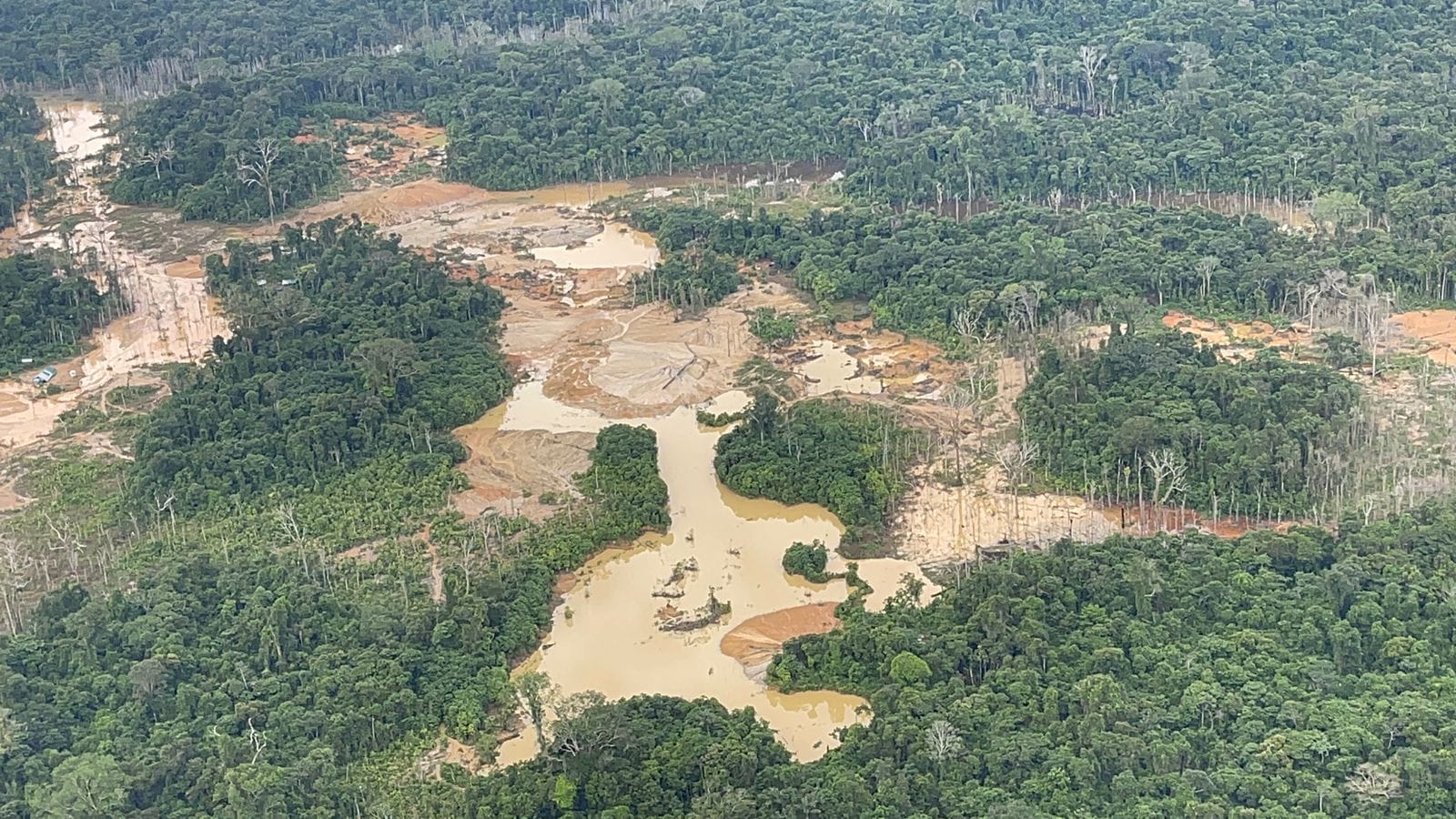
Photo: Júnior Hekurari / Garimpo T.I Yanomami
The Palimiú community, for example, was the main target of attacks by miners in 2021. One of the conflicts even occurred while the Federal Police was on site. The region also suffers from the presence of factions that escort miners using heavy weapons. According to the tuxaua-cacique of Palimiú, Fernando Palimiteri, because of this, the risks are even greater.
"In my community we are going through many difficulties, especially with miners, factions and drug traffickers. We debated it at the Leadership Forum and made a document to send to the agencies. Currently the entry of miners is very large, miners are passing through our river all the time. It doesn't matter the time, it's 12-meter boats passing by carrying miners and cargo to supply the mines. In my Palimiú community, we are very upset with all this. I've had relatives who were killed by miners and traffickers. As a leader, I'm very upset too," he said.
In September 2021, the II Yanomami and Ye'kuana Leadership Forum was held in the Tabalascada community, Serra da Lua region. They also made a document that was delivered to the Yanomami and Ye'kuana Indigenous Health District Council (Condisi – YY), the National Indian Foundation (Funai) and the Federal Public Ministry (MPF). At the event, the tuxaua-cacique spoke to other leaders about the real situation.
"In my community and in others, we are being harmed by mercury pollution, our relatives have started to lose their hair, many are thin, they do not eat properly. This is because our fish, our game are contaminated by mercury. People don't want to eat anymore because of this and end up being malnourished. There we are not having health, everyone fled and to this day we are not getting medical care. So there are many problems within my community. Mining has been growing every day, leaving the river all polluted, we no longer have clean water to drink, the fish are all contaminated, so many relatives are no longer eating. Because if they do, there is a lot of diarrhea. I, tuxaua-cacique, will never accept mining within our lands," commented the chief indignantly.
Another to speak was the greatest leader of the Yanomami, who is a shaman and traditional leader known worldwide for the struggle for the rights of the people of the forest, Davi Kopenawa. He pointed out that mining is rising more and more and increasing within his lands. This is his biggest concern, which is leaving him disturbed. Kopenawa also says that he is not sad, but very angry. Because it is being like it was 500 years ago, the invaders are arriving every day and bringing more problems. So the Yanomami and Ye'kuana people are worried about all this.
"The invaders are ruining our land to be able to extract gold and extract oil as well. What we can do is show it for everyone to see, making a documentary and spreading it in Brazil and abroad, this is our struggle. This is for the defense of our land and our original rights that we have lived in the forest for many years. Today my thoughts about everything that is happening have increased. Just as the invaders have increased in Yanomami land. The problem has increased in general. And this is there for everyone to see. Today, our Uraricoera River is being spoiled. The water is dirty. Water is food, it is health for our body. Fish are also spoiling being contaminated by mining, we all eat fish," he said.
Davi Kopenawa ended his speech by saying that he learned to fight by being beaten, walking and traveling. He points out that he has seen many things, the diseases of governments, a lot of destroyed land. Many places are destroyed, there is no more forest and the "whites" are only looking at what is under it, underground.
"Here in Brazil, the forest is our home. Because in the past our people already occupied this land. That's why we are here, discussing these problems. But the problems are not only in Yanomami Land, this is Brazil around the world. There are political problems, they brought this to Brazil. That's why our land is dirty, destroyed, our water is dirty and our fish are suffering. I say all this, because I am a traditional leader. Governments only look at money, without money the white man will not work and without money, the white man will suffer too. Just as we are suffering. That is why we are here on the same path, on the same war field and this struggle continues," he concluded.
In the leadership forum, the chiefs estimate that there are more than 50,000 miners within the Yanomami Indigenous Land and not 20,000 as has already been reported. The tuxaua-chief of Palimiú also mentioned some names of miners, they are: Xitei, Papiú, Alto Catrimani, Palimiú, Waikás, Cachoeira do Tukuxi, Surucucu, Currutela do Quebrado, Aracaçá, Homoxi, Kayanau and Palão.
By: Ariene Susui and Nailson Almeida
Collaboration Mayra Wapichana