
Collaboration Mayra Wapichana
The right to lands traditionally occupied by indigenous peoples is guaranteed in the 1988 Federal Constitution and predates the very formation of the Brazilian State. It is in this pursuit of fulfilling a right denied for over 40 years that the indigenous communities of the Manoá-Pium indigenous land, in the Serra da Lua region, have taken the initiative to reclaim part of their ancestral land excluded from the homologation process.
The Manoá-Pium indigenous land, officially recognized in 1982, comprises 43,000 hectares. However, with the remaining land, it could reach 67,000 hectares if the State recognizes the 24,000 hectares excluded from the official recognition, which are currently the subject of struggle for the indigenous communities that have reclaimed the land. Since the 27th of last month, when they decided to reclaim the area, residents have been receiving threats and intimidation from farmers who, without the communities' authorization, occupied the area and are now attempting to use police forces to intimidate and even expel the indigenous people from their traditional land. An indigenous leader accused by the farmer of ordering the retaking was summoned by the Bonfim Police Station.
Following a complaint forwarded to the Indigenous Council of Roraima (CIR) on March 5, the organization’s general coordination and legal advisors were on site this Tuesday (7) to investigate the situation and reaffirm their commitment to defending indigenous rights, especially the right to land guaranteed in the Constitution as a basic right of indigenous peoples.
To maintain the safety and protection of indigenous leaders, their names will not be mentioned. However, expressions of struggle and resistance will be highlighted, as one female leader said, "the land is our mother and we will fight for her," and another leader, knowledgeable about his territory, cited the names of invaders, saying that "they occupy, sell, and leave. While the indigenous people, the original inhabitants of the territories, want it for their children, grandchildren, and all future generations." This is the reason for the land reclamation.
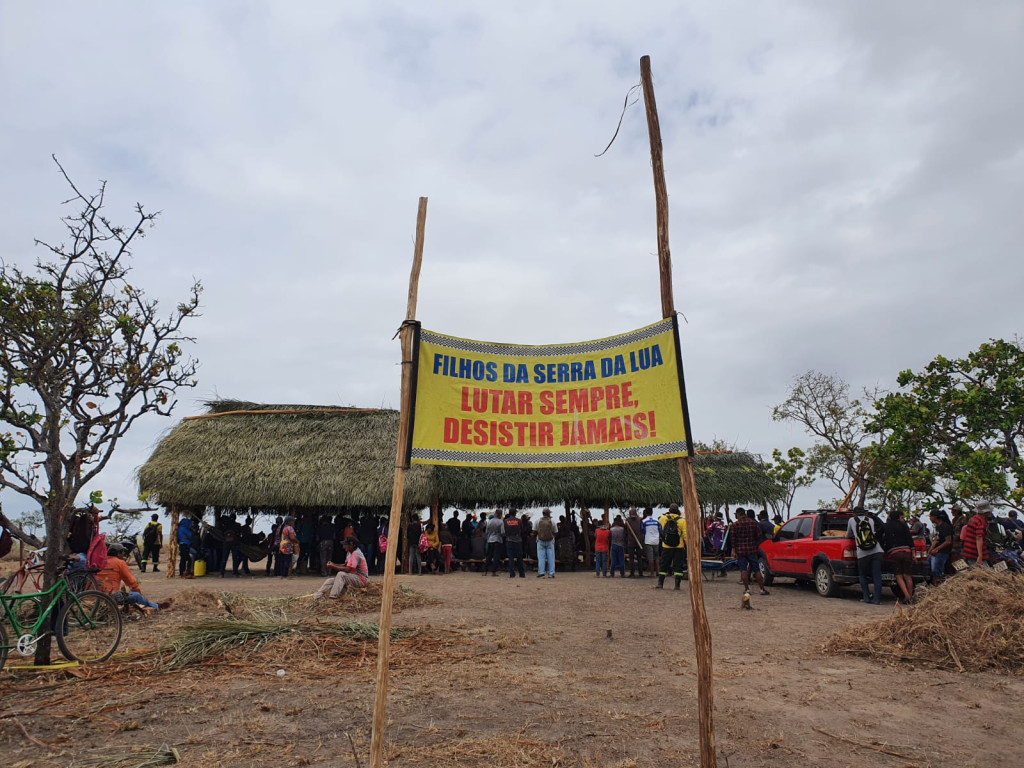
Beneath the maloca (traditional indigenous dwelling) built by the communities, more than 100 indigenous leaders, from the youngest to the most traditional, recounted the initiative to resume a struggle that is long-standing, according to the reports of the process monitored by the National Foundation for Indigenous Peoples (Funai), since the 1960s, formerly the Indian Protection Service (SPI). With the resumption of the case, a meticulous study of the process is being carried out, including new elements that prove the exclusive possession of the land by the indigenous people.
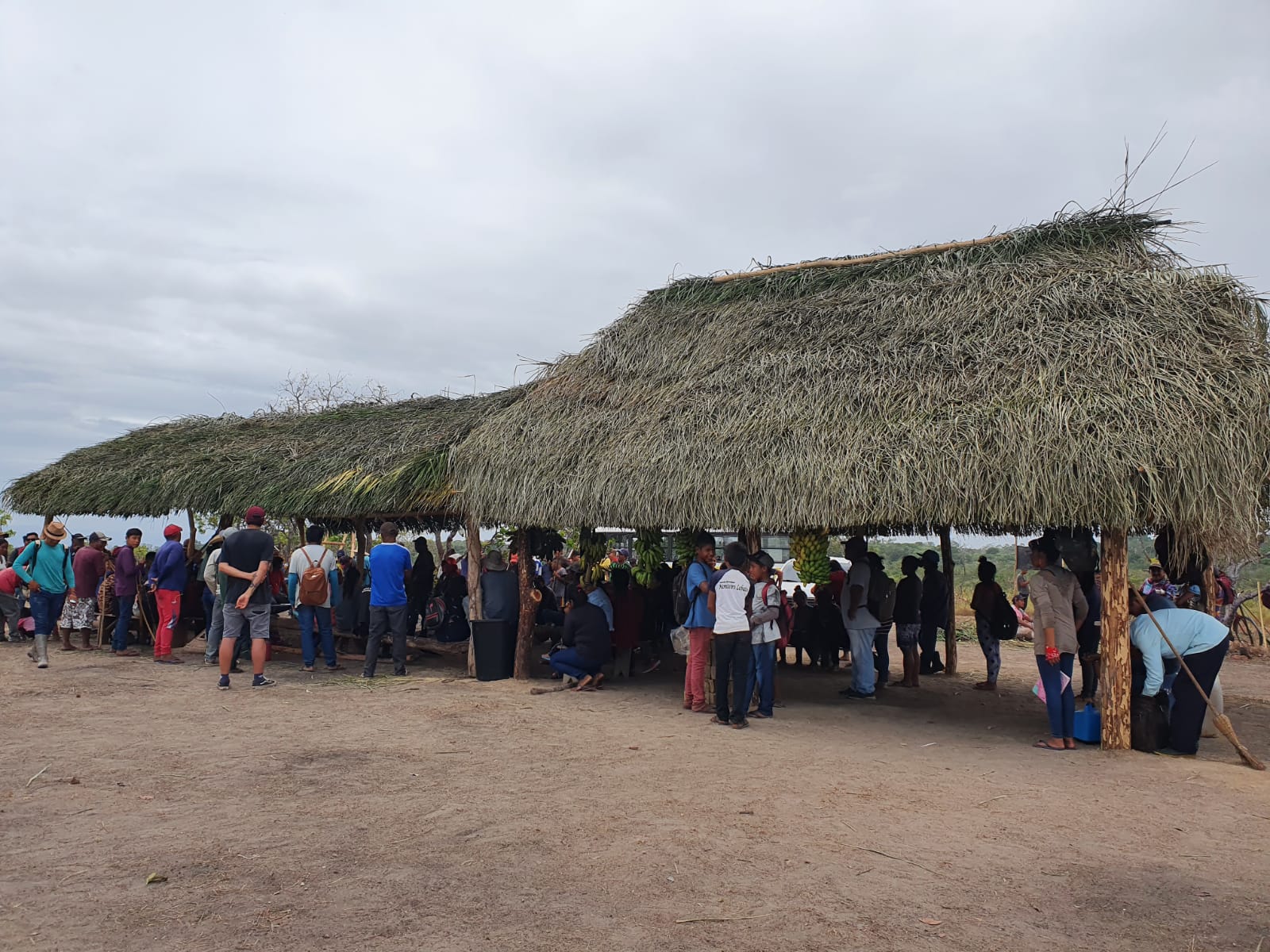
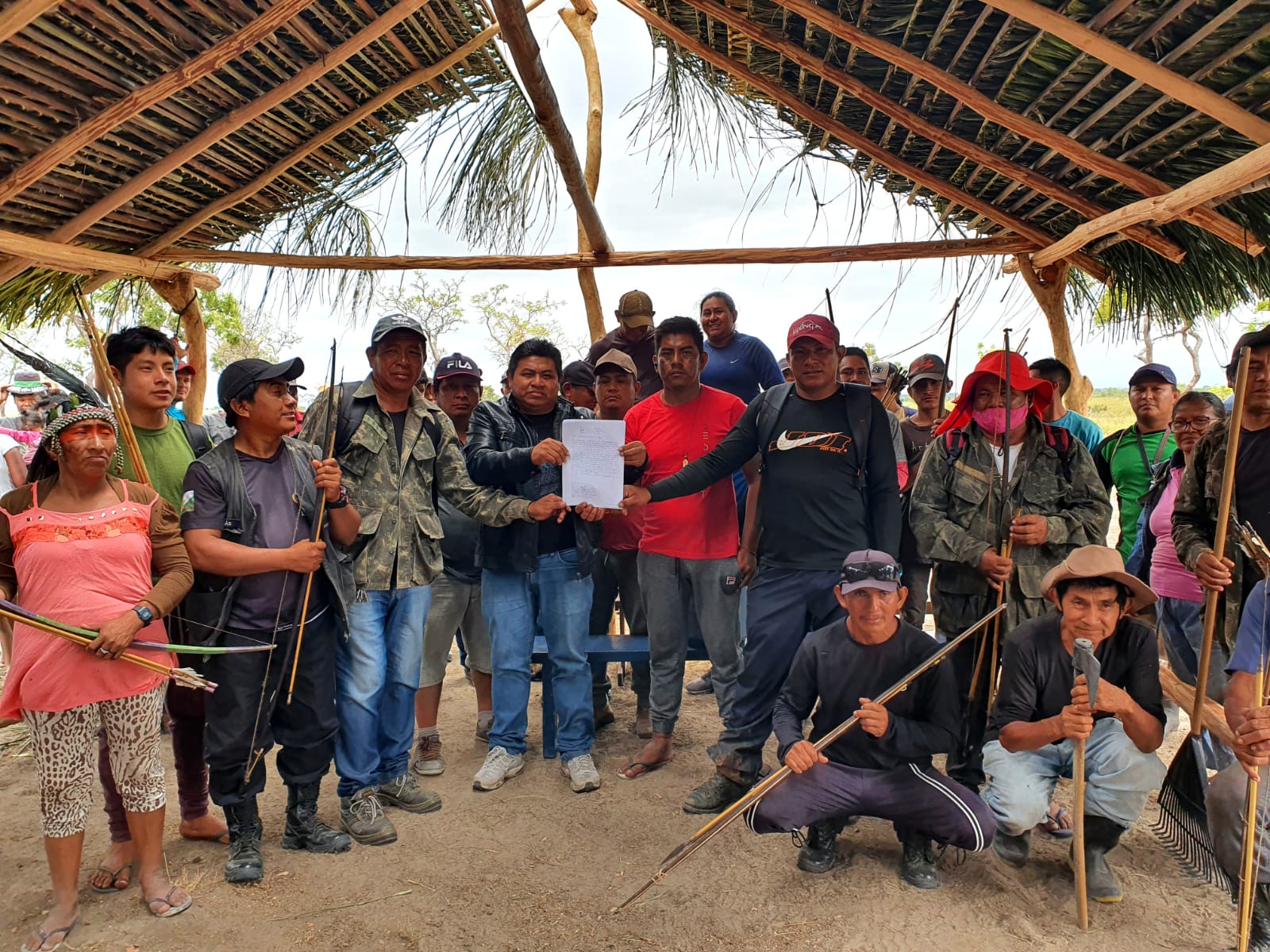
The collective resumption involves children, young people, women, and veteran leaders who have been on site since February 27th. Photos: Mayra Wapichana
The leaders delivered the document reinforcing the statement regarding the retaking of the land, denouncing threats and intimidation by farmers, and requesting support from federal public bodies such as the Federal Public Prosecutor's Office (MPF), the National Foundation for Indigenous Peoples (Funai), the Ministry of Indigenous Peoples (MPI), and other federal agencies to give due attention to this long-standing and legitimate cause. The leaders also requested an urgent hearing with the MPF/RR.
Attention is urgently needed, as Indigenous people fear acts of violence like those that occurred in the Tabatinga community, in the Raposa Serra do Sol Indigenous Territory, and in Pium, in the Tabaio region, when armed police invaded the communities, destroyed homes, and threatened the lives of Indigenous people. Such acts are typical in a state that denies the existence of Indigenous peoples and uses its power to threaten them.
The collective retaking involves children, young people, women, and long-standing leaders who, since February 27th, have been on the site, reoccupying the area that was forgotten by the Brazilian State, but never by the indigenous people. Nearby, there is a cemetery where ancestors, grandparents, children, and parents were buried before the arrival of the invaders, and this proves, beyond the documents in the vast demarcation process, that this is indeed ancestral land.
The context cannot be considered an expansion of the land, but rather a reparation in the homologation process that left out a necessary extension for the use of indigenous people, an area of forests, lakes, and production for subsistence.
At the entrance, a message on a banner makes the indigenous people's position clear: children of Serra da Lua - always fight, never give up. The Manoa-Pium Indigenous Territory is inhabited by the Macuxi and Wapichana peoples and borders Guyana.
In the current Brazilian political landscape, which is favorable to indigenous struggles and the achievement of positions such as the National Foundation for Indigenous Peoples (Funai) and the Ministry of Indigenous Peoples (MPI), strategically created to address indigenous issues within the Executive branch, the possibilities for fair attention are real and should indeed prioritize respect for the rights of indigenous peoples.