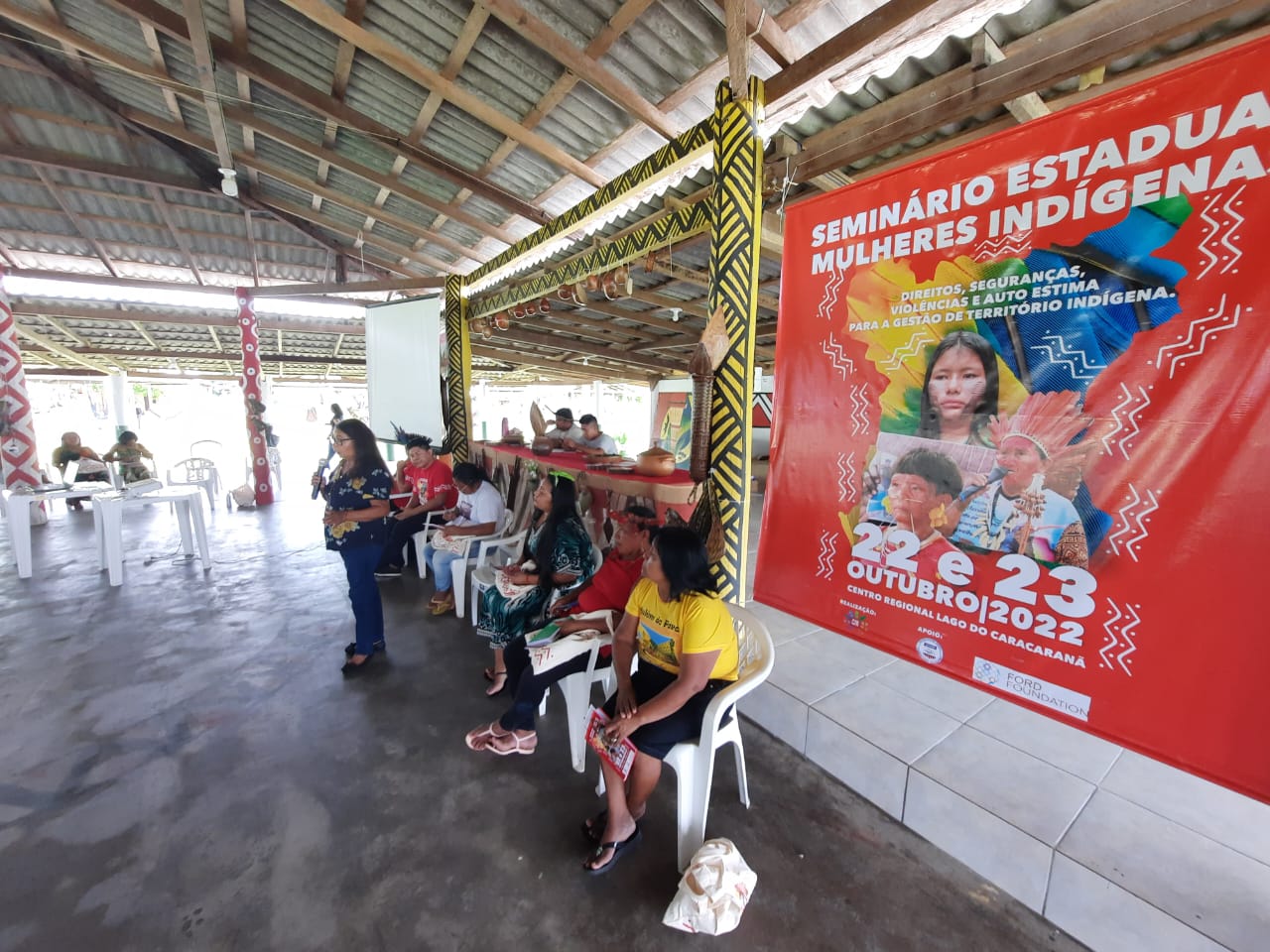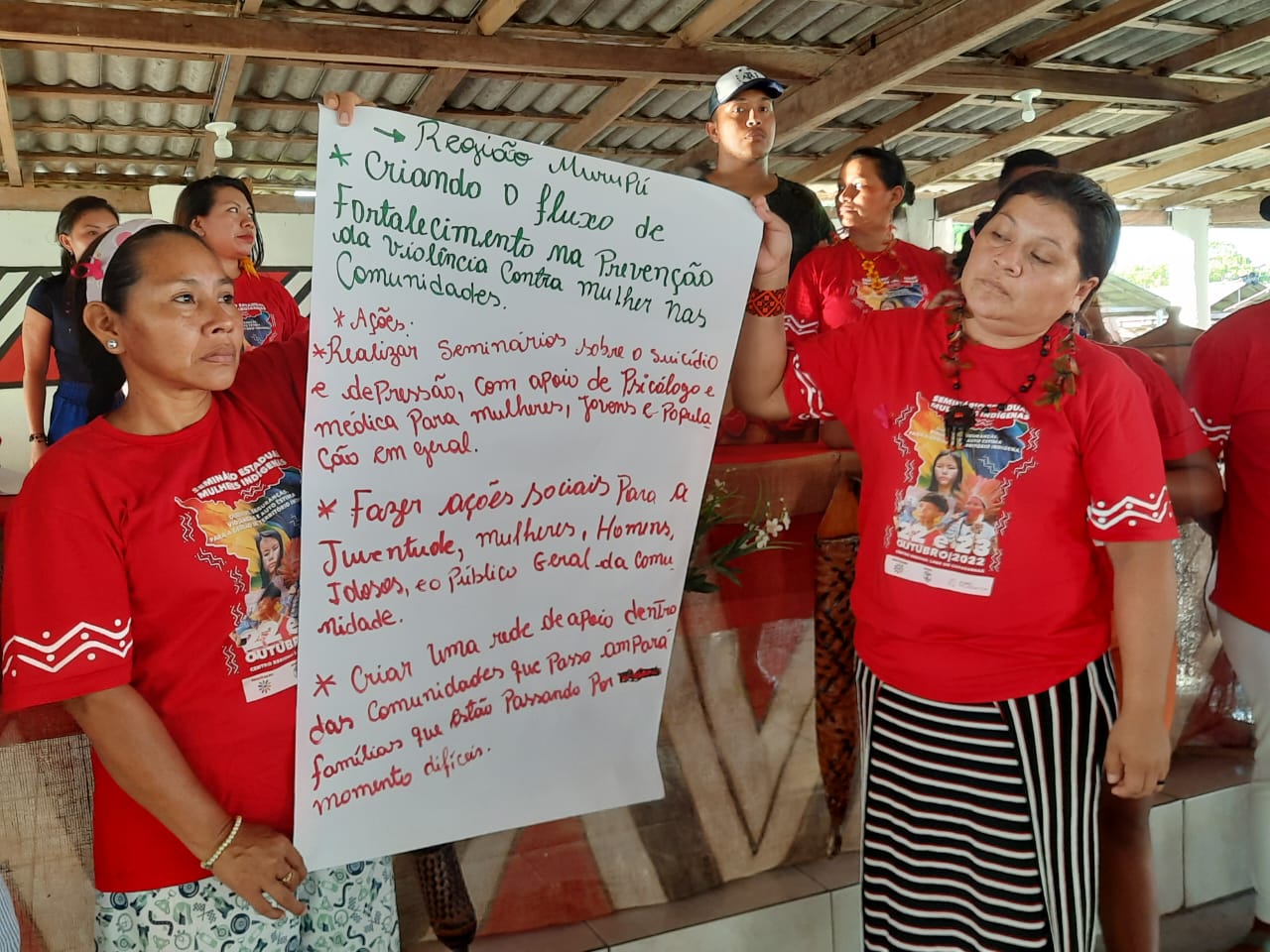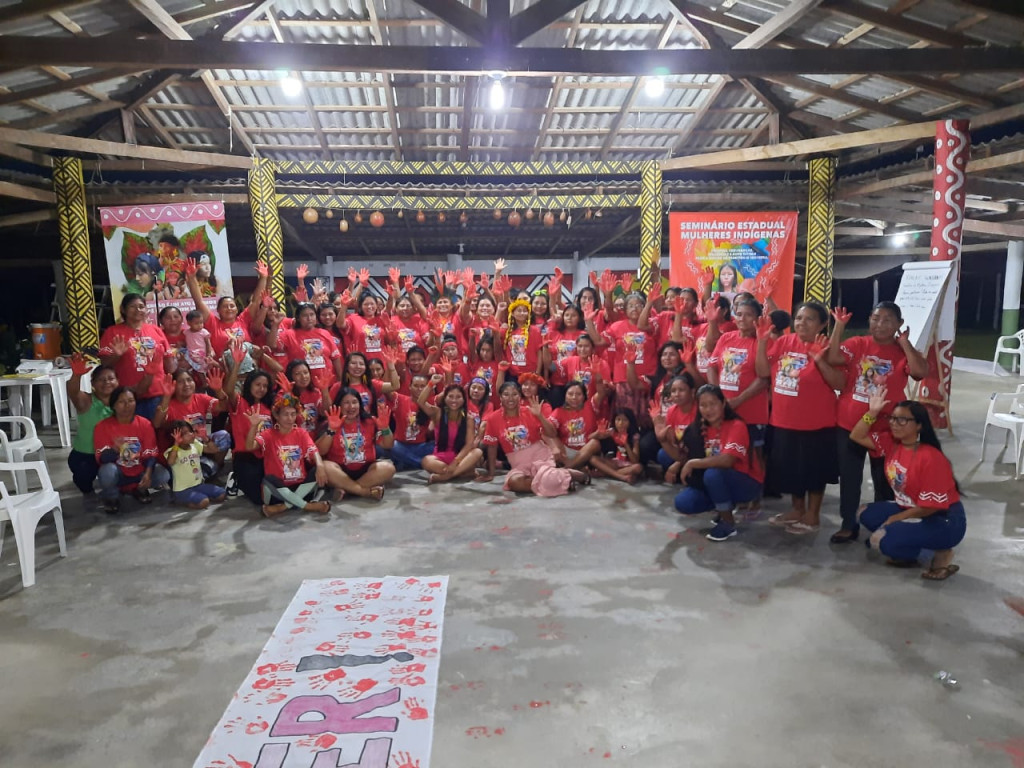
The Indigenous Council of Roraima, in partnership with the Ford Foundation and USAID, took the State Seminar on Indigenous Women to the Lago Caracaranã Regional Center, from October 22 to 23, with the theme Rights, Security, Violence and Self-Esteem for the Management of Indigenous Territory.
The event was attended by the Executive Coordination of the CIR, Department of Territorial and Environmental Management, Legal Department, Secretariat of the Indigenous Women's Movement, Coordination of Indigenous Youth of RR, Coordinators of indigenous women from the Serra Da Lua, Raposa, Baixo Cotingo, Surumu, Serras, Alto Cauamé and Murupu regions, Diocese of Roraima, Casa da mulher Brasileira, FIOCRUZ, Podcast Cunhatã - UFRR, CRAS Cantá, Conexão Puxirum, Vulva Criativa, Mãe da lua and Secretariat of the Indian.
The leaders brought to light the problems they have faced, not least they also showed how they have solved the dilemmas in their regions and communities.
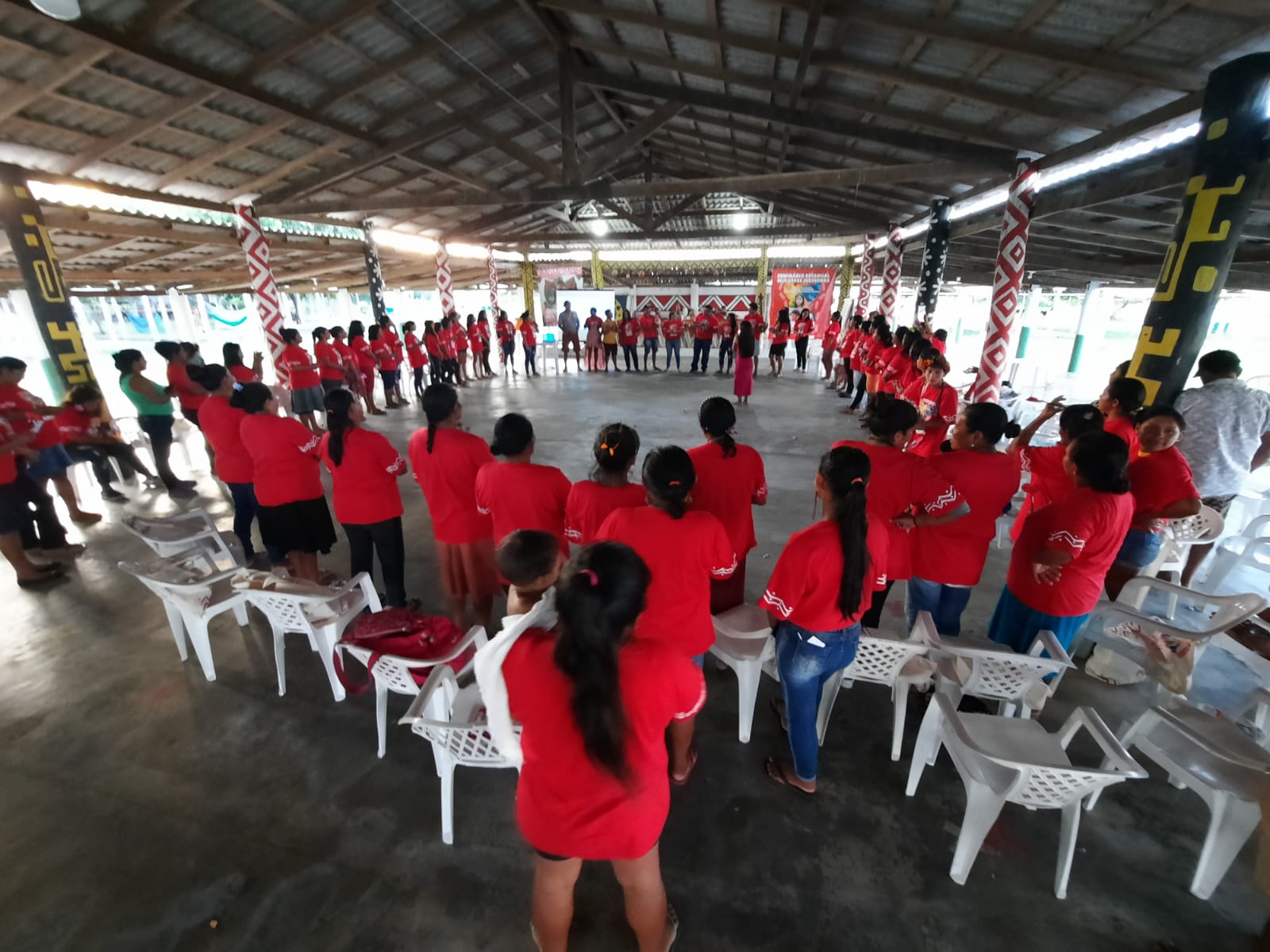
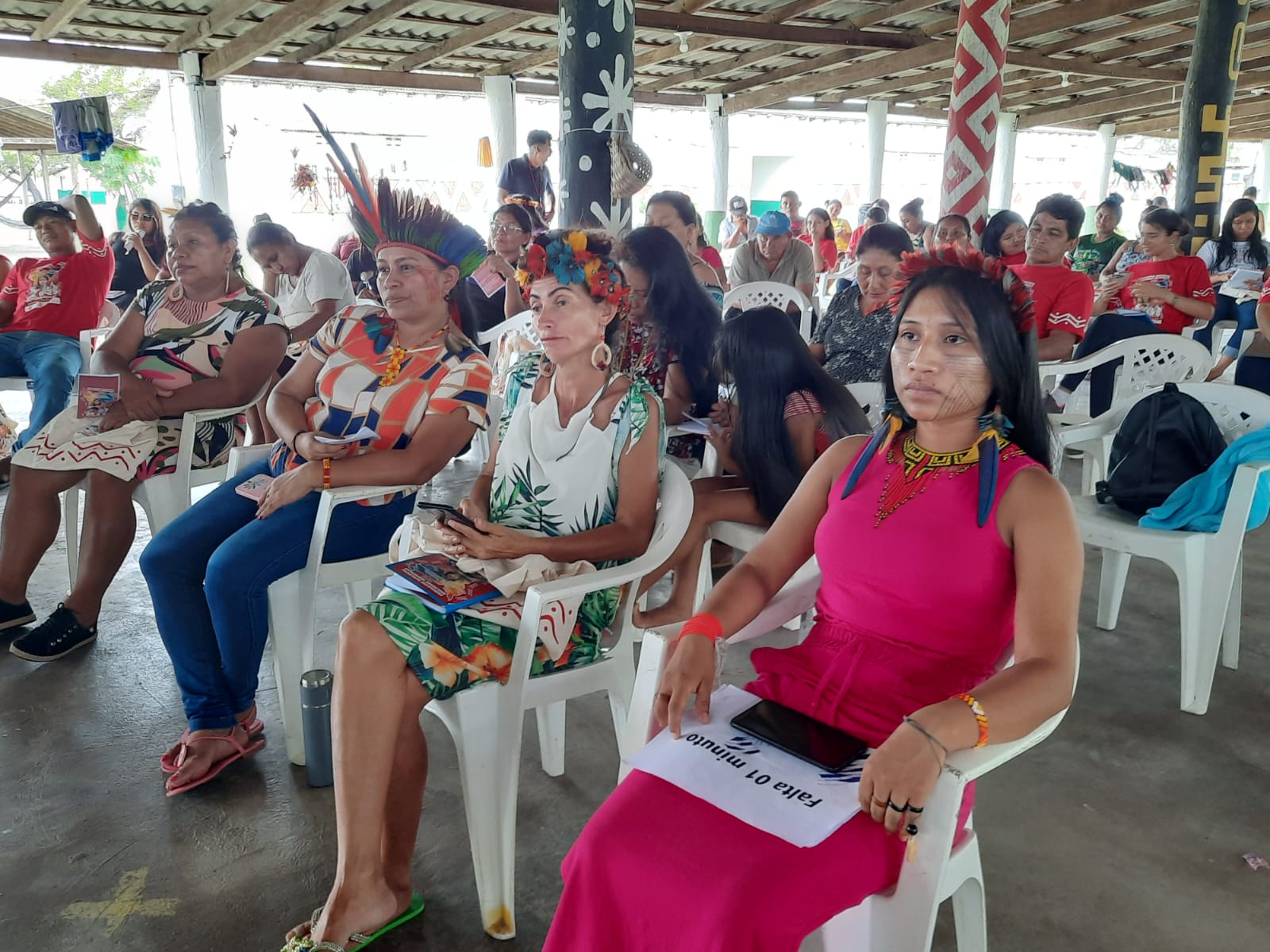
The event brought together about 200 participants from the Macuxi, Wapichana, Taurepang and Patamona peoples, and discussed, among other issues, reporting channels, women's rights, the Maria da Penha Law, protection measures, female empowerment, welcoming women who suffer domestic violence, psychological violence, depression and suicide.
In their speeches, often choked by the pain of one day having already gone through difficult situations, but firm for being survivors, the women pointed out where and how violence has been affecting indigenous communities, with alcoholic beverages being one of the main catalysts for aggression, in addition, the leaders congratulated the CIR, for the encouragement and support, especially in psychological issues, legal knowledge and empowerment.
And they talked about their internal protection measures, cases in which the Indigenous Territorial Surveillance Group (GPVTI), often led by women, worked with the police in cases of domestic aggression.
"We carried out diligences with the civil police, we even dealt with faction criminals, robbers who entered the Community of the Serra da Lua Region.
And Men who assaulted their wives, we even expelled a recurring aggressor, it is difficult to do this, but we have the internal regulations. In addition to police guidance, we spent five days in one of the courses with the CIR's Legal Department, we are aware of the work of GPVTI."
Said Alcinda Pinho Cadete, Macuxi people, from the Serra da Lua Region.
Maria Betânia, Secretary of the Indigenous Women's Movement of the CIR, praised the importance of women's speech and their strategies in the face of scenarios overloaded with authoritarianism.
"We deal with our emotions, we know how to always act at the right time, we determine what we are, what we value and want, depending on how we find our daily lives and the situations we experience."
Said Mary to the women present.
Iterniza Pereira, from the Macuxi people, is a psychologist at the CIR, who has been serving the communities for at least two years, according to her there has been an increase in cases of domestic violence, abuse of minors, early pregnancy and depression.
"It is a concern for us who are on the front line, for the leaders, and for the CIR.
The CIR aims at agendas and projects that bring prevention measures, including psychological illness, these are just some of the factors for us to hold the seminar." Said Iterniza.
One of the important collaborations was that of the representative of FIOCRUZ, Alessandra do Santos, who said
"It is important for FIOCRUZ to participate in events of this nature, so that we listen and bring elements to help these women build strategies so that they can make the territory a little stronger, less vulnerable, discovering new technologies. When we deal with a diversity of territory, we need to understand the complexity of each one." Alessandra stressed.
Adriã Galvão, Cunhatã Podcast at the Federal University of Roraima, spoke of the experience of being in the midst of so many women who emphasize their position and how two days of experience brought her new reflections
"Seeing other women bringing up different points that involve indigenous women is not common in everyday life, especially in the urban environment. For me it was invigorating, important, powerful with a lot of energy, to be involved by women, so strong, powerful, engaged in the struggle for land, education and health, it was a unique, incredible and empowering experience." Said Adriã.
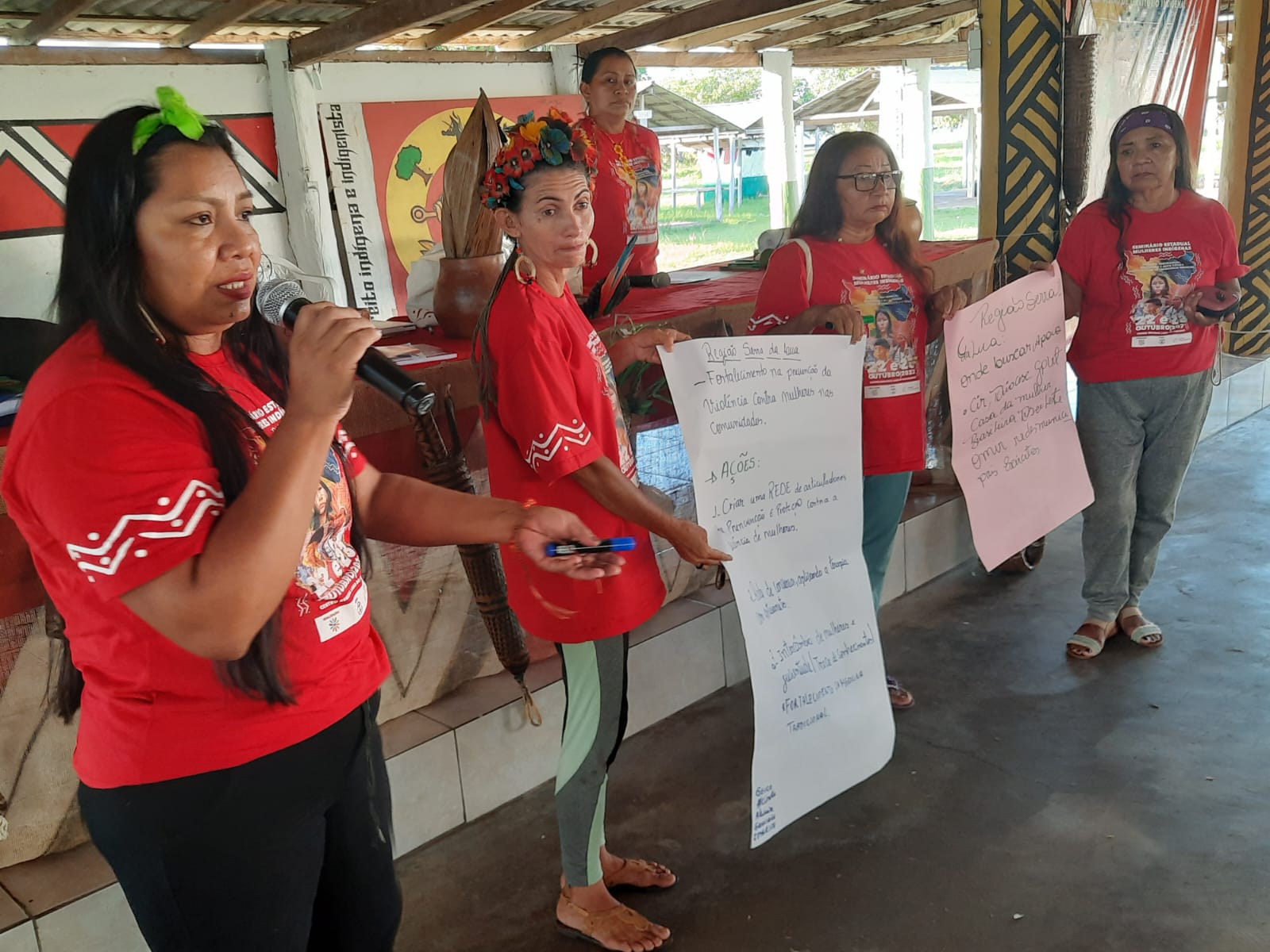
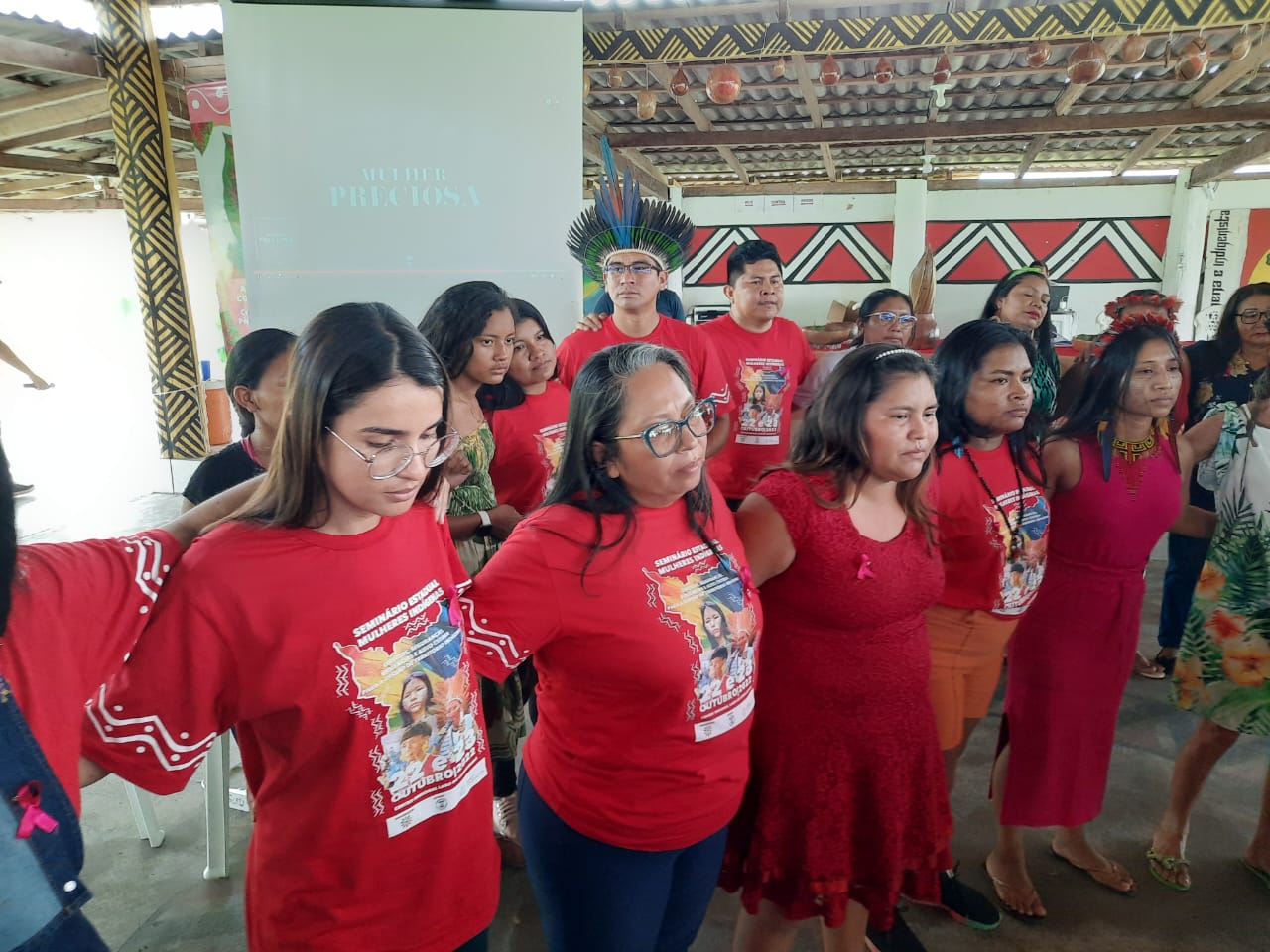
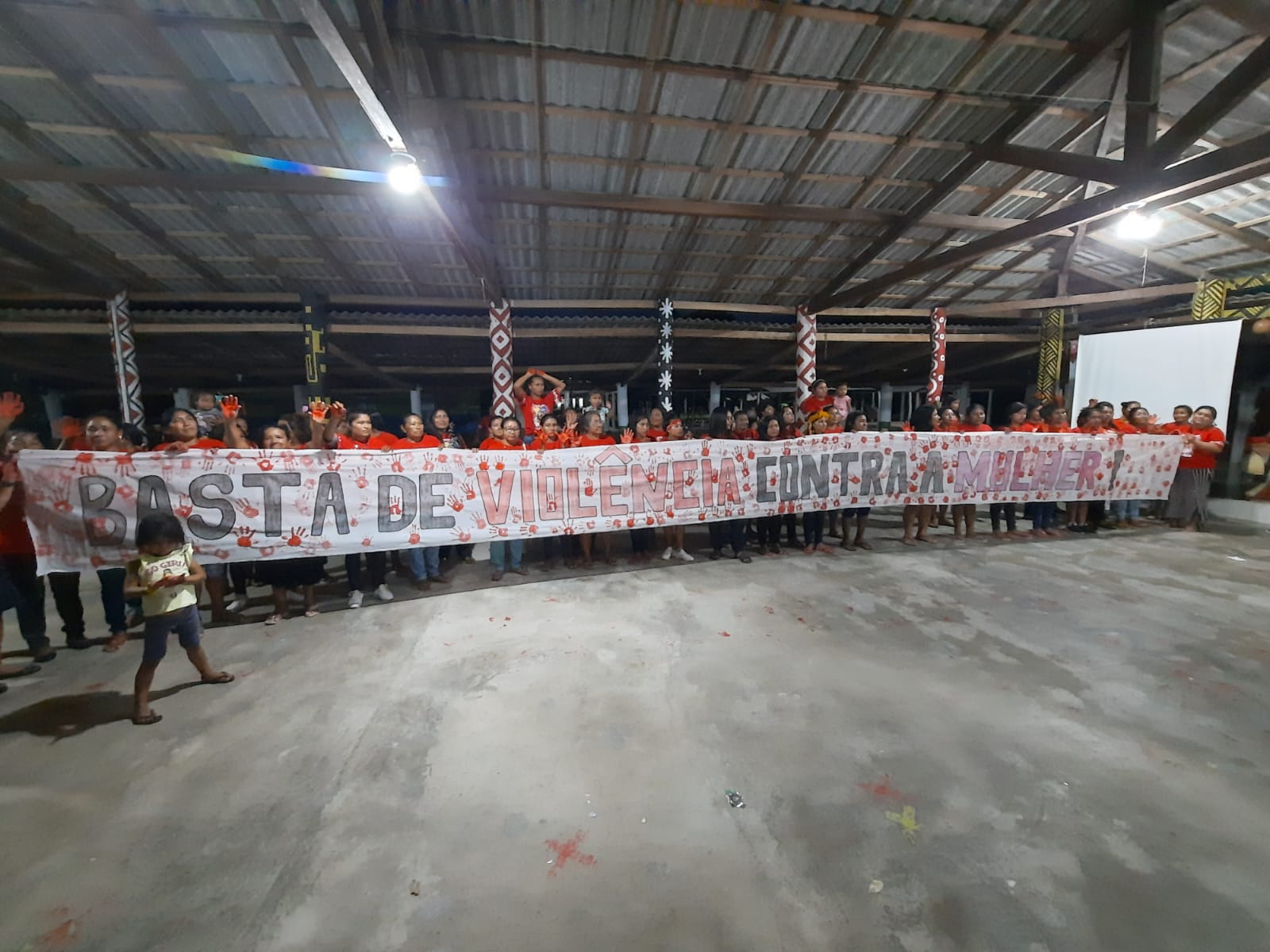
At the end of the Seminar, the leaders in working groups carried out the preparation of strategies within the communities, committing to comply and discuss with young people and men also important in this equation, an act calling for the End of Violence against Women was held where everyone painted and stained the banner in a symbolic way.