
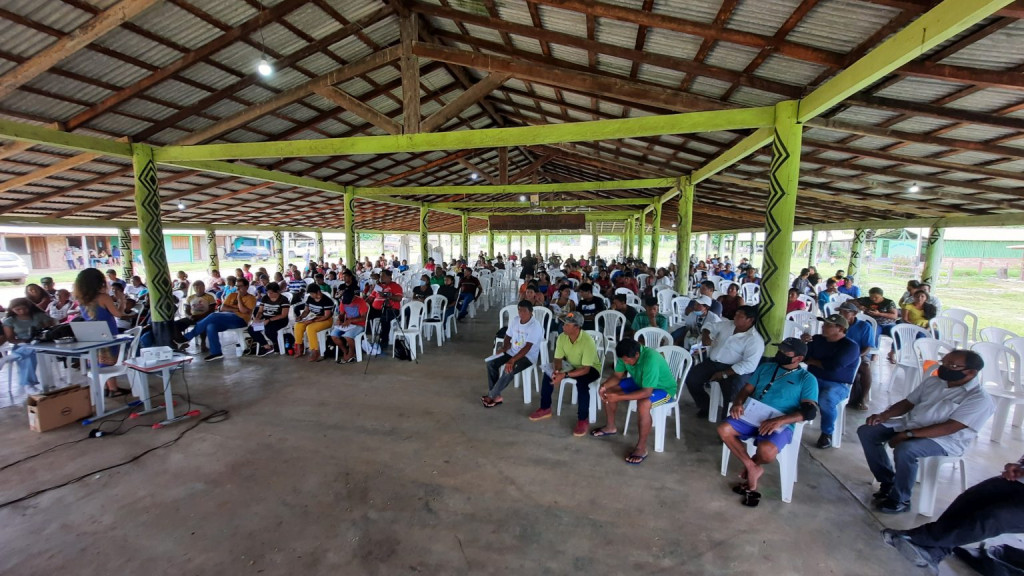
Leaders and residents of the Canauanim, Malacacheta and Tabalascada Indigenous Lands, in the Serra da Lua region, municipality of Cantá, met from April 26 to 28, in a Seminar to discuss the following subjects: Socio-environmental Impacts, Legal Aspects and Right to Consultation, considering the Thermoelectric Power Plants installed around the indigenous lands.
According to information released by the press, the Cantá Thermoelectric Power Plant was inaugurated on March 28, but has been operating since February 2022. The installation of the plant worried the leaders due to the proximity of the Tabalascada, Malacacheta, and Canauanim indigenous lands. In view of the concerns, the leaders decided to invite experts to understand the impacts of the project.
On March 29, 30 and 31, Community Assemblies of Consultation Protocol on the Thermoelectric Plant were held in the region, in the same Indigenous Lands, and were attended by the companies Oxe Energia, responsible for the project, and MRS Environmental Studies. On the occasion, the Work Plan for the preparation of the Indigenous Component Study (ECI) was presented. In addition to the schedule for the execution of activities that would be developed within the communities.
However, the leaders and residents had doubts about the real situation of the project. Therefore, they chose to hold another event without the participation of the plant's representatives. The Indigenous Council of Roraima (CIR), the Indigenous Missionary Council (CIMI), the Federal Public Prosecutor's Office (MPF), the Insikiran Institute/UFRR, the Chico Mendes Institute for Biodiversity Conservation (ICMBio), the Renewable Energy Forum, the Puraké Movement, tuxauas and residents who were giving lectures on the subject were invited so that all participants could better understand the situation that has already been impacting the region.
On April 26, the Malacacheta community was the one who received the first lecture. About 150 people were participating in the meeting. According to the regional coordinator of Serra da Lua, Clóvis Ambrósio, he pointed out that the plant is within the area in which the Malacacheta community asks for a review of the land.
"From everything that was said about this plant, we were taken by surprise, without information about many things. Because no one knew that this construction process was taking place, who informed us was CIR's legal counsel. We see in this that the government has no consideration for the indigenous population, nor does Funai. The plant would be within our territory. In the 70s, that area belonged to the Malacacheta community, it was even bought by the indigenous people, we paid taxes for it. When the demarcation came, Funai did not include this part and we ended up losing the land," he said.
On the 27th, the Canauanim indigenous community hosted the seminar. About 100 people were present. The event was attended by the Federal Prosecutor of the 4th Office that works in the defense of the Environment in the Federal Public Ministry, MPF, Dr. Matheus de Andrade Bueno, who explained the impacts that the thermoelectric plant may eventually cause to the population and highlighted the importance of the right to consultation of indigenous peoples:
“You can't get there like this by entering or invading and then establishing conditions. To do something there must be prior permission. To build something you have to have the participation of people, from the beginning. Here we are in a phase where things are already working and there has been no hearing. Which is a legislative guarantee and we have international conventions in which they guarantee that consultation must be free, prior and informed. The fact that communities are not heard is very serious, it is non-compliance with a regulation and that causes damage that people do not imagine. Because first you must investigate and find out between the benefit and risk of the project, know about the damage it will cause. If you don't know, you can't build", he highlighted.
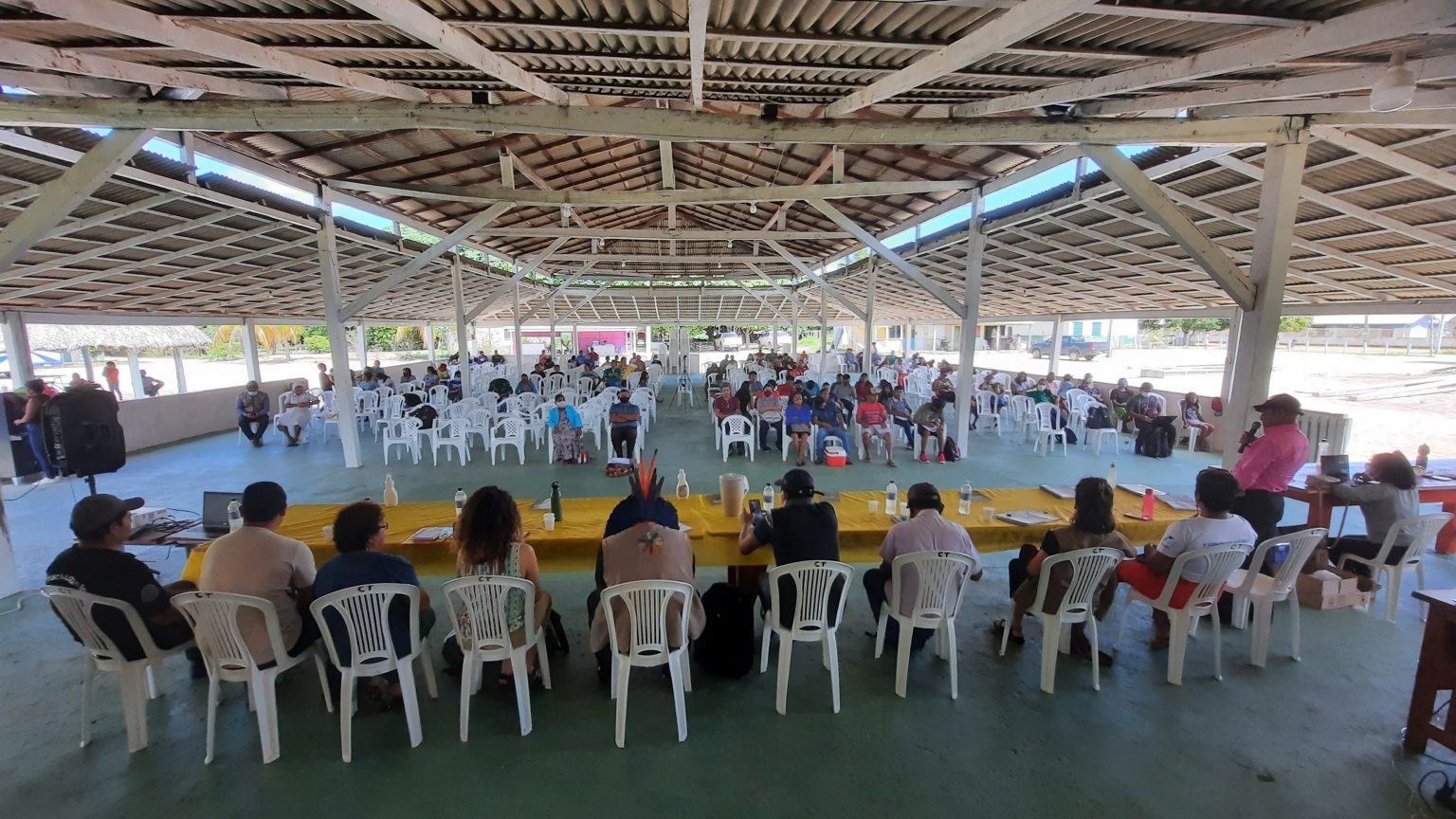
Tabalascada Community received the closing of the Seminar on the impacts of the Thermoelectric Plant
On April 28, the closing of the seminar was held in the Tabalascada Indigenous Land with about 100 participants. The tuxaua César da Silva, stressed the importance of discussing with the community about this issue related to the construction and operation of the thermoelectric plant.
"This is a subject that brings us great concern. We are still trying to understand what will really happen and the consequences we will have from now on. It is important to know more about this construction and the impacts we will suffer. It is also worth mentioning not only issues about the thermoelectric plant, but also about the Bem Querer hydroelectric plant. This one that will also affect us and that a study has already been proposed, in the same way that they are proposing us about the thermoelectric plant. So it is important to be aware and give more importance to this", stressed the tuxaua.
Dr. Maria Luiza, legal advisor of the CIR, highlighted the right of the communities to be consulted:
“The right to be consulted is protected by the Federal Constitution and in an international treaty Convention 169 of the International Labor Organization (ILO), the right to prior, free and informed consultation of indigenous peoples, on any measure, action, project and even Bill that may affect the communities. That everything must be consulted before, at the time of the project, at the time of the idea. And not only projects that are within the Indigenous Land, but any project that will reach the communities,he stressed.
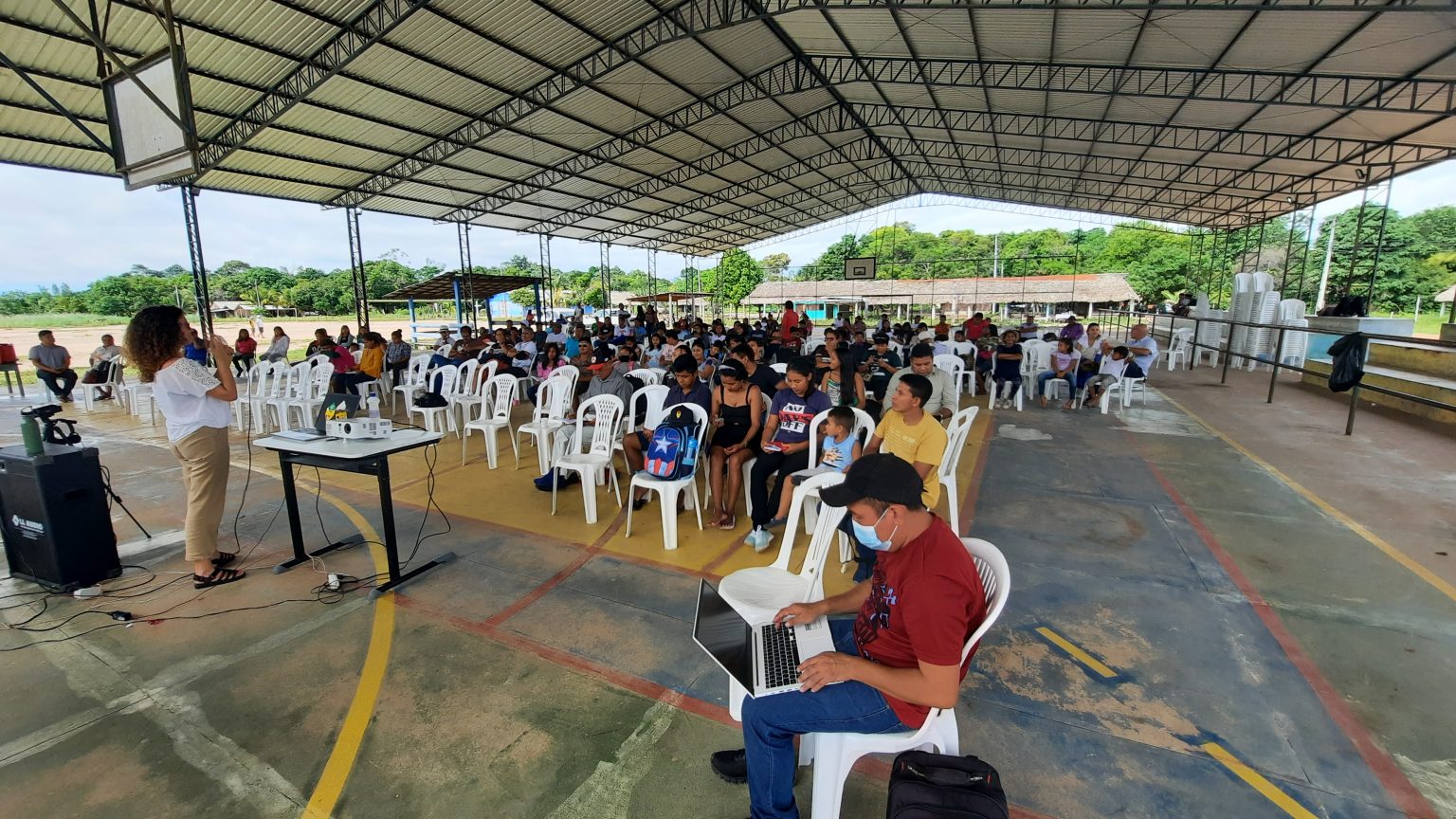
CIMI's legal counsel was clarifying about licensing for leaders
General Coordinator of the CIR, Edinho Batista, participated in the seminar in the three Indigenous Lands and highlighted in his speech about the project built in the Serra da Lua region: "We were not consulted and we have no knowledge about this plant, so it is illegal. For there to be a consultation, there must not be only half a dozen people participating, but mass participation, from children to the elderly. Because those who are affected are the indigenous population. But we don't just want to be consulted, our decisions must be respected" he commented.
THE MILLS
A thermoelectric complex was built in the Serra da Lua region, in the municipalities of Cantá and Bonfim. The project is controlled by the company Oxe Energia and is close to three Indigenous Lands: Canauanim, Malacacheta and Tabalascada. They have four communities of the Wapichana and Macuxi ethnic groups.
What is known is that the plants received tax incentives from the Government of Roraima and were auctioned in May 2019, in the first energy auction promoted by the Bolsonaro government. And soon after, construction work began.
At first, the winner of the auction was the company Uniagro Comércio de Energia. But in 2020, in the middle of the Covid-19 pandemic, Oxe Energia bought the company and continued the works, not respecting isolation. Including putting the health of the indigenous people at risk due to coronavirus contamination. Since the road on which they traveled passes through the communities. So far, compensation for the environmental damage caused by the Serra da Lua Complex was through a conduct adjustment agreement signed in July 2020, without the participation of the affected indigenous communities, and allocated resources from the owners of the plants for the renovation of FEMARH's headquarters, in Boa Vista.