
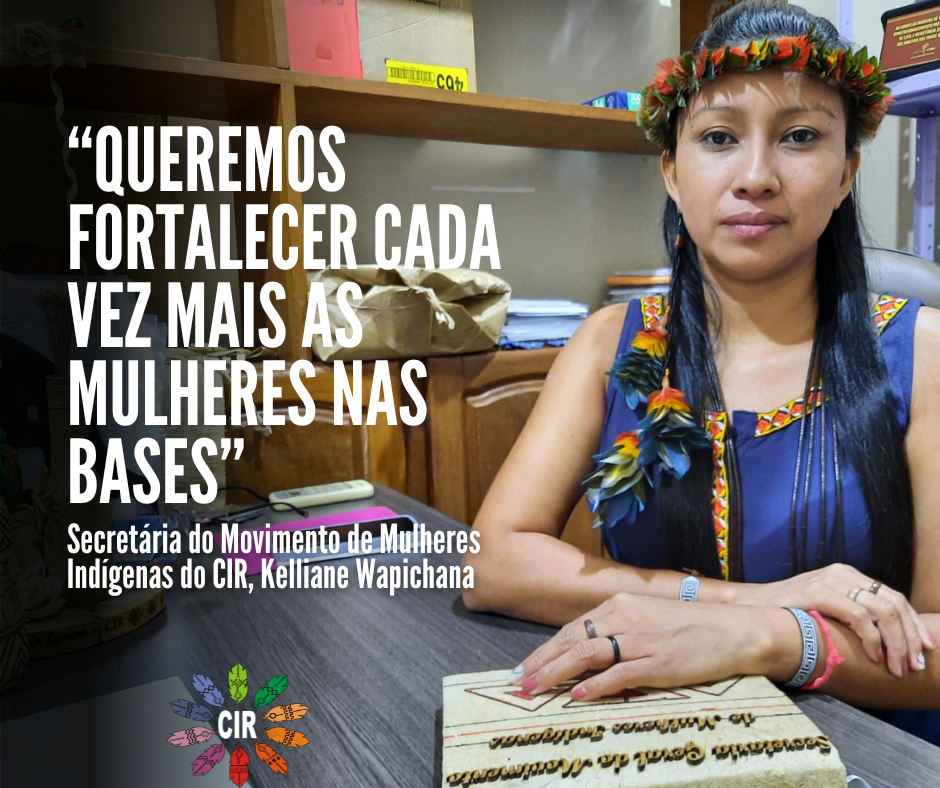
A daughter of Serra da Lua and the traditional territory of Canauanim, Kelliane Cruz, from the Wapichana people, has been at the head of the Secretariat of the Indigenous Women's Movement for a month. This body is part of the coordination of the Indigenous Council of Roraima (CIR). In an interview with the organization's Communications department, she spoke about the actions carried out since the previous administration, the planning with regional women, the challenges, and the achievements in gaining space.
Territorial manager Kelliane, a graduate of the Insikiran Institute at the Federal University of Roraima (UFRR), was also a teacher, working in two indigenous communities, Jabuti and Alto Arraia, both in her own region. “I never lost focus on the indigenous movement; I was always in the communities, attending meetings, assemblies, and meeting with leaders like Clóvis Ambrósio, a reference in the struggle,” said Kelli, mentioning one of the pioneering leaders of the indigenous movement, especially in the fight for specific and differentiated indigenous health, and also one of the founders of CIR.
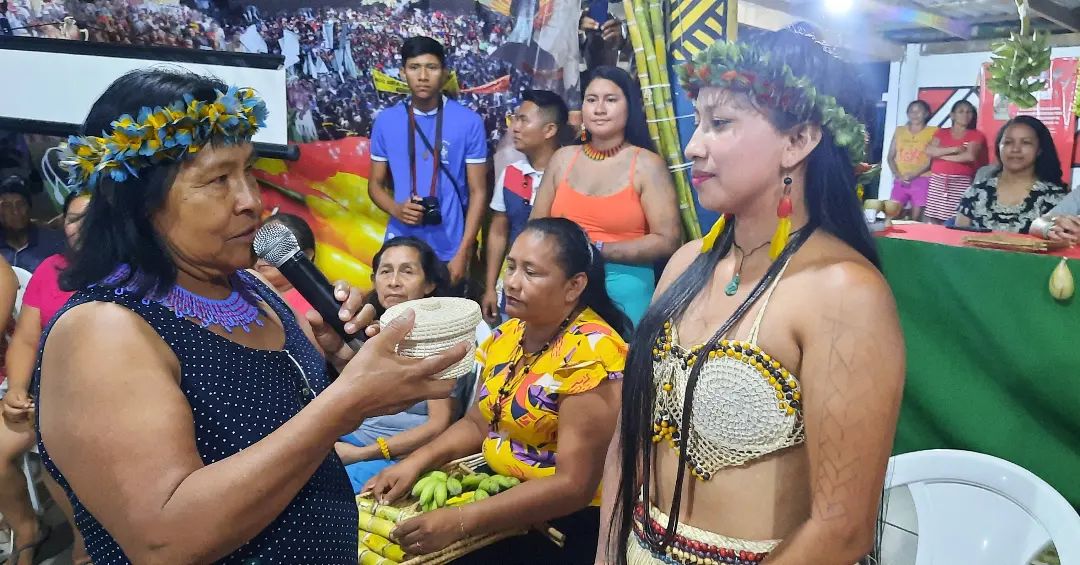
Kelliane's inauguration, Celebration of CIR's 50th anniversary.
Highlighting the six years of service of the former secretary, Maria Betania Mota de Jesus, Kelliane pointed out projects that were successfully implemented in the communities, such as cattle farming, sewing, poultry farming, handicrafts, as well as awareness lectures and events. Regarding the awareness lectures on violence against women, Kelli stressed that it is an important initiative to understand how women are doing in their territories. "It is a challenge to be a woman, and even more so to be a female leader."
A month into her role as Secretary, Wapichana spoke about the plans being developed in collaboration with regional women. She mentioned the upcoming first state-level meeting to outline strategies, plans, and the empowerment of indigenous women. The date has not yet been set.
Last Friday, the 14th, there was a meeting of the regional coordinators and the coordination of the Organization of Indigenous Women of Roraima (OMIR), at the organization's headquarters in Boa Vista, where they discussed plans and collective actions.
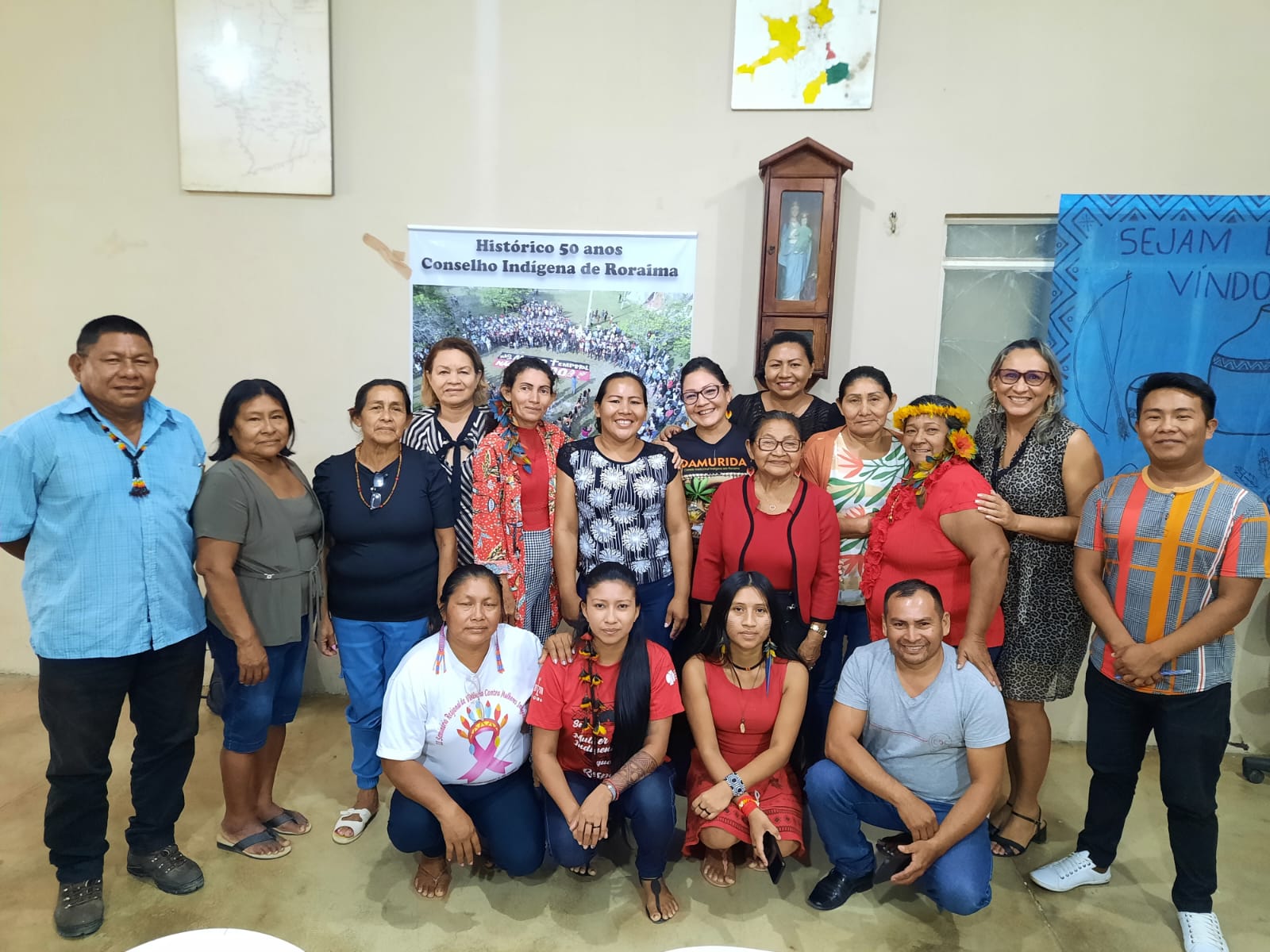
Meeting with regional coordinators of women, traditional leaders and young people.
The Organization of Indigenous Women of Roraima (OMIR) is a strong ally and partner in actions aimed at indigenous women in the state. According to the Secretary, strengthening this partnership "is essential to increasingly expand support for women at the grassroots level."
The Indigenous Council of Roraima (CIR) operates in 263 communities and 10 regions in the state: Serras, Surumu, Baixo Cotingo, Raposa, Amajari, Wai-Wai, Tabaio, Serra da Lua, Murupu, and Alto Cauamé, serving a population of around 30,000 indigenous people. In her first days of work, Kelliane visited four regions—Wai-Wai, Serra da Lua, Surumu, and Amajari—to observe the activities of the regional women.
When asked about the department's priorities, Kelliane emphasized that, in addition to fighting for rights, one of the challenges is "strengthening indigenous women at the grassroots level, both in the context of actions and projects, but also in the pursuit of empowerment and encouragement for women to occupy these spaces."
Regarding the challenges and spaces gained in the current context of the Brazilian indigenous movement, such as the presidency of the National Foundation for Indigenous Peoples (Funai), headed by Joenia Wapichana, the Ministry of Indigenous Peoples, with Sonia Guajajara, and in Roraima, the regional coordination, with Marizete de Souza, Cruz emphasized that these are achievements not only of women, but of indigenous peoples, especially the leaders who fought so hard for these spaces. A joint struggle.
“Just having representation of these women in these spaces is already a great achievement. This is a victory for indigenous peoples, because these are spaces won as a result of the struggle of the indigenous movement, especially the indigenous leaders who fought so hard,” Kelli emphasized.
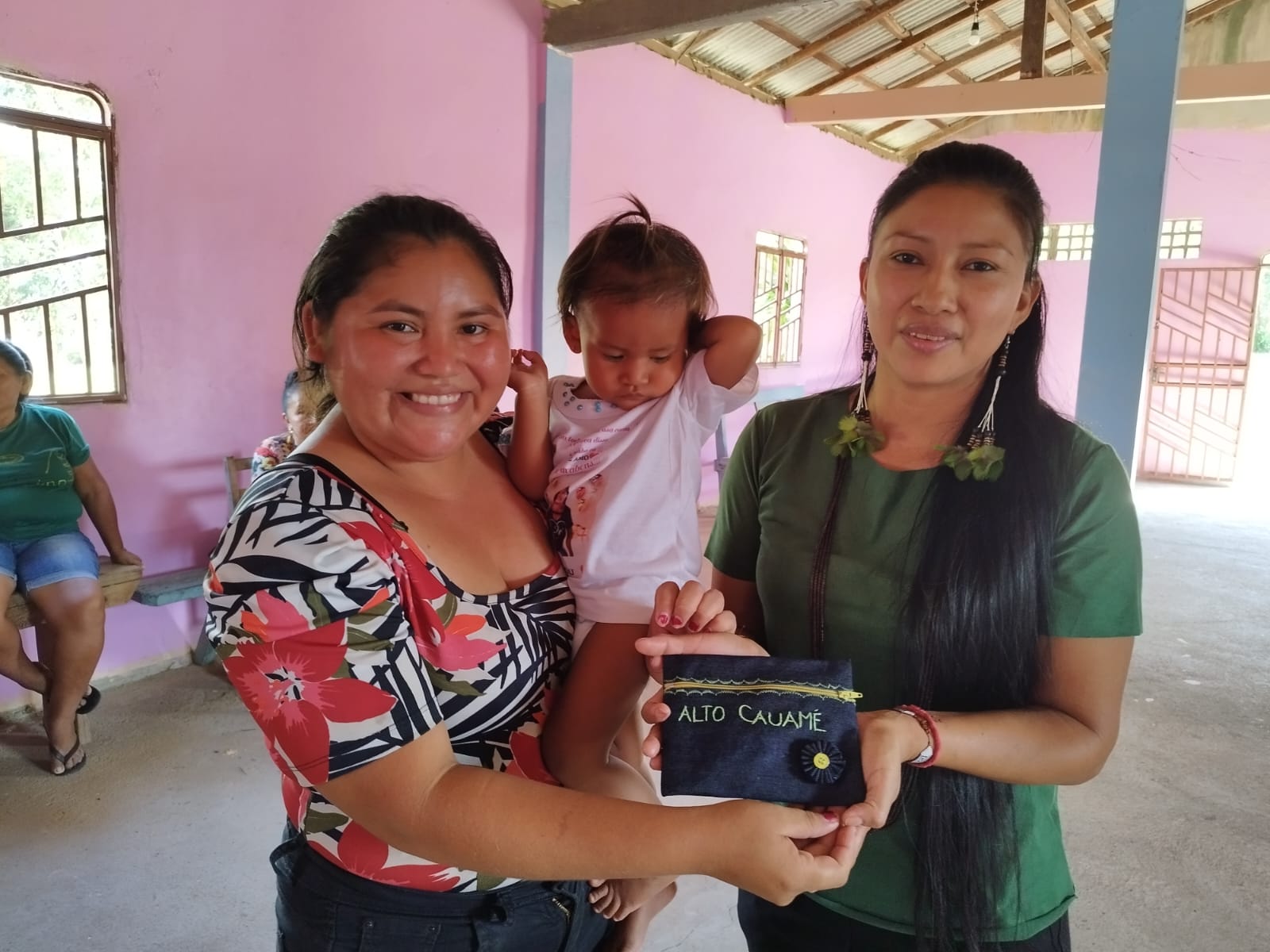
Visit to the regional coordinator of indigenous women
Elected at the 52nd General Assembly of Indigenous Peoples of Roraima in March, at the Lago Caracaranã Regional Center, Kelliane also represents the achievements of indigenous youth. At 31 years old, she has gained a place in one of the oldest indigenous organizations in Brazil, the Indigenous Council of Roraima, which celebrated its 50th anniversary. A space that represents the struggle, unity, resistance, and achievements of the indigenous movement in Roraima.
From her newest workspace, a room decorated with handicrafts and displays of traditional medicines—the result of the work of regional women who took the initiative to strengthen traditional medicine during the toughest time of the struggle for life in 2020, when the Covid-19 pandemic began—Kelli, originally from Roraima and the Amazon, left a message for Indigenous women in Brazil, in addition to the bundle of sticks, a symbol of unity among Indigenous peoples. Empowerment begins when the base is strengthened, by women, men, young people, and children, just like the example of the bundle of sticks.
“We are constantly evolving, and we women are fundamental in this process of building and decolonizing minds. We carry in our roots a history of resistance and resilience in the face of the political landscape focused on Indigenous peoples. Today we have the autonomy to speak for ourselves; every day we occupy spaces that are fundamental in this new administration. We face the struggle and reclaiming of our territories, and many challenges lie ahead. It is a time to embrace the same cause, to strengthen what we already have, and I call upon you, supporter of the cause, to join us in this collective struggle for the well-being of all,” she expressed.
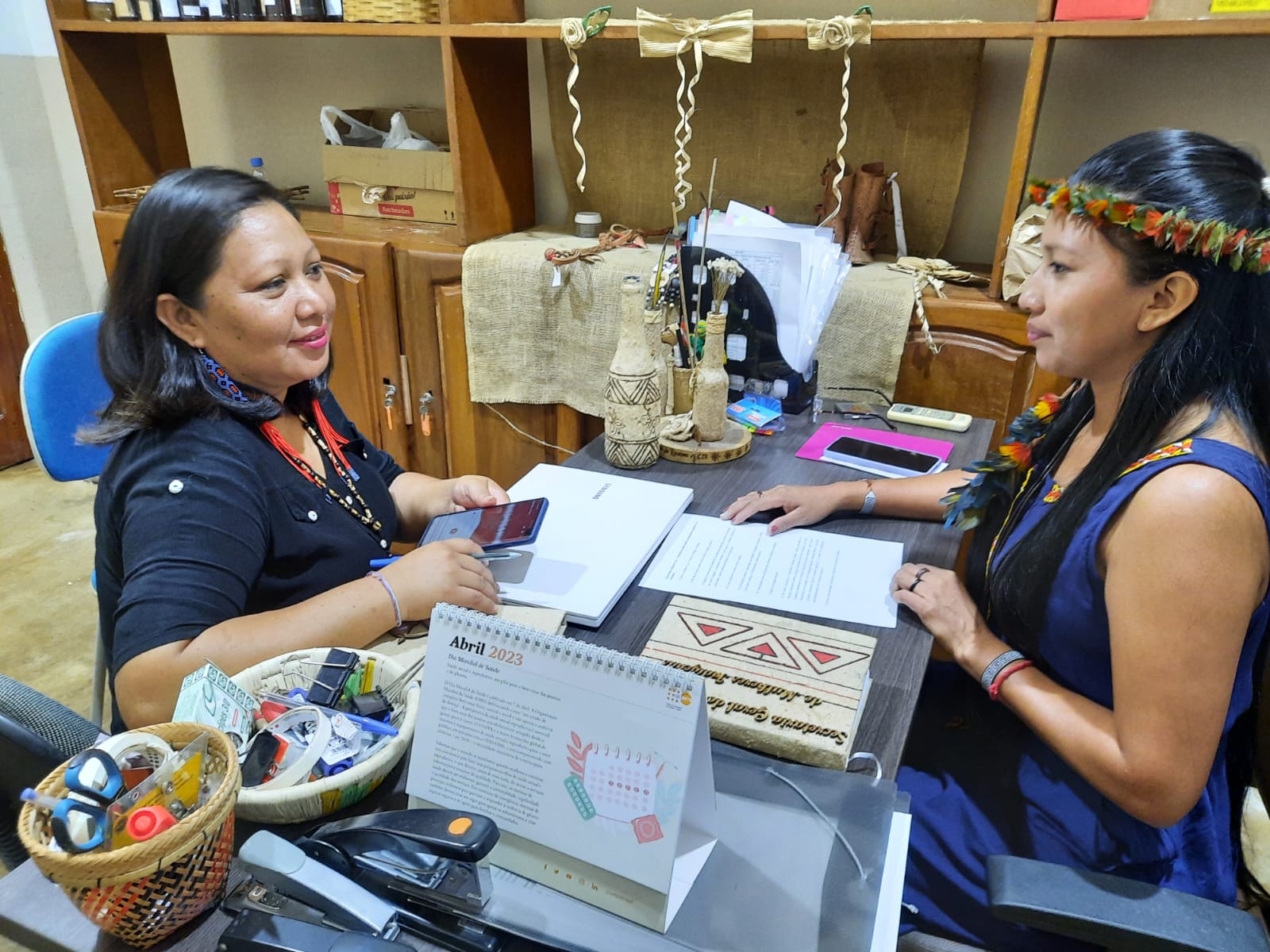
Interview with journalist Mayra Wapichana