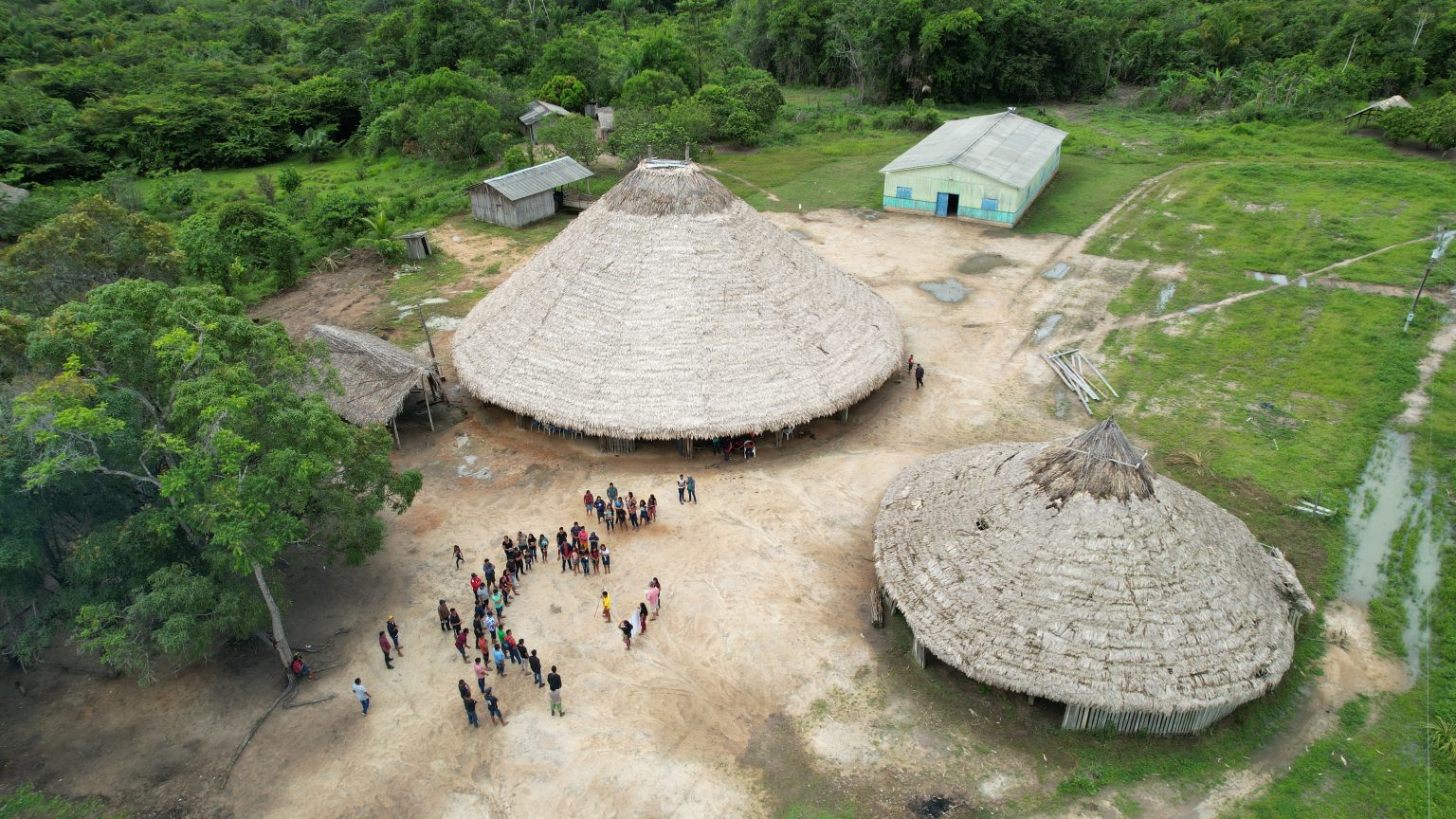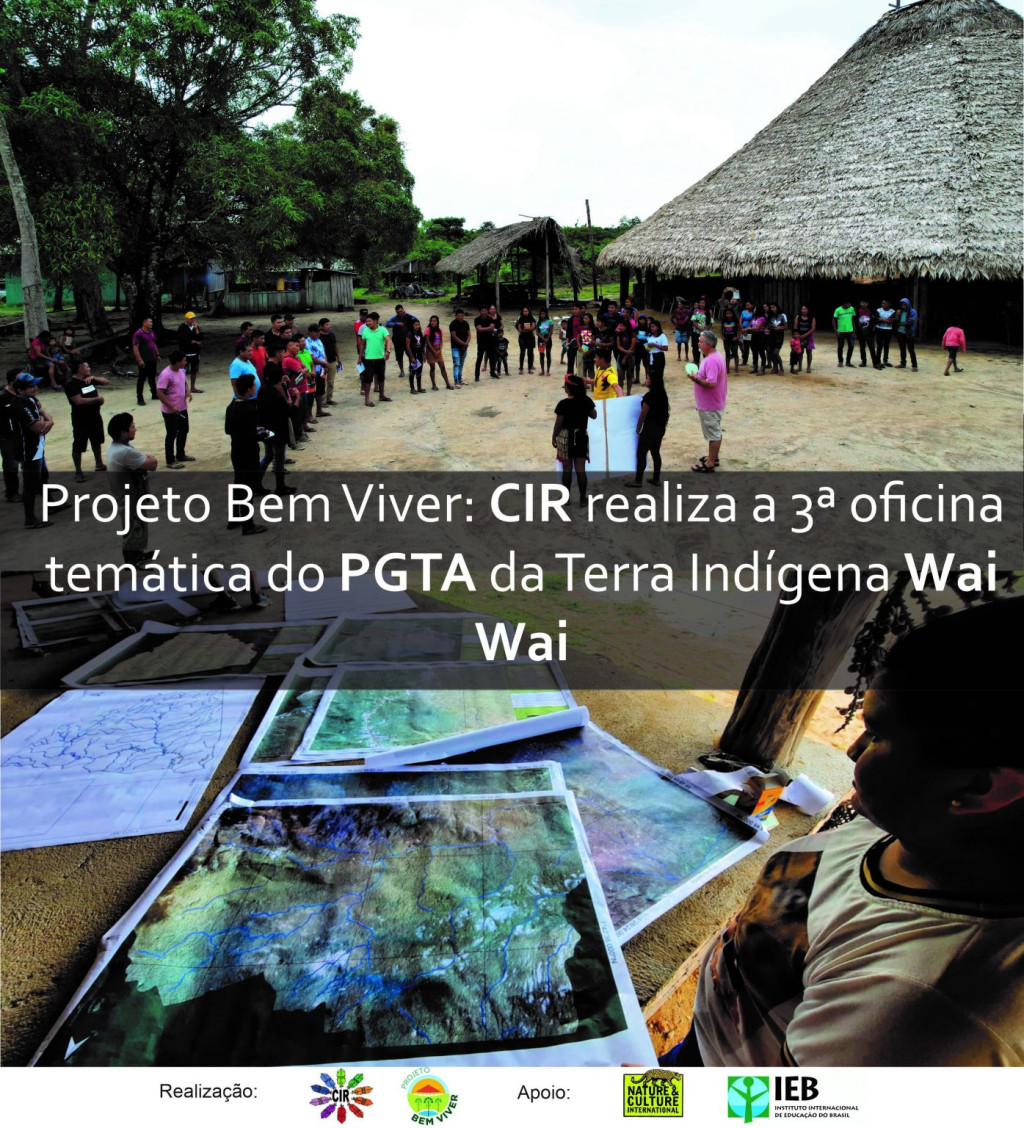
The Indigenous Council of Roraima (CIR), through the Department of Territorial and Environmental Management (DGTA) in partnership with NCI and IEB, held from April 26 to 28 a thematic workshop on the Territorial and Environmental Management Plan (PGTA) with the theme: "Territorial control and law. The activity took place in the Xaari community, T.I Wai Wai and had instructors Keliane Wapichana, Territorial Manager, Genisvan André, GIS technician, Fátima André, Collective Health manager, in addition to Reinaldo Lourival, Coordinator of National Culture International (NCI) and Leda Martins, Anthropologist of the Bem Viver project. At least 110 leaders from 3 communities, Xaari, Anauá and Serra Talhada, participated.
The Territorial and Environmental Management Plan (PGTA) aims to format a life plan made entirely by the communities. During the workshop, they made a brief history of the PGTAs of other T.Is, in addition to remembering what was addressed in the two previous ones held within the Wai Wai Indigenous Land.
The main activity of the communities in the territory of the Wai Wai people are the collection of Brazil nuts, which annually yield 8 to 9 tons, the sale of bananas, and the sale of flour.
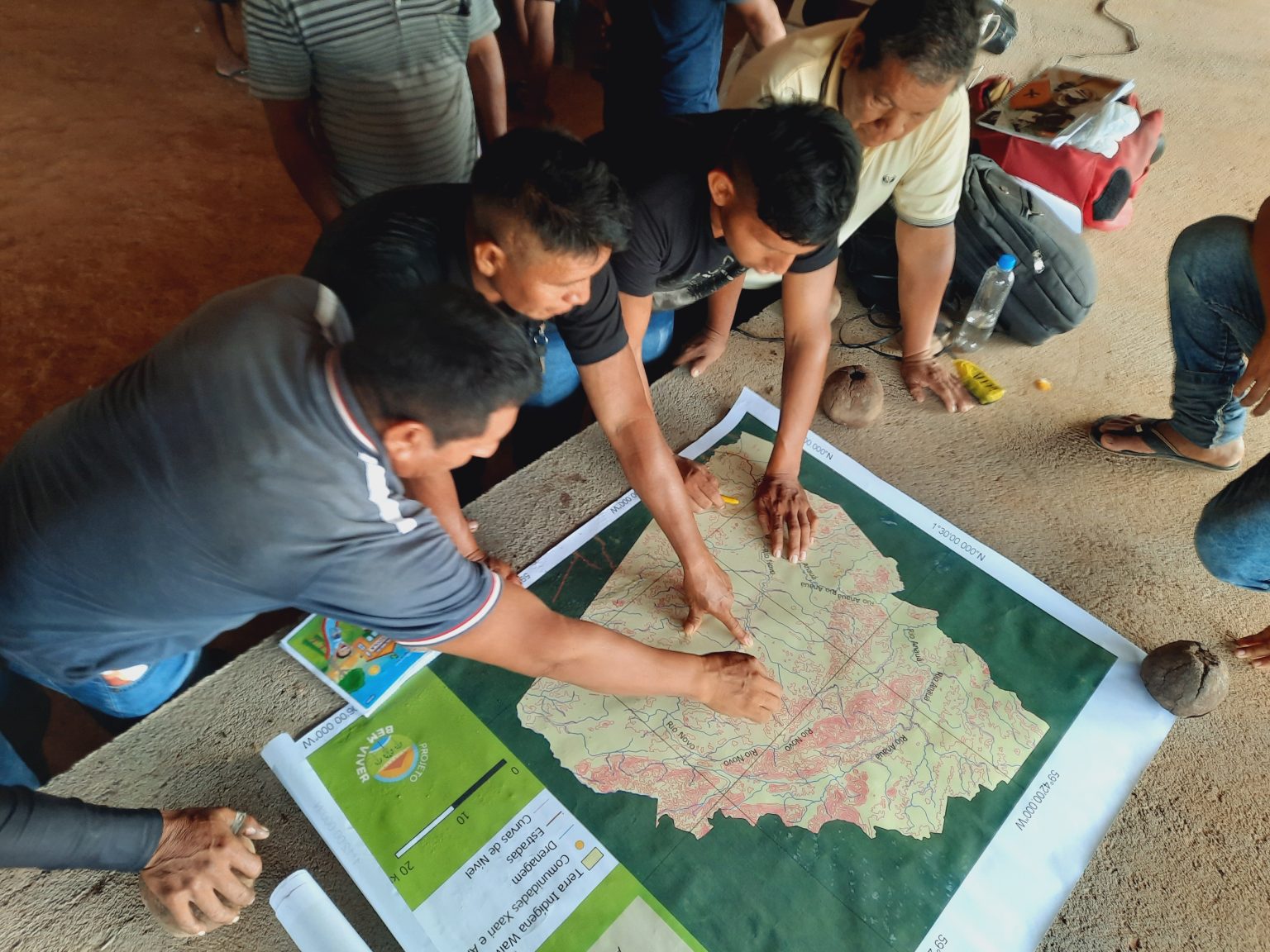
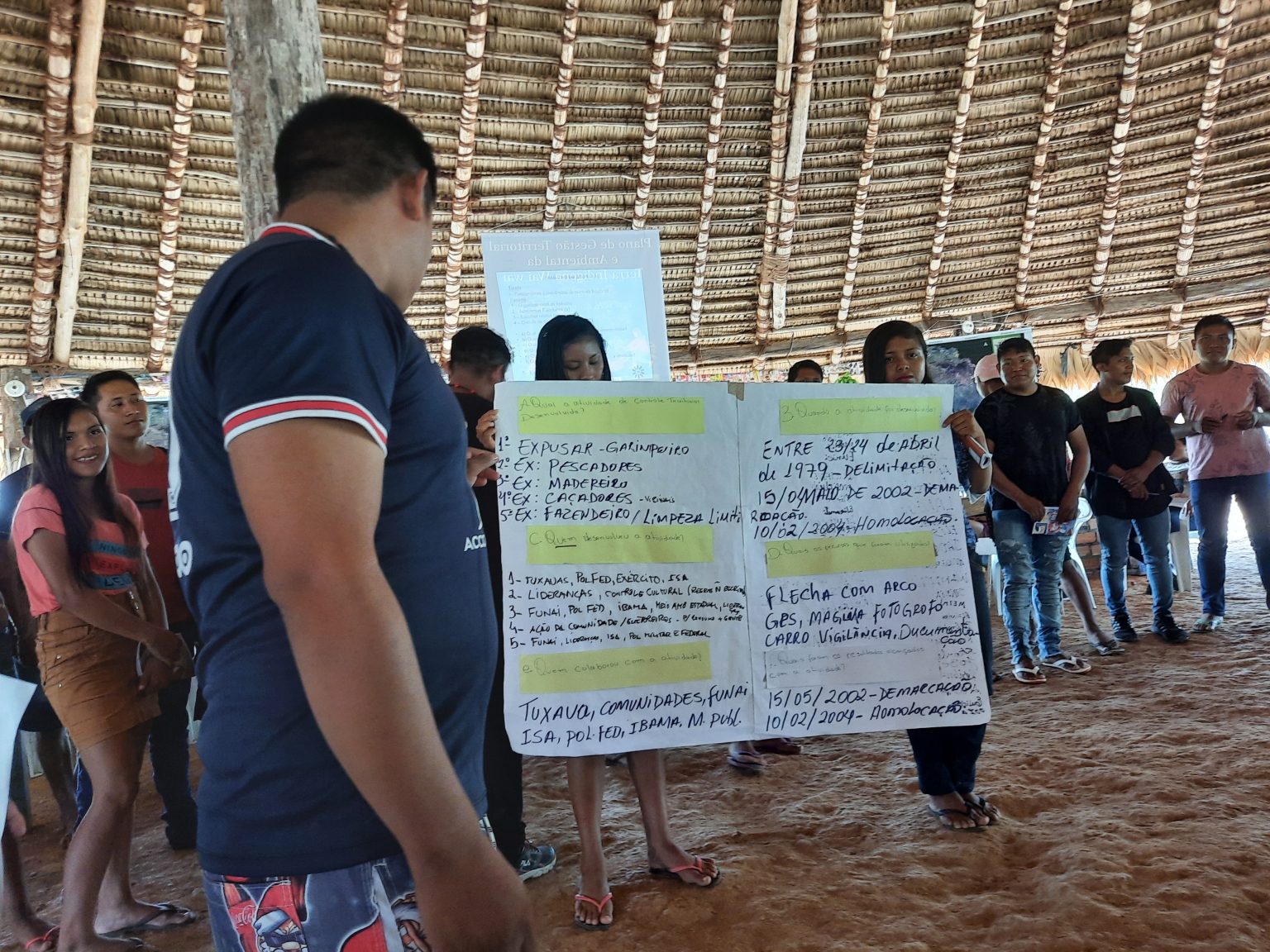
Wai Wai Leaders Identify Conservation Hotspots and Conflicts
"The PGTA for the community was very important, with the participation of the elderly, young people, adults and children, where we put on paper what we have in memory, it is very important for us to record this moment, we have been building over this time, we have to thank the participation of the entire community, here in the region, we are 400 people in the Anauá and Xaari communities."
The leader reported Ivaldo Wai Wai, who also highlighted the fact that the more traditional leaders have told part of the story, from the beginning of the struggle for the territory to the demarcation.
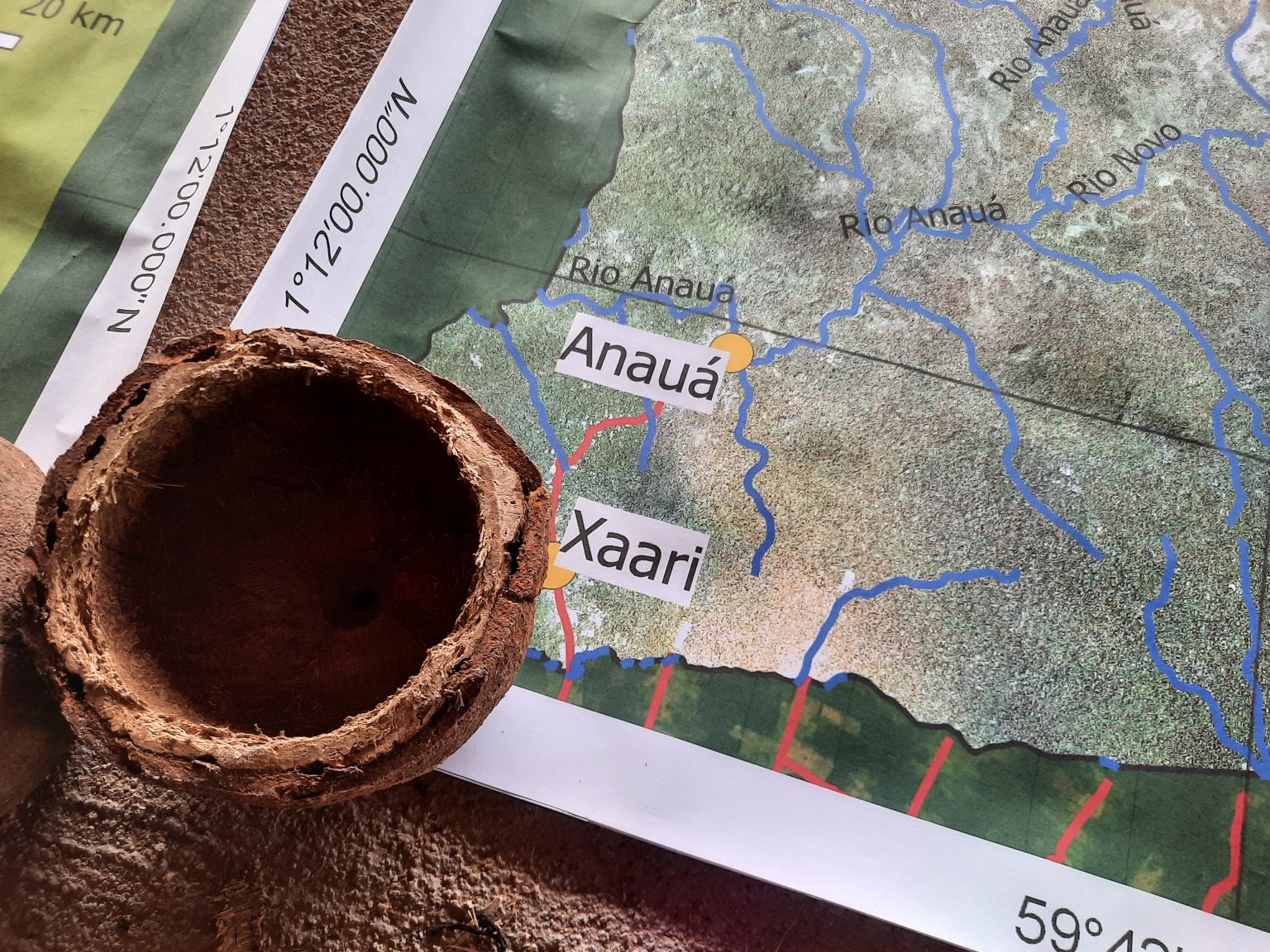
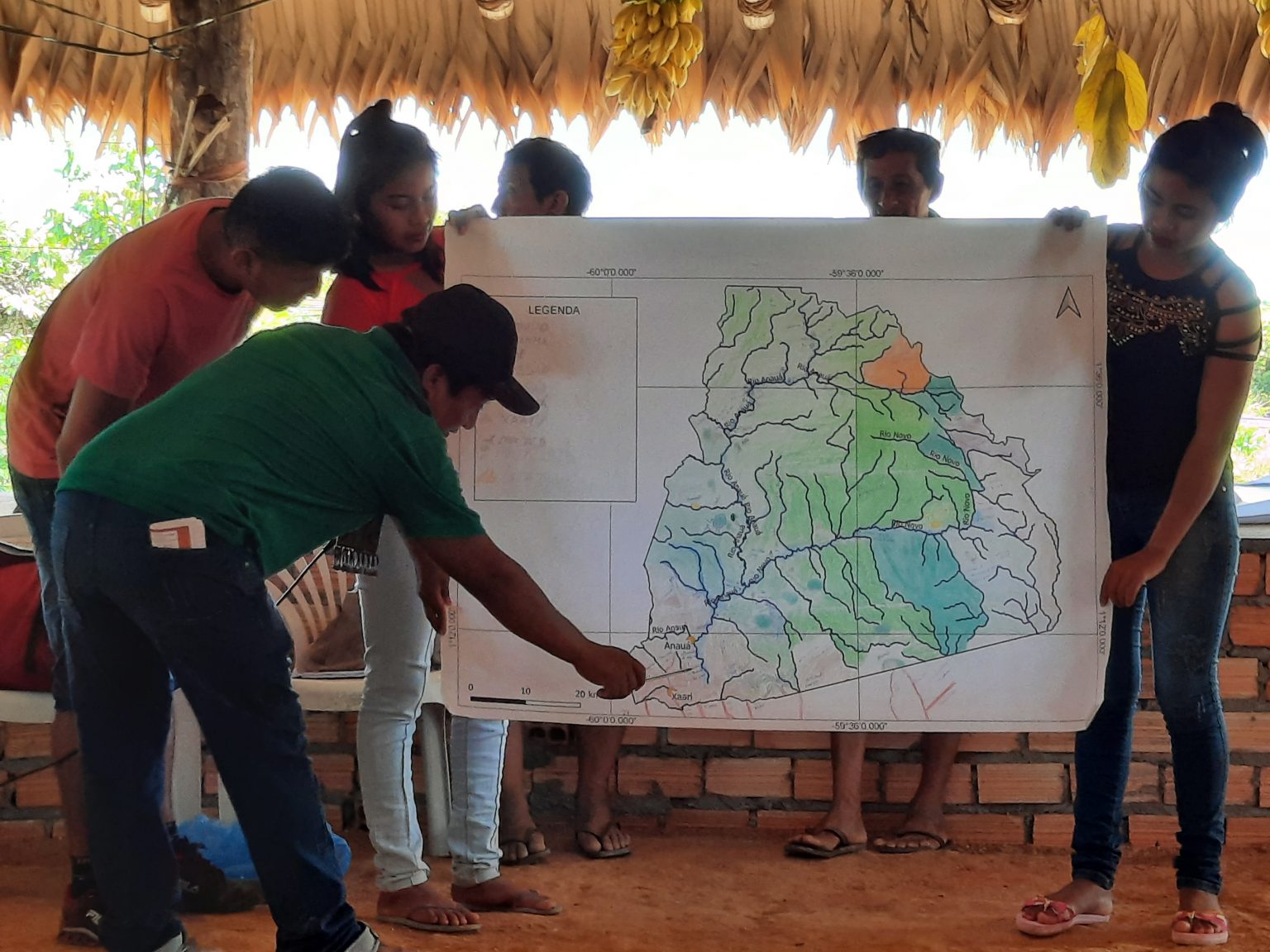
As a continuation of the initial workshops on awareness and management of natural resources, respectively, the third workshop sought to identify the threats against the territories, in addition to looking for solutions, and pointing out actions taken by the region's own leaders. The identifications were made through cartographic maps of the IT. The traditional leaders soon visualized areas of conflict (mining, theft of nuts/cattle and deforestation), areas of preservation, conservation, collection and maintenance.
Among the internal and external threats highlighted during the workshop are alcoholic beverages, sexual abuse, mining, invasion of tourists, fishing and illegal hunting, within the IT. The leaders also pointed out solutions to the problems through integrated meetings and actions to combat and prevent threats.
In the group work, the leaders were carrying out the vision of the future for their land in drawings, made on a cloth of approximately 4 meters, which was to be shown from the previous activity, among the paintings they highlighted the preservation of culture and the territory.
Timeline:
The Wai Wai Territory is composed of the T.Is Trombetas Mapuera and Wai Wai, delimited on April 23 and 24, 1979, Demarcated on April 23, 2001, Homologated on June 23, 2003. This timeline was redone by the leaders during the workshop, they still reported great political pressure to reduce the territory, however it was asked that it was still too small and they would not accept any agreement outside its terms, and so they proceeded with the homologation. The Wai Wai Territory has a population of 800 to 900 Indigenous people, 15 communities.
As previously reported, the T.Is Trombetas Mapuera and Wai Wai maintain as a productive activity the collection of Brazil nuts made through the Jatapú and Anauá rivers. The management of the resources generated by the sale of Brazil nuts is done by the Wai Wai leaders in Associations, the resource rotates within the communities allowing the maintenance of boats, community centers and malocões.
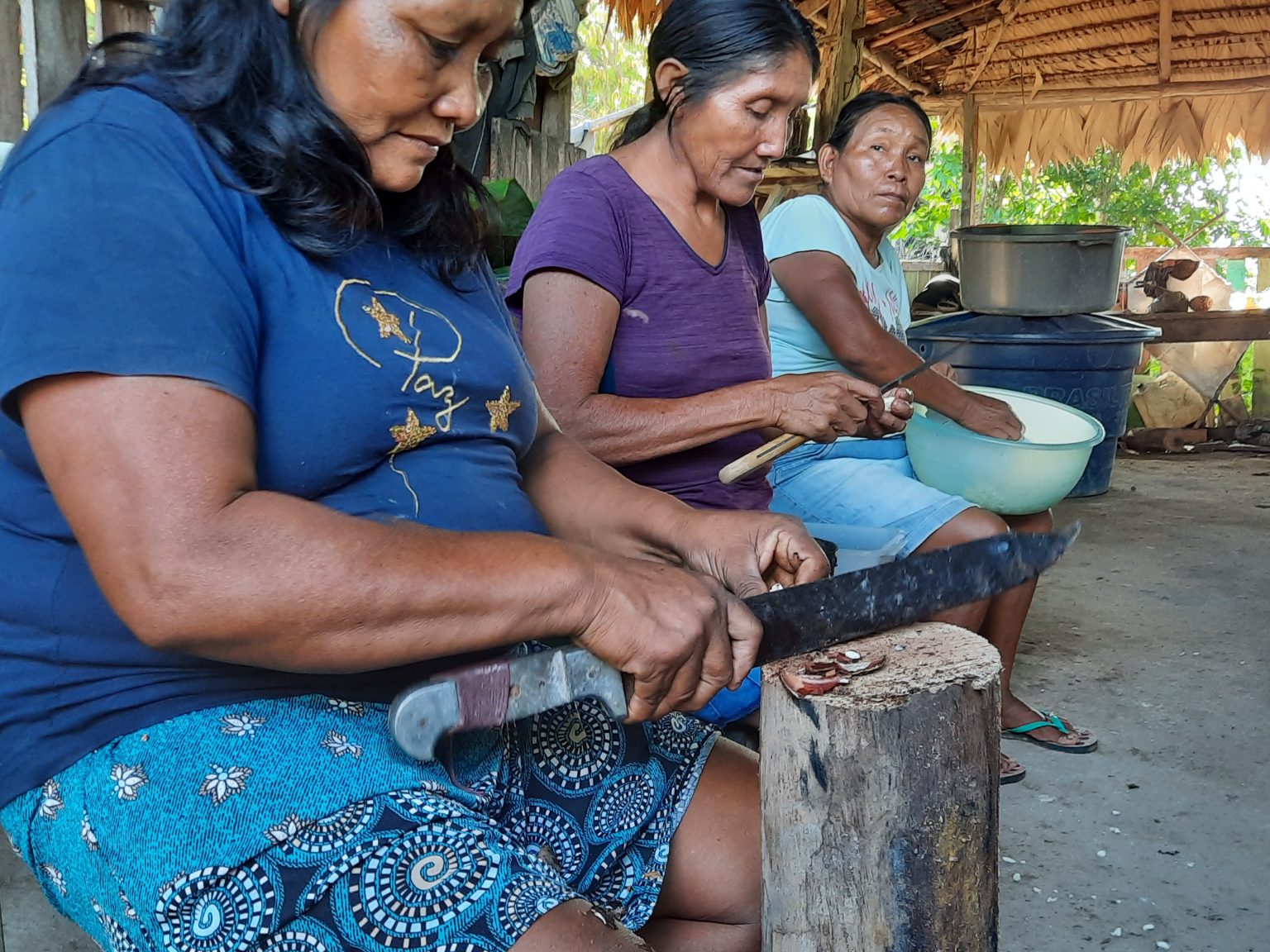
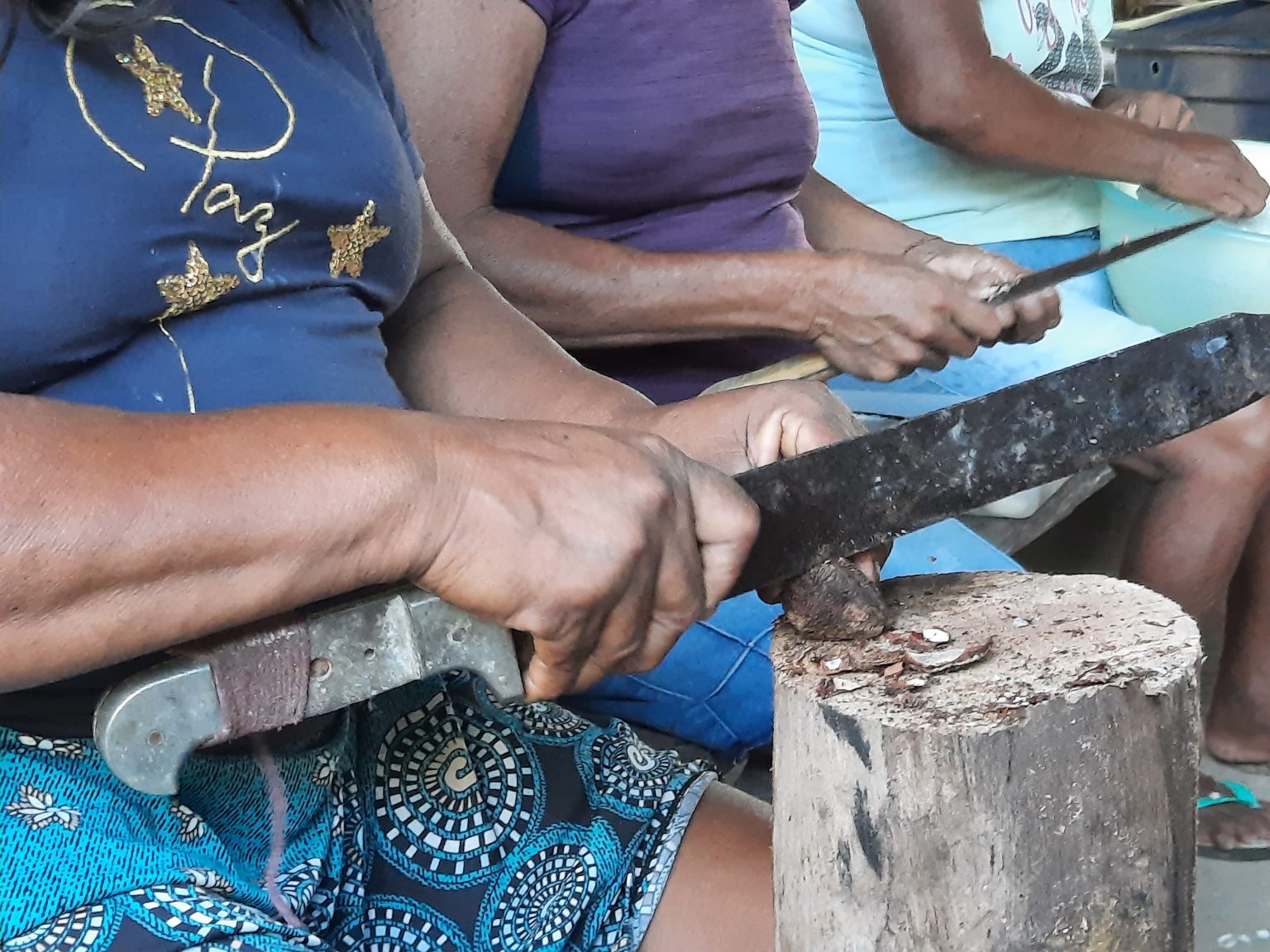
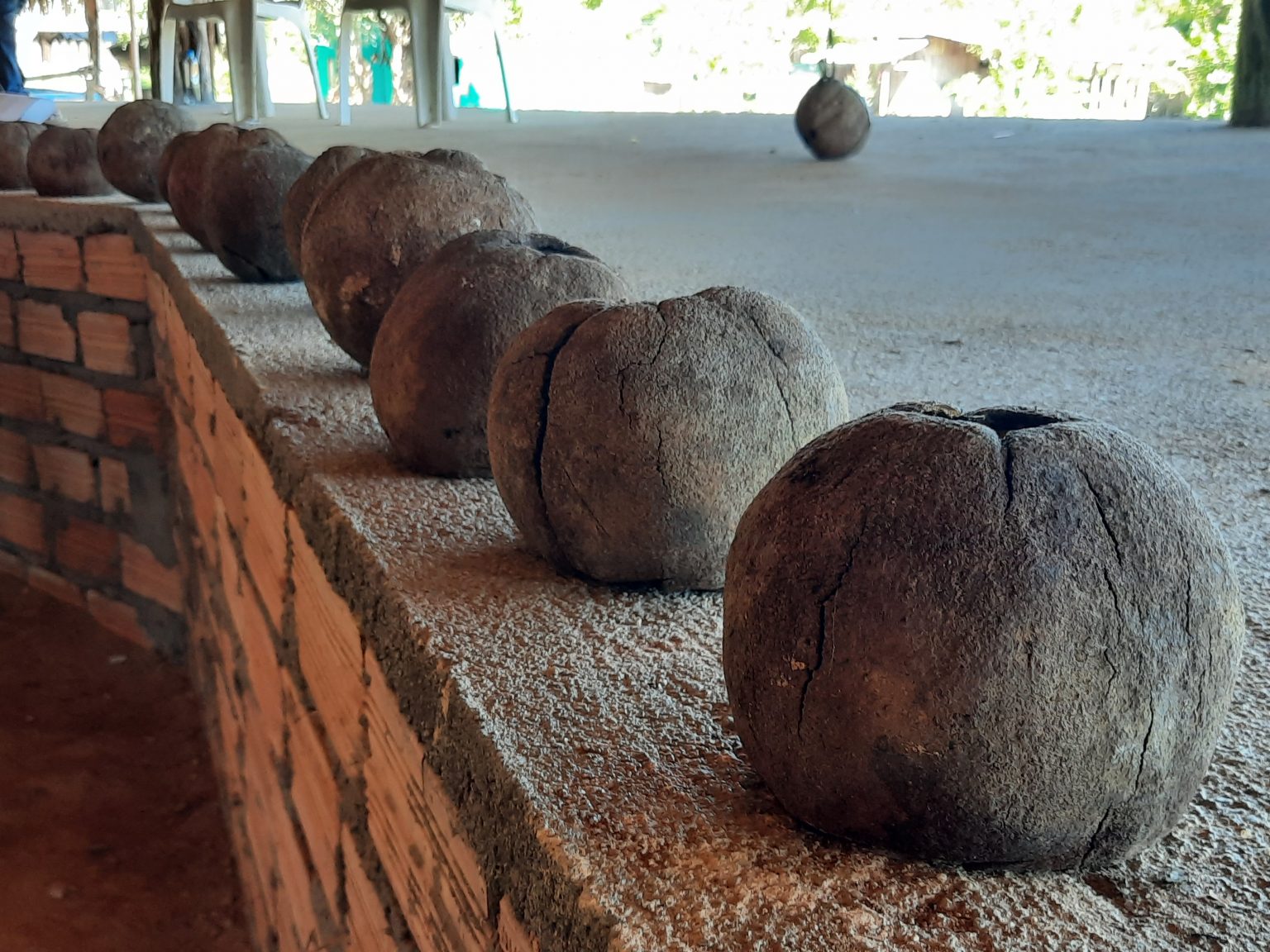
Traditional leaders prepare Brazil nuts / Aerial view of the Xaari Community