
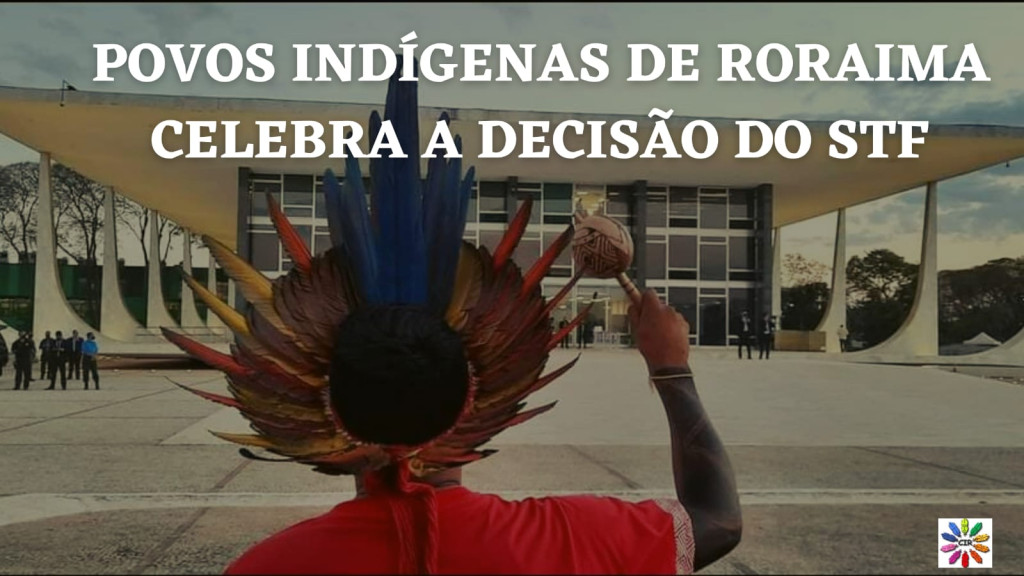
Photo: Andressa Menandro
By ASCOM/CIR and Nailson Wapichana/ Wakywai network/CIR
This week, the Federal Supreme Court (STF) overturned, on Wednesday (15), in a virtual session, State Law No. 1,453/2021, in which it legalized mining with the use of mercury in Roraima. This project, which is authored by Governor Antônio Denarium (no party), even had the support of the majority of the deputies of the Legislative Assembly and was sanctioned by him on February 8, 2021.
The Supreme Court's decision is considered a victory mainly for indigenous peoples. Since most of the mines are within indigenous lands. For the general coordinator of the Indigenous Council of Roraima (CIR), Edinho Macuxi, it was a victory, not only for indigenous peoples, but also for the environment and society in Roraima.
"This bill allowed mining and, in addition, it released the use of mercury in an uncontrolled way. And when we talk about it, here in our state, more specifically in Boa Vista, we have the only hydrographic basin that is the Rio Branco. If this project really passed, it would really be enabling exploration and environmental destruction."
Also according to Edinho, this would mainly affect the sources of the rivers. Especially those that form a single hydrographic basin in Roraima.
"If this happened, it would be directly affecting the entire population, especially our health. Because it will contaminate the water, the fish and this would have a very negative impact, because in addition to the pandemic, it puts the lives of the population at risk. Then the river, the forest and the people would also die, not only the indigenous people. But everyone who lives in Roraima", he highlighted.
The Direct Action of Unconstitutionality against the law was proposed by the Sustainability Network, articulated by federal deputy Joenia Wapichana from the same party and supported by the Indigenous Council of Roraima (CIR) that represents 255 indigenous communities.
The reporting minister, Alexandre de Morais, voted against and was joined by eight other ministers. The rapporteur declared that the law is unconstitutional because legislating on mining is the exclusive competence of the Union.
Morais also considered that the law violates the right to an ecologically balanced environment as a good for common use and that it must be preserved, especially in relation to future generations, violating articles 225 and 227 of the Federal Constitution.
For Edinho Macuxi, this decision by the Supreme Court to bar the bill was an achievement for all indigenous peoples, as well as for society in general in Roraima.
"It was a very important and very competent decision. This really helps the indigenous population, the environment and non-indigenous society to continue to have clean water, natural air and having uncontaminated soil. In fact, having a quality of life. So this is very important and we want to thank you directly on behalf of indigenous peoples and all those who really defend the environment. Thank the Supreme Court for every vote for stopping this governor's law that was a suicidal project and an announced tragedy. So for us it was very important and we received it with great joy, the people really celebrated and continue to celebrate", he concluded.