
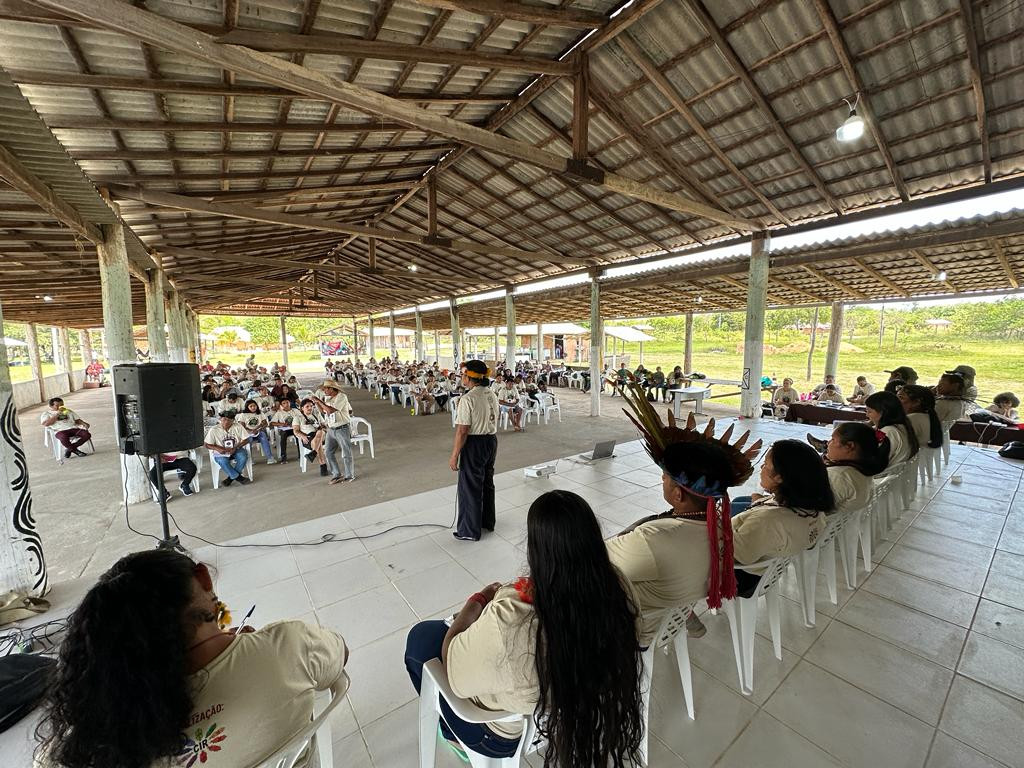
The Department of Territorial and Environmental Management of the Indigenous Council of Roraima (CIR), began last Monday (03) the activity of preparing the Territorial and Environmental Management Plan (PGTA) for the Amajari and Tabaio regions, and the Truaru da Cabeceira and Sucuba indigenous lands, in the Arcará indigenous community, Amajari region.
Approximately 170 people are involved in the activity, including indigenous leaders such as Tuxauas, indigenous protection, surveillance and territorial groups (GPVTI), firefighters, young people and women, from the Macuxi, Wapichana and Taurepang peoples.
The department coordinator, Sineia do Vale, from the Wapichana people, spoke about the importance of collectively building life plans and engaging in dialogue with public institutions to implement actions.
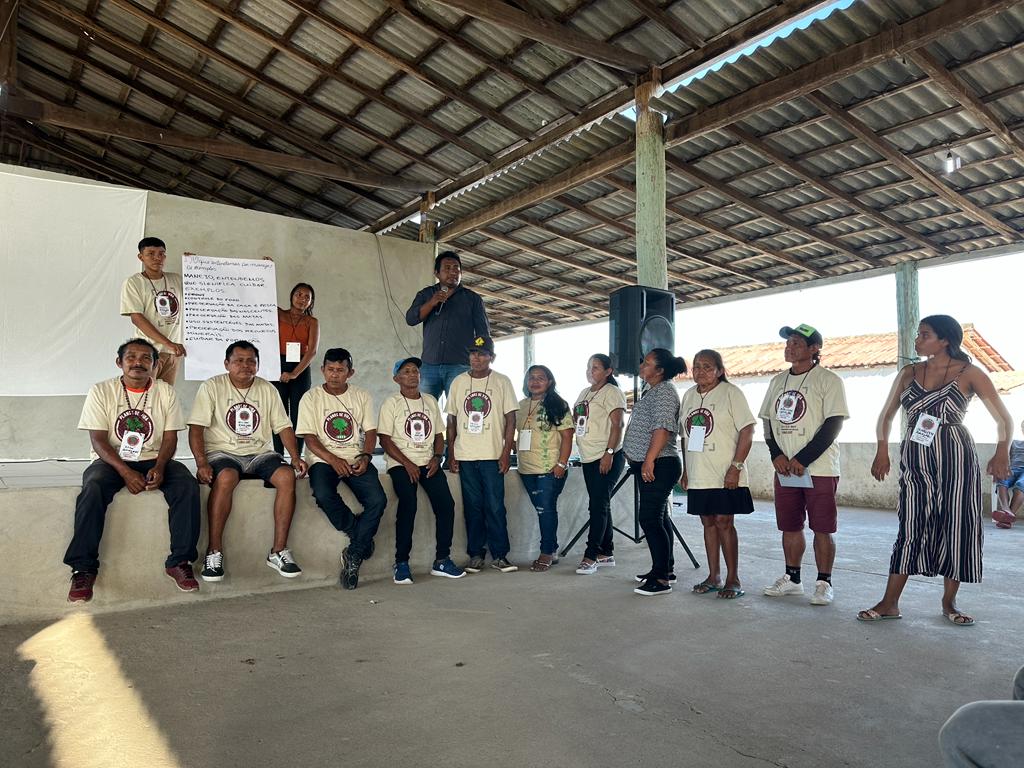
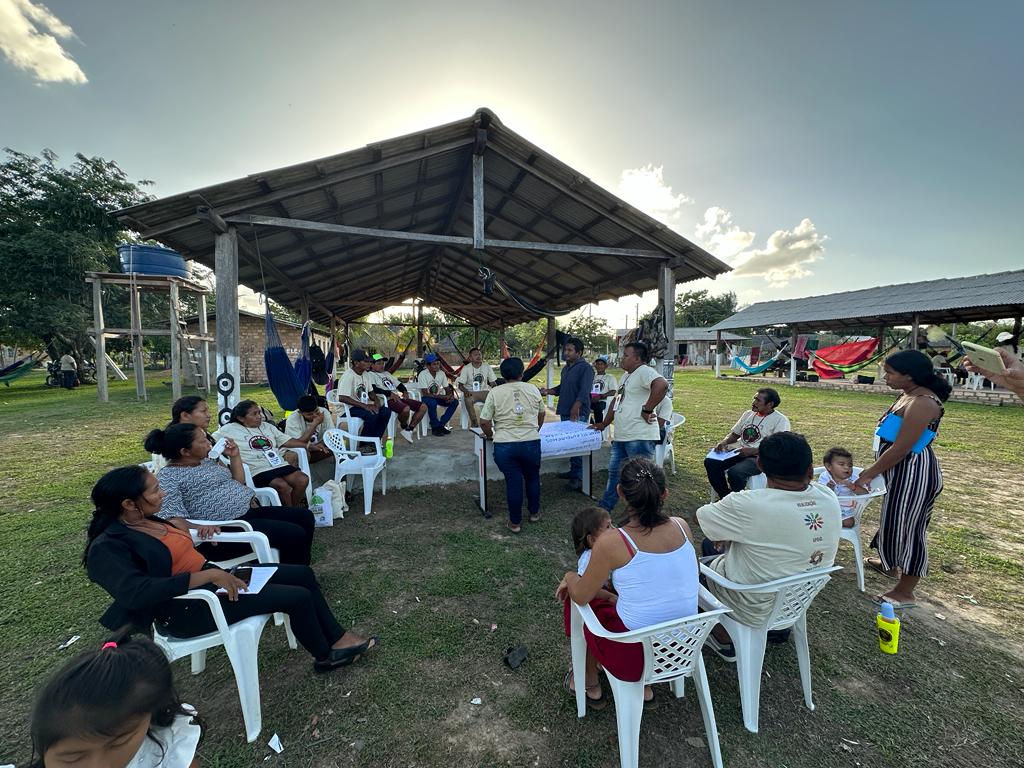
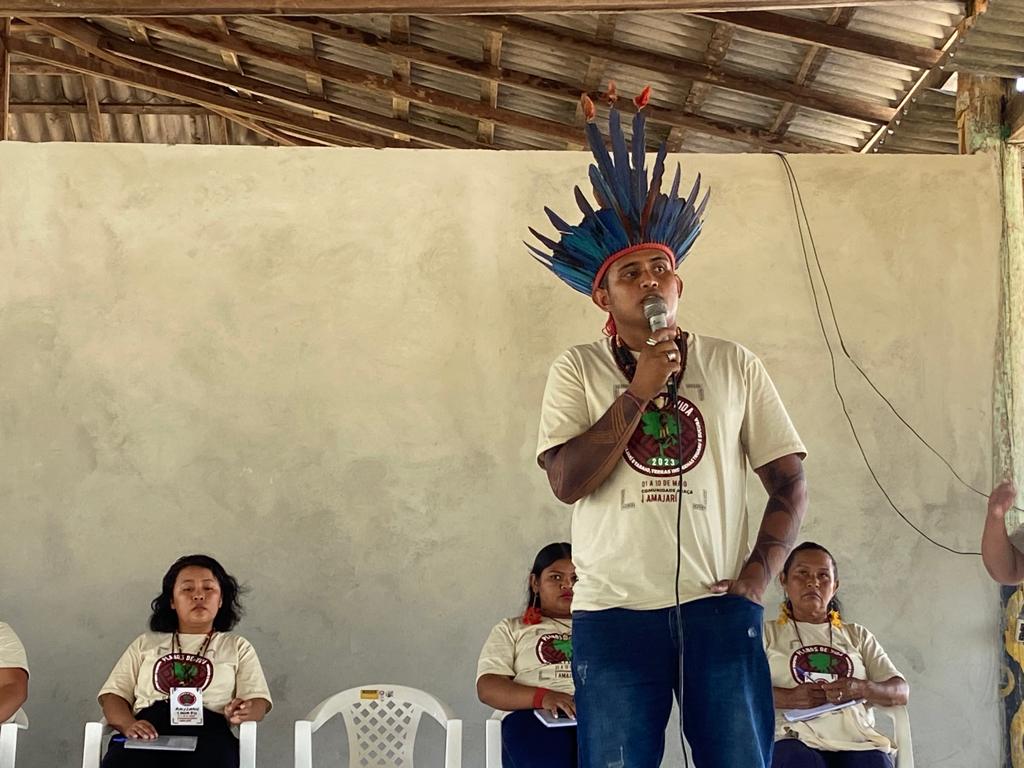
“In this initial phase, it is very important to build a life plan and engage in dialogue with the community. After this plan is consolidated, we can then engage in dialogue with public institutions, partners, and also implement actions in areas where there are no partnerships, neither in terms of public policy nor other projects. With this plan, we can implement dreams and projects for the well-being of the communities,” the coordinator emphasized regarding the importance of the life plan.
With the plans being developed by the communities themselves and supported by partners such as Nia Tero, the activity continues until the 11th. During these days, there will be work in thematic groups, and at the end, the participation of institutions and partners for the agreement of actions.
It will be a time to solidify commitments and partnerships for the implementation of projects and actions proposed by the communities.
Information and photos: Communicators/Wakywai network.