
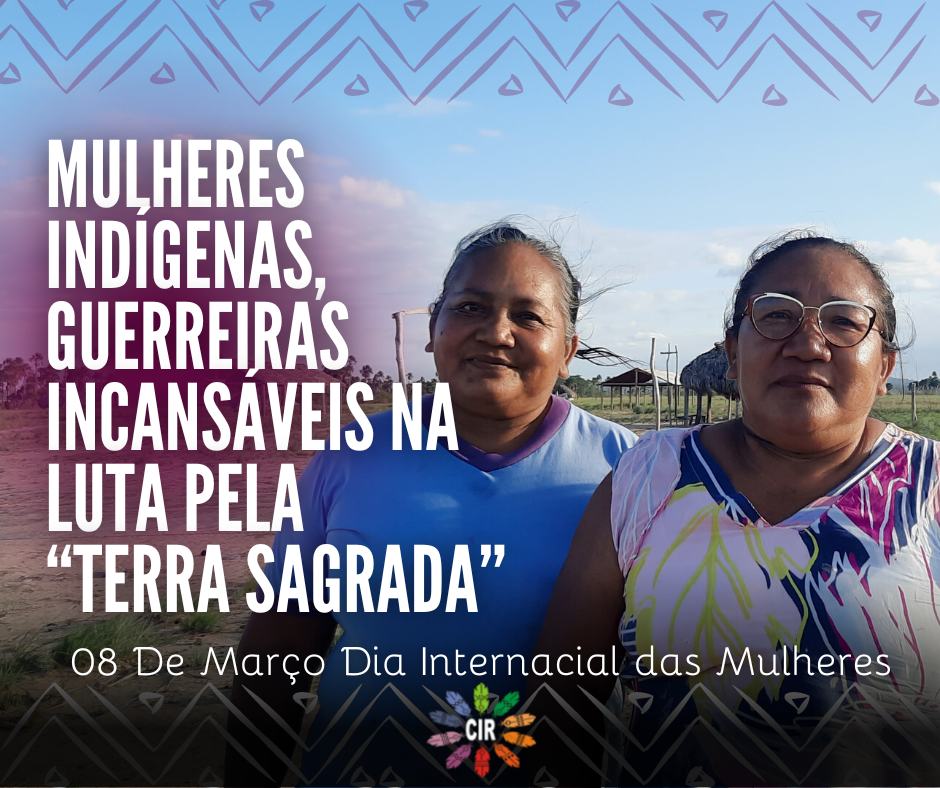
On this March 8th, International Women's Day, the Indigenous Council of Roraima (CIR) honors all women, especially the warriors who fight collectively for their territories.
Represented by two leaders of the Macuxi people, Nadis da Silva Neto, 49, and Madalena Macuxi, both recount the struggle for the "Sacred Land" that they have been experiencing since 2021 in the Pium Indigenous Land, Tabaio region, Alto Alegre Municipality.
The area occupied by the community has been traditional land of the Wapichana and Macuxi peoples for over 30 years. However, it was excluded from the demarcation due to pressure from farmers. Nevertheless, it is for collective use, where they plant crops, raise animals, and a portion is considered an environmental preservation area now called "sacred land." The elders report that there were no farmers in this area. However, in recent years, an invader claimed that portion of land is his property.
Dona Nádis explains that the name "Sacred Land" was created by Sandra Salustino, from the Sapará people, who was a teacher in the Pium community at the time. For the Macuxi and Wapichana peoples of the community, the land is sacred because it goes far beyond its geographical space. From there, the residents live off their crops and fishing. Before being invaded, the place was not occupied by the residents, precisely to maintain its protection.
“In our Sacred Land, there are many medicinal plants, that's why we named it that. The land is ours. When the farmer came to fence it off, we decided to all move there. On April 18th, and on the 19th, the first house was built. So, since 2021, we have been fighting for this space until today. The first confrontation with the police was on August 17th, 2021, when the police came saying that one of them was the delegate. Then, the second confrontation was when they came to demolish the houses, on December 1st, 2021. On June 4th, 2022, they burned our houses and the community shed. Almost everything was ready when the invader's henchmen came and demolished and burned it again,” he recounted.
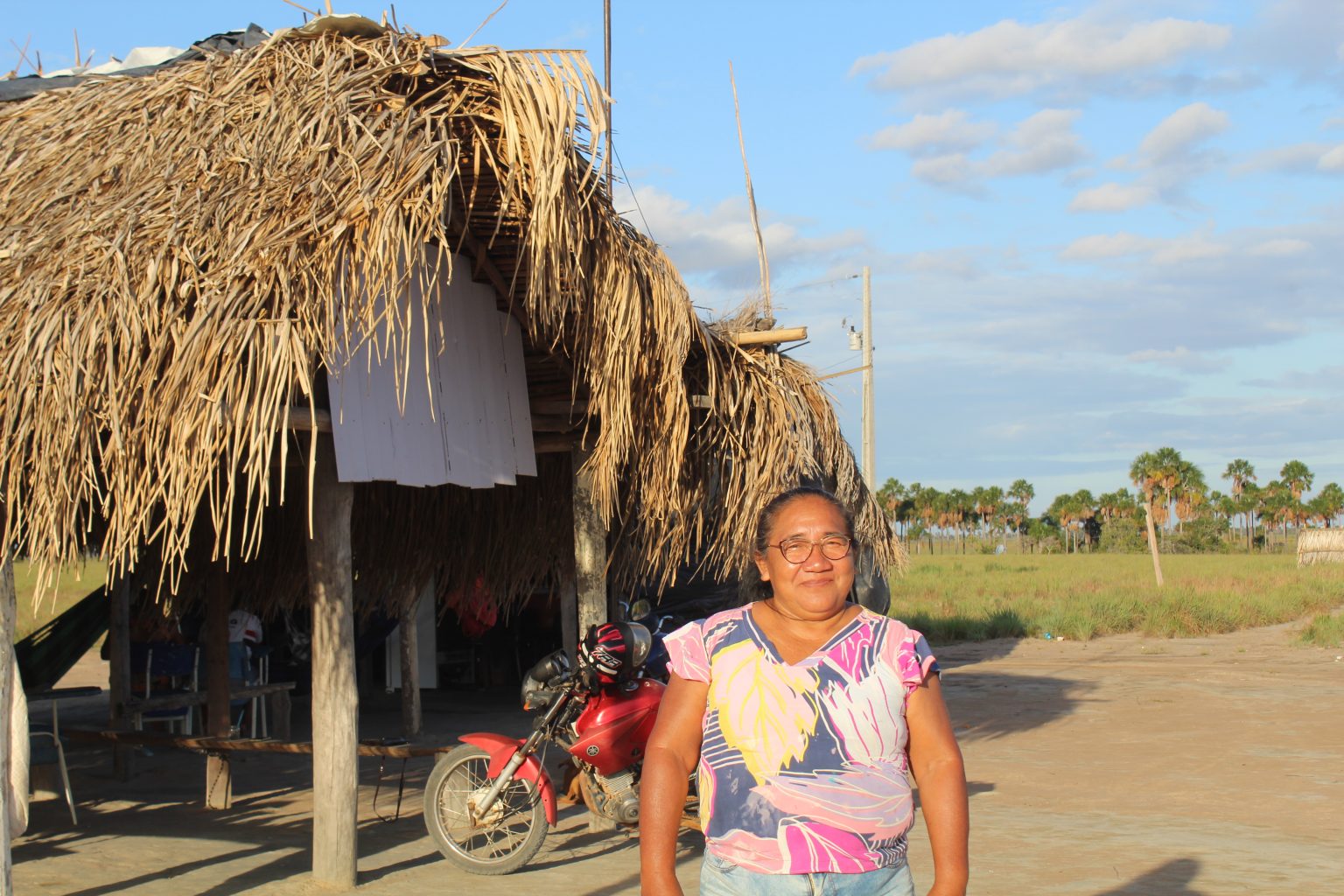
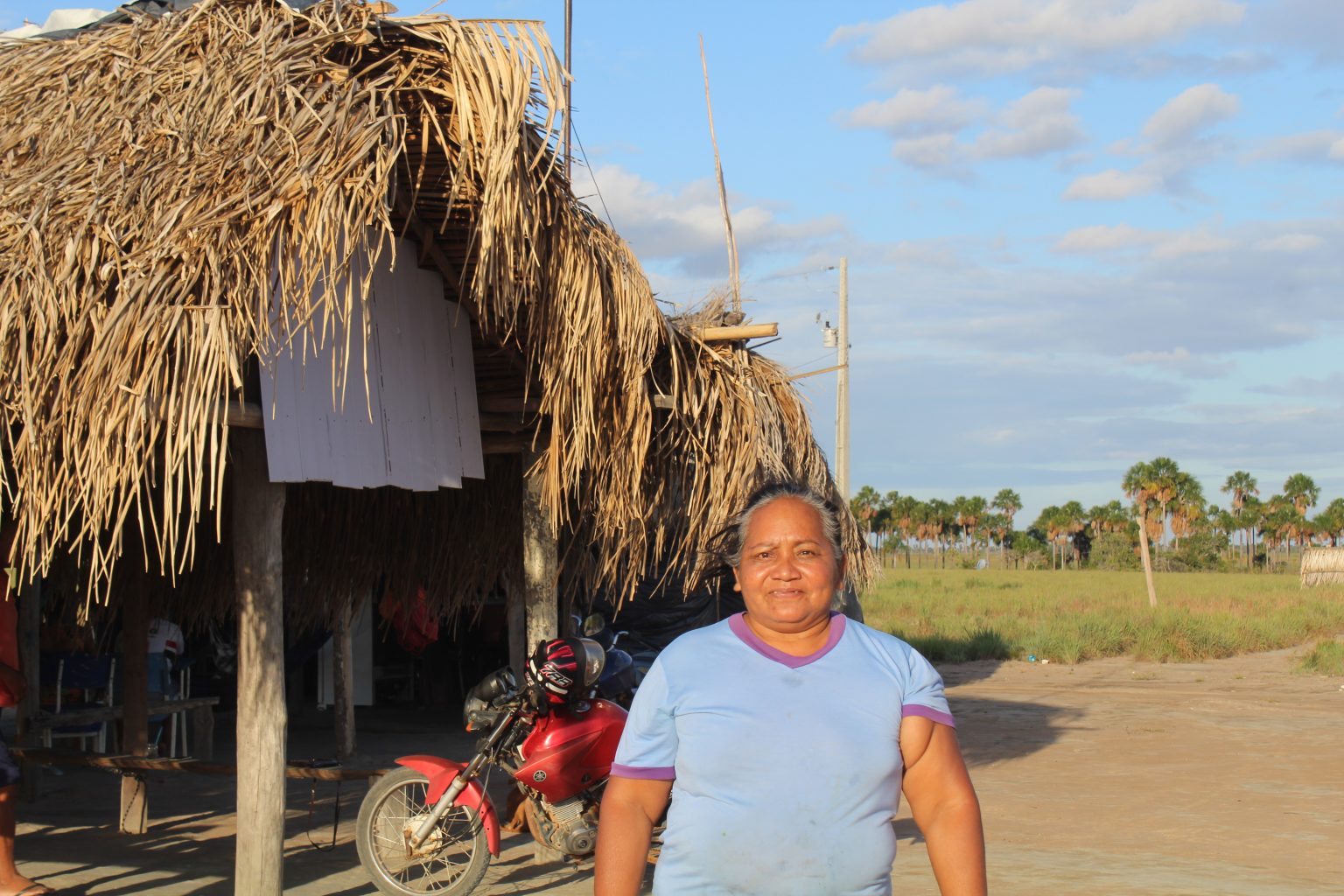
Leaders Ângela Maria Raposo Batista Macuxi and Dona Nádis da Silva Macuvi. Photos: Rede Wakywai.
Nádis explains that indigenous territories are for everyone to live in, maintaining their culture and guaranteeing their means of existence and resistance. Natural resources spring from the territory, hence the struggle to protect it. For her, having her home invaded brought feelings of fear and outrage.
“The feeling was one of fear and anger. To arrive like that, invading what is ours, without having the right to take our things from our house, I felt a lot of anger and sadness simultaneously. To know that you will leave only with your children and leave all your work there in vain. The Sacred Land is important to me because it has many medicinal plants that we use to make syrups and ointments to maintain our health. It's where we get straw to cover our houses, where we get buriti to make juice, and there are also our animals there, raising cattle, horses, and pigs. Most importantly, because we have a spring that produces water, and this water is miraculous,” she emphasized.
Dona Nádis and Dona Madalena recount the experiences they have had and continue to have on their sacred land. They are living a resistance that has lasted two years and 11 months. In indigenous territories, women are leaders who embody courage and resistance in the fight for the rights and well-being of the community. They maintain the care of the territory, facing everything in defense of their mother earth.
“We fight with pride. As an Indigenous woman, I fight for the well-being of my people. To fight, you have to have courage. We are very sad to see our land being destroyed; we have our water source in the streams where we bathe, fish, get our food, and depend on our health,” stated the leader Madalena.
Just like Dona Nádis and Dona Madalena, there are other women who fight to defend their sacred territory so that present and future generations have a place to live and enjoy what it offers.