Combating violence and sexual abuse of indigenous children and adolescents, especially in more vulnerable areas with a high rate of cases, has been one of the main struggles of indigenous communities seeking the protection and well-being of their indigenous children and young people.
To strengthen this fight, now the communities can also count on the support of the Network for the Protection of Indigenous Children and Adolescents, through the "Rede Viva Bonfim Project", created by the Court of Justice of Roraima (TJ/RR), involving several public agencies and entities that work on the agenda of protection of children and adolescents in the State.
The Network's work is focused on the regions covered by the municipality of Bonfim, on the border with Guyana, one of the most vulnerable and with constant cases of complaints, according to reports from the Military Police of Roraima.
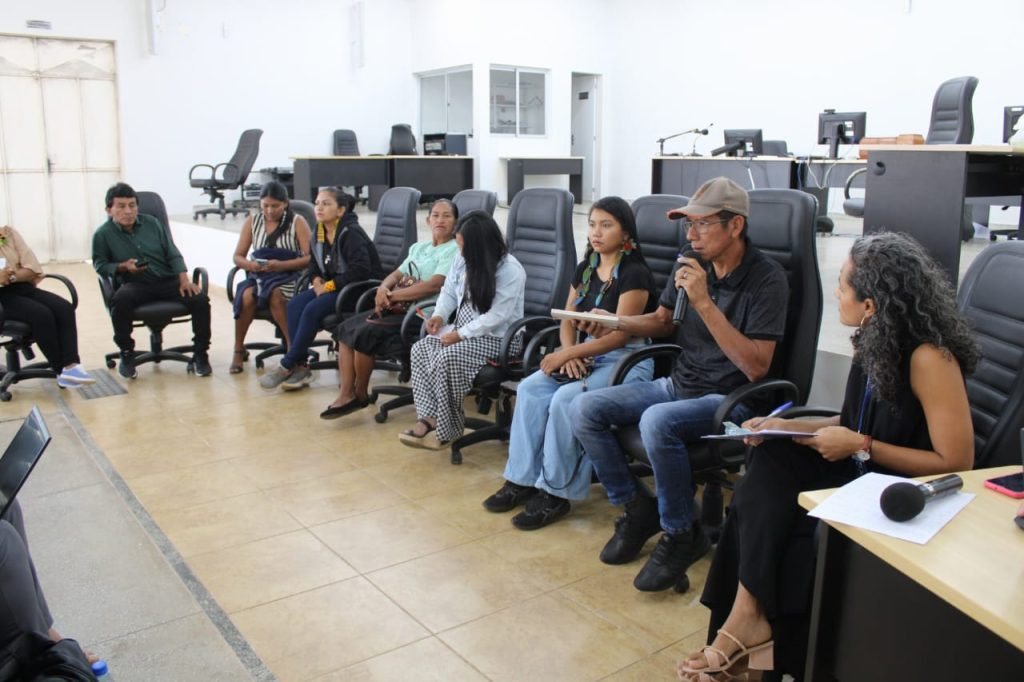
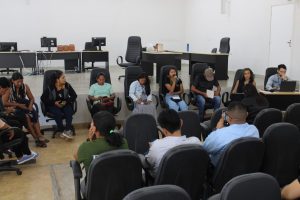
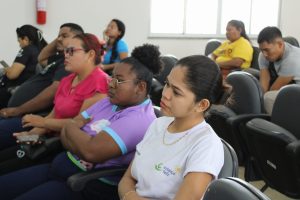
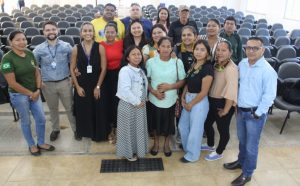
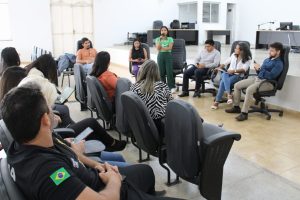
Advancing in the dialogues and proposals for joint actions, the second meeting of the Network took place on the last days, 14 and 15, in the auditorium of the District of Bonfim, with the presence of the Indigenous Council of Roraima (CIR) and teams from the legal, women's and youth departments, in addition to institutions such as the Department of Education, Military Police, Guardianship Council of the Municipality of Bonfim, Social Assistance Reference Center (CRAS), Bonfim Police Station, National Foundation of Indigenous Peoples (Funai) and other institutions that work on the agenda of protection of children and adolescents.
The regional coordinators of tuxauas, women and youth, from Serra da Lua, Raposa and Baixo Cotingo, from the municipalities of Bonfim, Cantá and Normandia, were at the meeting and presented their concerns and realities in relation to children and adolescents, having as problems not only abuse, but depression and suicides of young people. "We are here for the same objective, which is the protection of our children and young people. Cases are growing in our region and in others as well, and this is a concern for us. We have to call our GPVITI, which can also help us in this part", suggested the regional coordinator of Serra da Lua and tuxaua of the Tabalascada community, Cesar da Silva. He also suggested getting to know better the performance of the Tutelary Council in indigenous communities, so that it does not happen as in certain situations that they arrive in the communities without looking for the main leader, which is the tuxaua.
Considering the importance of the Network's work with indigenous communities, he also suggested that the initiative be widely shared with the other tuxauas and their leaders, so that they can be effective in actions to combat violence, especially the sexual abuse of children and adolescents.
In the last two years, the current Indigenous Youth department of the CIR has been prioritizing the mental health of indigenous youth due to the urgency and need to act against the various types of violence, including sexual abuse.
Addressing the concern of the indigenous youth of the Raposa region, in the municipality of Normandia, the deputy coordinator of the youth, Alzieny Almeida, while highlighting the importance of the space for youth to speak at the event, suggested more dialogue between the Council and the indigenous communities, in order to act jointly, in the face of the various difficulties, especially in access to the communities, which is not always in accordance with the local organization.
With the desire to seek answers to what is motivating the increase in violence, the regional coordinator of women of Serra da Lua, Aldenicia Cadete, considered the moment very opportune and new, however, she requested alignment between the institutions. "It is an opportune and new moment, for me, as a regional coordinator of women. It is a good initiative, what is missing is the alignment between the institutions. We need to be aligned with this purpose of mitigating and even ending this violence in our communities", she pointed out.
Aldenicia also suggested that institutions be aware of the use of instruments of social organization of indigenous communities, such as internal regulations and consultation protocols, as is the case of the Serra da Lua region, which already has its protocol. A document that is supported by the laws that guarantee the rights of indigenous peoples in the Federal Constitution.
"We have our organizational structure, such as the internal regulations, which is the internal law of the community, an instrument that has been strengthening us. It is essential to use it because it is supported by the Constitution and they are the instruments that are closest to the indigenous communities. That is why it is important to align so that we know what the role of each one is in this process. It is not only the Tuxaua that will solve it, but a conjuncture and leadership structure, everyone will help", considered Aldenicia.
The Indigenous Council of Roraima (CIR), which operates in 260 communities, 11 regions and different indigenous peoples, has paid attention to dialogue with the aim of strengthening the actions already carried out through its legal, women, and youth departments, but also enabling other forms of access and help to indigenous communities. The organization highlights in its actions, respect for the rights and the form of organization of each community and indigenous people.
Accompanying the meeting on the first day (14), the general tuxaua of the Indigenous Women's Movement and member of the executive coordination of the CIR, Kelliane Wapichana, stressed the importance of maintaining dialogue and understanding the form of organization of the communities, especially in solving the problems and reinforced that sexual abuse of children and adolescents is a serious issue, needs to be fought and is not a cultural issue.
"It is an important dialogue, they need to understand the reality of indigenous communities, their social organization, and propose actions that combat the various types of violence. It is an urgent issue to be fought and in no way should it be treated as a cultural issue. We do not consider this", stressed, Tuxaua, who has been participating in the discussions since the first meeting of the Network.
For the psychologist and member of the Coordination of Childhood and Youth of the Court of Justice of Roraima (TJ/RR), Isabeau Cristina, when highlighting the first steps of the Network, stressed that the intention is to carry out work in schools with children and adolescents, prepare teachers of the school network to identify possible signs of violence, however, before that, they seek to articulate the functioning of the Network and be able to serve children and adolescents, who possibly tend to seek help more and more.
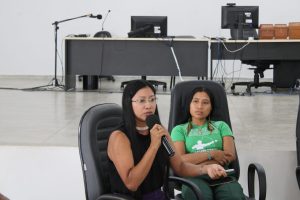
"When informative and awareness-raising actions are carried out, this also ends up generating an increase in complaints," he pointed out, commenting on the alignment between the Network and indigenous leaders.
As one of the main advances in the second meeting, Isabeau, highlighted the strengthening of dialogue with the leaders, even with the various questions about the types of violence. "We leave with some questions regarding the approach of the Network and this has already taken a big step, from the presence of indigenous leaders, such as the coordinators of tuxauas, women and youth. There was an invitation for the participation of the Network in the regional Assemblies, which for me is one of the greatest advances of this meeting", he highlighted.
One of the challenges for the institutions, including for the organization and its bases, identified in this context of the Network's implementation, is the specific data of indigenous children and adolescents, victims of sexual abuse and other violence, which they do not yet have and which can be included in the most effective actions to protect indigenous children and adolescents in Roraima.
During the meeting, each representative presented the institution's performance, the difficulties and its expectations for improving the service to indigenous communities. One of the main institutions mentioned was the Tutelary Council, created based on the Statute of the Child and Adolescent (ECA), which is a permanent and autonomous body that seeks to ensure the fulfillment of the rights of children and adolescents. Its work takes place in partnership with schools, social organizations and public services.
The Councilor of Bonfim, Talison Lúcio, when reporting the challenges and difficulties of acting in indigenous communities, considered that the meeting was very important to strengthen the relationship with the communities and their leaders, so that they can improve their work and give better attention to this public. "It was an important meeting for us who work directly with the cases, when triggered, in order to strengthen the relationship with the communities, to know how we can act, without disrespecting their way of social organization, bringing information and awareness, not only to children and young people, but to the entire community", he reported, making himself available for dialogues, as requested by indigenous leaders.
As a follow-up to the meeting, the participants presented as proposals the production of awareness materials and information, such as booklets and videos, involving children and adolescents, specific training on indigenous rights to institutions and the functions of each institution, with the participation of indigenous communities and their focal leaders, in addition to participation in the Regional Assemblies of Serra da Lua, Raposa and Baixo Cotingo, as invited by the regional coordinators to the representatives of the Network.
The alignment of actions and strategic planning will be addressed at the next meeting of the Network. Date and place have not yet been defined.