
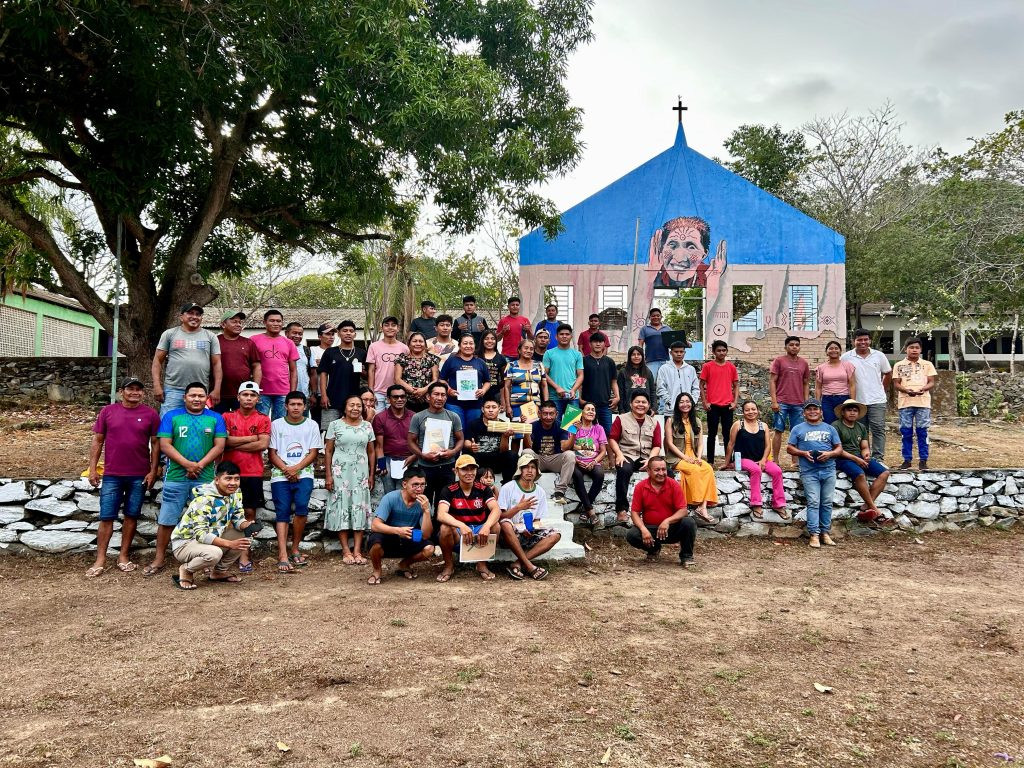
Indigenous leaders from the Surumu region, within the Raposa Serra do Sol Indigenous Territory, met yesterday, February 18, 2025, in the Dionito Macuxi auditorium at the Raposa Serra do Sol Indigenous Training and Culture Center (CIFCRSS), to approve the Regional Regulations. This event represented a historic milestone in guaranteeing the autonomy of the Macuxi, Wapichana, and Taurepang indigenous peoples who live in the region, which comprises 18 communities and has more than 3,000 inhabitants.
The creation of the regulations was a collective process that lasted more than 5 years of discussion, involving chiefs, women, coordinators, young people, legal professionals, and other residents. During this period, debates and reflections were promoted on the internal organization of the region, always with the aim of strengthening indigenous governance and guaranteeing the legal security of collective decisions.

With support from the Ford Foundation, the legal advisory team of the Indigenous Council of Roraima (CIR) oversaw the entire process of drafting the document, together with legal professionals from the region. “The Regional Regulation is more than just a set of rules; it represents the strengthening of indigenous identity and autonomy, as well as the recovery of histories of struggle,” explained legal advisor and lawyer Junior Nicacio, of the Wapichana people.
Leaders Francinete Garcia and Dioclésio Macuxi actively contributed to the drafting of the regulations, guiding other leaders and ensuring that the document reflected the needs and aspirations of the region. During the meeting, Francinete, a legal professional, highlighted the importance of this achievement. “I affirm that the regulations guarantee autonomy and strengthen our social organization, and now, it is the law of the Surumu region,” she emphasized.

With the approval of the Surumu region, the leaders reaffirmed their commitment to defending indigenous rights and consolidating their own organizational structure, in accordance with their culture and tradition. The CIR continues to stand alongside its bases, supporting the construction and implementation of instruments that strengthen the self-determination of the indigenous peoples of Roraima.