
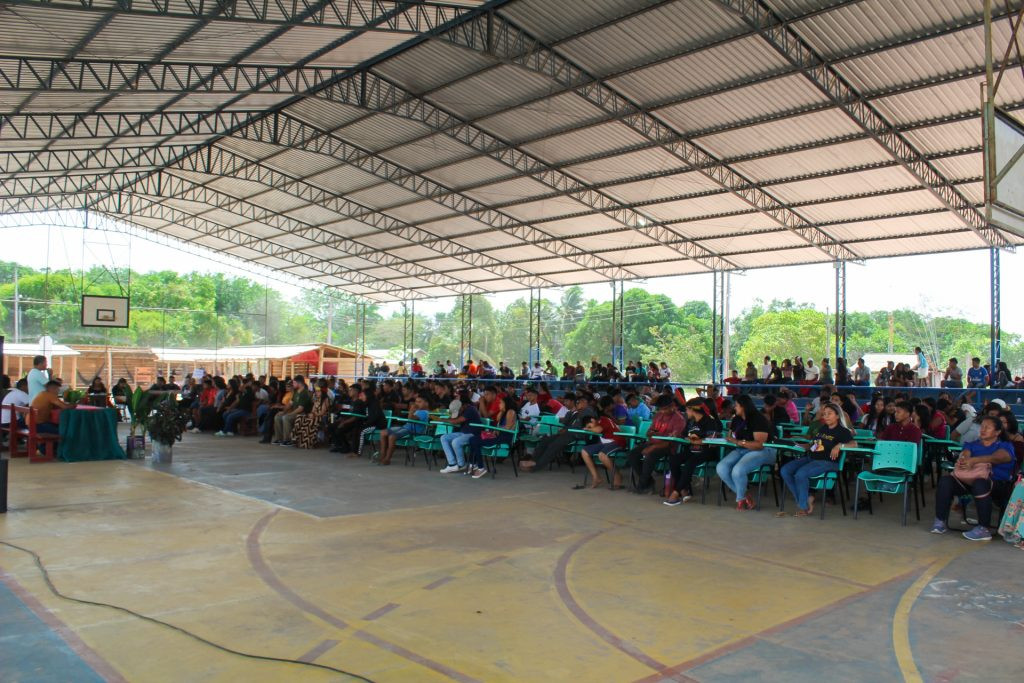
ith attention to the health of young people in the indigenous communities of Roraima, the Indigenous Youth Center of the Indigenous Council of Roraima (CIR), promoted for two days, 11 and 12, the I State Seminar of the Indigenous Youth of Roraima on Mental Health, with the theme "Saving lives and rebuilding dreams", a necessary and important theme, not only to debate mental health, but also to strengthen the youth movement in Roraima.
The event was held in the Canauanim indigenous community, Serra da Lua region, municipality of Cantá. According to the Nucleus, the community is one of those with a high suicide rate among young people, and that is why they chose the location at the VIII State Youth Assembly, held in October last year.
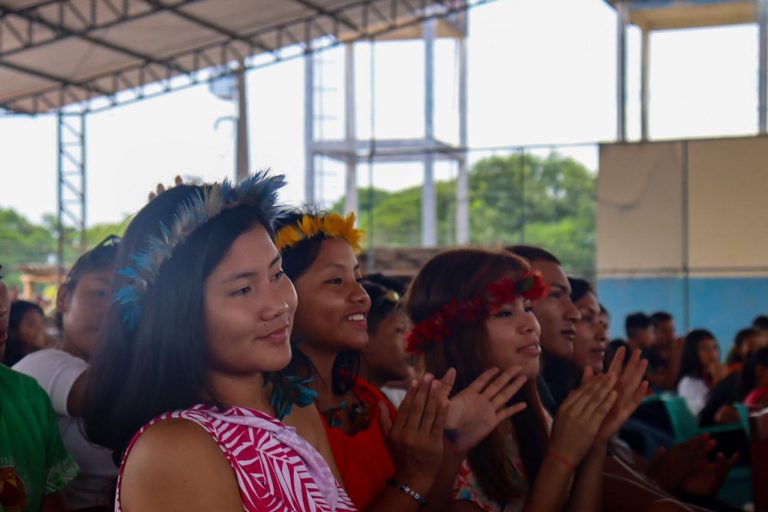
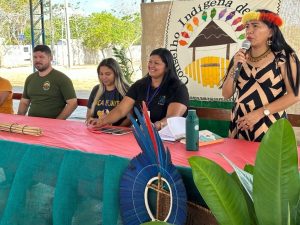
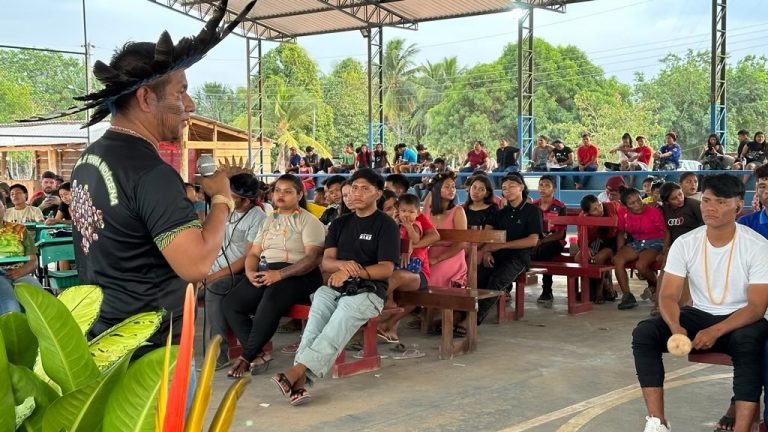
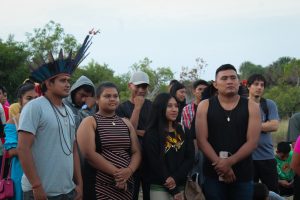
With the participation of more than 300 young people from the regions of Alto Cauamé, Amajari, Baixo Cotingo, Surumu, Serras, Raposa, Murupu, Serra da Lua and Tabaio, the seminar also brought together representatives of municipal and federal public agencies, as well as psychology professionals, who contributed to the dynamics of information and clarification during the event.
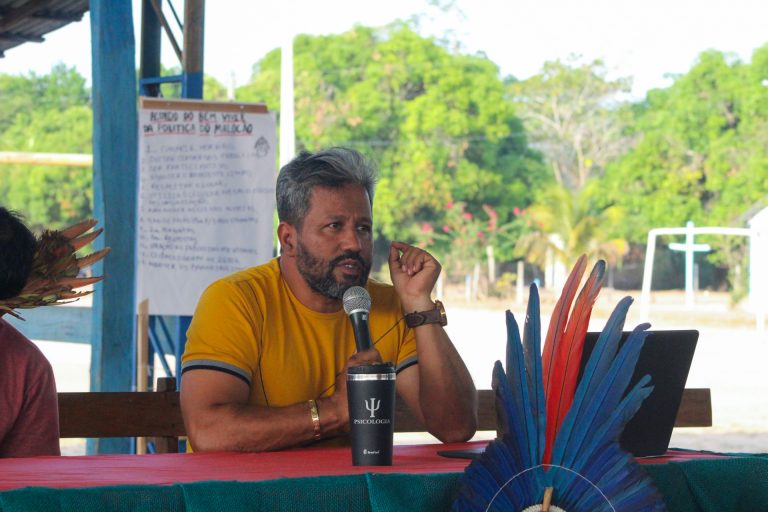
One of the speakers was the psychologist, Rômulo Terminelis, who composed the table "Listening to Youth". Romulo listened to the wishes of the participants and also shared the study carried out in the Serra da Lua region, and pointing out as one of the regions of the state of Roraima with a high rate of depression and suicide attempts. He highlighted the indigenous communities Canauanim, Malacacheta and Tabalascada, as one of the ones with the most cases.
These three communities in the Serra da Lua region are in the ranking of suicide attempts, it is a situation that worries us a lot, which has led young people to attempt suicide, it is often a family problem. Sexual abuse is a situation that cannot be externalized, many are suffering in silence, they suffer in silence because they are afraid to talk to someone and not be understood, what I recommend is that you seek help, go to the caps, talk to someone you trust," asked the psychologist.
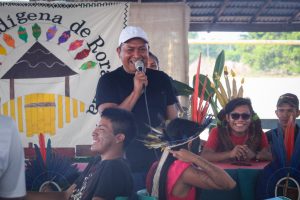
With dynamics, the young people expressed feelings, shared experiences, and learned to value each other, the importance of collective work and especially the value of life.
It is very important to talk about mental health, people think that depression is a joke and it is not! We are here to help those in need, join hands and continue the journey", commented Lázaro Wapichana, tuxaua from the Pium indigenous community, present at the event along with the young people of the group "The children of the resumption".
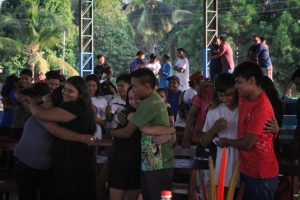
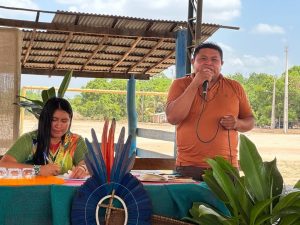
The general coordinator of the Indigenous Council of Roraima (CIR), Edinho Batista, highlighted the role of indigenous youth in holding the seminar focused on mental health, and said that it is a social problem that everyone must join forces to prevent.
"Once again indigenous young people are leading this important moment, talking about this evil that is a social problem is fundamental and needs everyone's collaboration to save the lives of young people and we are here to support them," Batista concluded.
The regional coordinator of Funai, in Roraima, Marizete Macuxi, and representatives of the guardianship council of the municipality of Cantá, attended the seminar on the first day, Marizete reinforced the institution's support for indigenous youth and left a message to young people.
"I want to tell you that you are strong, you are important, you will and you can make a difference, believe in your potential," said Marizete.
According to the World Health Organization (WHO), in the world, it is estimated that more than 700 thousand people commit suicide per year, also according to the organization the number can reach 1 million if unregistered cases are considered. In Brazil, there are approximately 14 thousand suicides every year, which leads to an average of 38 people per day.
In Roraima, according to data from the State Health Department (Sesau), the numbers of suicides are worrying, in 2021 261 cases of suicide were registered, six more than in 2020. In 2022, the index points out that 224 people took their own lives, until September last year 199 cases of suicide had been registered.
Mental health has been one of the concerns of fathers, mothers and leaders, who have dealt with situations involving young people, and dealing with the topic and especially how to prevent mental illness is essential to have a strengthened youth.
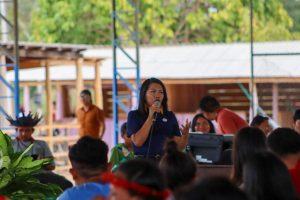
To guide, dialogue and provide clarification on the agenda, psychologist Iterniza André, from the Macuxi people, and nurse Priscila Gonçalves, who work in the Special Indigenous Sanitary District of Eastern Roraima (Dsei-Leste/RR), were at the event in the afternoon (12). They addressed the theme "mental health – shining again".
When reflecting, Iterniza highlighted that dealing with mental health "it is necessary to be aware of what has harmed mental health". He suggested identifying the factors that will help keep health up to date and pointed out that one of the phases in which young people most experience negative feelings is in adolescence.
As one of the ways to take care of mental health, Iterniza highlighted the importance of self-knowledge, in addition to knowing how to investigate qualities, capacity and difficulties.
Priscila gave mental health tips, such as healthy eating, sleep quality, physical activity and family dialogue. "Your self-esteem does not depend on anyone's opinion," Gonçalves reflected.
Based on information from the Special Indigenous Sanitary District of Eastern Roraima (Dsei-Leste), which receives the constant demands, he highlighted as one of the factors of depression, the sexual abuse of minor girls and boys.
Another dialogue with the theme "We take care of each other", was conducted by the deputy coordinator of the CIR, Enock Taurepang. Taurepang spoke of care and reciprocal feelings, acts that also save lives.
"I believe in the brave youth, youth who go to the indigenous movement, and who seek to be in this space with a lot of thirst to participate and who are out of love," he reflected. "We need to take care of each other," he added.
The "Trail of Life"
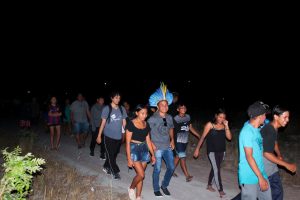
The young people made the "Trail of Life", in honor of Hilton Cadete, former local youth coordinator, who passed away in 2022, but left the poultry project as a legacy for the young people of the community. The walk, which started at 5 am, took the participants to visit the new location, where the project will be developed, amid cries of resistance and traditional songs, shared and listened to experiences of overcoming.
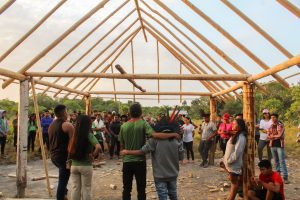
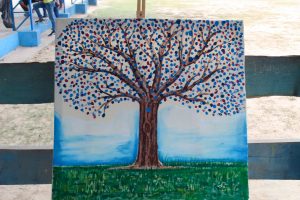
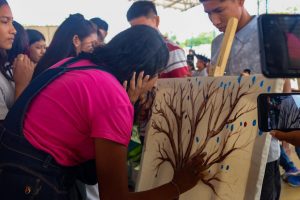
The record of this very important moment was left on the Youth Wall with the signature of the names of the young people and on the Tree of Life with the fingerprints of each one.
The state coordinator of Youth, Raquel Wapichana, evaluated that the event served to strengthen the youth of the region and, especially, of the Canauanim community, one of those with a high suicide rate.
"I believe that the event strengthened the young people of the Serra da Lua region, especially this community, which has had a high suicide rate. I feel strengthened and I hope that young people return to their communities and multiply information", she evaluated.
At the end, the youth coordinators of each region had the opportunity to speak, Paulo Ricardo Constantino, coordinator of the Raposa region youth, thanked for holding the seminar, which brought strength to the young people of his region.
"We will return to our region stronger, saving more lives, we came in twenty, but we will multiply this information and we will save more lives" concluded Paulo.
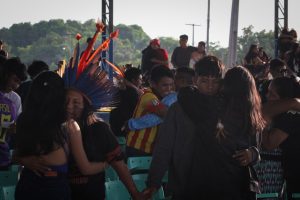
The seminar ended on Monday (12), with the evaluation of the results and planning of the next activities, including the location of the II seminar on mental health that will be held in February 2025, in the Baixo Cotingo region in Centro Camará.
Organized by: Youth Center
Support: CIR, FUNAI, Canauanim Community and Regions