
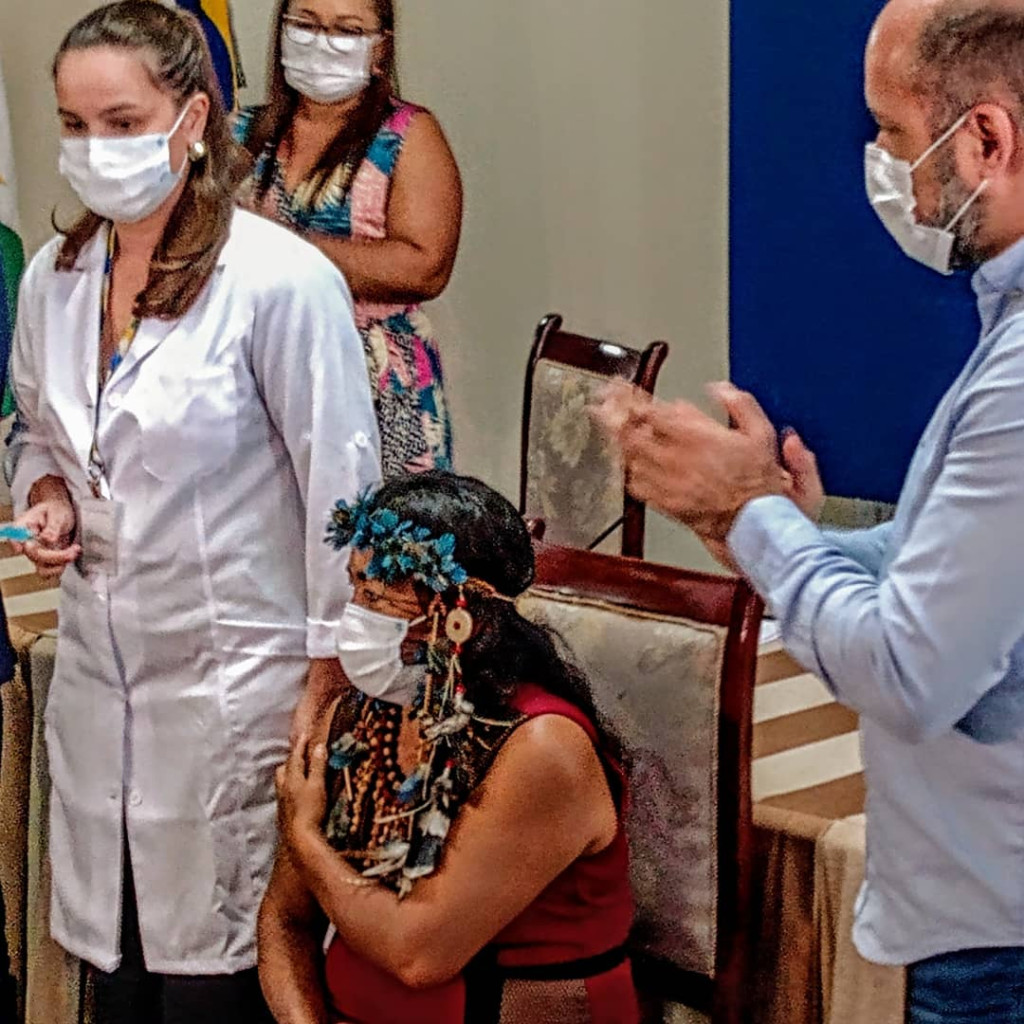
The first person to receive the vaccine against COVID-19 this Tuesday (19) in Roraima is a woman and indigenous. Dona Iolanda Pereira da Silva, from the Macuxi people, is 45 years old and lives in the Uiramutã indigenous community, in the Serras region, T.I Raposa Serra do Sol.
Midwife and daughter of indigenous leader Orlando Pereira Macuxi, she was once the coordinator of traditional indigenous medicine at the DSEI East of Roraima. In 2019, she worked as an indigenous health agent (AIS), and received the medal of merit from the Osvaldo Cruz Foundation for her work in indigenous health.
After receiving the vaccine, she celebrated.
"I am very grateful for this moment of being vaccinated, for being the first indigenous woman. Among the 80 thousand indigenous people in the state, for me to be here is very exciting. I am very excited, because we, in our work, being here representing everyone is very important. Not only for me, but also for my people."
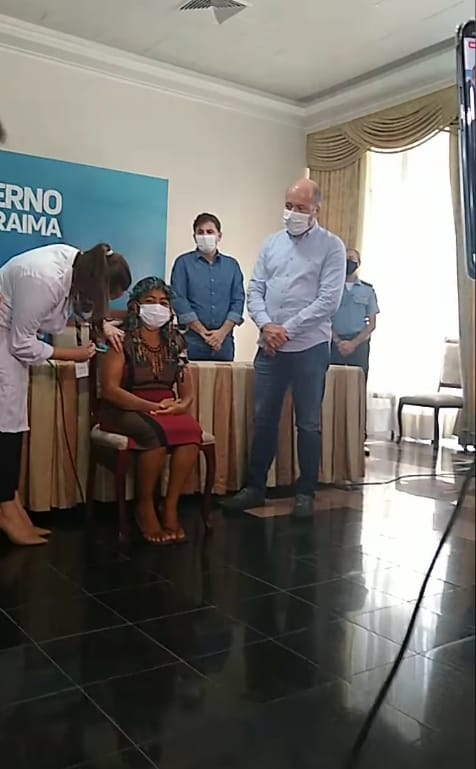
In addition to telling the experience of the historic day, Mrs. Iolanda also sent a message to the indigenous communities:
"I ask everyone to get vaccinated because we need this vaccine. Our body needs to be immune. This disease will not end with the vaccine, but we have to create immunity to be able to face it more often, because we have already seen that this disease is not the type that we catch and then it goes away, it always comes back, so we have to have immunity in our body".
The coordinator of the Indigenous Council of Roraima, Enock Taurepang, through a live broadcast on Tuesday (19), also emphasized the importance of vaccination.
"Don't be afraid. My relatives are going to take this vaccine, we have our entities like Fiocruz, the Butantã institute that have been working in Brazil for more than 50 years with the issue of science, we have to value our scientists, and value the people who studied and committed themselves to saving lives."
Roraima received about 87,720 doses of the Coronavac Covid-19 vaccine and the government's initial plan is to immunize 44 thousand people, including health agents and doctors on the front line in the fight against the virus, and groups with priorities such as indigenous people and the elderly.