
A An agenda that takes place annually connects indigenous peoples to the debates on climate change
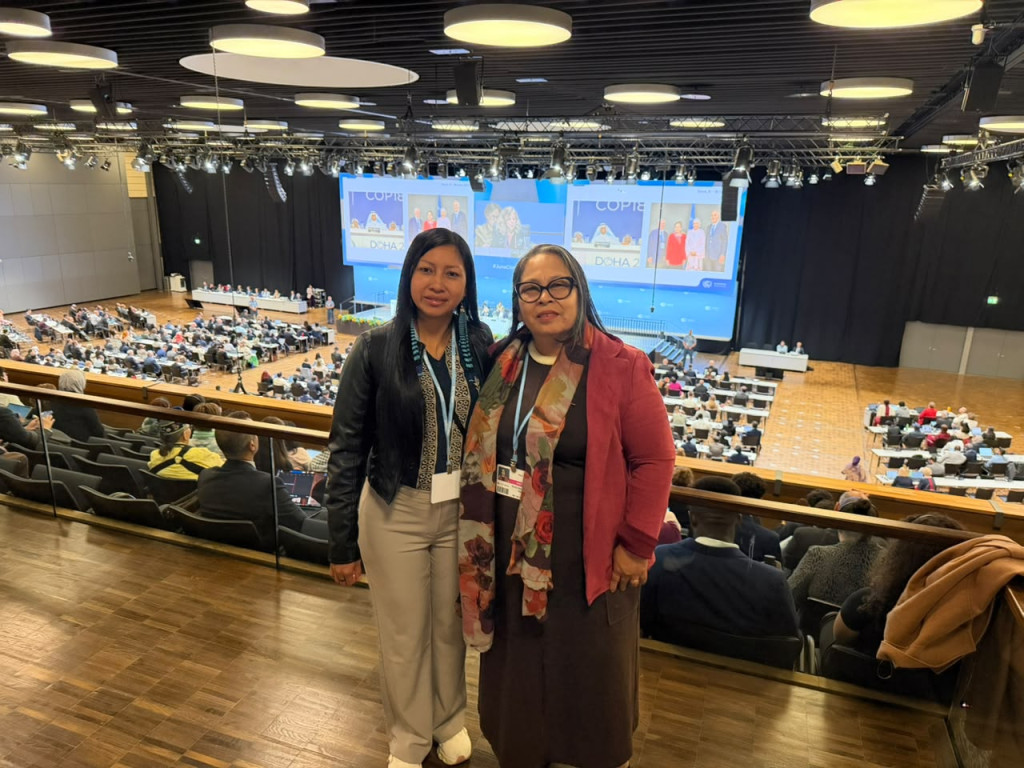
A The international advocacy agenda began in the city of Bonn, located in the Germany on June 3rd, with the meeting of the Indigenous Caucus, where peoples Indigenous people from the seven ethno-regions of the world come together to contribute to the debates on climate change. The meeting precedes the 64th session of the Subsidiary Bodies (SB64), and can be understood as a kind of conference United Nations climate conference that precedes the United Nations Climate Conferences. Climate. Representatives of the Communities Platform were present at the occasion Indigenous Peoples and Indigenous Peoples (LCIPP), the official mechanism of the Climate Convention aimed at promoting indigenous participation in international negotiations.
Representing the Indigenous Council of Roraima (CIR), Sineia do Vale and Kelliane Wapichana participated in an intense agenda of political articulation, advocacy and presentation of experiences developed on the floor of the indigenous territories of Roraima. Suhyasun Pataxó, member of the Indigenous Committee of Climate Change (CIMC) and youth representative for APIB, was also to the sides of the leaders echoing the voice of the indigenous youth of Brazil, in the space debating the present and future of those who take care of the territory and who it also suffers the consequences of climate change.
Sineia do Vale is Co-president of the Indigenous Caucus, the main instance of articulation of indigenous peoples at the UN climate negotiations, she led to the discussions international demands and proposals of the indigenous people of Roraima and Brazil.
In addition to to coordinate the Department of Territorial, Environmental and Change Management (DGTAMC) of the CIR, Sineia also acts as national coordinator of the Indigenous Committee on Climate Change (CIMC) is a special envoy of the peoples with the presidency of COP30.
By side by Kelliane Wapichana, coordinator of the Women's Department of the CIR and General Tuxaua of the Indigenous Women's Movement of Roraima, the leadership presented the Indigenous Adaptation Plans and Confronting Climate Change collectively prepared by leaders from the Serra da Lua, Raposa and Amajari regions. Sara Gaia, coordinator of the Indigenous Peoples Program (PPI) of the International Institute of Education in the Brasil (IEB), also presented the Indigenous Adaptation Plan for the peoples of the South of Amazonas – SULAM, built with the support of the CIR AND IEB.


The documents represent an unprecedented construction led by the Indigenous Council of Roraima, through the Department of Territorial, Environmental and Changes (DGTAMC) and are the result of a broad process of community dialogue to identify the impacts of climate change on territories and define strategies for adaptation and environmental protection. The work has consolidated the CIR as one of the main national references and in the formulation of indigenous mechanisms to confront the crisis climatic.
The plans were also shared with Norway's climate negotiator, Leif Fosse, who highlighted the relevance of the initiatives developed by the peoples indigenous people of Roraima as concrete examples of actions that can contribute to the global responses to climate change.
In one of the side events of the conference, Sineia do Vale presented to the public the experience of building adaptation plans, highlighting the Importance of recognizing traditional knowledge and protagonism in the implementation of effective climate solutions.
As co-chair of the Indian Caucus, Sineia coordinated strategic meetings bringing together representatives of the seven ethno-regions of the world. In the meetings, the focal points of the themes such as climate adaptation, mitigation, climate finance strategies to ensure that rights of indigenous peoples are considered in international agreements.
A the participation of the CIR leaders also included meetings with the organization international indigenous Tebtebba, from the Philippines, who will support initiatives aimed at strengthening indigenous women in Roraima.
Other An important moment was the meeting with representatives of the COP30 presidency. On the occasion, Sineia discussed ways to expand indigenous participation in the construction of the Road Map to Stop and Reverse Deforestation and the Forest Degradation by 2030, one of the main results of COP30.
The plans presented in Bonn reflect a process built directly by the indigenous communities of Roraima that have already been shared in important spaces of national and international political advocacy that show the results of the work carried out in the territories, strengthening the role of the and the role of indigenous peoples in the protection of territories, of biodiversity and in the construction of concrete solutions to face the global climate emergency.