
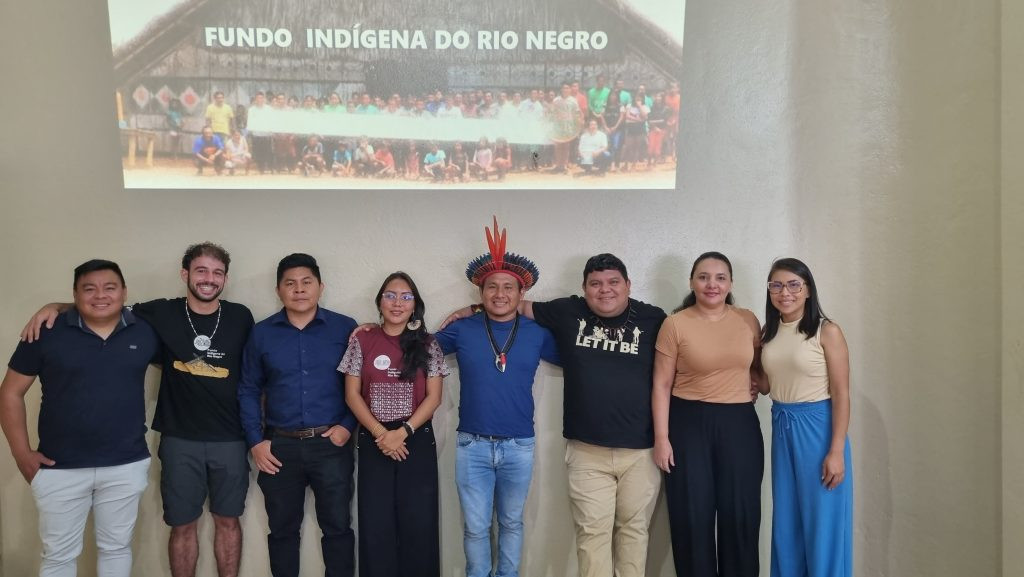
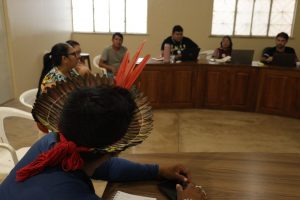
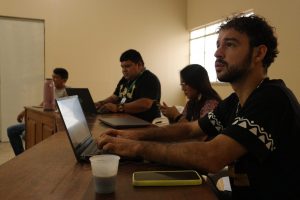
The "Jamaxim Indigenous Fund" of the indigenous peoples of Roraima, which in the Macuxi language is called "Rutu", gains strength and advances towards its consolidation, with the institutional meeting between two large indigenous organizations in the Amazon, the Indigenous Council of Roraima (CIR) and the Federation of Indigenous Organizations of the Rio Negro (FOIRN), held this Monday (9), at the headquarters of the CIR, in Boa Vista/RR.
The Jamaxim Fund is an initiative of the Indigenous Council of Roraima (CIR) and its member communities, which was approved at the I Extended Meeting, held in July, in the Pium community, in the Manoá-Pium indigenous land. With the approval of the leaders, including the name of the fund, the organization seeks mechanisms to consolidate the proposal, in the process of construction since 2020, collectively and with the economic and sustainable reality of the indigenous communities of Roraima.
There are community gardens, cattle projects, fish, poultry, organic agricultural products, in addition to the variety of indigenous handicrafts, which drive the local and regional economy. "Jamaxim" will have the mission of welcoming all these economic, sustainable and cultural potentialities of the indigenous peoples of Roraima, as well as strengthening the autonomy, protagonism and sustainability of the communities.
The name "Jamaxim" refers to the traditional basket, made of buriti fiber, used in community activities, to carry various types of work materials, food and other products.
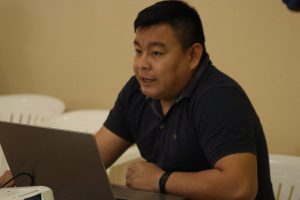
During the meeting, there was an exchange of information and experiences of indigenous fund initiatives. The indigenous agronomist, Giovan Mandulão, from the Department of Territorial and Environmental Management (PGTA), one of the technicians who is part of the working group that prepared the proposal, made a brief presentation highlighting that the construction sought to value the potential, mainly agricultural and cattle farming, already existing in indigenous territories.
"A fund designed by us indigenous people"
For the deputy coordinator, Enock Taurepang, who has been following the initiative since the first steps of construction, he stressed that the meeting was a dialogue, a conversation of "relative to relative", a fundamental factor for the effectiveness of an initiative built by the indigenous people themselves.
"We are talking from relative to relative, from indigenous organization to indigenous organization about the indigenous fund. Fund that will serve indigenous communities, fund that will bring benefits to families, communities and regions. A fund that is designed by us indigenous people, by the leaders and that will certainly bring economic strengthening within our territories", he stressed with encouragement and believing in the potential of the initiative.
To strengthen and contribute to the Roraima initiative, the Federation of Indigenous Organizations of the Rio Negro (FOIRN), brought its baggage of experience with the Indigenous Fund of the Rio Negro (FIRN), already existing in the region, serving 23 indigenous peoples, more than 100 indigenous communities and a region with more than 13 million indigenous territories. The coordinator of the FIRN, Josimara Oliveira Baré, presented the initiative from the process of preparation, execution and results.
Present at the meeting, the president of FOIRN, Marivelton Baré, reinforced that the visit to Roraima was to strengthen the two initiatives, especially of the indigenous peoples of Roraima who are advancing in consolidation, focused on strengthening sustainability.
"One is the agenda for the creation of an indigenous fund to finance and support initiatives for territorial and environmental management of indigenous lands, from strengthening sustainability and meeting the desires that are part of the environmental management plan, always respecting the consultation protocols", he reinforced about the meeting between the two indigenous organizations.
Approved in 2019, the FIRN has as results 15 projects served, 7 projects by women's groups, 200 communities, more than 2 thousand people and 6 indigenous lands out of 13 in the Rio Negro region extension. The projects are focused on culture, food security and sustainable economy.
He also highlighted the tourism initiative, which is already carried out in the Rio Negro region, pointed out as another economic, sustainable and territorial protection alternative.
One of the main references for the construction of the Jamanxim Indigenous Fund are the Territorial and Environmental Management Plans (PGTA) of the Indigenous Lands of Roraima, which encompasses the life of the community in the areas of health, education, sustainability, environment, culture and others.
The coordinator of the Department of Territorial and Environmental Management (DGTA), Sineia Wapichana, who coordinated the construction of the PGTAs of all indigenous lands in Roraima, highlighted that the Fund will strengthen the development of indigenous communities in Roraima.
"It is a fund where it will strengthen the development of indigenous communities in Roraima and all this work that the communities have done, has a very great potential and so this fund will give autonomy to the communities themselves. All the work that is being done, everything they would like to do in the line of agriculture, sustainable livestock, handicrafts, everything will be enhanced through the community itself", highlighted Sineia.
Ethnotourism – an alternative for territorial protection, cultural enhancement and economic alternative
Another initiative of great economic and sustainable potential that, from the I Ethnotourism Seminar, promoted by the Indigenous Council of Roraima (CIR), from the 5th to the 7th, began to compose the organization's debate agendas, was also pointed out at today's meeting, between the CIR and FOIRN organizations.
The coordinator of the Legal Department of the CIR, Junior Nicacio, responsible for organizing the event, briefly informed about the initiative to provide clarifications and present experiences of the community-based tourism activity, both those that exist in Roraima and in other states, such as Rio Negro, in Amazonas.
"The first moment was to clarify and the second, to discuss in more depth how to create", stressed Nicácio. "We left with a good impression that we can and cannot work in the area of tourism", he added, reinforcing that the next step is to take the discussion to the indigenous communities.
The CIR comes with the challenge of creating and implementing the indigenous fund contemplating its 263 communities, 10 regions and 36 indigenous lands in the state, including 4 indigenous lands with a request for demarcation.
In the Amazon, in addition to FOIRN and CIR, there is also the Podáali Fund of the Coordination of Indigenous Organizations of the Brazilian Amazon (Coiab).
The meeting was attended by the deputy coordinator of the Indigenous Council of Roraima (CIR), Enock Taurepang, the coordinators of the Territorial and Environmental Management (DGTA), Sineia Wapichana and Legal departments, Junior Nicacio, in addition to the indigenous agronomist, Giofan Mandulão, the technician in Georeferencing System (SIG), Genisvan André and the coordinator of Emergency Action, Vanessa Fernandes.
Directly from the Rio Negro region, one of the largest in the Amazon region, the president of FOIRN, Marivelton Baré, the coordinator of the Rio Negro Indigenous Fund (FIRN), Josimara Oliveira Baré and the technical advisor of the Socioenvironmental Institute (FIRN/ISA), João Luis, the organization's partner in the initiative, participated in the meeting.
With the next step being taken to visit the Rio Negro region, learn about the initiatives implemented and experience the challenge of managing an indigenous fund, the meeting, in addition to strengthening the initiatives, also strengthens the political action of the two indigenous organizations, references in the Amazon, in Brazil and in the world.