
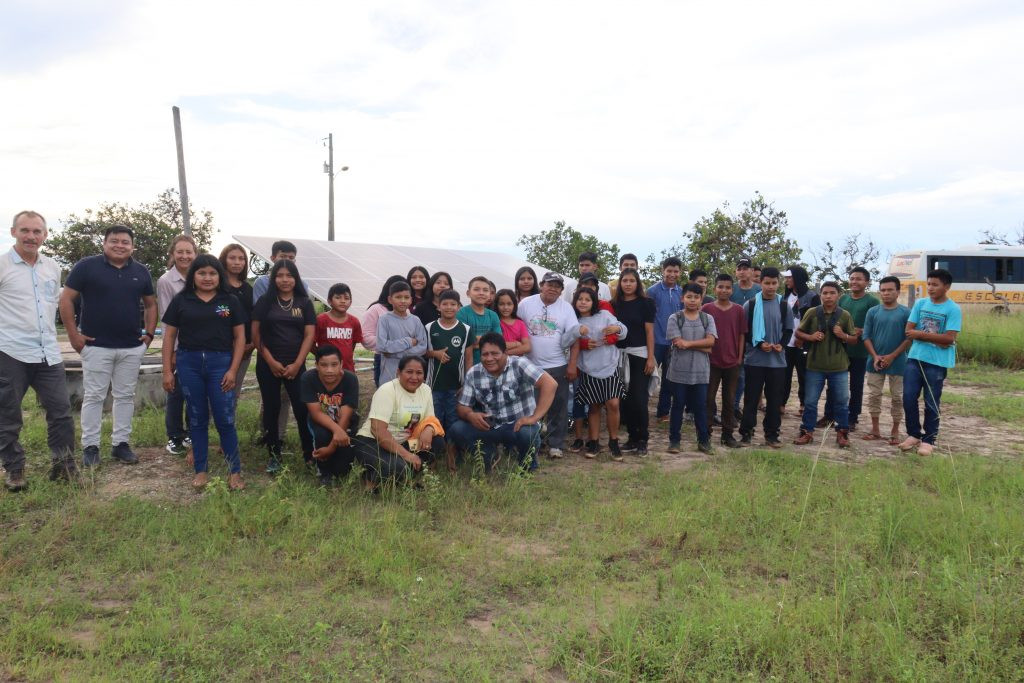
One of the projects is access to water and a solar system for irrigation
For more than 20 years, the Indigenous Council of Roraima (CIR) has as one of its long-standing partners and tireless struggles, the Catholic Development Agency (CAFOD), supporting actions in the defense of indigenous rights, especially land rights and environmental and territorial management.
To monitor the execution of projects through the Department of Territorial and Environmental Management (DGTA) of the CIR in the area of sustainability, environmental preservation, climate change and others in the line of territorial management, representatives of the agency were in Roraima for two days, 23 and 24.
In the team, the director of CAFOD, Fergus Conmee and the technical advisor, Cecília Lório. Due to contracting a virus, the director could not follow the agendas in the indigenous communities.
As the first agenda, on Friday (23), in the morning, at the headquarters of the Prelature, in Boa Vista, there was a meeting with the general coordination of the CIR, Edinho Batista and the DGTA team, coordinated by the environmental manager, Sineia Bezerra do Vale. After the meeting, in the afternoon, they visited projects supported by the Agency, in the Truarú da Cabeceira indigenous community, in the Murupu region and on Saturday, 24, Tarau Paru, in the São Marcos indigenous land.
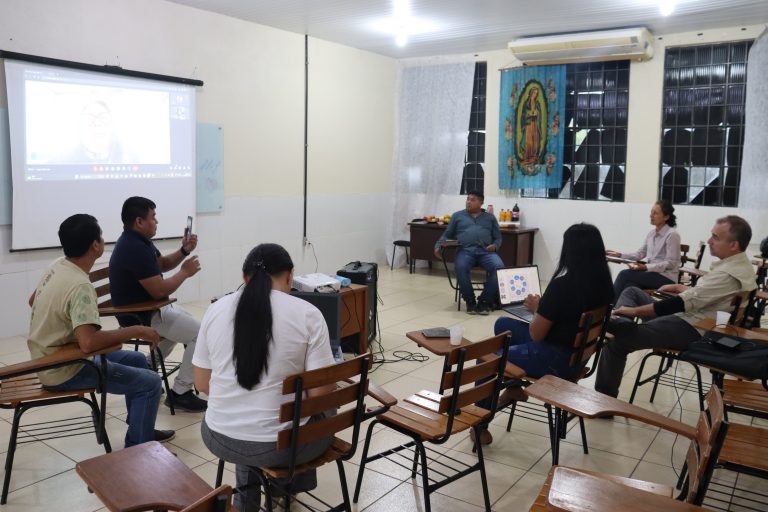
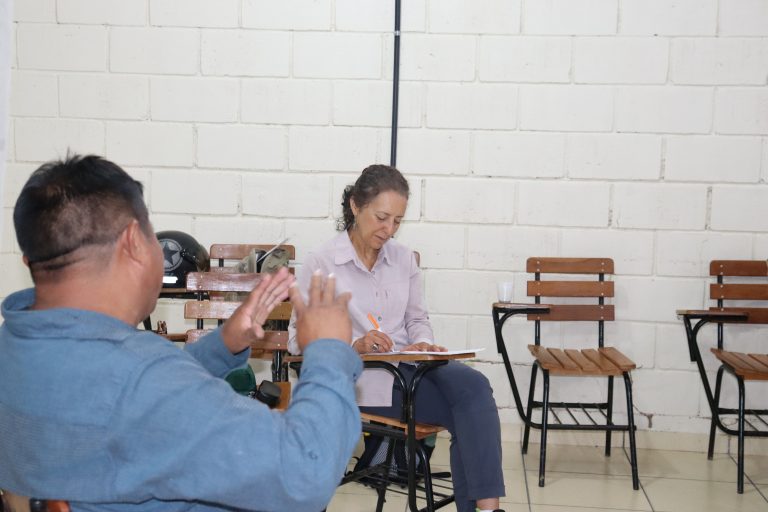
At the meeting, Edinho Batista presented the structure of the organization. And he also emphasized the challenges of this management, in addition to recalling the historical struggle of the indigenous peoples of Roraima to demarcate their territories, and that there are still many challenges to continue with the demarcations.
"We are fighting to demarcate the indigenous lands, Pirititi, Lago da Praia, Anzol and Arapuá, and also the 23 lands that need to be expanded", reinforced the coordinator.
The coordinator of the DGTA, Sineia do Vale Wapichana, presented the projects supported by CAFOD: Alternative water abstraction, in the Truaru community, Murupu region, traditional seeds, seedlings of native plants, nurseries and seed banks, indigenous firefighters, support for community actions: monitoring, protection of boundaries, climate emergencies, support in Territorial and Environmental Management Plans (PGTAs), drilling of the artesian well, cleaning of wells, distribution of clay filters and filters for the water system for water tanks, in the São Francisco Community, Baixo Cotingo Region, in the Raposa Serra do Sol indigenous land.
"The meeting is always very rich, with the exchange of knowledge. And also to know the challenges that are always arising. The CIR is never intimidated, the CIR brings challenges and finds a way to deal with it, and today was a moment of dialogue, exchange of knowledge, I leave here very enriched", said the technical advisor, Cecília Lório.
Truaru da Cabeceira/Murupu – One of the projects that are in full swing and that have worked is the irrigation system through the capture of solar energy.
On the same day (23), in the afternoon, Cecília and the DGTA team were in the Truarú da Cabeceira community, to investigate the project and dialogue with the community about the benefits of the project.
The DGTA agronomist, Giofan Mandulão, who accompanied the team, explained the operation of the project and highlighted that the intention is to expand to other communities that also need it. "We had the support of CAFOD in this pilot project, which is the irrigation system. With the cost benefit, we intend to expand these projects to other communities as well," said the agronomist.
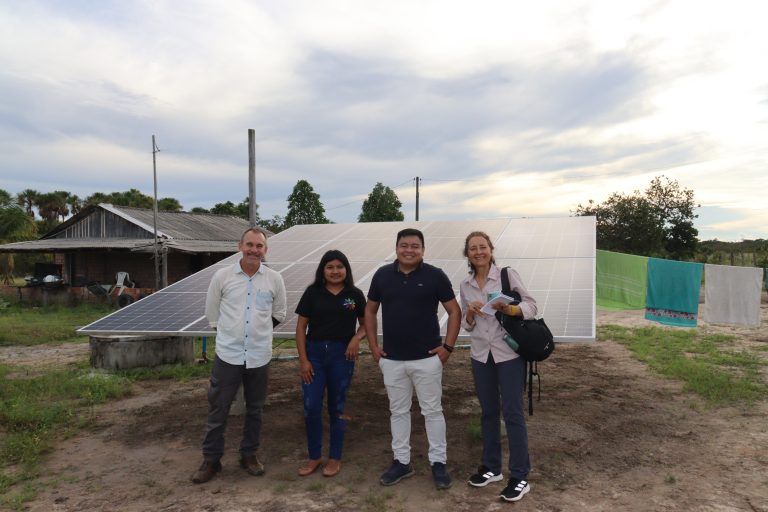
For the community's vice-tuxaua, Franciele Costa, the project is benefiting the farmers of the community, and thanked the important support. "It is very gratifying to receive the partner who implemented the irrigation system who is contributing here, in our community. We hope that this support will expand here", he commented.
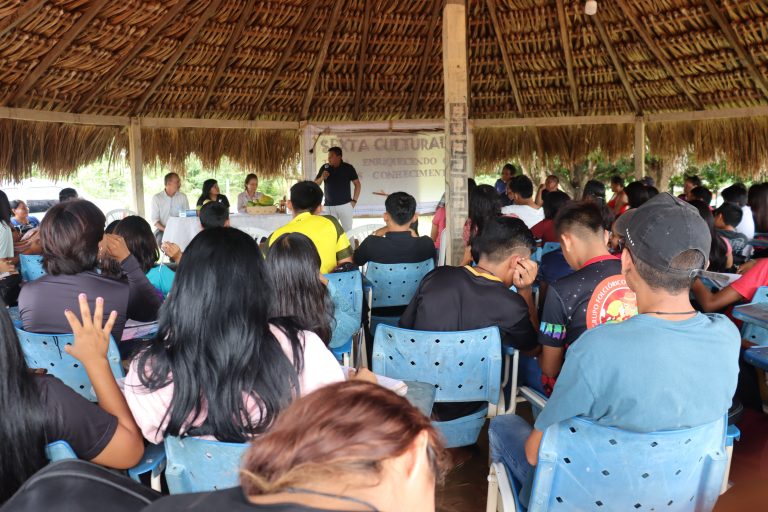
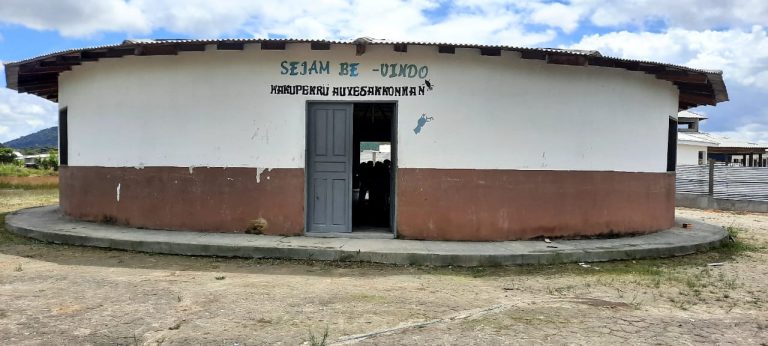
Tarau Paru/ São Marcos - this Saturday, 24, the DGTA and CAFOD team were in the Tarau Paru indigenous community, in the São Marcos Indigenous Land, on the border with Venezuela, and met with the leaders at the Cultural Center, a space built with the support of the institutions. Intended for moments of leisure and cultural exchanges, the Center brought new perspectives to children and young people. The community has about 900 residents and, in addition to the inhabitants themselves, also welcomed the Pemón and E'ñapa indigenous people, coming from Venezuela,
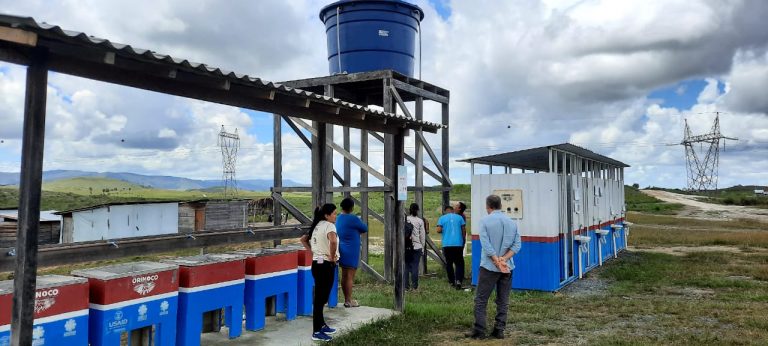
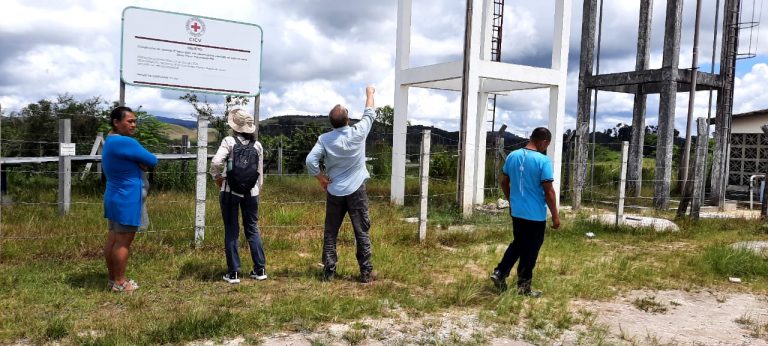
The leaders presented demands in the areas of health, education, sewing courses, handicrafts and infrastructure. However, the main request was access to water. There is a structure set up at the site, but it does not reach the water tanks and, consequently, the homes of the residents.
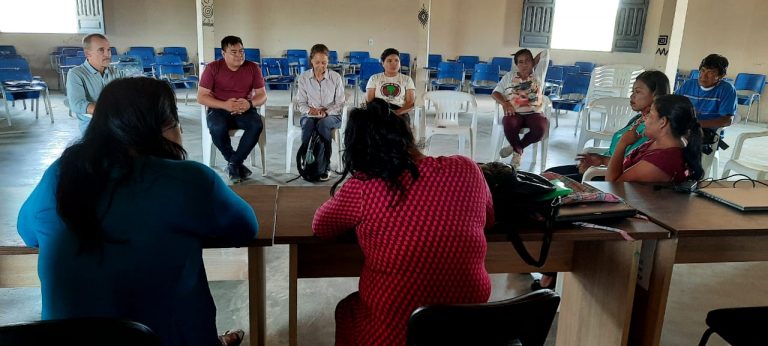
The vice-tuxaua, Angélica Fernandes, from the Taurepang people, took the team to visit the water collection facilities, and asked for support to solve the problem. She thanked the look at the communities. "We hope that the water problem will be solved soon, and we are very happy to receive these projects. May our demands be met, because everything is important to us", she considered.
Giofan Mandulão listened to the needs and offered to forward it to the executive coordination of the CIR, and pointed out that it will speed up the water project, considering that the community has the hydraulic system assembled, lacking only a high-power pump and other necessary items. "This issue of water is urgent, we will see how we can solve it, and we are available to try to meet the other requests", he reinforced.
Cecília evaluated the visit as satisfactory, seeing that the project is working, and happy because the children were the most benefited from the space. But, she said that she still needs to do much more for the community. "We are happy to see the benefits that the communities receive, that they can know about their rights. There is a conversation that the CIR has to say what is the obligation of public policies, this is very important," she said. "Another essential thing is to do work that values the culture of these people, so that they are proud of their indigenous identity and that children in the future have this as a legacy," added Lório.
The leaders were invited to visit the Department of Indigenous Women and the Youth Center of the Indigenous Council of Roraima, so that partnerships aimed at this audience can be initiated.