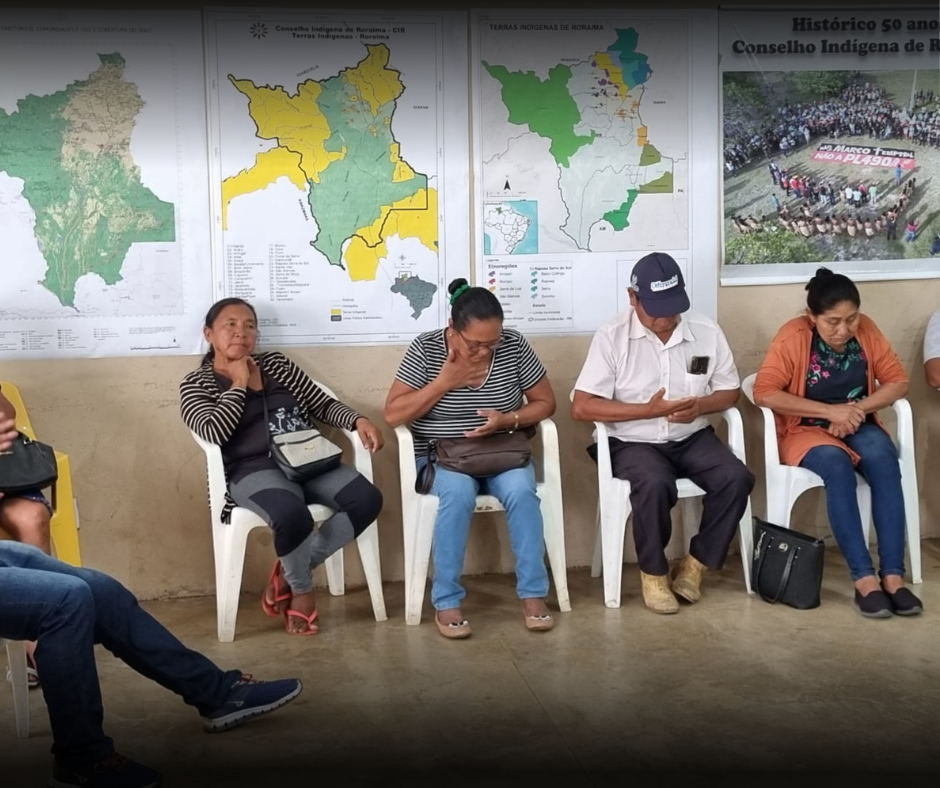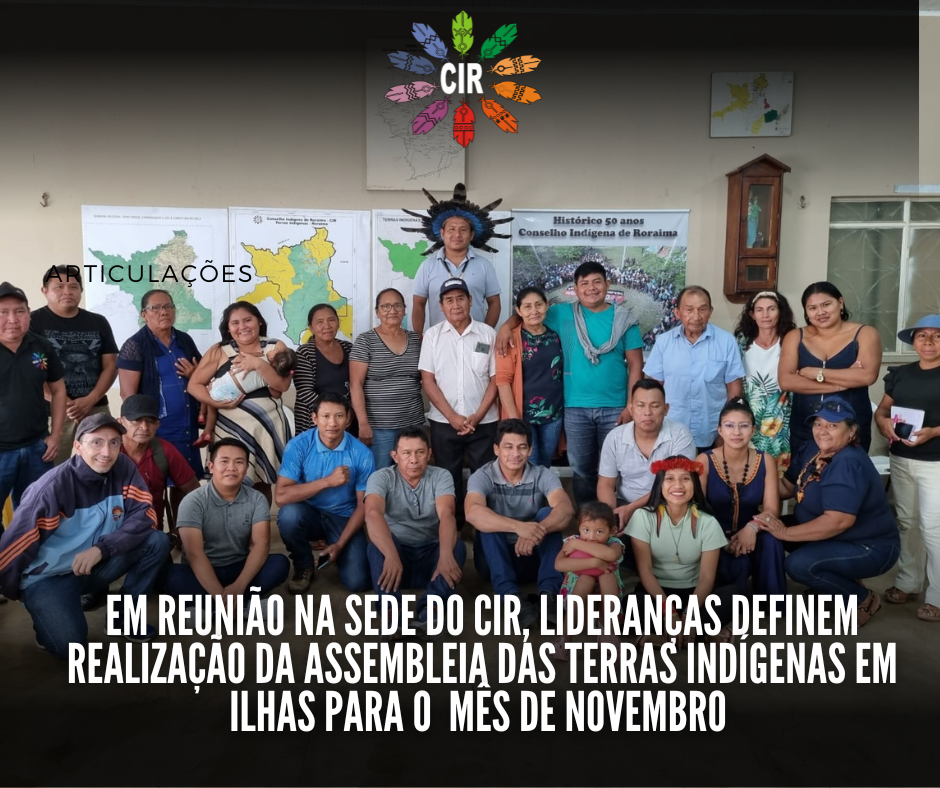
At a meeting at the headquarters of the Indigenous Council of Roraima (CIR), regional coordinators of Amajari, Tabaio, Alto Cauamé, Murupu, Serra da Lua and Wai wai, defined today (19), the holding of the 1st General Assembly of Indigenous Lands demarcated on Islands. Scheduled for the period of November 26 to 30, this year, the Assembly is a long-standing demand of the leaders who live in territories highly impacted by the advance of invasions by land grabbers, miners, squatters and agribusiness.
According to complaints from indigenous communities, agribusiness has been having a strong impact, mainly with the increase in soybean planting and the use of pesticides. One example is the indigenous community of Morcego, in the Murupu region, municipality of Boa Vista, which was affected during the...Spraying poison from aircraft.
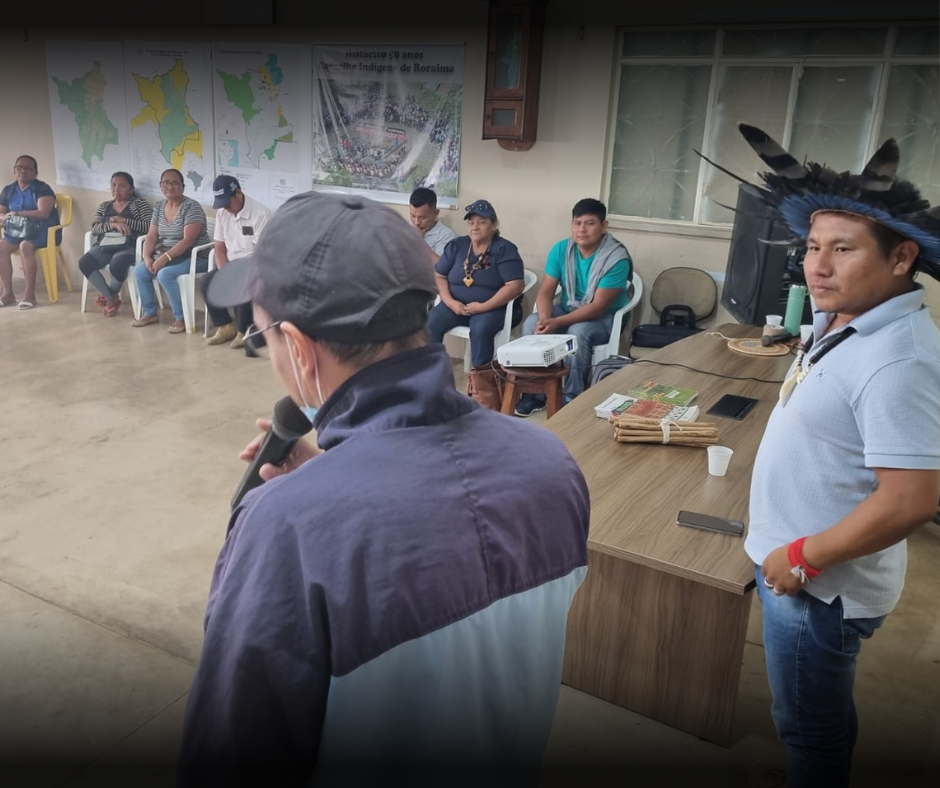
Also participating in the meeting were the Indigenous Youth Coordination, representatives from the Diocese of Roraima, CIMI, and the executive coordination of CIR, including coordinators Edinho Batista, Enock Taurepang, and Kelliane Cruz. During the meeting, coordinator Enock highlighted that the specific assembly to address Indigenous lands on islands was decided upon at the General Assembly.
"Holding the first assembly for the demarcation of indigenous lands on islands was a decision made by the general assembly of indigenous peoples in 2023, and now we have actually started to take the next step. Which was to bring together all the leaders so that we could choose the location and date on which it will take place."
Approved to take place from November 23rd to 30th of this year, in the Araçá community, Araçá Indigenous Land, Amajari region, it will be attended by leaders from all indigenous lands in Roraima, both those that have been officially recognized and those that are pending. “This assembly will serve to strengthen us. To make joint decisions, and to form strategies to overcome some of our difficulties,” Enock emphasized.
One of the reasons for the Assembly is to strengthen the struggles, but also the achievements, of the indigenous peoples of Roraima, with the bundle of sticks as their main symbol. “As an indigenous movement, like the bundle of sticks that we have always talked about. We have seen that over the years we have had many achievements, but these achievements need to be worked on, moving forward positively,” emphasized Taurepang.
In the state of Roraima there are 36 indigenous lands, 32 demarcated and approved, 23 requests for restudy and 4 for demarcation, as is the case of the Indigenous Lands: Arapuá (Alto Cauamé), Lago da Praia and Anzol (Murupu), Pirititi (south of the state).