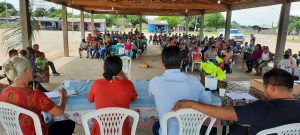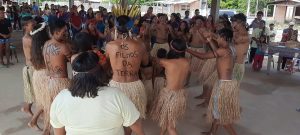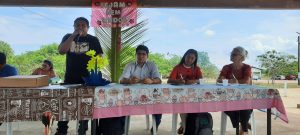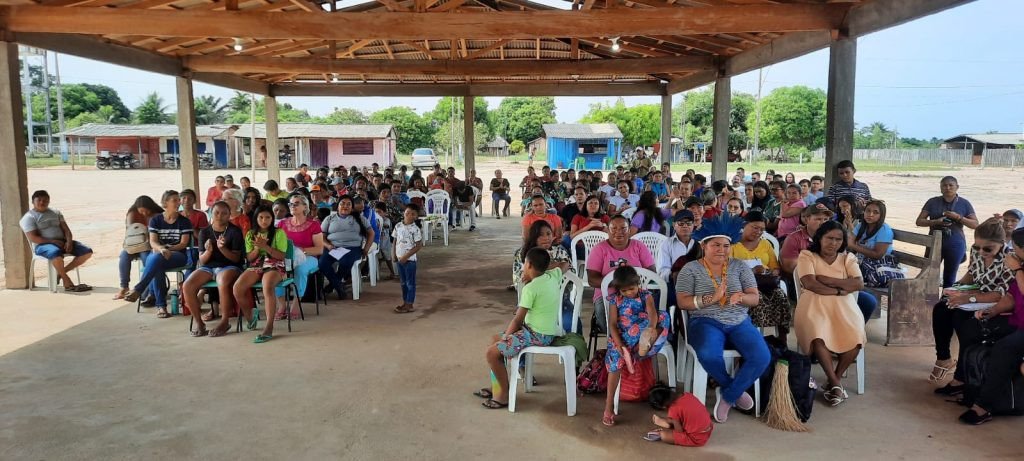
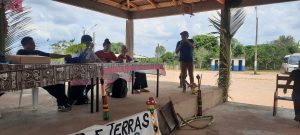
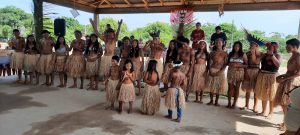
The indigenous communities of the Alto Cauamé region held the Extraordinary Assembly of Alignment and Union to strengthen the actions of the region and the social organization of the communities. The Assembly took place today (20), in the Sucuba indigenous community, Alto Cauamé, municipality of Alto Alegre.
Tuxauas, women, young people and children from the four communities in the region, Raimundão I and II, Sucuba and Arapuá, debated important agendas in the assembly, such as health, education and territory.
The communities of Alto Cauamé are surrounded by monoculture production, and the concern is with pesticides (poison used to combat pests) that are invading the soil and streams in the region, as explained by the deputy tuxaua of the Raimundão II community, Leandro Guilherme.
"Our communities are surrounded by soybeans, even those who live in the municipality of Alto Alegre, are already feeling the impact of the pollution of pesticides dumped into the air by planes, the water from our rivers and streams in the future will not be able to be used by our children," denounced the leader.
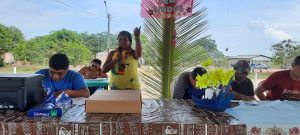
The tuxauas and vice tuxauas spoke about the projects of the Indigenous Council of Roraima (CIR) and the state secretariat of Indigenous Peoples developed in their communities. The vice-tuxaua, Geane Pereira, shared the experience she had during the I Ethnotourism Seminar, which took place at Lake Caracaranã.
"Our area is small, 600 hectares, we had the pepper project that the chickens ate, and I shared this at the seminar. I want to say that this learning with the exchange of knowledge was very good", said Geane.
The coordinators Edinho Batista, Kelliane Wapichana and the legal advisor Ivo Makuxi, brought information about the performance of the CIR and the actions of its departments.
Edinho Batista, highlighted the unity in the fight for the indigenous cause, and informed the strategy that will be set up to face climate change. He also informed about the second expanded deliberative meeting that will take place in December in the Arapuá community, the celebration party against the time frame, the participation of the CIR in COP 28, represented by the environmental manager Sineia do Vale, the Youth coordinator, Raquel Wapichana, and Charlane Almeida from the institution's administration and finance department.
The coordinator also commented on the youth assembly and reinforced the participation of young people in this space of political education.
"Young people are the present, and these events are fundamental for the preparation of youth. It is necessary to train young leaders, so that in the future they assume the responsibility of taking care of the community and fighting for the indigenous cause," said the coordinator.
The legal advisor Ivo Macuxi, explained about the right of consultation to indigenous peoples, and informed about the decision of the MPF, in the conciliation process in the 1st Court of Federal Justice to start the demarcation of the Arapuá indigenous land, where studies should begin by the middle of next year. The advisor also warned about the projects that the government has been developing in indigenous communities to make politicking.
"The way they use our right to public policies, to do politics, in the first years of government we received a lot of harassment, and it was denounced by the residents of Serrinha. The documents arrived at the community ready, without consulting the residents, the leaders felt aggrieved because they did not participate in the discussion, we have our ideas and demands," recalled Ivo.
The general secretary of the Women's Movement, Kelliane Wapichana brought strength to women in the region, spoke of the projects aimed at women of self-esteem, women's rights, and sexual violence against children and adolescents. Kelliane presented the historical struggle of the Training Center, a school of autonomy for indigenous peoples, which needs restructuring and teachers.
The secretary said that one region should strengthen the other, and recalled that the Alto Cauamé region was a reference for the others for production in the territory.
"This region has been and is a reference for many struggles, it is very new, but it was through it that there were fairs that stimulated other regions, and that led to greater flour production for a state assembly of the indigenous council of Roraima, so believe in this potential leadership", concluded the secretary.
Arapuá is a small community and has been fighting for the conquest of the territory for more than thirty years, and has 14 fathers of families.