
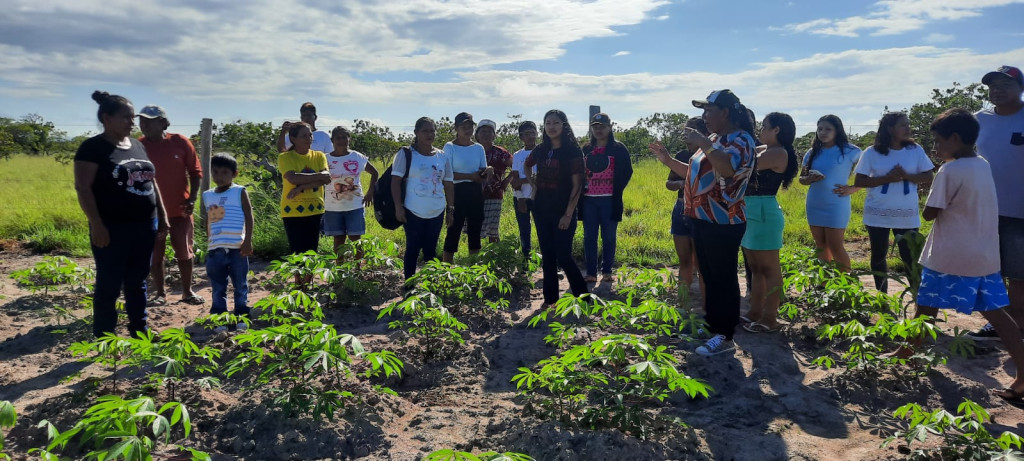
The Jauari indigenous communities, in the Raposa region, in the municipality of Normandia, and Livramento, in Tabaio, municipality of Alto Alegre, received a visit from the secretary of the Indigenous Women's Movement of the Indigenous Council of Roraima (CIR), Kelliane Wapichana. During the visits, which took place on the 14th and 15th, the communities presented projects on agriculture, cattle farming, handicrafts and others carried out in the community, in addition to presenting other demands and community plans.
Jauari - Fox
At the request of the women and the community chief, Erivelton Macuxi, the visit to the Jauari community, a location 190 km from Boa Vista and difficult to access, was important to observe the activities carried out there and to hear the community's needs and plans. "This strengthening is important for them and for us as a community," the chief said about the Secretary's visit.
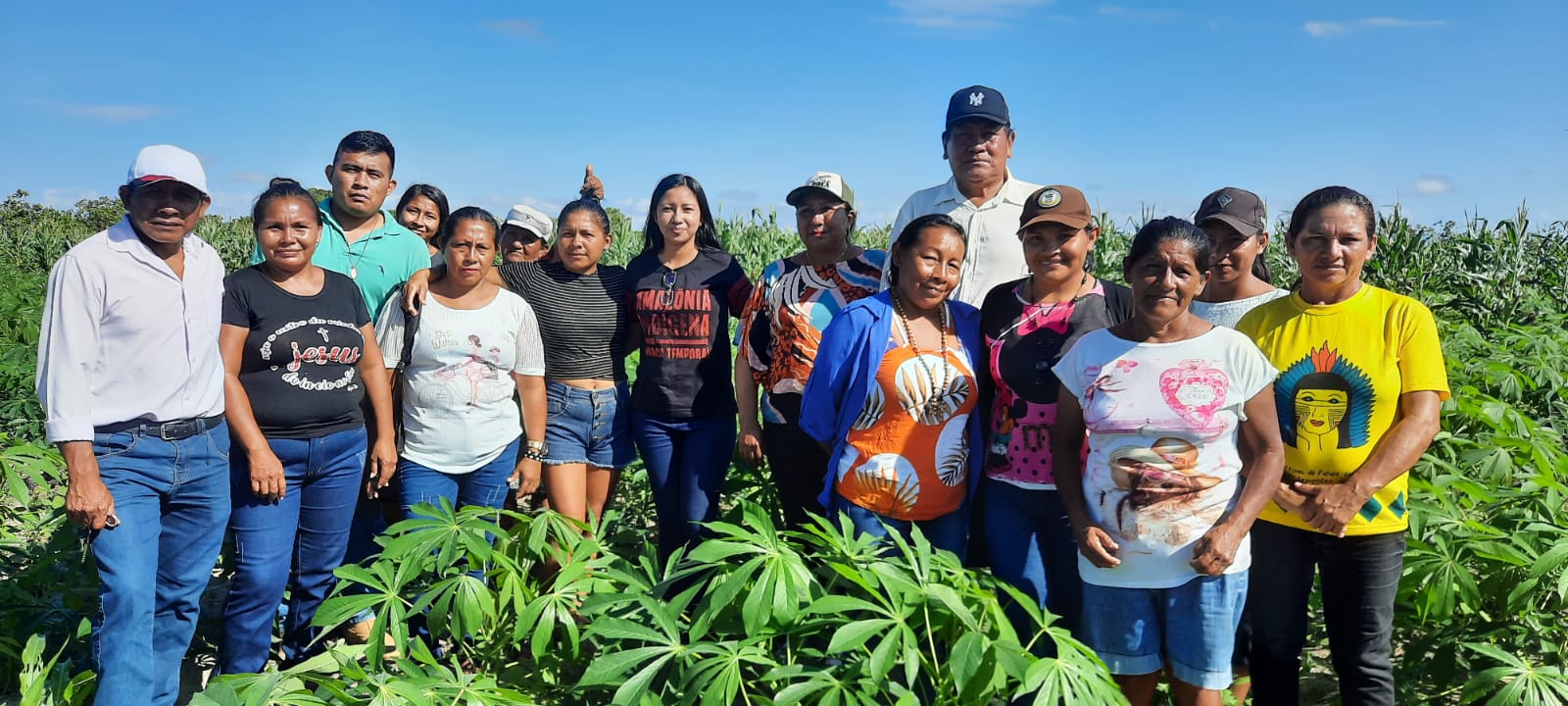
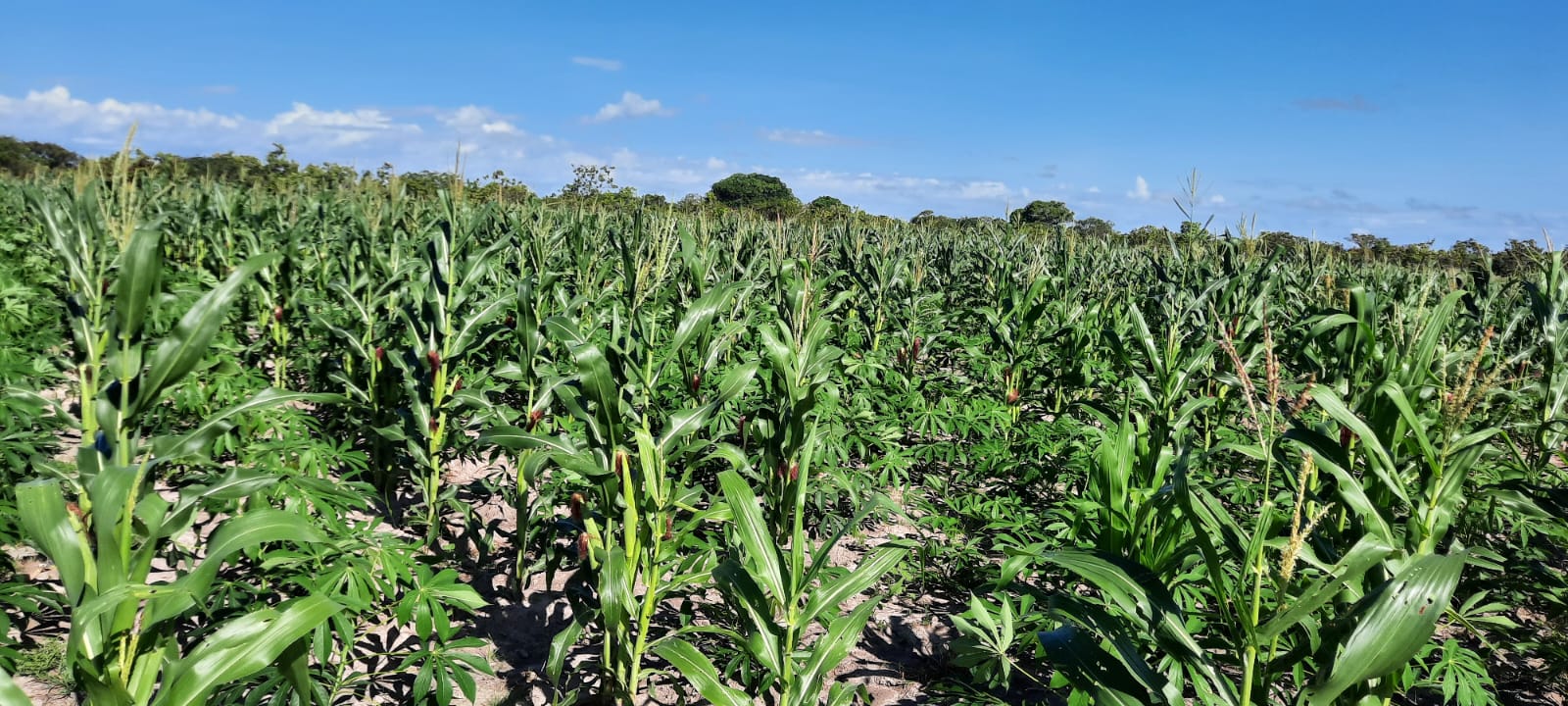
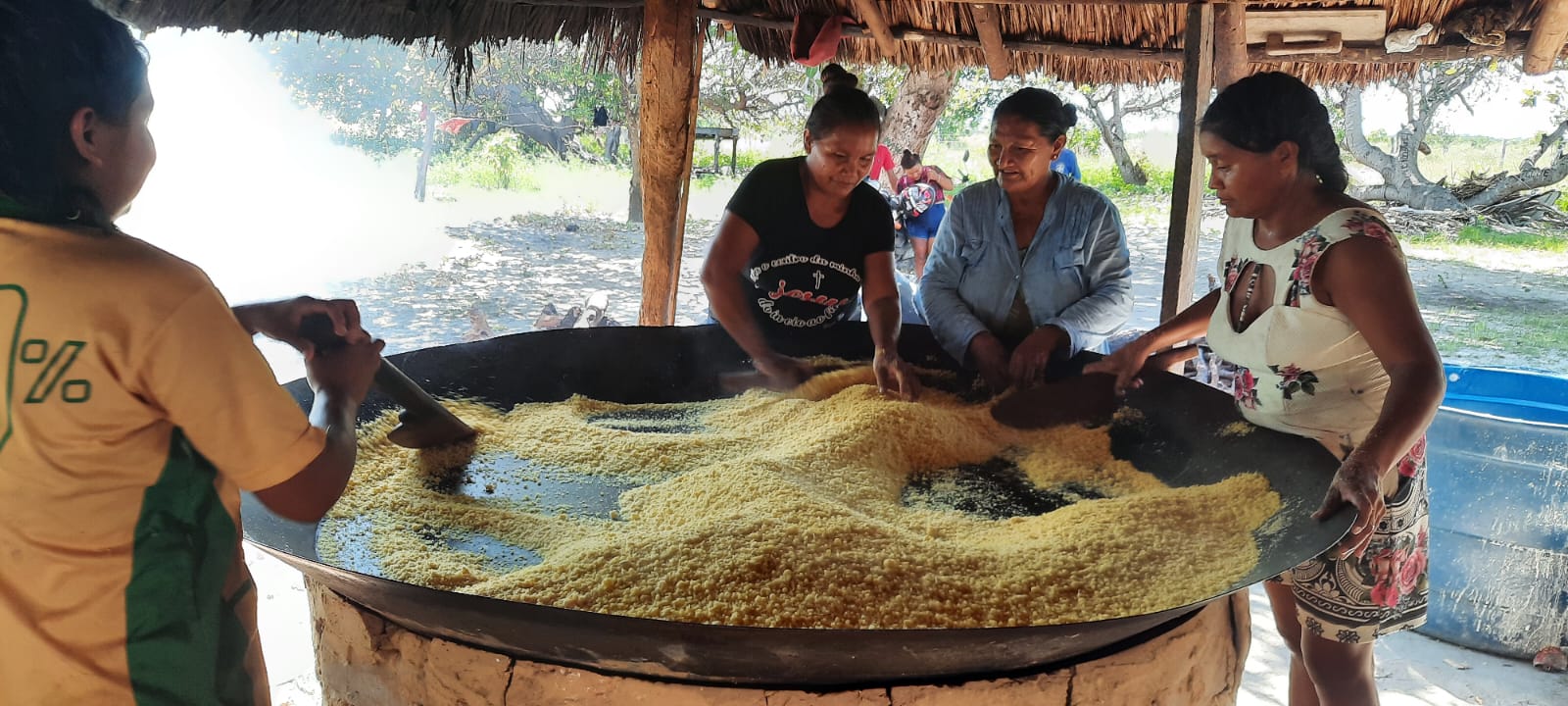
Secretary Kelliane Wapichana visits the production sites of the Jauari community in the Raposa region. Photos: Ascom/CIR.
In the Jauari community, women are carrying out the "Women in the Countryside" project, which began last year and has been successful. The first harvest yielded 25 sacks of flour, used both for their own consumption and for sale in Normandia.
Taking advantage of the fertile soil for organic agricultural production, with cassava, corn, bananas, and watermelon as the main products, the community also invests in cattle production. There are 115 head of cattle in the community livestock project.
"We are proud to show our crops, but we need to invest and expand even further. That's why we asked the secretariat and CIR for support with tools to carry out the services and increase our production even more," reinforced the women's coordinator, Áurea Lucas da Silva.
Climate change is also being felt in the region. Reports indicate that, in the past, at this time of year, there was heavy rainfall, often causing crop losses, but now the once severe rains have given way to drought, which is harming crop cultivation. To aid in production, the women requested an irrigation kit.
The situation does not discourage the residents. The first steps to develop other projects have already been taken, such as creating a women's retreat where bananas, beans, corn, and sheep will be produced, and building a flour mill. In the nursery, the idea is to create a vegetable garden with cabbage, lettuce, and peppers, and to plant fruit seedlings and native plants for reforestation.
Kelliane visited these locations and observed some of the flour production, recognizing the area's potential. She emphasized the importance of uniting women, men, and young people because it makes a difference in strengthening the projects. The secretary also distributed various seeds to the women and affirmed that valuing traditional seeds is fundamental for the future and the unity of women, men, and young people.
“It’s our tradition to have this in our communities, the territory is about having our indigenous productions, valuing our indigenous seeds, our traditional seeds, because currently the system imposes this on you, the non-indigenous system,” Kelliane reflected.
She spoke about the actions of the women's secretariat in the communities, which has been conducting lectures on women's rights, self-esteem, mental health, and types of violence against women, such as domestic and family violence.
“We are in the communities bringing important information to women, restructuring the department to give more support to projects and to women,” said Kelliane, who has been in charge of the Secretariat for four months and is continuing the work carried out by former secretary Maria Betânia.
The coordinator for the Raposa region, Valério Eurico da Silva, and the regional coordinator for Youth, Paulo Ricardo Justino, accompanied the visit to the farms and shared experiences and knowledge. "Youth plays an important role in the community; it's a fundamental piece, so it's necessary to strengthen young people by listening to and passing on the knowledge of the elders," emphasized Paulo.
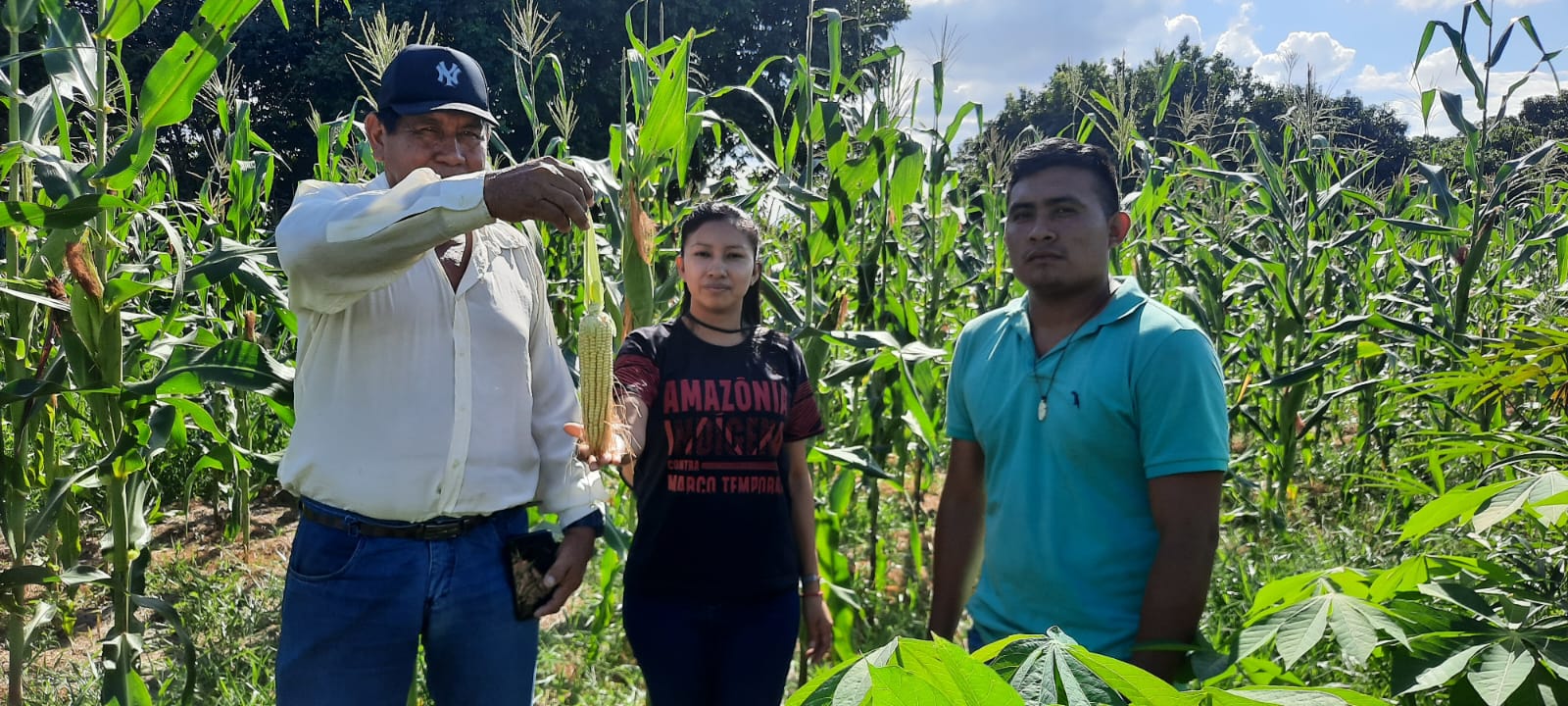
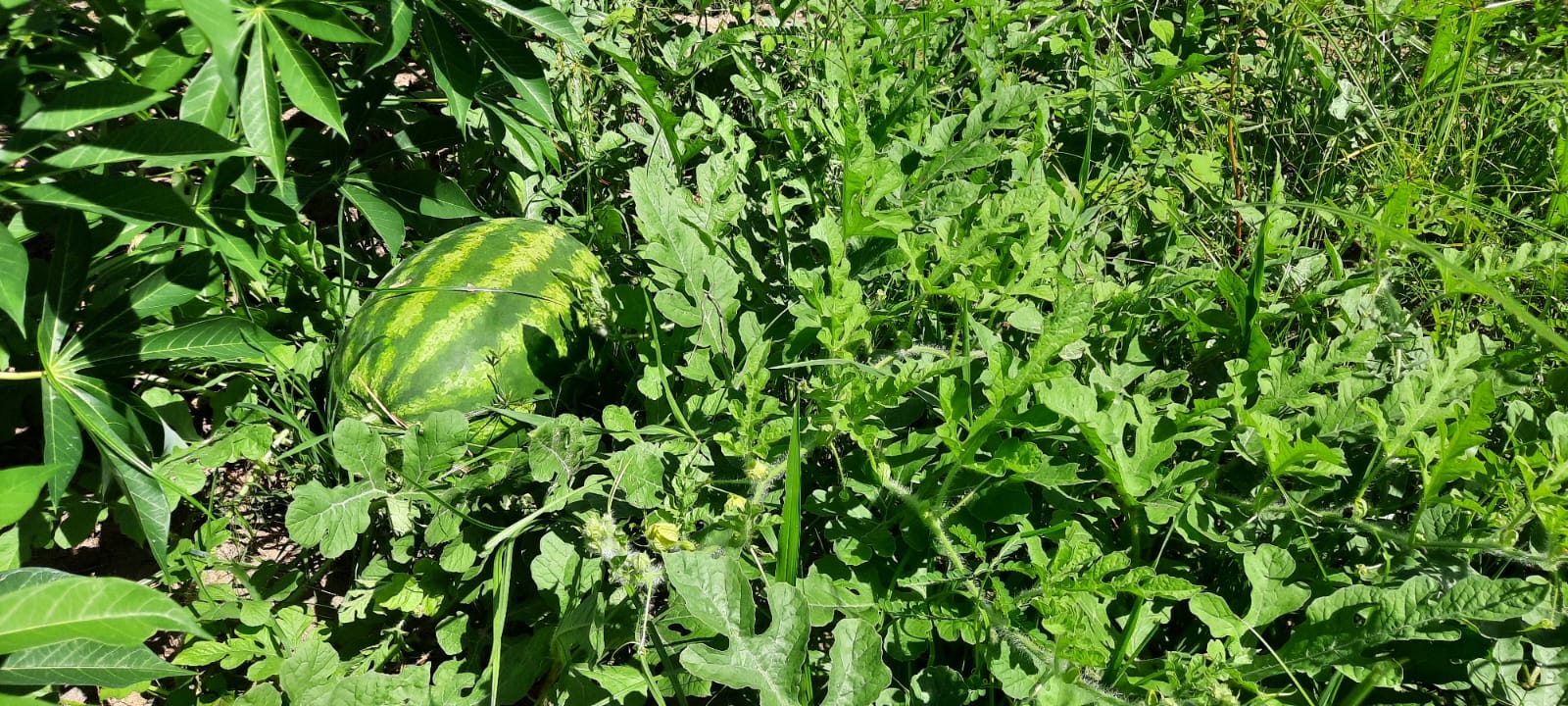
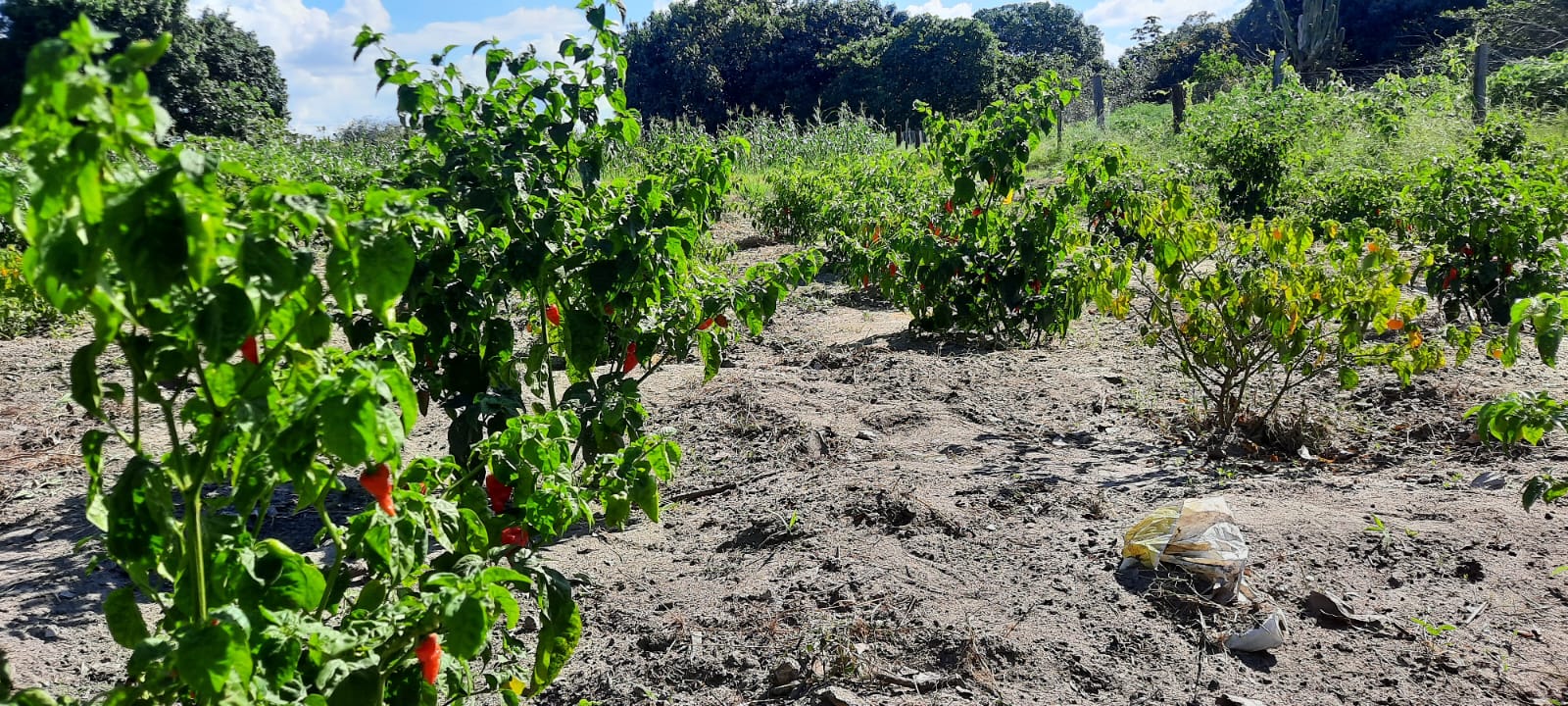
Traditional leaders presenting the productions to the general secretary of the indigenous women's movement. Photos: Ascom/CIR.
Coordinator Valério recalled that the Jauari community was the first place he lived when he arrived in the Raposa region, and congratulated the community on the positive results achieved with the projects and activities carried out.
"Congratulations, everything that has been shown is very good, a project developed without depending on the government. Now it's time to support it to increase productivity," suggested the coordinator.
Livramento - Tabaio
Continuing the visits, on Saturday (15), Secretary Kelliane Wapichana visited the Livramento indigenous community, Tabaio region, municipality of Alto Alegre. She was welcomed by the women of the region. During the meeting, the dialogue was about existing projects in the region as well as the demands. Kelliane presented to the women the support directed to the activities of the secretariat, and also informed them about the schedule of the organization's activities.
“In this meeting, we are bringing information about strengthening these initiatives through seminars, projects in the areas of agriculture and traditional medicine, and a seminar on women's rights and self-esteem. We are discussing and strengthening these initiatives in the region,” Kelliane informed about the actions that will be developed with the support of partners.
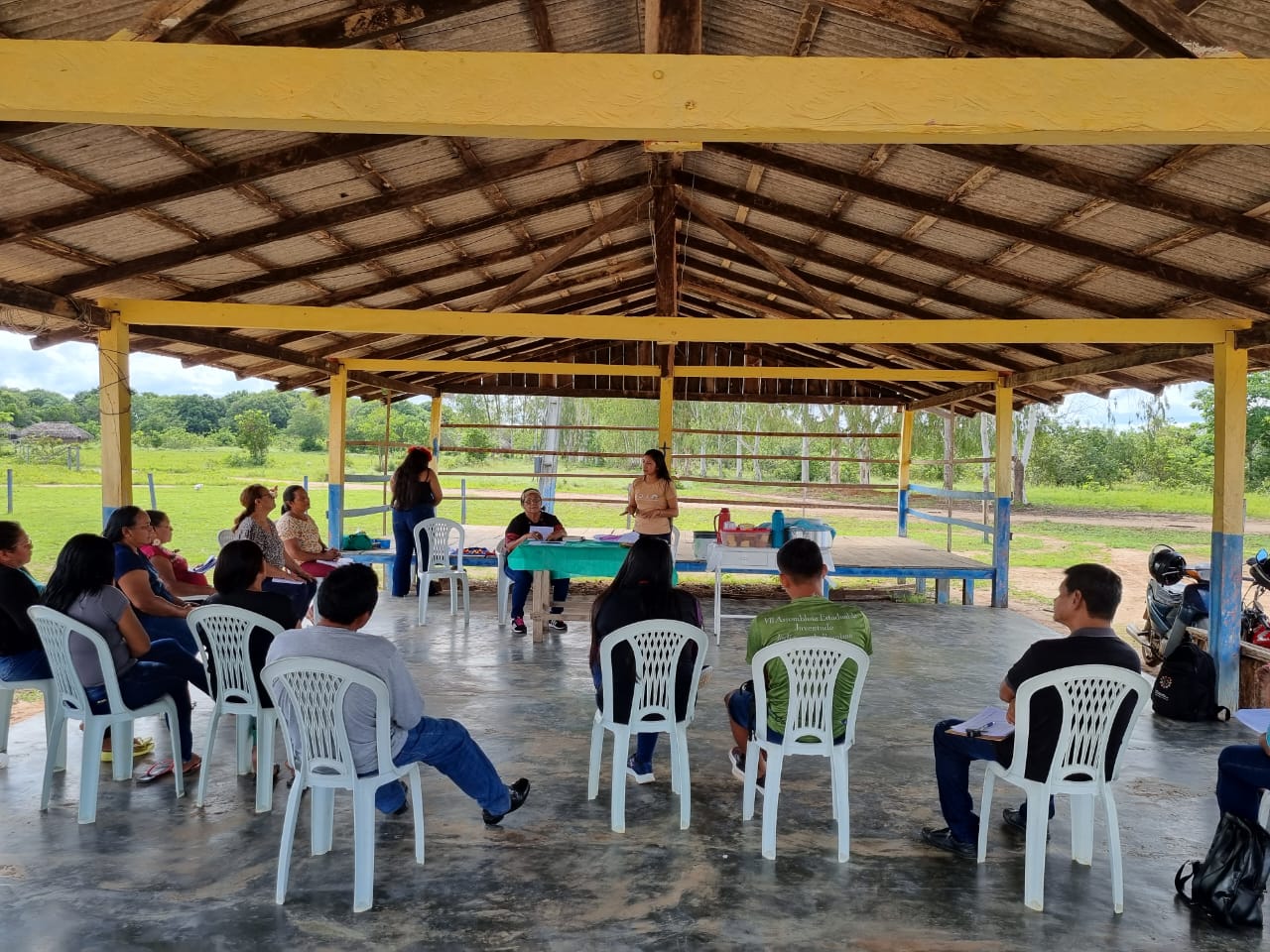
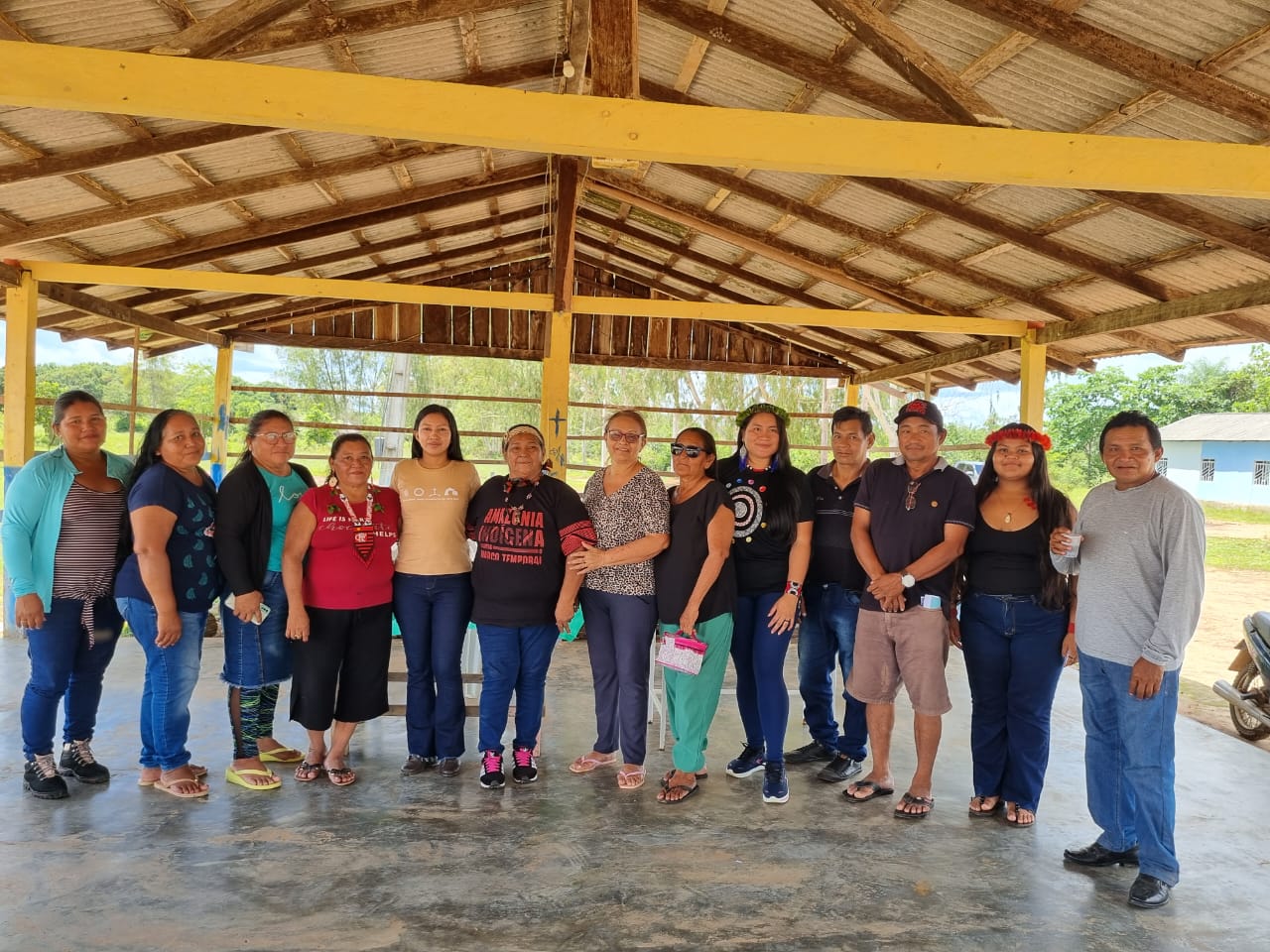
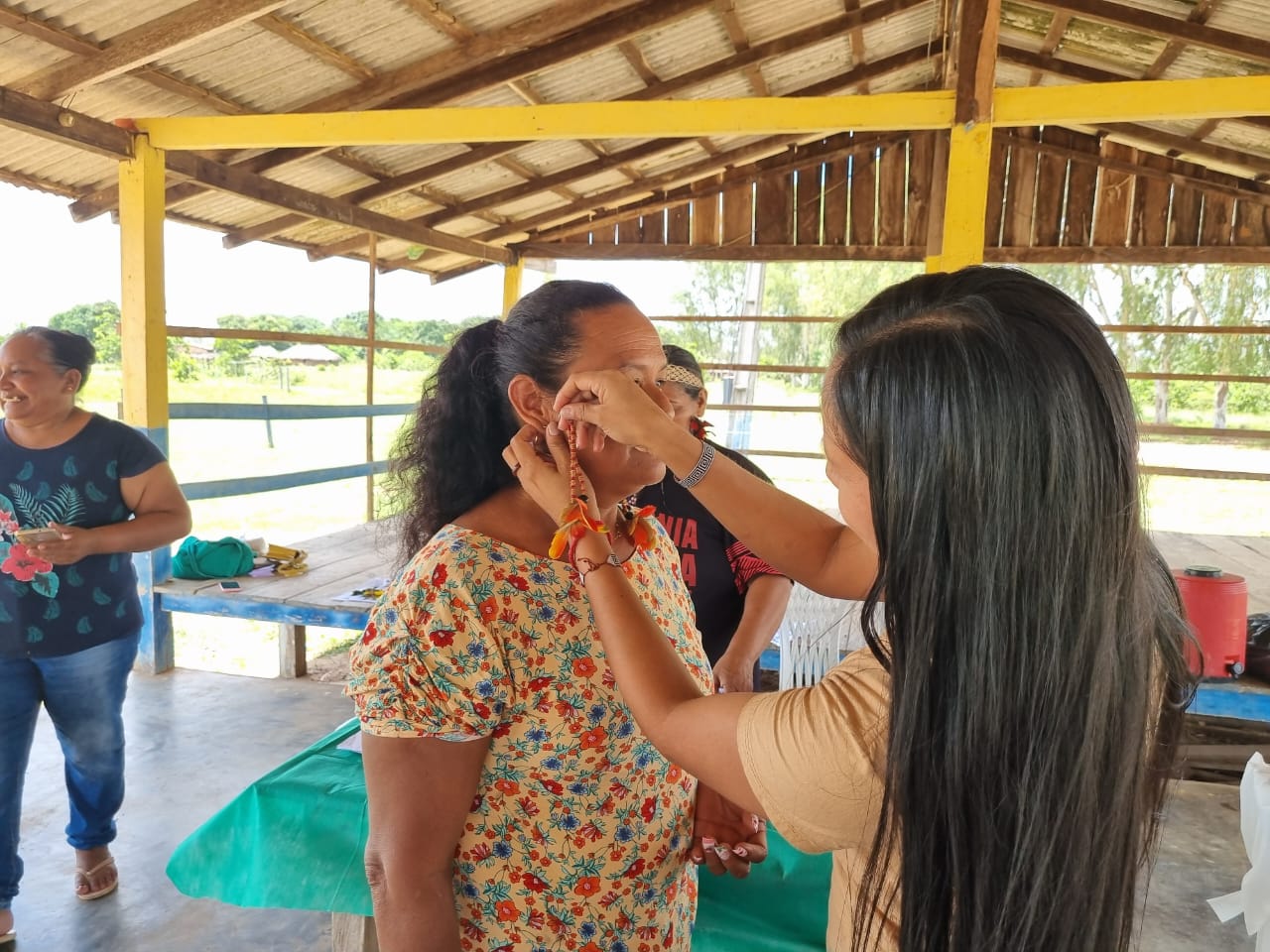
Women from the Livramento community in the Tabaio region presenting their demands to Secretary Kelliane Wapichana. Photo: Ascom/CIR.
Crafts are among the activities carried out by women in the region, and were showcased at the meeting. The coordinator for women in the Tabaio Jailda region emphasized the importance of strengthening initiatives aimed at women.
“We are grateful to the supporters and to CIR for the assistance they have given us in the projects, strengthening our cultures, our farms, handicrafts, family farming, traditional medicine – all of this is very important for our region,” Jailda emphasized, thanking the organization for its support.
These visits are part of the actions of the general secretariat of the Indigenous Women's Movement of the CIR, bringing fundamental information to the women to strengthen their autonomy and empowerment.