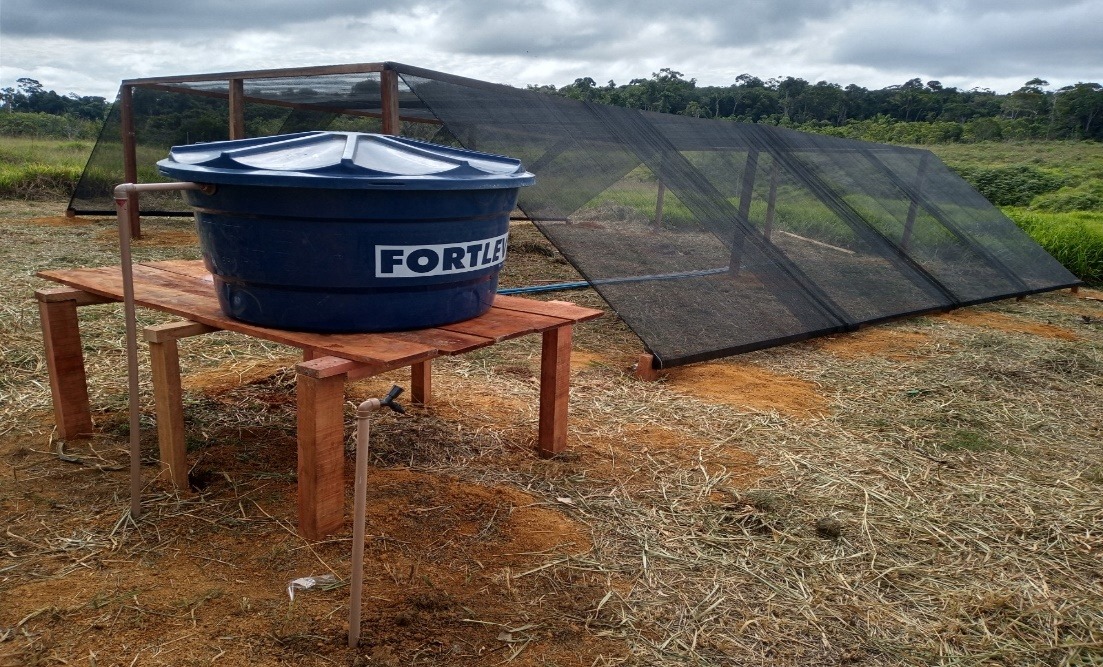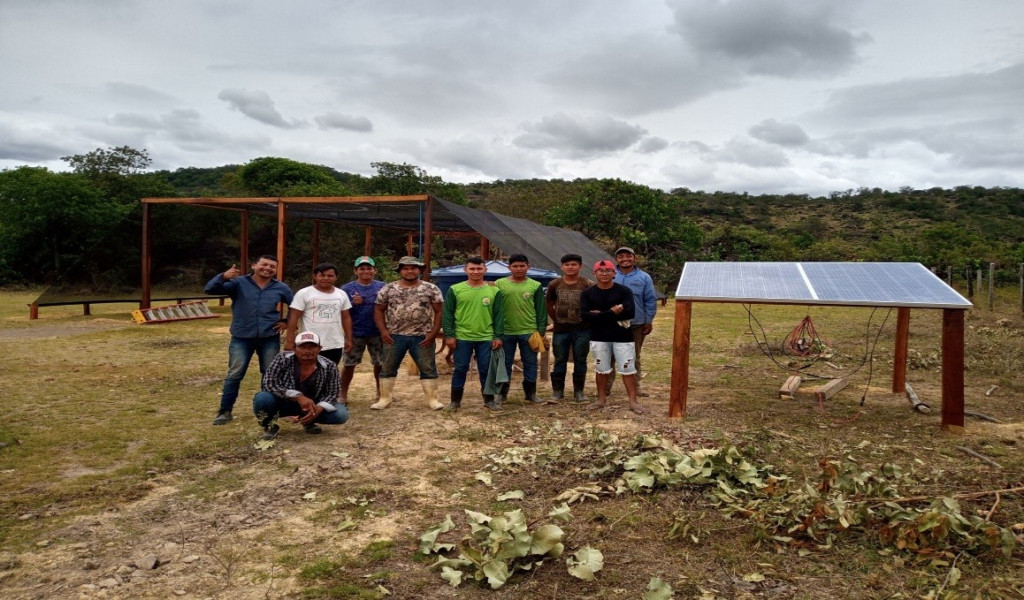
More than ten indigenous communities in the Surumu, Serra da Lua, Raposa, Baixo Cotingo, Amajari, São Marcos and Wai-Wai regions are benefiting from the "reforestation" project, aimed at building nurseries for native and exotic plants. Implemented by the Department of Environmental and Territorial Management (DGTA) of the Indigenous Council of Roraima (CIR), with support from the Rainforest Foundation (USD), the initiative is an alternative to combat deforestation caused by fires and logging.
The project, which has been in place since 2021, follows the specific characteristics of the location, respecting the unique calendar of each region, such as the planting season and the harvesting of traditional fruits and seeds.
For the project's execution, residents have an active role in the action, making decisions about what they will produce. For example, seedlings of timber trees, a medicinal herb garden, and fruit tree seedlings.
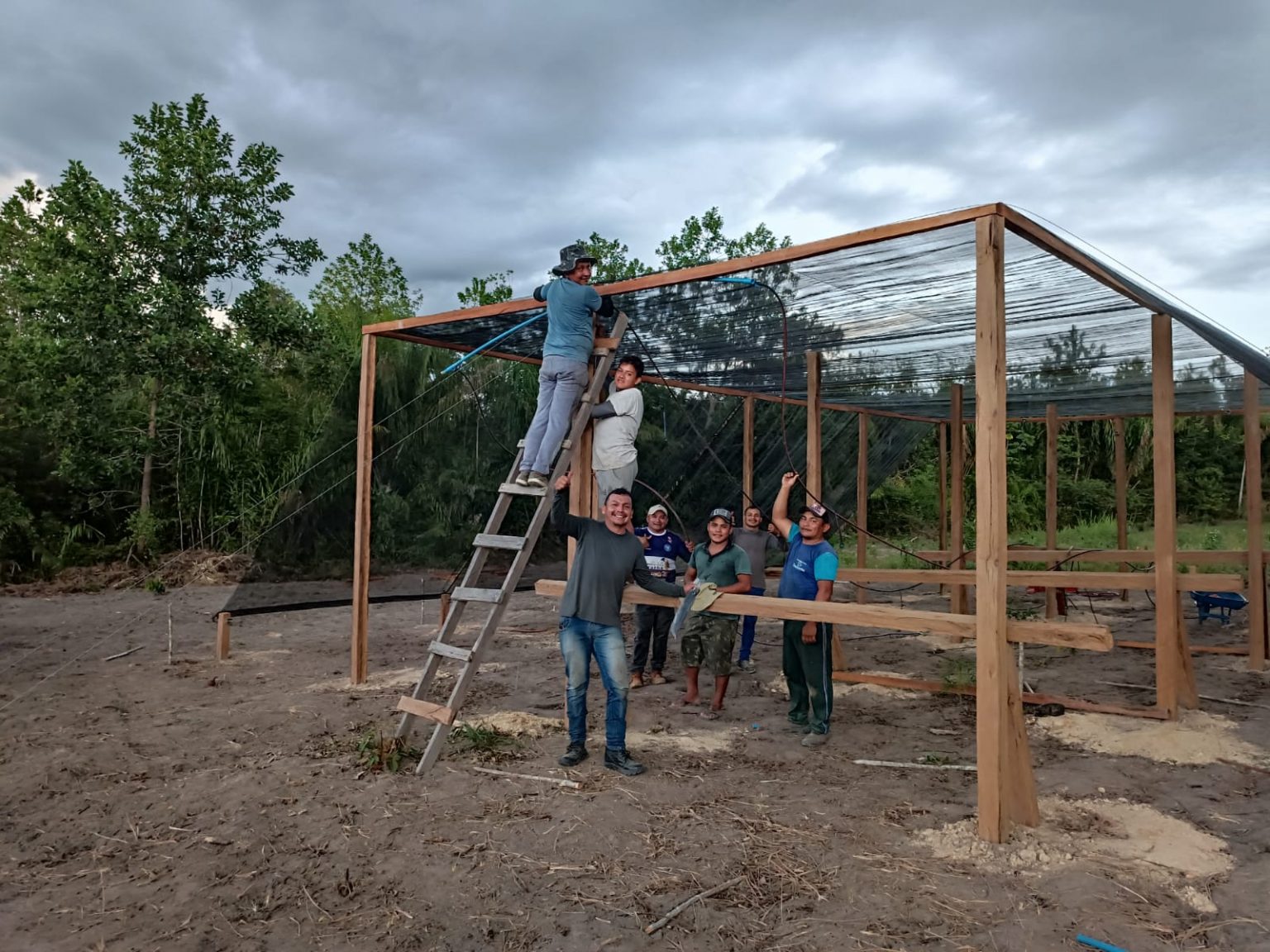
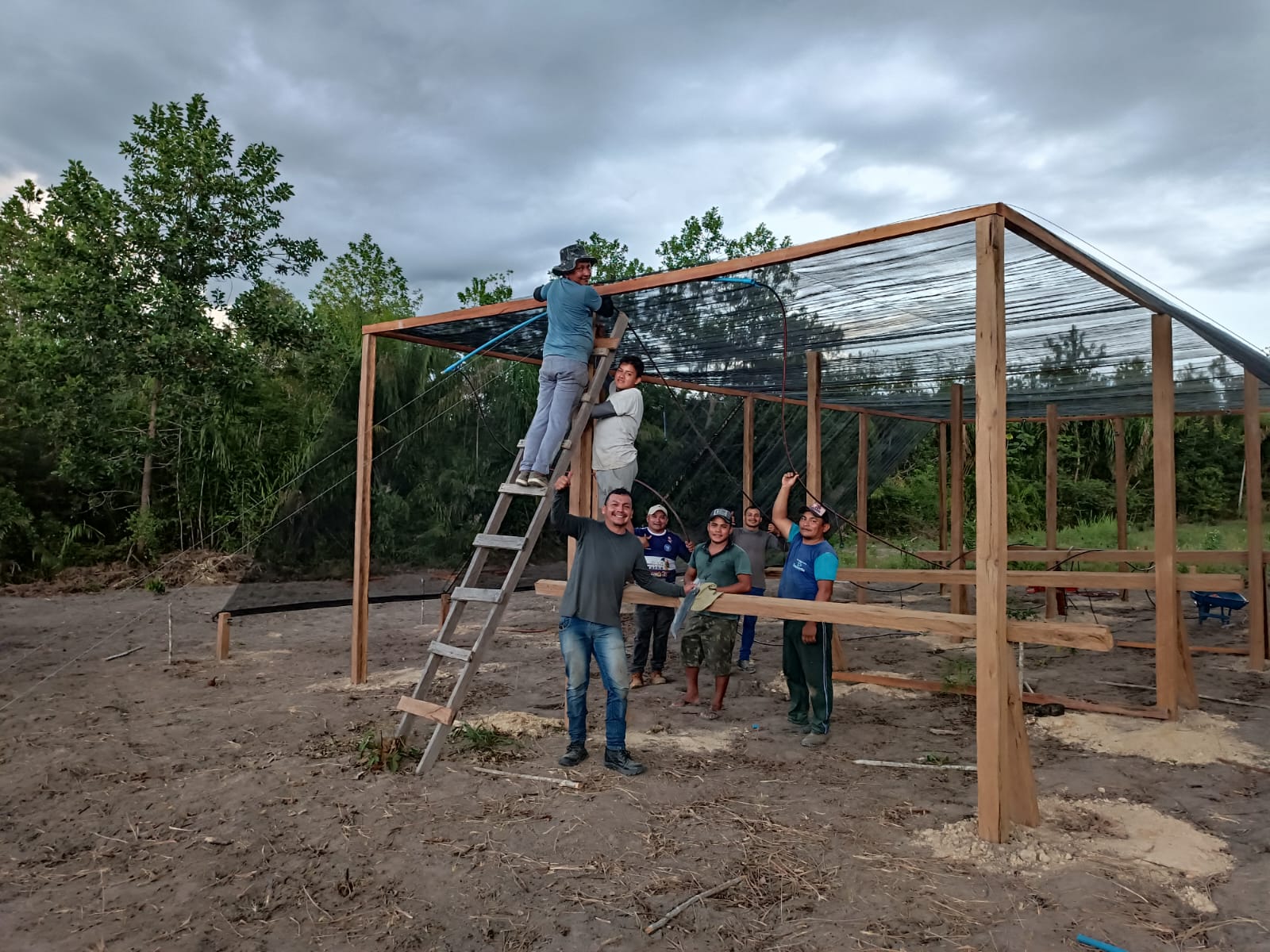
Seedling Nursery, Jauari Indigenous Community, Raposa Region, Raposa Serra do Sol Indigenous Territory
Giofan Erasmo Mandulão, an agronomist from the Macuxi people who works at the DGTA of the CIR, explained that, after the necessary training, each community becomes responsible for managing its own nursery. “The community feels involved; they donate the wood and participate in the production. The department provides technical assistance and irrigation systems so that they can have year-round seedling production,” he explained.
The strategy is a way to preserve and also strengthen the autonomy of indigenous peoples who plant fruit and vegetable species, and use them for consumption, commercialization, and even to help with family income.
Native seedlings, for example, play an essential role in maintaining riparian forests, those found along the banks of streams. Furthermore, they aid in the reconstruction of degraded areas and ecosystems.
Water harvesting through solar energy - Another project that has been successful in indigenous communities is water harvesting through solar energy. This initiative has the support of the Catholic Agency for Development (CAFOD), which visited the communities over the weekend of the 23rd and 24th.
The pilot project, implemented in the Truaru da Cabeceira community, located in the Murupu region, municipality of Boa Vista, provides residents with water for consumption and sustainable production, such as irrigation of crops like watermelon, corn, cassava, and vegetables in general.
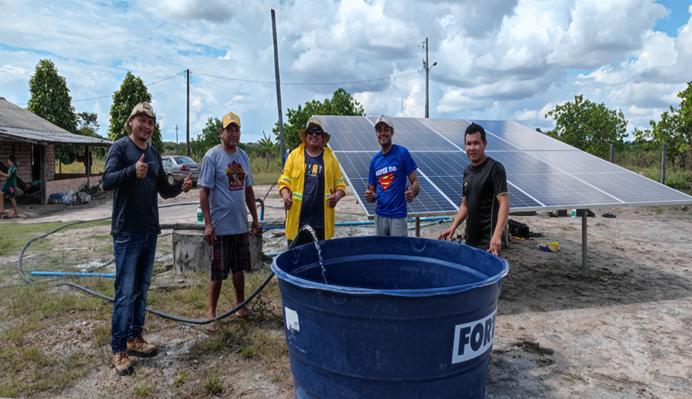
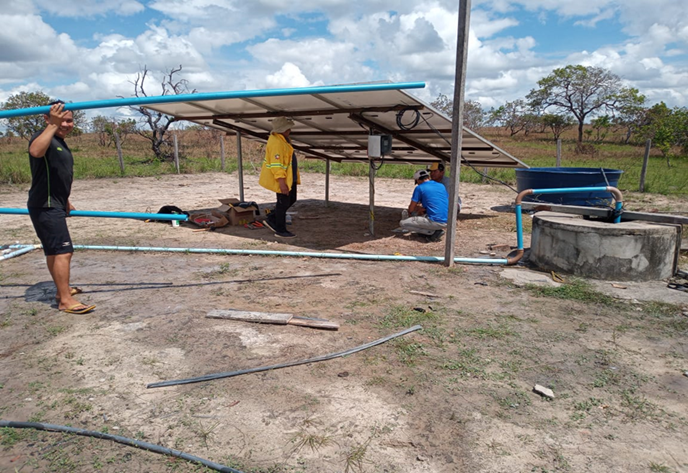
Solar panel for water harvesting system, Truaru Indigenous Community
The system operates using solar energy, consisting of eight panels and water pumps. The low-cost project began in 2020 and strengthens indigenous family farming, as explained by Giofan Mandulão, an agronomist from the environmental department of CIR.
"The photovoltaic system does not generate costs for those who are producing it; there are no charges on the energy generated, much less on the water that is collected and used for production by indigenous families," he clarified.
The water catchment project was a community demand, and according to the community's vice-chief, Franciele Costa, it has brought benefits to the farmers, and she expressed her gratitude for the support. "The irrigation system is contributing to the community. It's gratifying to receive the project, and I hope this support expands here," Franciele stated.
The actions are planned so that future generations can also enjoy a sustainable environment and follow the example in caring for the territory. The expectation is to extend the projects to other indigenous communities in the state.
Land is life, an essential asset not only for indigenous peoples but for humanity. It is a sacred place, a source of food and natural resources, such as hunting, fishing, fruits, and traditional seeds found in these territories.
To confront the expansion of agribusiness, illegal logging, and other invasions affecting indigenous lands, CIR has been implementing projects of this nature with the aim of strengthening the sustainability, autonomy, and social organization of indigenous communities in Roraima.