
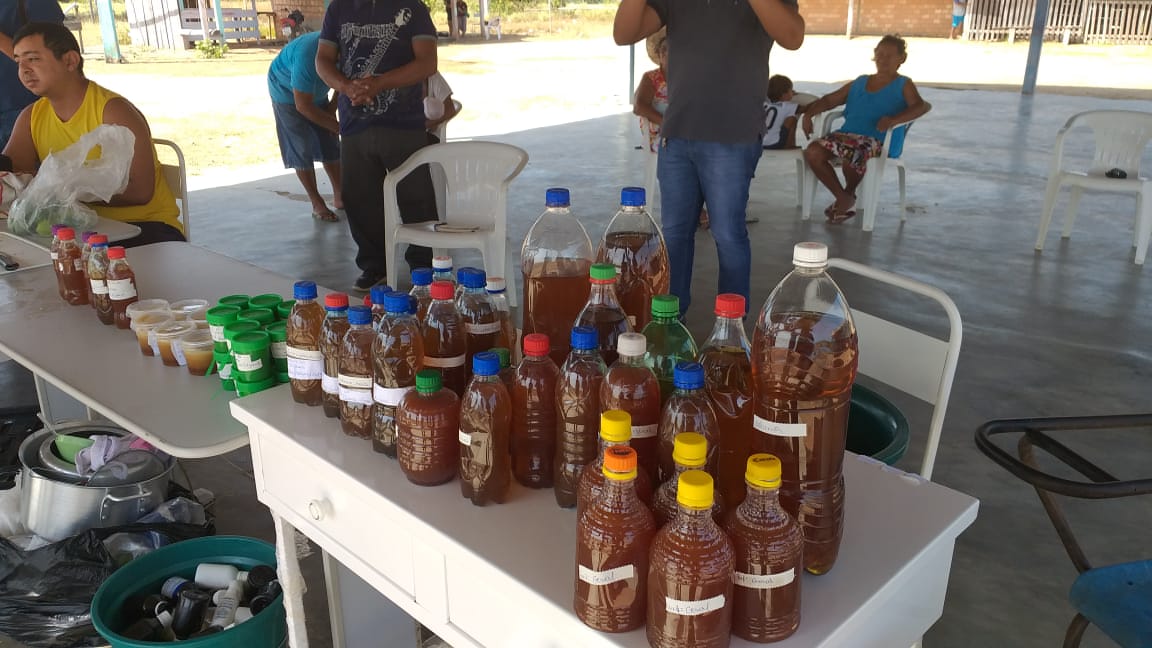
With the lack of assistance and even medicines in health centers in the communities of Roraima, indigenous communities decided to unite to boost traditional medicine in the fight against the new coronavirus.
Seeing residents getting sick and being left unassisted in the midst of the new coronavirus pandemic, the São Mateus community, in the Raposa Serra do Sol Indigenous Land, decided to act. Volunteers came together to increase the production of syrups using medicinal plants existing in the region. The practice of resorting to medicines extracted from nature is millenary and comes from the knowledge left by ancestors.
The medicines produced are for the entire population of the community, but mainly for the leaders who are at the sanitary barriers placed at the entrance and exit of the community to prevent the flow of people. If neighboring communities need it, donations are also made.
According to the Indigenous Health Agent (AIS) Linda Lima, the production of syrups is carried out together with the leaders, shamans, healers, midwives, among others.
"We are making the syrups with bitter plants such as boldo, jaguar's ear, and other plants as well," said the indigenous agent.
Another community that has been making syrups using medicinal plants is the Tabalascada community, Tabalascada Indigenous Land, Serra da Lua region. The work brought together volunteers and the community's health team.
In 2019, the Indigenous Council of Roraima (CIR) supported, through the General Secretariat of the Indigenous Women's Movement, severalWorkshops on traditional medicineto improve and pass on traditional knowledge to women and young people. The classes were taught by indigenous leader Lucila Mota, 82, of the Wapichana ethnic group, who has been working with traditional medicine for more than 20 years.
"The result of this work was positive, because with the initiatives of holding workshops at the bases, we had a great appreciation of traditional medicine, which is now very important in the face of Covid-19", highlighted Maria Betânia Macuxi, Secretary General of the Indigenous Women's Movement.
Since last year, the Tabaio region has intensified the production of traditional medicine in the Anta II community.
"The syrups we made are for us and also for the neighboring communities," said the coordinator of traditional medicine in the Tabaio region, Rosângela Raposo Batista.
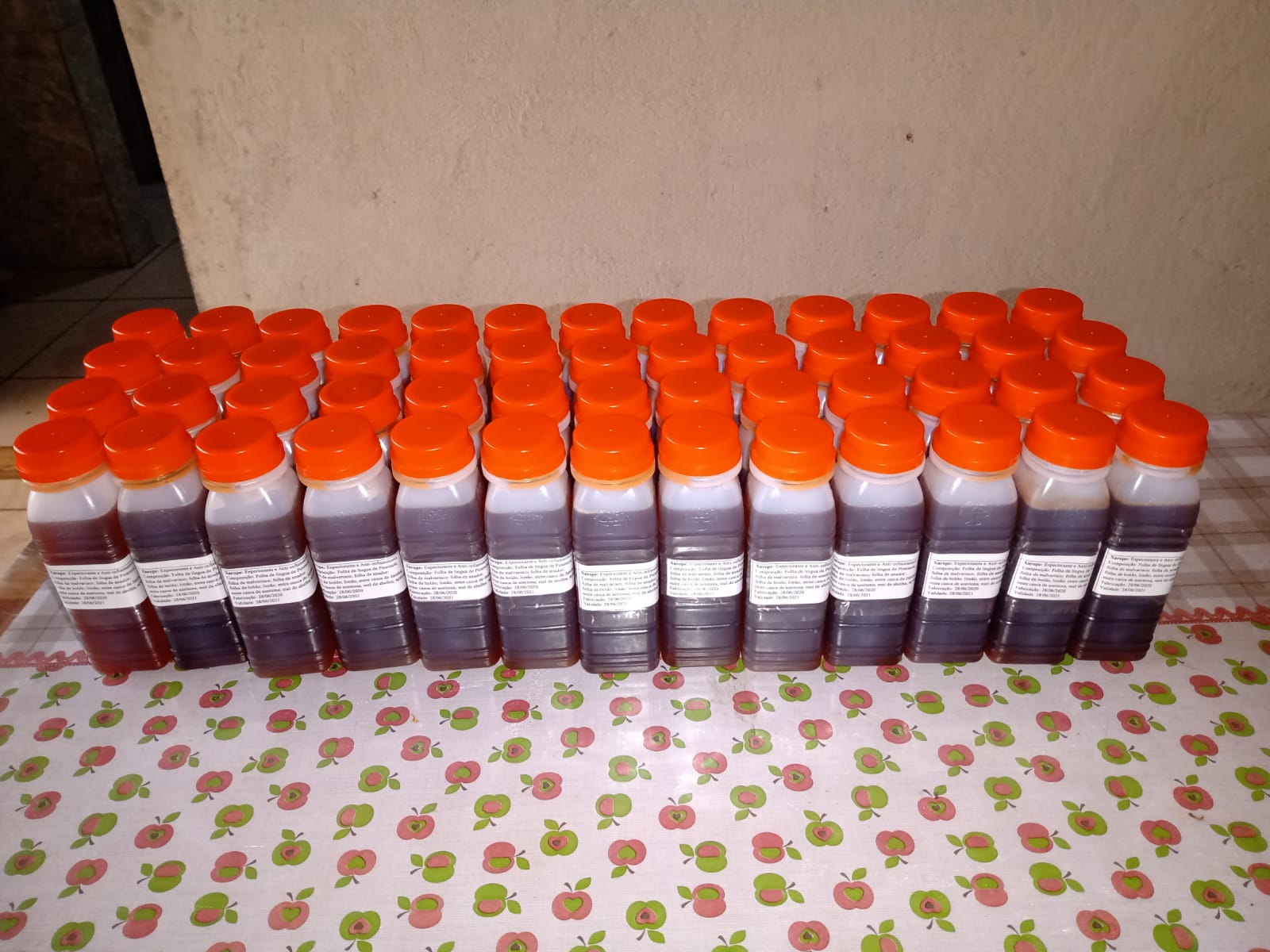
In addition to the work in the communities, the syrups are also being manufactured in Boa Vista by nurse Letícia Monteiro Taurepang and Mrs. Iolanda Pereira Macuxi. The two, concerned about the indigenous people who live in the city and those who come to Boa Vista for treatment, decided to manufacture the syrups to help in some way.
"We manufacture 50 200ml jars and we will continue to produce syrups for our relatives, maintaining our traditional knowledge," said Letícia