
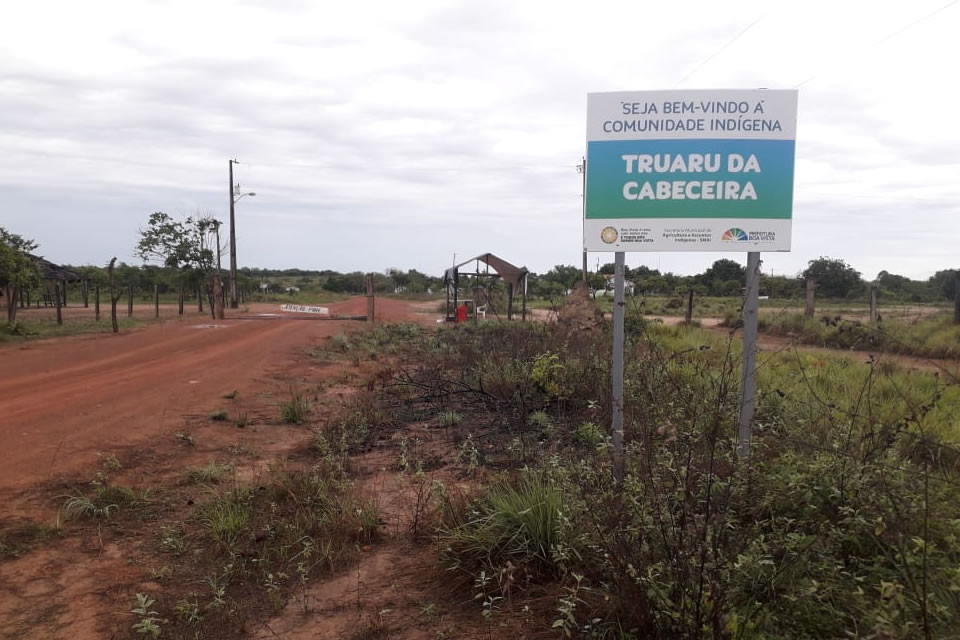
The Indigenous Council of Roraima (CIR), through the Legal Department, obtained a favorable decision in court in defense of the territory of the Truaru da Cabeceira indigenous community, Murupu region, in the municipality of Boa Vista.
In May of this year, community leaders received a court order issued by the Judge of the District of Alto Alegre to vacate an area of traditional use by the population living in the community.
The lawsuit, according to the leaders, was filed in the State Court by a person who claims to be the owner of the area and demands that it be vacated. At first, the court rejected his request, but after reconsideration it ended up granting the injunction in favor of the invader.
Understanding that the community uses the land and that the state judge does not have the competence to process and analyze the case because it involves a collective right provided for in the federal constitution (the right to land), the leaders decided to seek support from the CIR's legal counsel to contest the reintegration action.
Aware of the situation, the CIR team went to the community, where they heard the reports and carried out a survey on the legal situation of the territory. "After analyzing the documents, we decided to defend the indigenous people and we also asked that the community be heard by the Federal Court. The judge accepted the request, and recognized the incompetence and determined the immediate referral of the case to the Federal Court to judge the case", explained the legal advisor of the CIR, Ivo Cípio Aureliano.
The community leaders also reported that they have always used the area required for hunting and fishing activities and as a preservation area, considering that there are the natural riches essential for the physical and cultural reproduction of the indigenous people.
The lawsuit deals with an area of 450 hectares owned and occupied by the residents of the Truaru da Cabeceira community, in which the plaintiff claims to be the owner of a total area of 368.5761 hectares. In the community there are 108 families and 510 residents. The predominant ethnic group is Wapichana, but there are also peoples of the Macuxis, Yanomami and Wai Wai ethnic groups.
"For us, the territory represents much more than the geographical physical space, we grew up in a community whose limit was stipulated by the division between the private area of our neighbors and the area of the community, so seeing that hunting and fishing space as part of our territory made us believe that it also belonged to us, even though the white man placed his wire fences as a physical divider between the community and the private areas such as farms, ranches and small retreats, so we say that the territory encompasses beyond the geographical physical space, it includes the mystical spaces, of great importance for the preservation of our history of our ancestors who are buried in some of these places", said one of the leaders of the community, whose name will be preserved for protection.