
It is part of the customs and traditions of the Wapichana indigenous people of the Pium Indigenous Community, Serra da Lua Region, to seek solutions to internal conflicts based on their own rules. One of the cases that had great repercussions happened in the Cachoeira do Sapo Indigenous Community, which is ten kilometers from Pium, involving an indigenous man who violently assaulted his wife.
Leaders of the Cachoeira do Sapo Community, by collective determination, decided to expel the indigenous man. By mutual agreement, the Pium Community Leadership Council decided that the expelled indigenous person would be welcomed to serve his sentence according to the community's internal regulations.
In addition to the reported case, the Pium Community, through its Internal Rules, applies punishment, mediates and conciliates conflicts between the residents of the community. However, the rules only apply in the area of the indigenous land and when the case involves indigenous people.
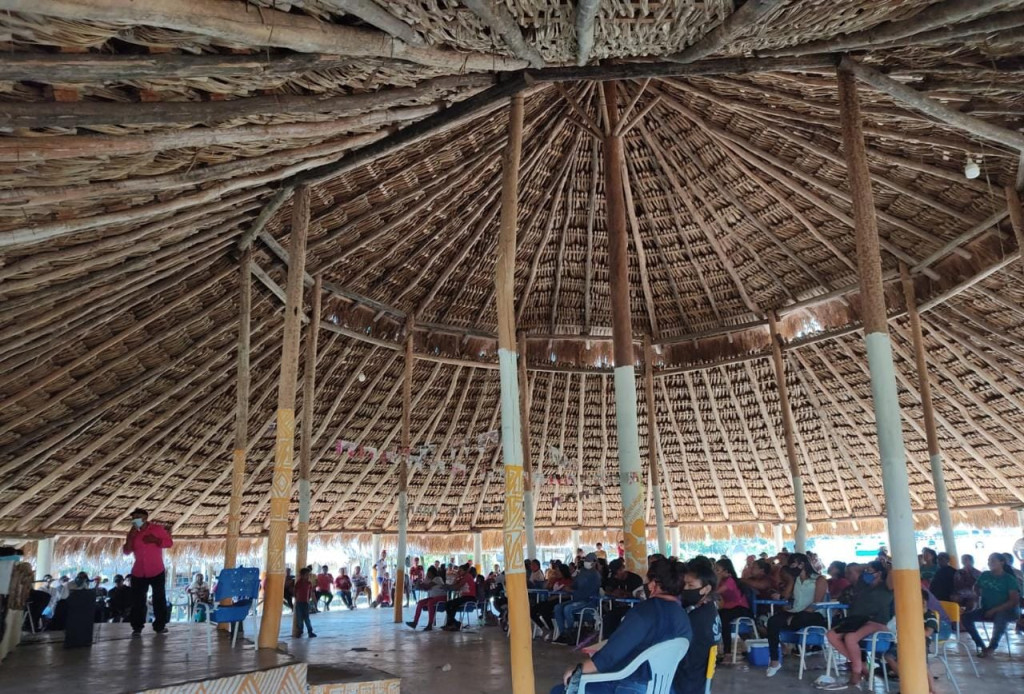
The older leaders say that internal issues were resolved in the community, but they did not have a written document. When the case was mild, the indigenous people received "advice" – that is, a sermon from the leaders. The meetings took place at the Tuxaua's house, at the church or at the community Malocão.
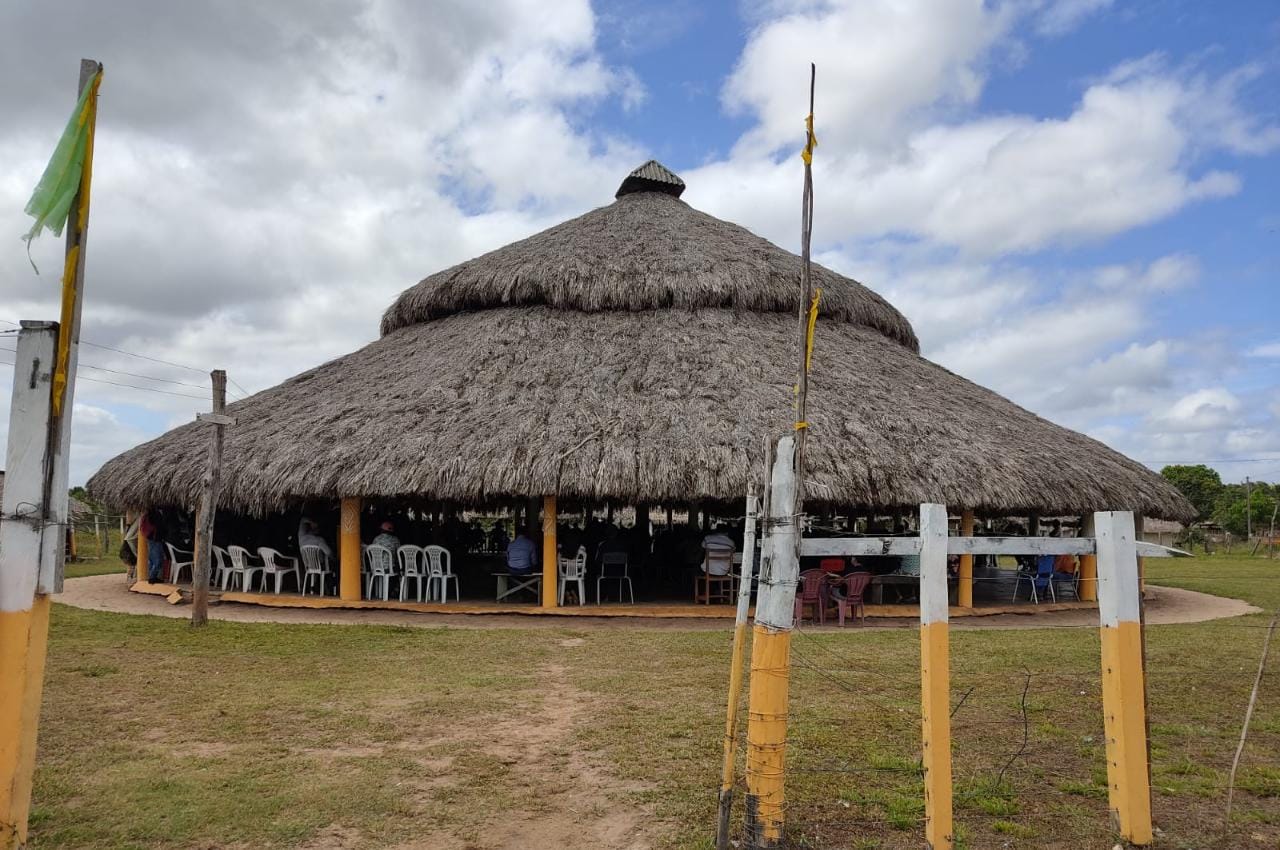
Community malocão of the Pium indigenous community. Space for political decisions of indigenous peoples. Photo: Community archive.
In order to strengthen the social organization of the community, the Internal Regulations were approved and the Leadership Council was created. The council is made up of traditional leaders among women, animators, teachers, elders, surveillance agents and young people who make up the administrative body. The main objective of the council is to resolve internal issues and forward cases to the assembly, then the community to make the final decision.
Leader Jacir Barreto explained one of the reasons for writing the Internal Regulations. “It was because of our relatives being arrested. We saw a lot of suffering. That's why we decided to punish our relatives in our community. In the past, the problem was solved by the Tuxaua and the foreman (tuxaua's assistant), there was no Leadership Council. And the most serious cases, they were taken to the community, and the community solved them together with the leaders,"he explained.
According to the Tuxaua Lázaro Wapichana, "the community decided to punish the relatives within the territory so that they do not go to jail in Boa Vista, because there the penalty is very cruel. Here they have freedom, but not freedom in their own way. Here they serve their sentences daily, doing community work, going to farms, doing women's work."
Vice President Tuxaua Pedro Wapichana said that, "currentlythere are 08 indigenous people who are serving time, according to the Regiment providing community service. There are indigenous people who were penalized with 03 and 04 years, and serious cases of up to 30 years. The indigenous people who provide community services sign a daily attendance and are accompanied by a leader", he explained.
The community's Regulations do not only deal with punishments, it reports the daily life of the community, such as the customs and traditions of the Wapichana people, makes clear the role of leaders, the form of consultation, management and territorial protection.
Due to the proximity to the communities of Guyana, there is cooperation for conflict resolution based on the legal systems of the communities.
The Pium Indigenous Community is located in the Manoá/Pium Indigenous Land, Serra da Lua region, municipality of Bonfim, near the border with Guyana. It has a population of 800 people, most of them from the Wapichana indigenous people.
Text: CIR legal advice