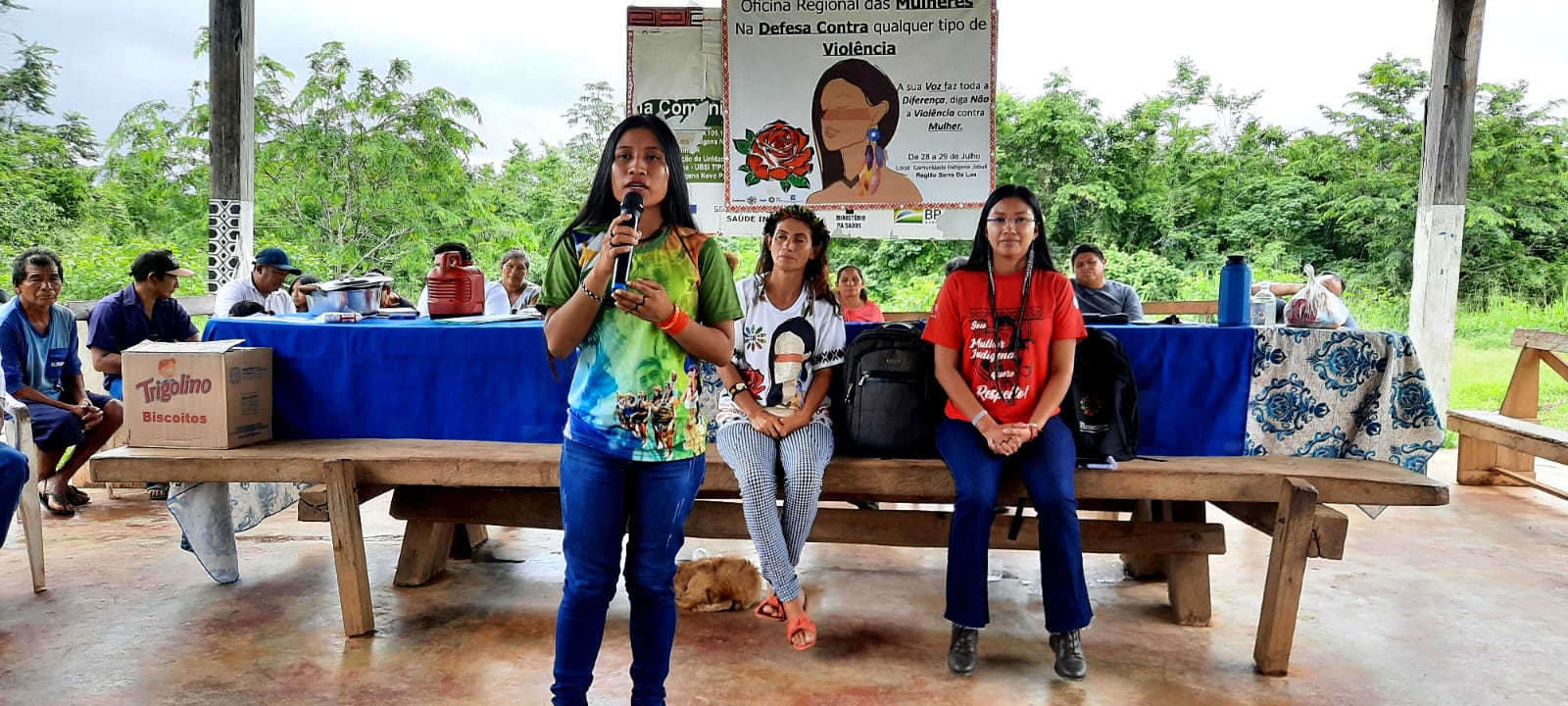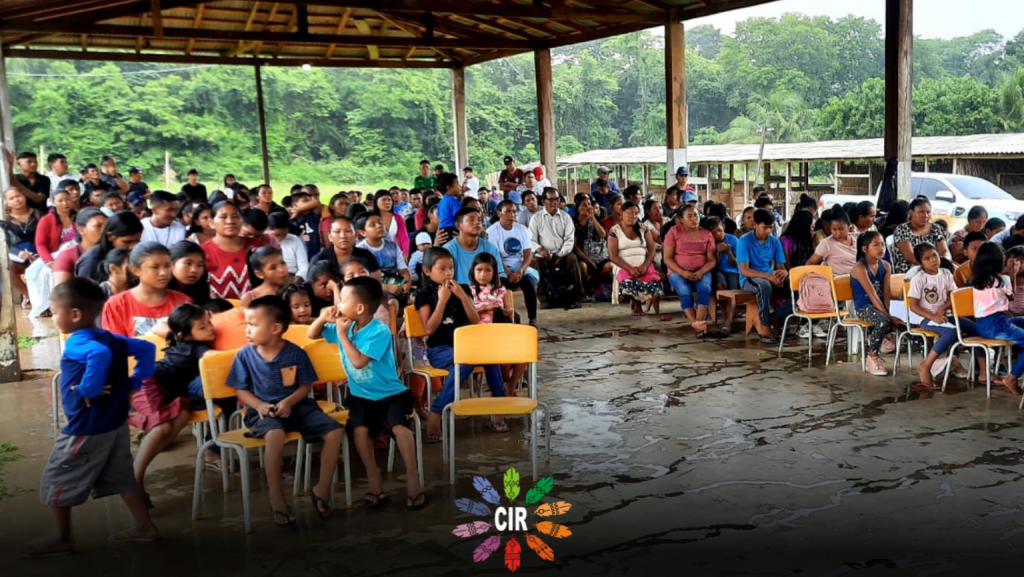
The indigenous community of Novo Paraíso, in the Serra da Lua region, held its first lecture on "Rights of Women, Children and Adolescents in the Community". Initiated by Tuxaua Maria Loreta, who has been in the position for four months, the activity took place last Friday, the 16th, in the community maloca, and brought together 200 participants, including women, children and young people.
Even with an important instrument for the community's social organization, the internal regulations, the Tuxaua sought other alternatives to bring knowledge and information to the community.
Pleased with the success of the lecture, Loreta explained how she managed to organize it and the importance of the initiative. "This is the first time we've hosted this type of lecture. Everything was done in collaboration with the community; I sought to understand the needs of my people. It's important to know that we have rights and responsibilities, that we need to respect them, and even though we have internal regulations here, it's necessary to understand that, depending on the situation, we are responsible for our actions. I thank everyone for their collaboration."
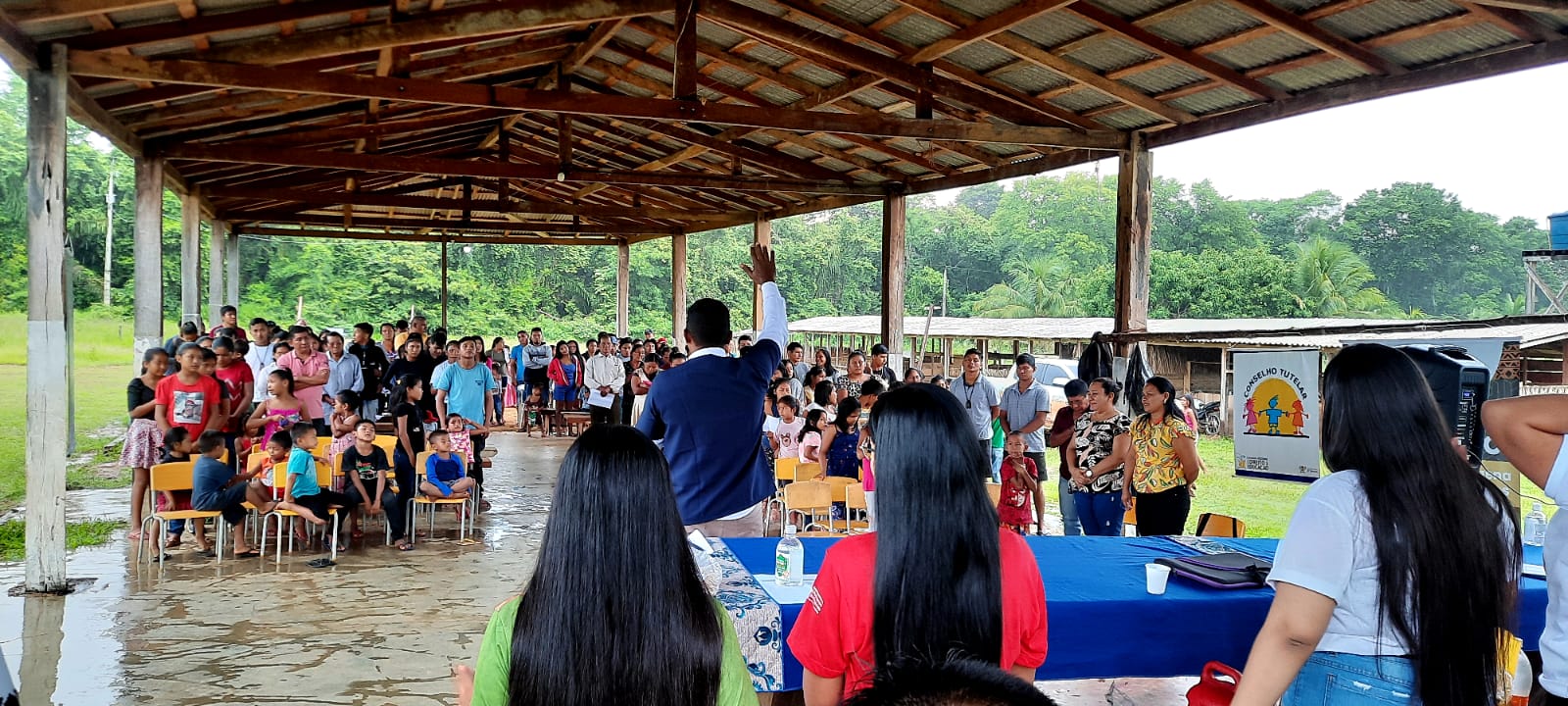
Representatives from the Indigenous Council of Roraima (CIR), Indigenous Leaders, the Bonfim Guardianship Council, CREAS (Specialized Social Assistance Reference Center), Health Agents, the Public Defender's Office, and community residents participated in the program.
Child welfare counselors from the municipality of Bonfim presented the Statute of Children and Adolescents (ECA), which outlines the rights and responsibilities of this population, such as the right to education, health, and leisure.
Terezinha Muniz, a public defender for the state who works to promote and defend women's rights, discussed the Maria da Penha Law, the types of domestic and family violence, including physical, moral, sexual, psychological, and patrimonial violence.
Residents took the opportunity to ask questions about the subject, sharing situations they experience daily, such as caring for the elderly, who often live alone and need help, the sale of alcoholic beverages to minors, abandonment of incapacitated individuals, and domestic violence.
Keliane Wapichana, secretary of the CIR Women's Movement, questioned the guardianship council regarding the rates of sexual abuse against children and adolescents in the Serra da Lua region, and what it has been doing about this reality.
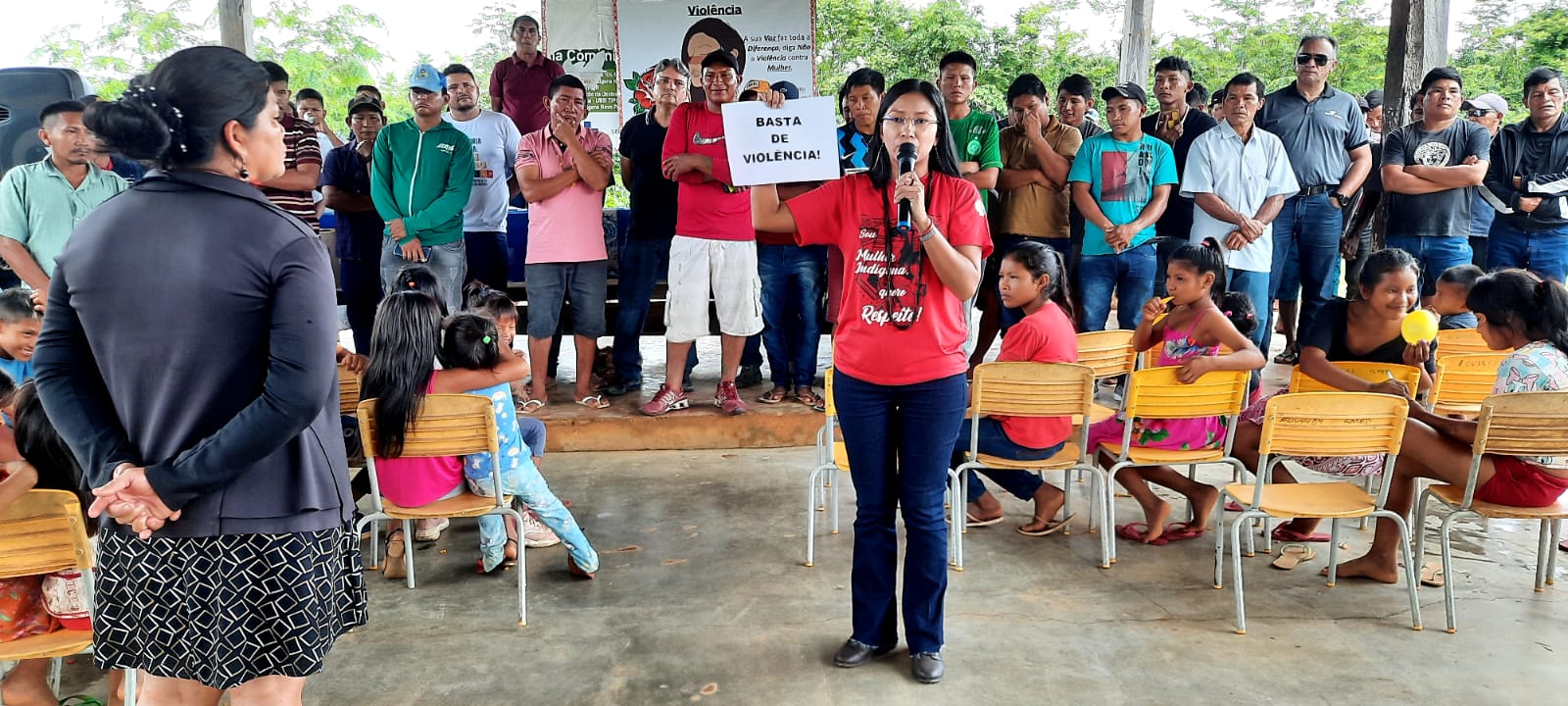
According to Alice Rebeca, a child welfare counselor, the rate of abuse against children and adolescents in the Serra da Lua region is high, and a system to monitor the cases will be implemented soon.
"Until we have the system in hand, the cases are forwarded to the civil police. What we can do is preventative work in the communities, on-site visits to investigate the complaints," said Alice.
The coordinator of the Indigenous Council of Roraima, Edinho Batista, spoke about the importance of participation in discussing the topic with the community. Batista congratulated the chief on her initiative.
"I heard the counselors talking about the ECA (Statute of Children and Adolescents), and the residents pointing out some situations, these problems that exist with young people, children, women, we try to solve them with the community. It is necessary to have a firm hand. But, if necessary, we will call upon the institutions that are also important to maintain order."
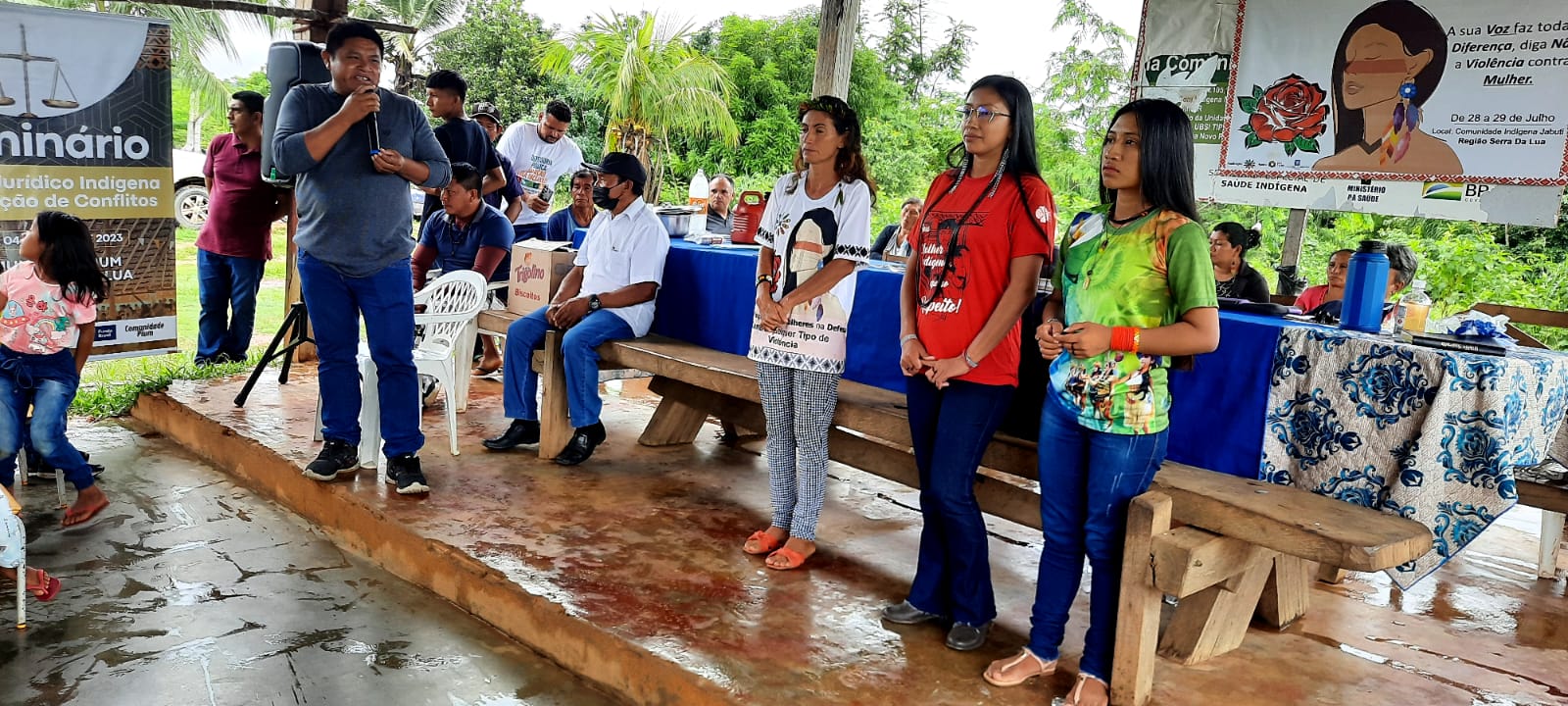
The state coordinator for youth, Raquel Wapichana, emphasized the importance of family involvement in the lecture, particularly in listening to discussions on various topics, especially regarding the rights of children and young people. "Today we learn about our rights through these partners who are there to help us in some way, and that's important."
Raquel also spoke about the importance of caring for the mental health of young people, "Our young people are going through difficult times. It is essential to help them, because they are the present, to take care of them so that they will be present with us in the future."
During a workshop, the secretary of the Indigenous Women's Movement, Kelliane Wapichana, called for an end to violence against women and listed some women's rights, such as the right to freedom of thought, the right to information, the right to health, the right to privacy, and others. In her speech, she encouraged the women.
"Women need to be respected, and women need to love and value themselves. Don't be afraid, have the courage to make your voice heard as a woman," she encouraged.