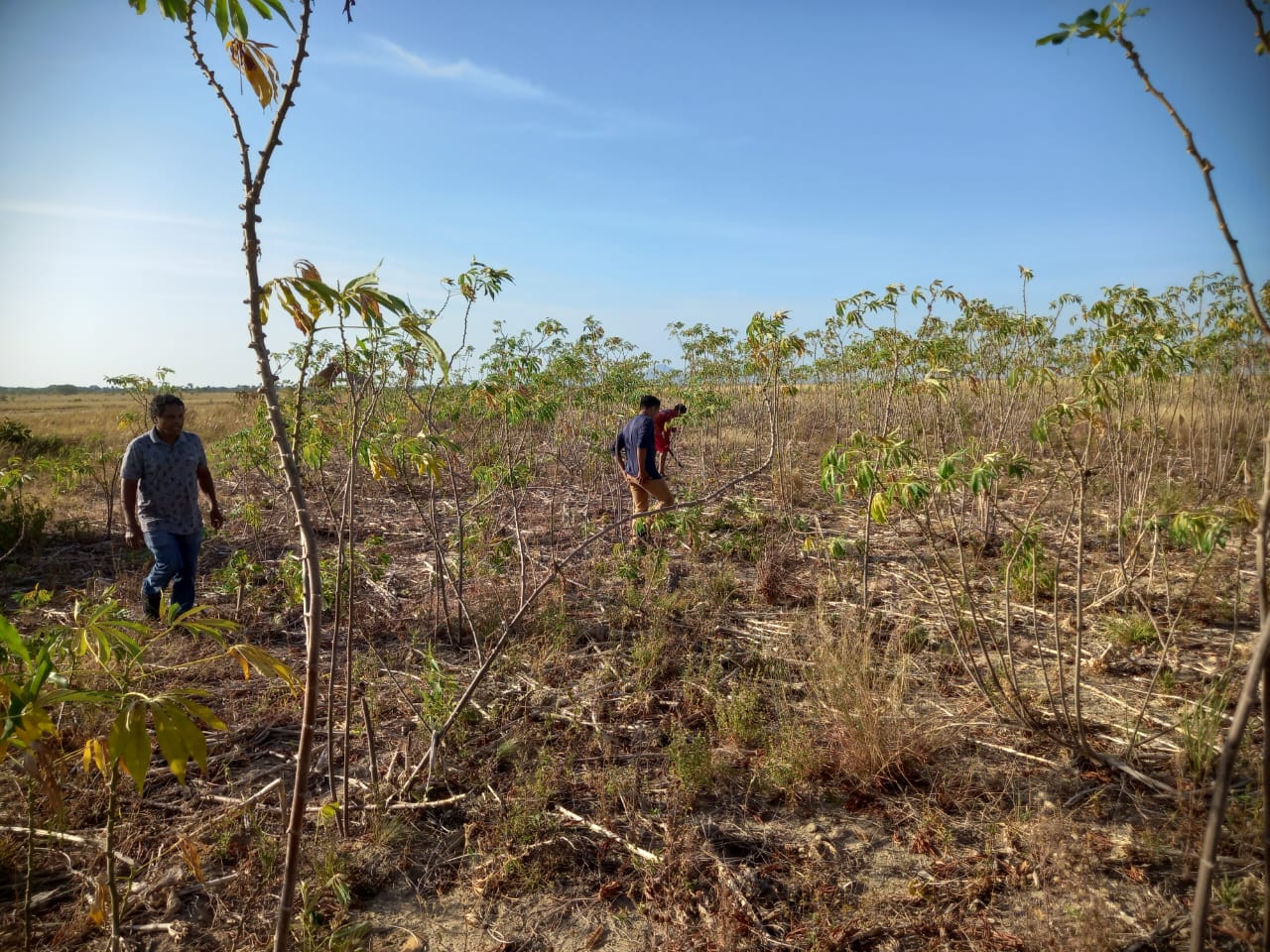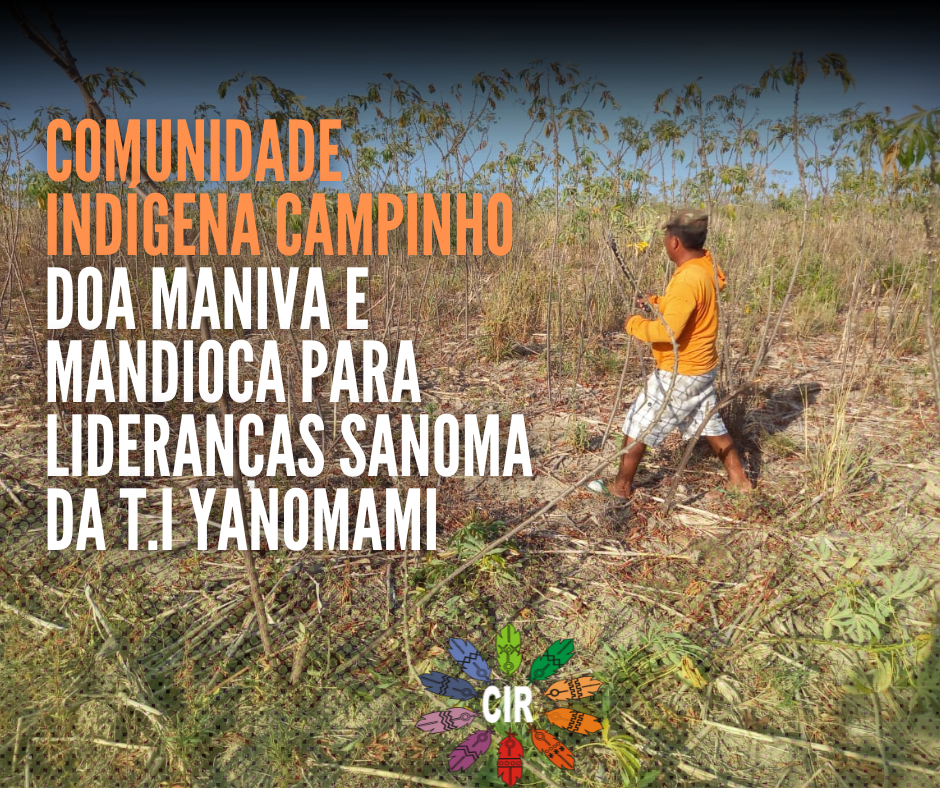
With the initiative to support Sanoma leaders from the Yanomami Indigenous Territory, the Campinho Indigenous community, in the Canauamin Indigenous Territory, donated cassava and manioc from its community garden to strengthen the food security of the Sanoma Indigenous people.
According to Sanoma leaders, the donation will benefit communities located 400 km from the place of origin, who have lost their traditional foods due to illegal mining. In addition to crops, game and fish are also scarce in the region, and even the water is contaminated with mercury.
According to the National Foundation for Indigenous Peoples (Funai), this situation arose due to the spread and increase in illegal mining activities in the rivers that cross indigenous territory, which have intensified in the last four years. Furthermore, the lack of action by the Federal Government between 2019 and 2022 weakened healthcare services in the territory and facilitated the entry of miners into the region, due to an open policy encouraging illegal mining. "As a result, the population suffers from a serious situation of food insecurity and lack of healthcare, in addition to violence perpetrated by heavily armed miners against indigenous people, especially women and children, with reports including cases of murder, assault, and rape," the agency states.
Since the beginning of the year, the Indigenous Council of Roraima (CIR) has been promoting the SOS Yanomami Campaign, which has already donated approximately 6 tons of food, tools, and medicine to the Yanomami people. The initiative also included donations from the indigenous communities themselves, who contributed flour, meat, and traditional seeds.
The SOS Yanomami Campaign has the support of COIAB, Fundo Brasil, ICS, and other supporters.