
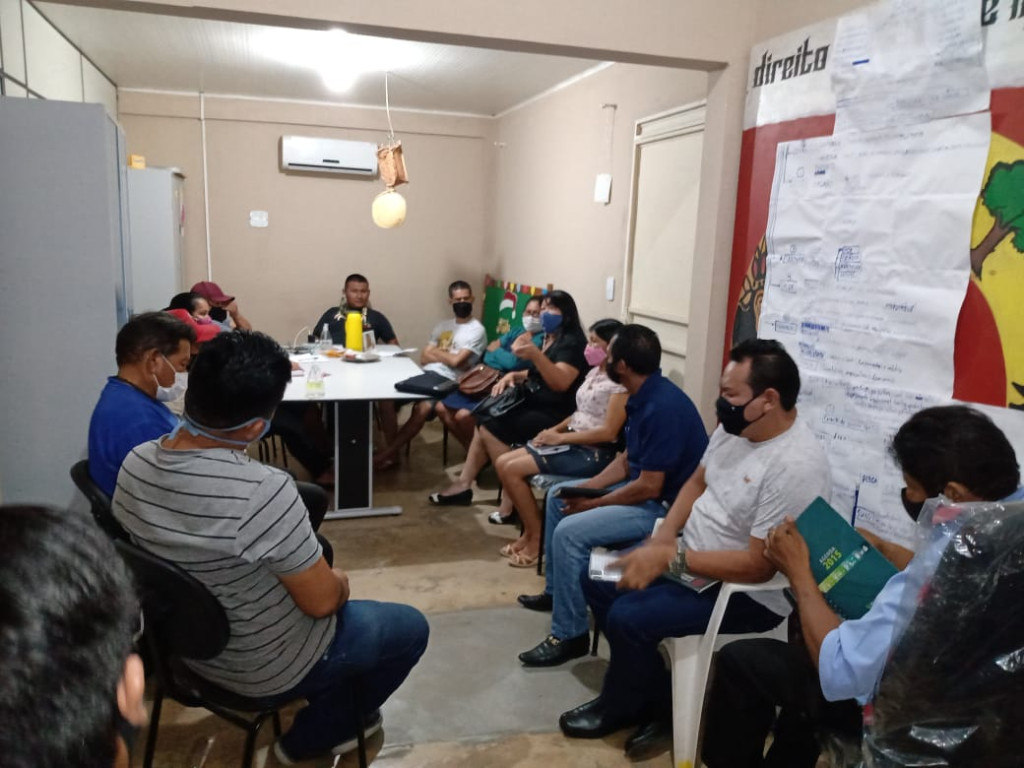
The Indigenous Council of Roraima (CIR) held meetings on an exceptional basis to discuss PL 201/2020 that provides for environmental licensing of mining activity in Roraima. The text, authored by Governor Antonio Denarium, was approved this week in the Legislative Assembly of Roraima.
On Thursday afternoon (14), in Boa Vista, the discussion brought together representatives of the Organization of Indigenous Teachers of Roraima (OPIRR), Association of Indigenous Peoples of the São Marcos Land (APITSM), Council of the Ingarikó Indigenous People, Kapoi Association, federal deputy Joênia Wapichana (REDE) and the state deputies who voted against the project, Lenir Rodrigues (PPS) and Evagelista Siqueira (PT).
The bill, approved with 18 votes in favor and two against, does not legalize mining in indigenous areas, but the leaders understand that the state government's position in releasing mining increases interest in illegal activity, and with it the tension on indigenous peoples.
"If they are trying to appear that mining on indigenous lands is already authorized, the mere fact of having this approval of the law is fake news and that it can bring irreparable damage to indigenous peoples and the environment," warned Deputy Joênia Wapichana, reinforcing that it is possible to repair collective damages if the law is implemented.
When approved, the bill also received amendments, including one that provides for the use of mercury, a highly toxic metal that used in mineral extraction accumulates in nature and intoxicates both humans and ecosystems, and another that increased the limit for land exploration.
Meeting with leaders of the regions
Still on PL 201/2020, another meeting was held this Friday (15) by the CIR. The discussion, this time online, was with indigenous leaders from the Raposa, Amajari, Tabaio, Serra da Lua, Serras and Surumu regions.
Together with the coordinators of the CIR Enock Taurepang and Edinho Macuxi and the secretary of the general movement of indigenous women Maria Betânia, the leaders were concerned about the bill, since the regions directly feel the impacts that mining brings.
The leaders also discussed other priorities to continue facing at this time, such as the fight against the coronavirus in the communities, and feel that the moment is one of struggle since the authorities refuse to fight mining and openly promote the activities.