
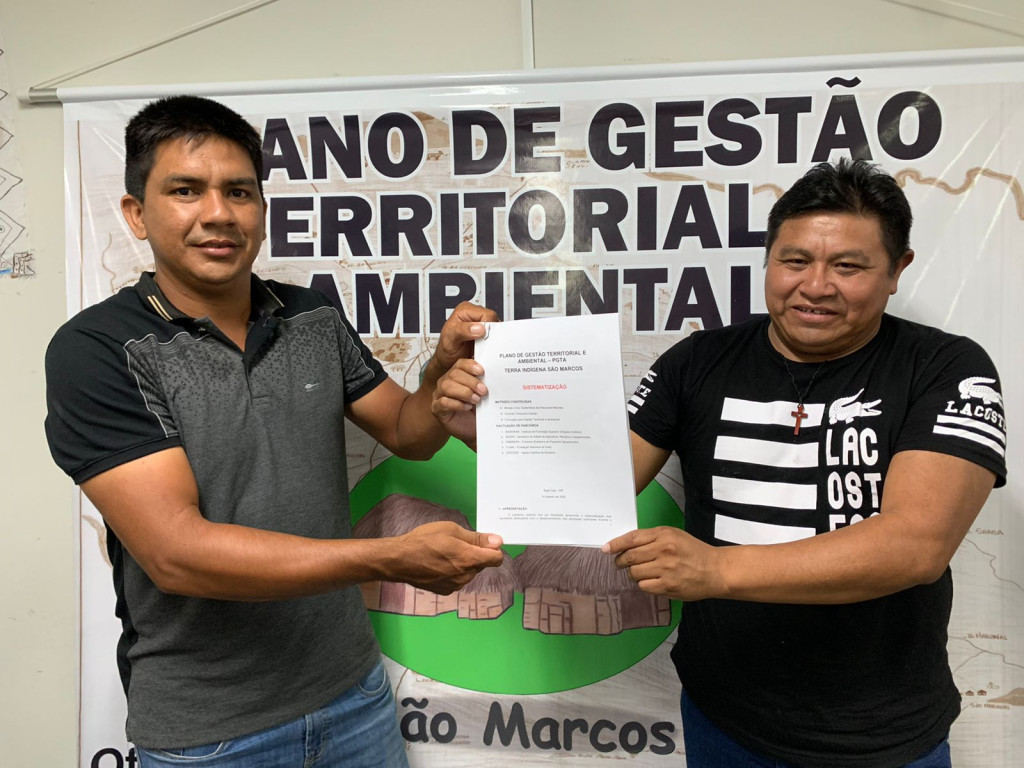
As a form of organization and territorial empowerment, the Indigenous Council of Roraima (CIR) through the Department of Territorial and Environmental Management (DGTA), promoted another workshop, this time on Training for Territorial Management and Covenant of the São Marcos Indigenous Land. Held from August 15 to 16, in Boa Vista.
The General Coordinator of the CIR, Edinho Batista Macuxi, the Secretary of the Maria Betânia Indigenous Women's Movement, and approximately 50 leaders of the Macuxi, Wapichana, Taurepang peoples from the Upper, Middle and Lower São Marcos communities, which make up the Indigenous Land, participated.
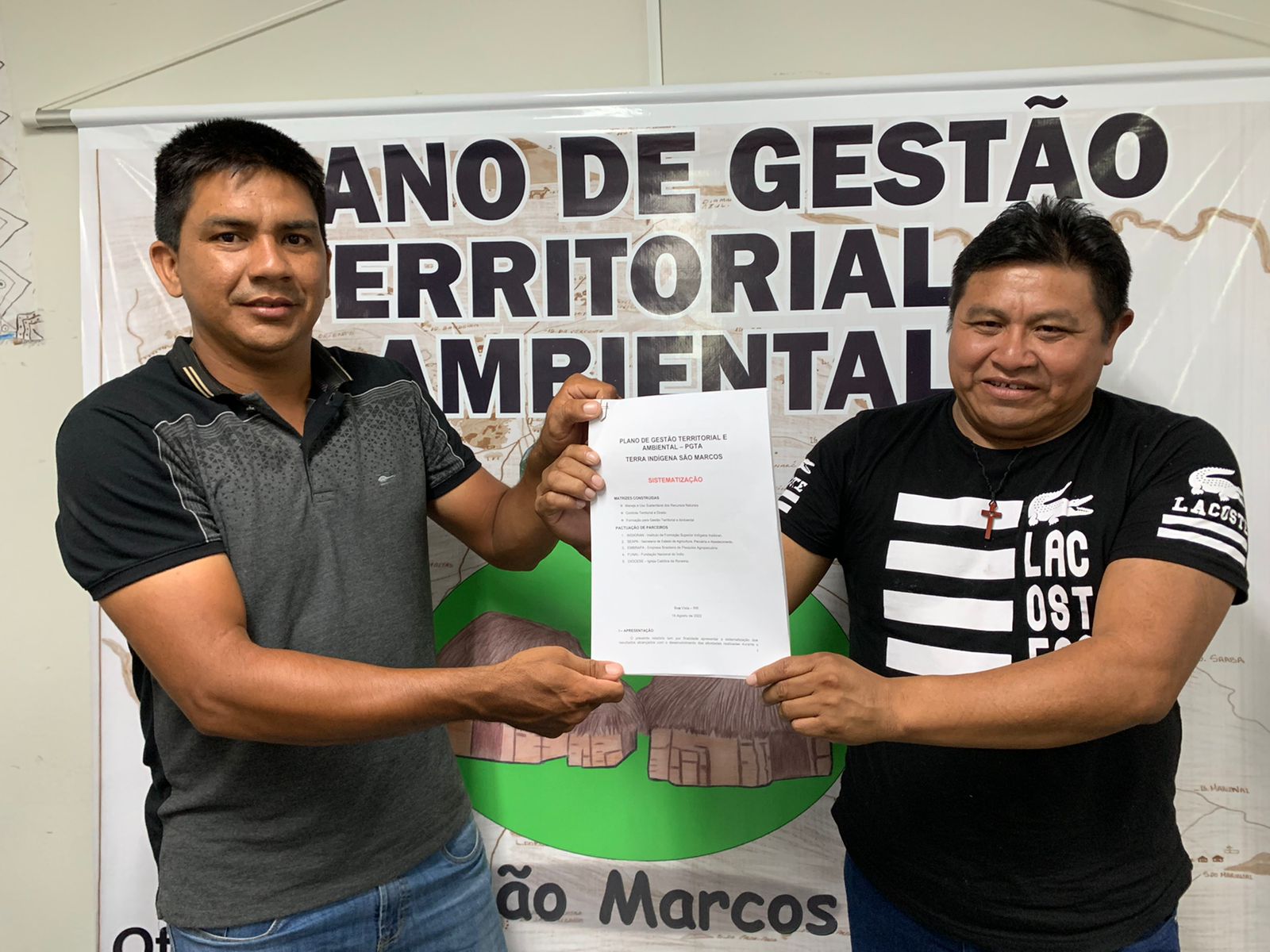
Signing of the Agreement Marcelo Macuxi (APITSM), Edinho Batista (CIR)
Continuing the construction of the plan, the workshop was composed of the fourth and fifth stages of the PGTA of the São Marcos Indigenous Land. It had the participation of governmental and non-governmental agencies such as EMBRAPA, SEAPA, FUNAI, DIOCESE, MAPA, INSIKIRAN and IFRR, the last three were available to the leaders to answer questions on the afternoon of the 16th and understand how both could help each other, according to the specificity of the institutions, reinforcing their characteristics that include education, conservation, agricultural production, maintenance and territorial and cultural protection.
In the group work, the leaders structured the history of the indigenous communities, what worked and what could be improved. In addition to discussing internal and external problems, making it clear that tradition together with experience strengthen everyone.
According to Marcelo Macuxi, Coordinator of the Association of Indigenous Peoples of the São Marcos Land (APITSM), the Indigenous Land has 660,110 hectares, 49 communities, eight peoples: Macuxi, Wapichana, Taurepang, Sapará, Tucano, Baré, with the Pemom and Warao coming from the Brazil/Venezuela border. And about 7,598 indigenous people, a sense raised by the coordinator in 2021.
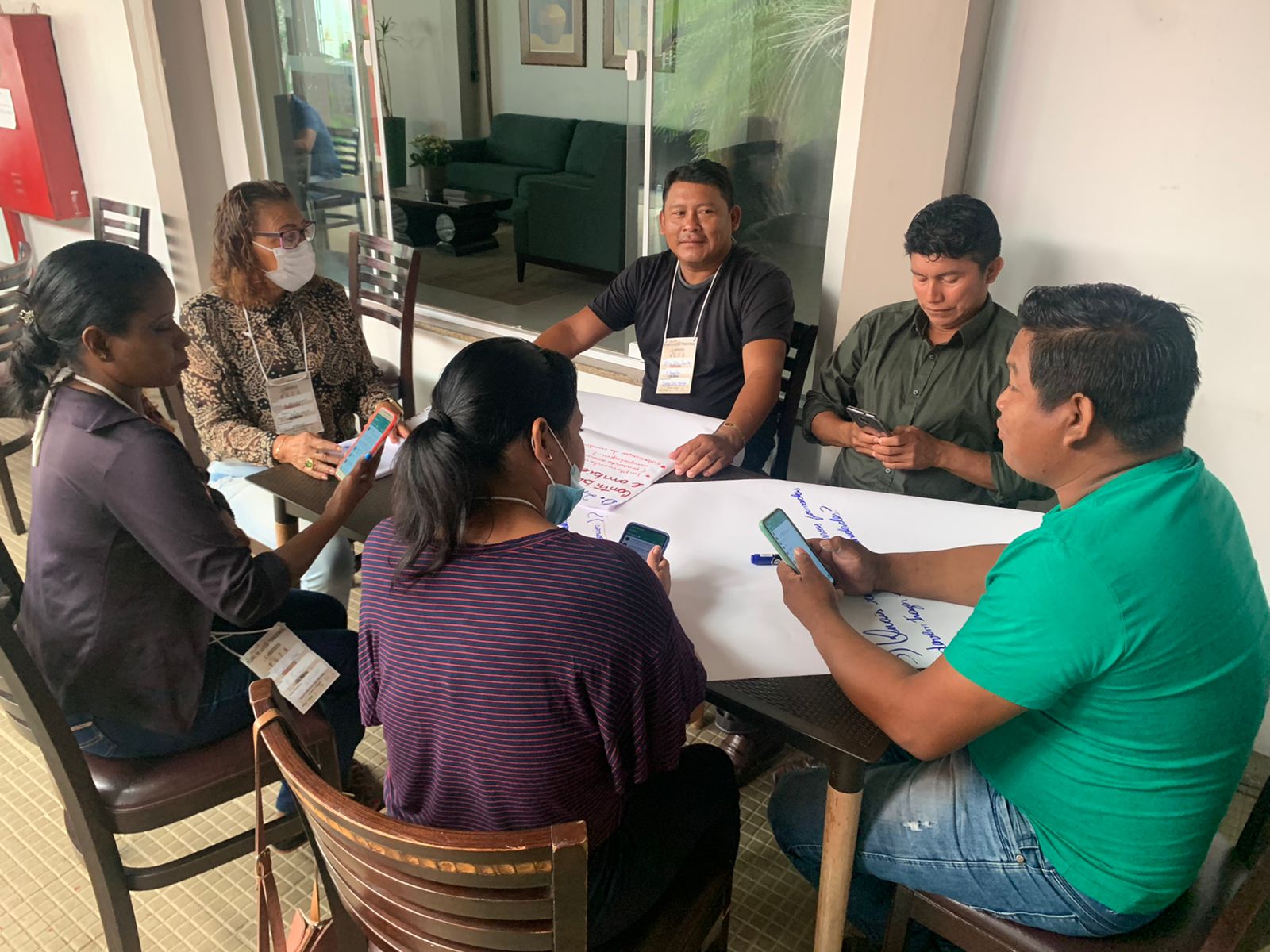
Working Groups - WG, Leaderships T.I São Marcos
"The PGTA comes to strengthen and mainly, organize and put on paper the plan of the São Marcos Indigenous Land, therefore, define how we will work in the next 20 years, after surveying the impacts of some actions that have been taking place, such as mining invasion, fires, destruction, and projects that have come to harm our organization system, and the collectivity that within the communities, even land lease was proposed. With the plan we will seek to unify the leaders again, and define a future where we can guarantee a good and free Territory for the next generations and communities that exist here."
Said the coordinator Marcelo, who also stressed that the PGTA will be presented at the General Assembly of the São Marcos Indigenous Land, and reaffirmed to those present that the Indigenous Land was one of the only Indigenous Lands that paid for its disintrusion.
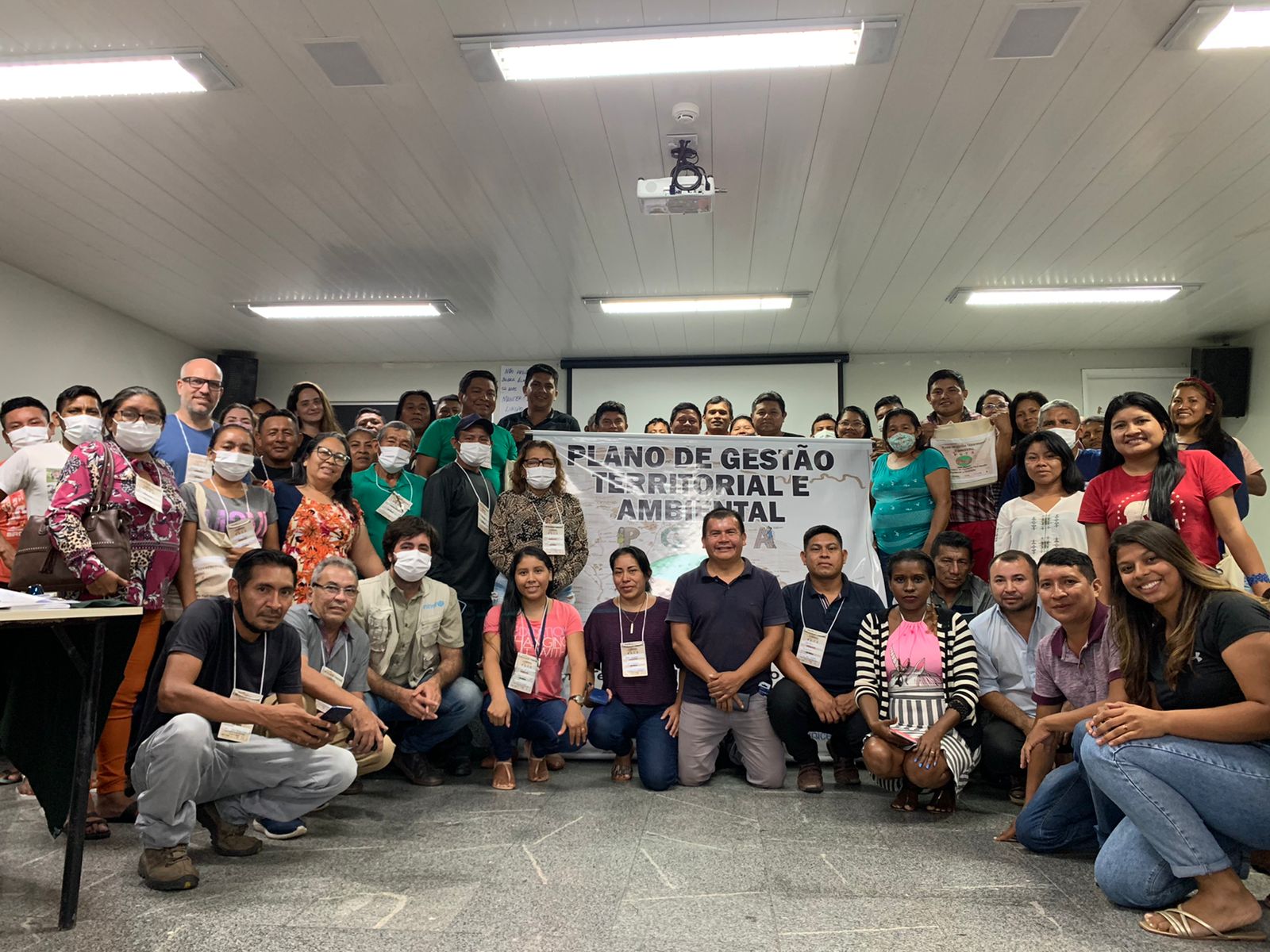
Thematic Workshop Team, Leaders, Partners and Employees
Sineia do Vale Wapichana, Coordinates the DGTA, and actively participates in the construction of the PGTAs of the indigenous communities, highlighted:
"Today the CIR advises indigenous communities in the construction of their life plan, we have published seven plans, and implementing actions in these as well, we are building 4 more PGTAs, we are finalizing this one in São Marcos, we already have 10 built waiting for official publication (...).
It is not a simple job, we went through this pandemic period, however the communities continued with this work internally, because of this the PGTA of São Marcos took 2 years, because we had to stop, and now we are finalizing, and it is very important for IT that will do all this dialogue, inside and outside, with this very important document, of how they want to manage their territory."
The workshop was held by CIR together with APITSM with the support of NCI, NIATERO and UNICEF.