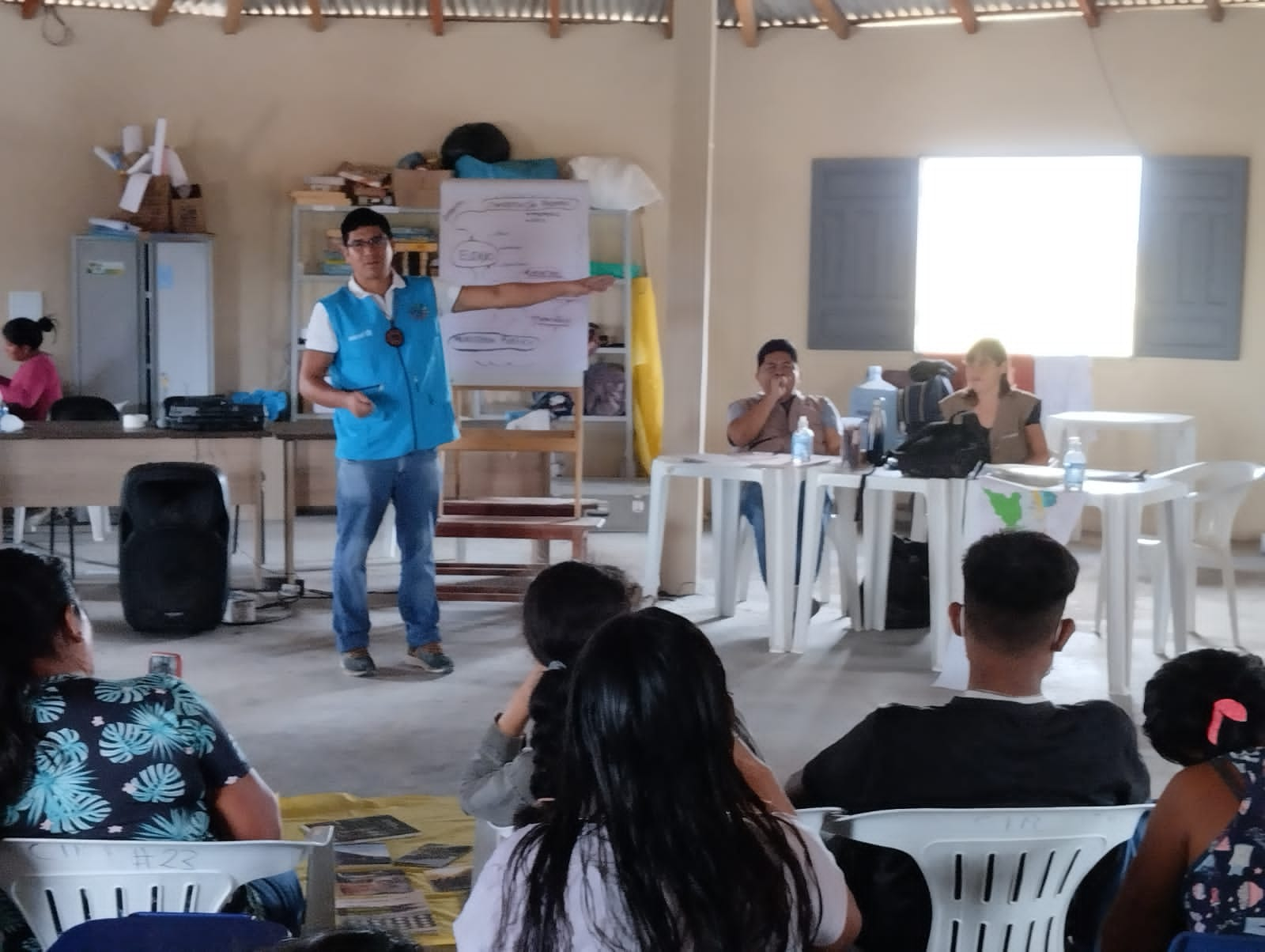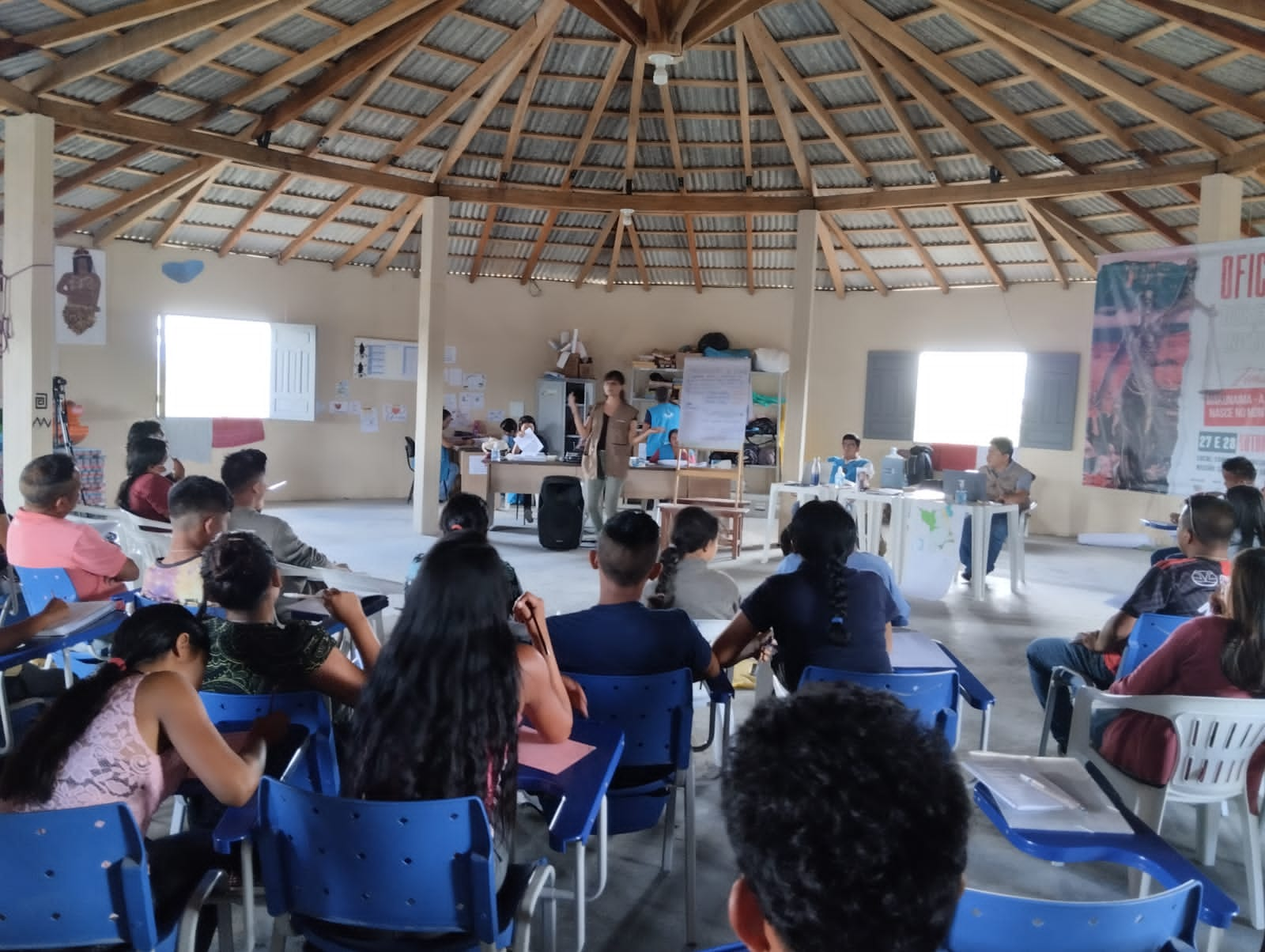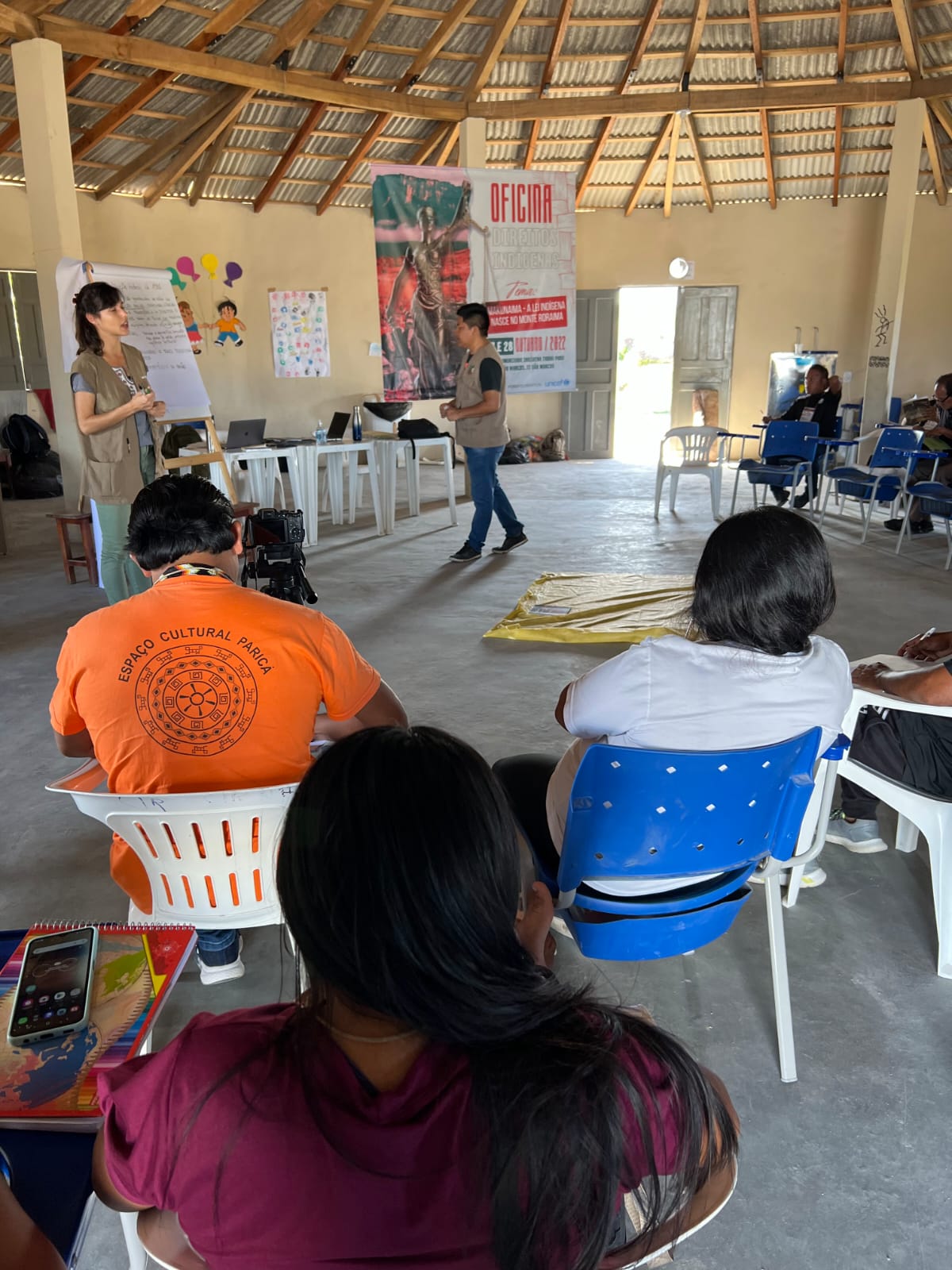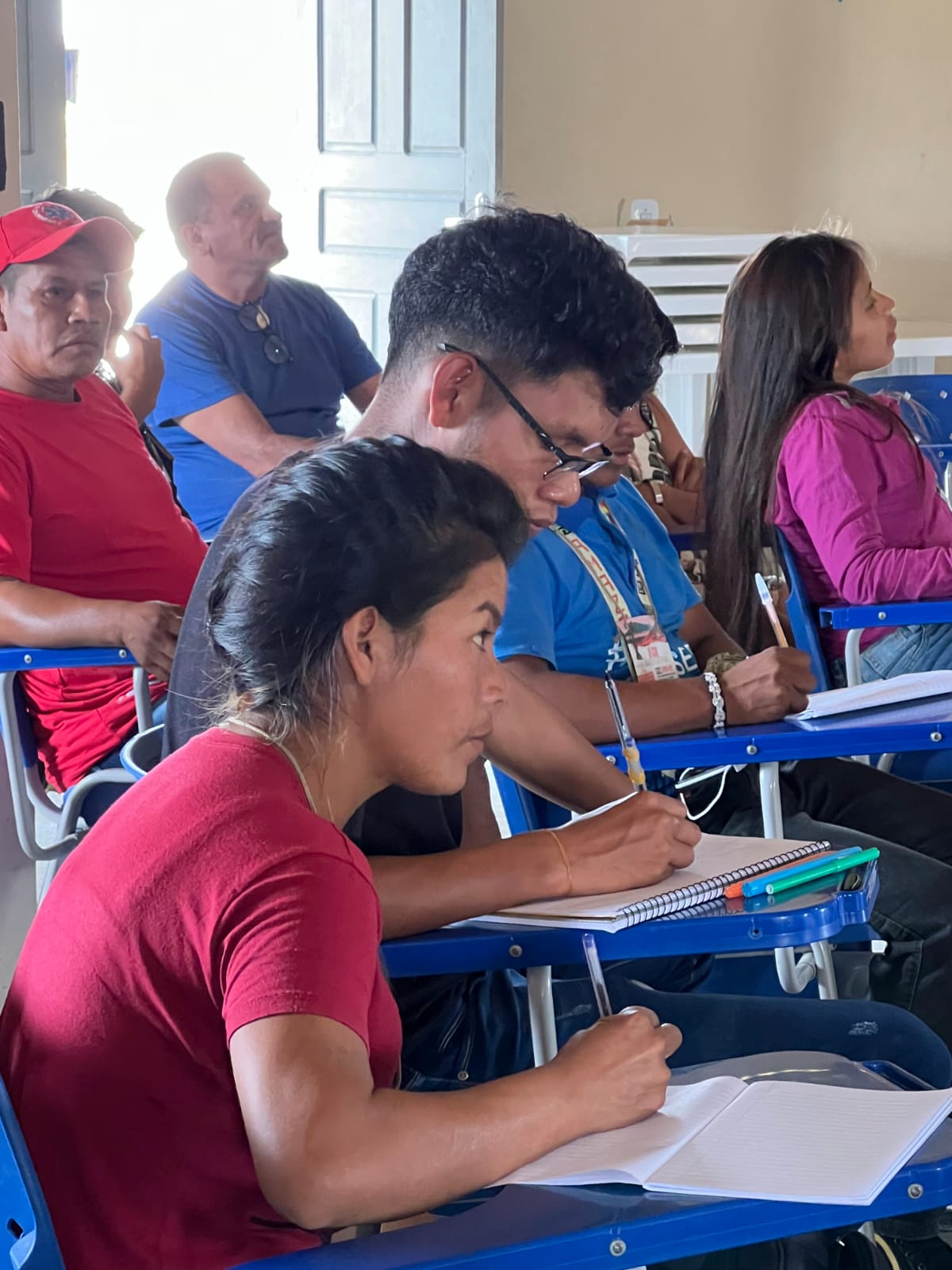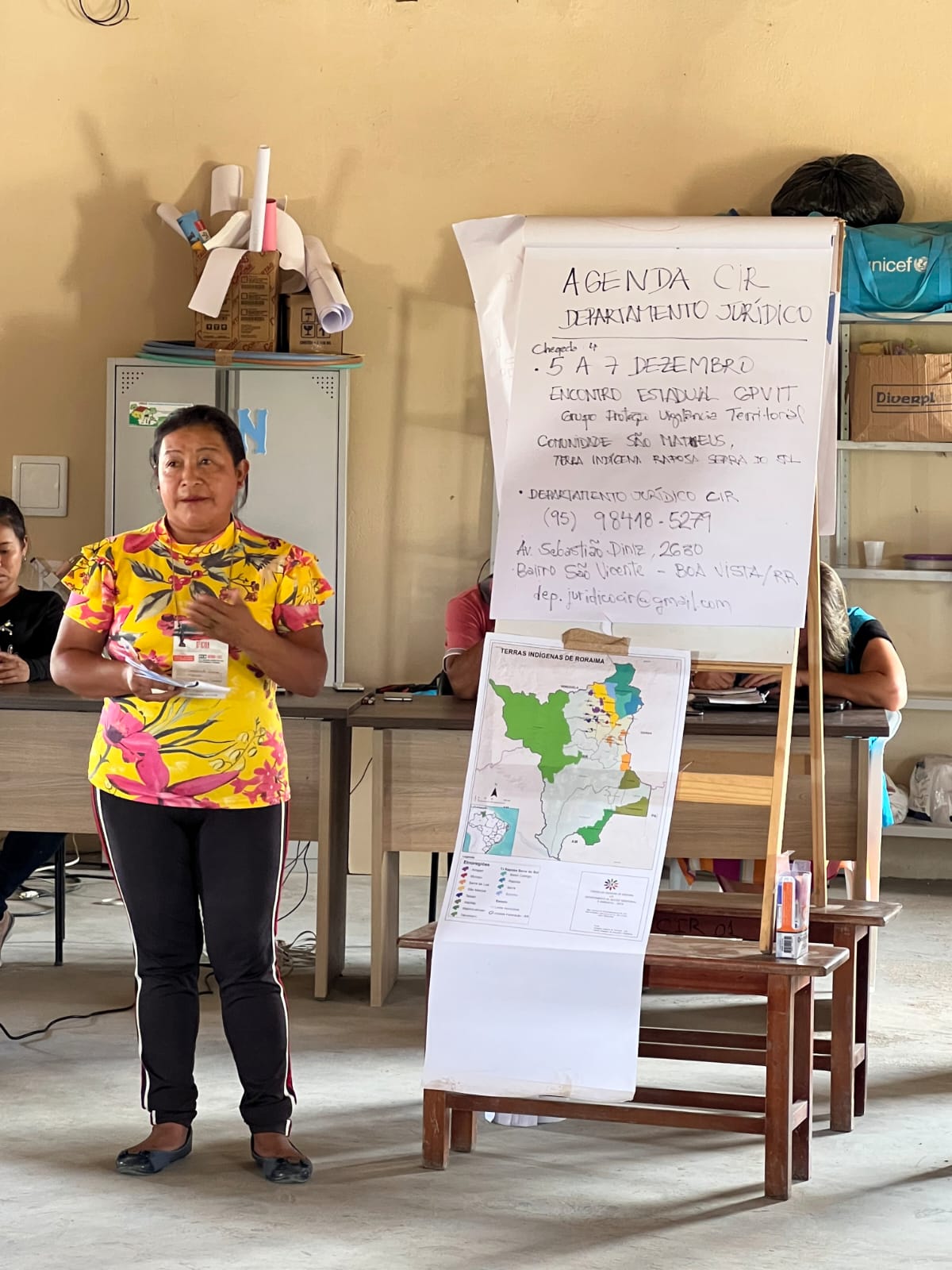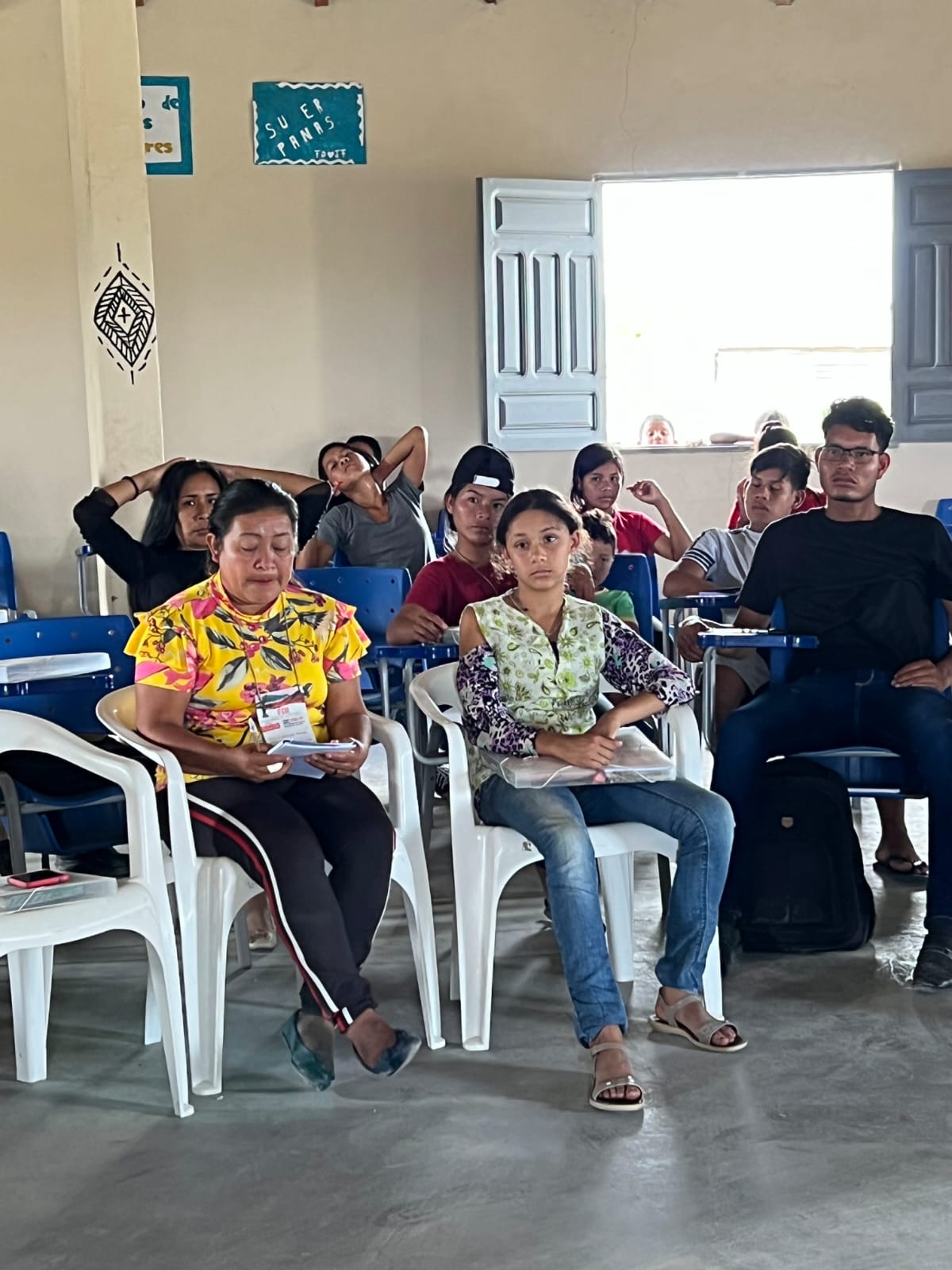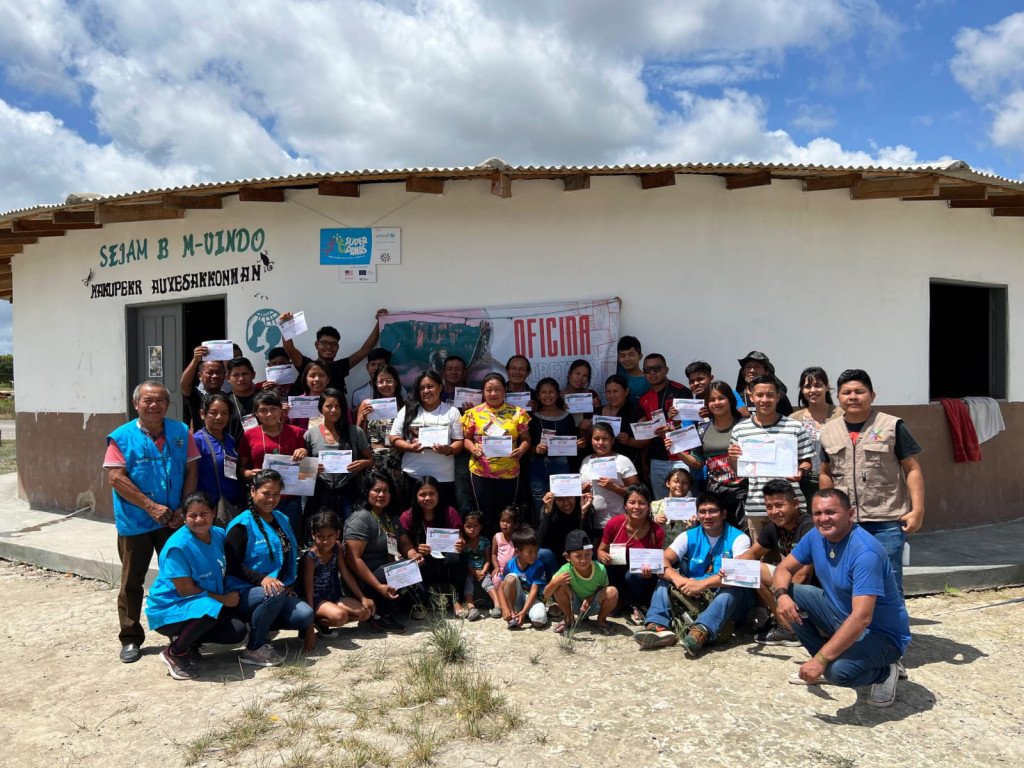
The workshop was given by the CIR's legal advisor, lawyers Ivo Cipio, Junior Nicacio, Maria Luiza and anthropologist Emerson. With the theme "MAKUNAIMA – THE INDIGENOUS LAW IS BORN IN MOUNT RORAIMA", the CIR's Legal Department, in partnership with Unicef, promoted the first workshop on indigenous rights, held in the Tarau paru indigenous community, São Marcos region. The event was attended by 30 indigenous leaders, from the Sorocaima, Bananal, Tarauparu, Sakao – Mota and Novo Paraíso communities of the Raposa Serra do Sol Indigenous Land from October 27 to 28.
On the first day (27), a historical, sociological, anthropological, cosmological approach was made to the indigenous peoples and their laws in the surroundings of Mount Roraima. Then, the Organization of the Brazilian State: Executive, Legislative and Judicial Branch; the Brazilian legal system and the supremacy of the Federal Constitution of 1988 were discussed; how the creation of laws occurs; and the auxiliary bodies of justice, especially the Public Prosecutor's Office and the Public Defender's Office.
The participants learned about the main fundamental rights, such as the right to life, physical and mental integrity, privacy, secrecy, freedom of movement, freedom, religion, health, environment, education, voting, being indigenous, indigenous lands, uses, customs and traditions, practices, cosmologies, languages, etc. We related the rights listed with the provisions of the Federal Constitution of 1988, especially the provisions of article 5, articles 231, 232 and the Right to Consultation were addressed later.
On the following day (28), the documents written by indigenous peoples in Brazil were presented, such as: Territorial and Environmental Management Plans - PGTA and consultation protocols. This was followed by the discussion of articles 231 and 232 of the Federal Constitution, the sources of indigenous rights (oral and written). Consultation Protocol, and the right to prior, free, informed, culturally appropriate consultation. Afterwards, a debate was held. Finally, the emphasis was placed on the importance of the organization of indigenous communities and peoples to defend their rights, for greater autonomy and de facto decision-making power.
information and photos Legal Department.