
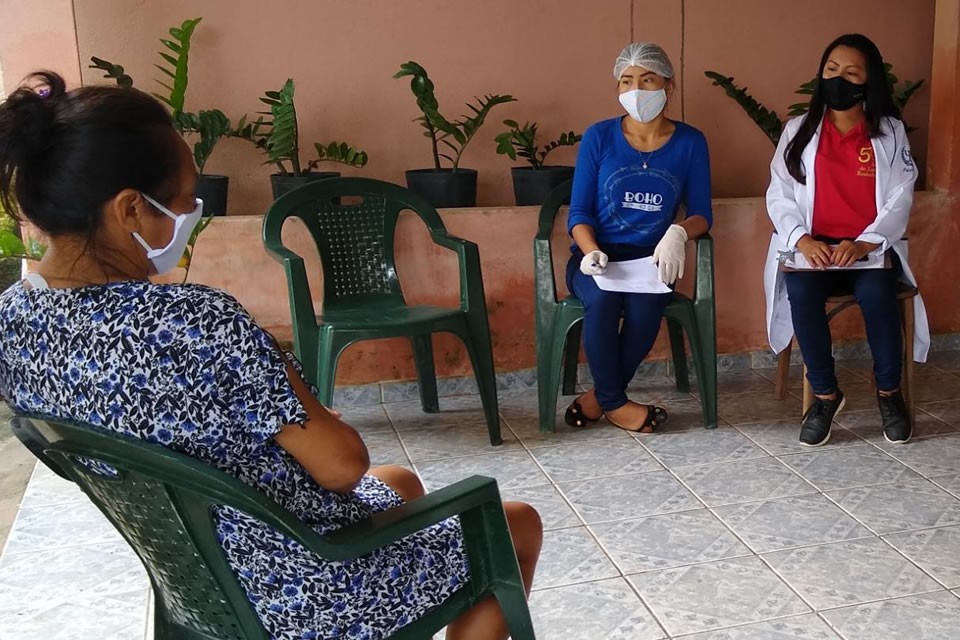
The Indigenous Council of Roraima (CIR), through the Emergency Campaign to Combat Covid-19, is offering psychological assistance to indigenous families affected by the pandemic of the new coronavirus. Roraima has already surpassed 2.5 thousand cases and 80 deaths from the disease among indigenous peoples in the state.
The CIR initiative, which has the support of Nia Tero and the Coordination of Indigenous Organizations of the Brazilian Amazon (Coiab), is directed by psychologist Iterniza Pereira, of the Macuxi ethnic group. Since the beginning of the pandemic, work has been carried out to raise awareness and monitor families affected by the disease in the communities and in Boa Vista, explaining about the new coronavirus, what precautions to be taken, and how it is possible to deal with the loss of loved ones.
According to Iterniza Pereira, the first impacts of the pandemic on the indigenous communities of Roraima were in the adaptation of coexistence to prevent the virus from circulating. Later, with the advance of the pandemic, the project began to accompany families who lost loved ones to the disease and suffered from the emotional shock of grief. "Our culture is watered by daily sharing and the changes were abrupt, becoming risk factors for the mental health of the communities," said the psychologist.
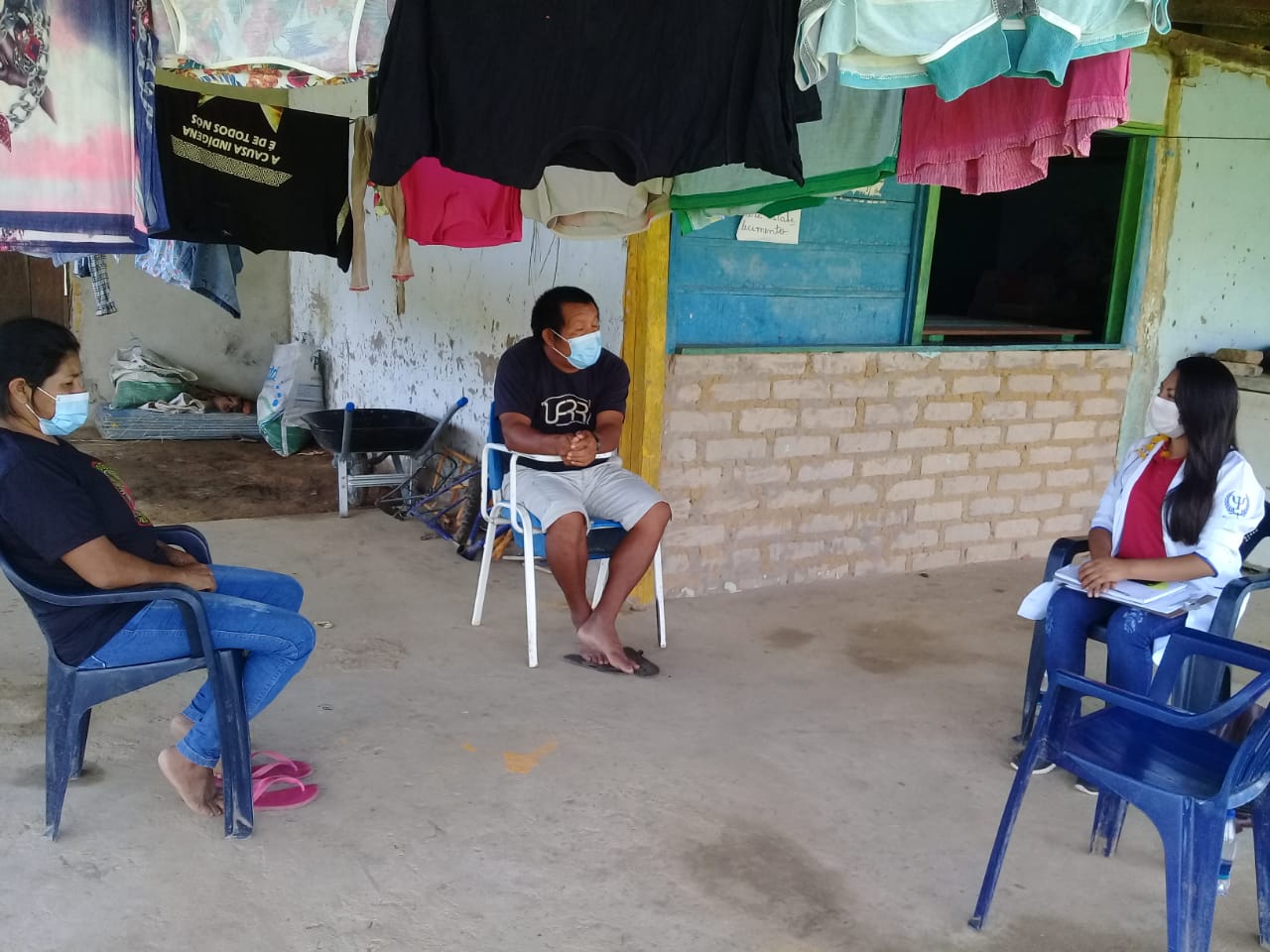
Another challenge that arose with the increase in the number of cases was the resistance of some indigenous people to carry out the tests, especially the elderly, who feared receiving positive diagnoses. "With many families and leaders showing resistance to taking the covid-19 test, and especially due to the advance in the number of deaths of leaders, I was careful to explain the importance of seeking treatment as soon as possible, which are treatment with home remedies, treatment in the shaman, medical treatment and psychological help, all to be carried out at the same time," said Iterniza.
Today in Boa Vista, the project accompanies 20 families. One of them is that of Mrs. Rosilda da Silva, 52, of the Macuxi ethnic group, who is grateful for the accompaniment. "Psychological care is very important in this moment of recovery for us, because I feel very sad, because I lost a close person to this disease," she said.
In the Maturuca community, in the Serras region, Raposa Serra do Sol, 109 of the 675 residents tested positive for the disease and one died. On site, the project also carried out consultations between August 4 and 5, listening to families who were infected by Covid-19 and also Indigenous Health Agents (AIES) in the community, professionals who are on the front line of the fight against the disease.
"When carrying out care, it is often clear in people that they are afraid of being infected by a potentially fatal virus, of rapid dissemination, whose origins, nature are still little known, which ends up affecting the psychological well-being of many people," he said
"But we are welcoming and listening to vulnerabilities and the interpretation of the current situation. We also work on loss and mourning, in addition to breaking the ritual of saying goodbye to the person who is a victim of Covid-19 as a way to help indigenous peoples face this very difficult moment", concluded Iterniza