
By: Maciel MaKuxi
The Roraima delegation brought experiences from the territories, strengthened international coordinations, and achieved important results in defending indigenous rights and the climate agenda.
The participation of the Indigenous Council of Roraima (CIR) in the 31st United Nations Climate Change Conference (COP31), in Antalya, Turkey, ended on November 14, 2026, and represented another important step in the trajectory of struggle and articulation of the indigenous peoples of Roraima. The organization brought experiences, knowledge, and claims from indigenous territories, reaffirming that it is not possible to discuss the planet's future without listening to those who have historically protected the land.
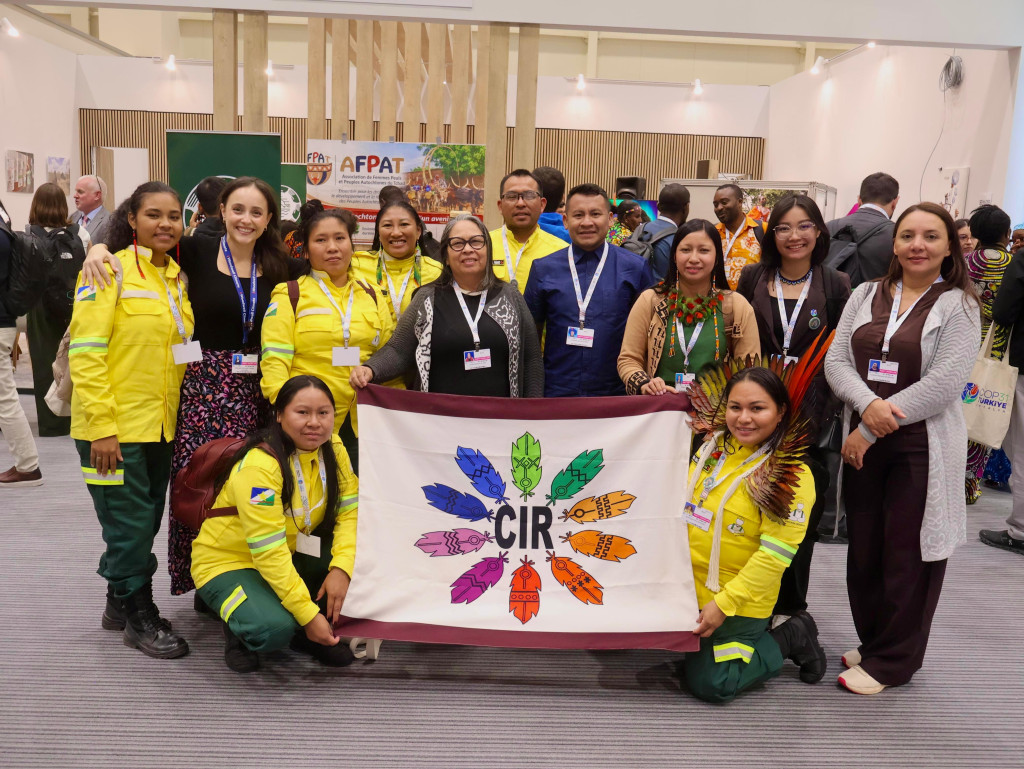
The participation of CIR represents the result of work that has been built over the years, involving leaders, women, youth, firefighters, and teams who work daily to defend the indigenous territories of Roraima.
Among the results of this participation are Sineia do Vale's continued co-presidency of the Indigenous Caucus, representing Latin America and the Caribbean, and the delivery of the invitation letter from the 56th General Assembly of Indigenous Peoples of Roraima to the President of the Republic of Brazil.
These are achievements that strengthen indigenous presence in international spaces and expand the possibilities for dialogue with organizations, institutions, and representatives from different countries.
Throughout the program, the delegation participated in meetings, panels, and gatherings with indigenous representatives, international organizations, and institutions linked to the climate agenda. These were days of dialogue, exchange of experiences, and political articulation, in which indigenous peoples' agendas were present in discussions about climate change, financing, forest fire prevention, territorial rights, and women's participation. These agendas also demonstrated the reality of Roraima's communities in spaces where paths, commitments, and decisions that directly affect indigenous territories are discussed.
The delegation's presence at COP31 also showed that the agendas defended by the CIR are connected to the challenges faced by indigenous peoples from different parts of the world. The protection of territories, recognition of traditional knowledge, access to climate finance, and effective participation in decision-making are issues that transcend borders.
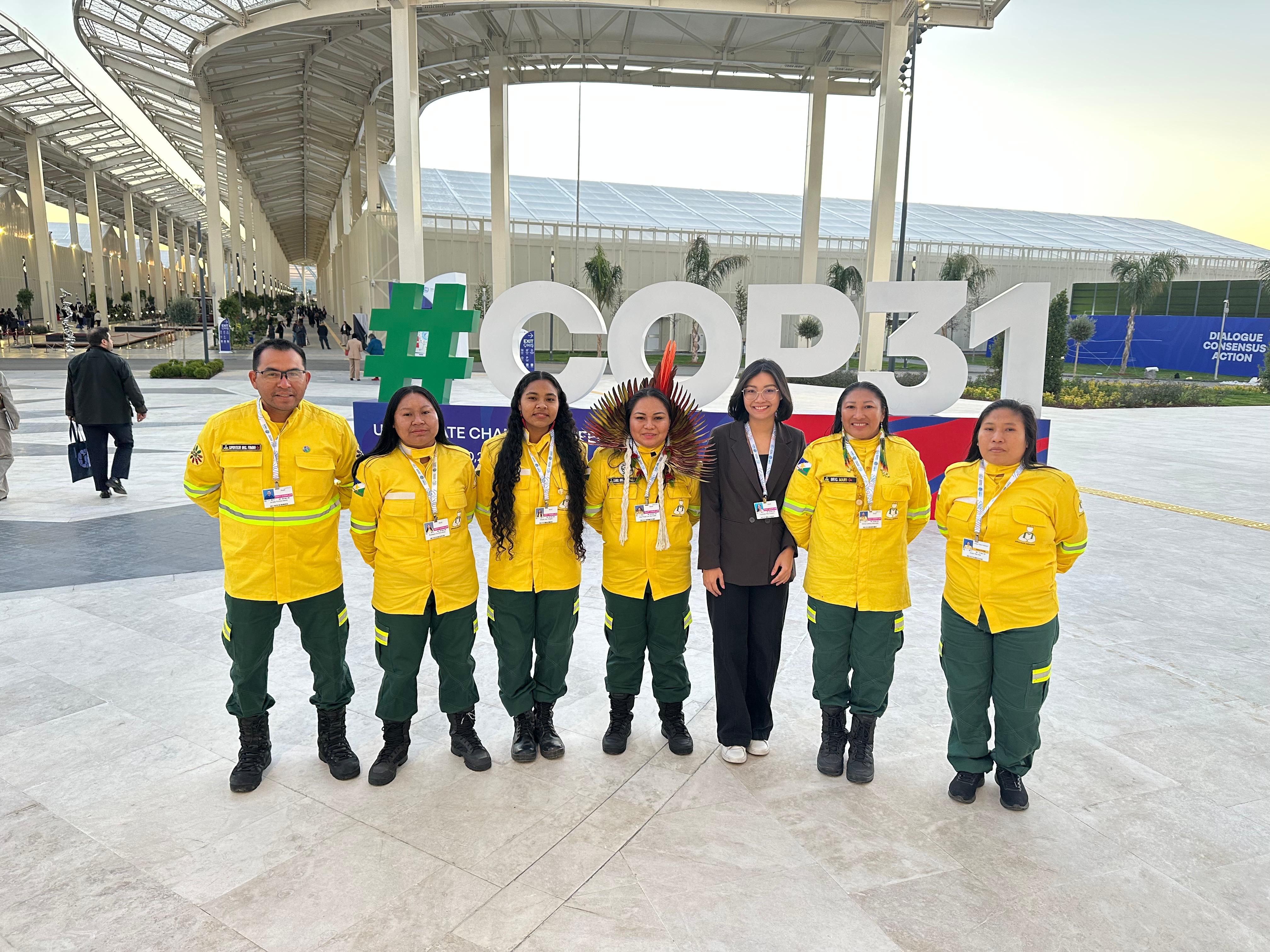
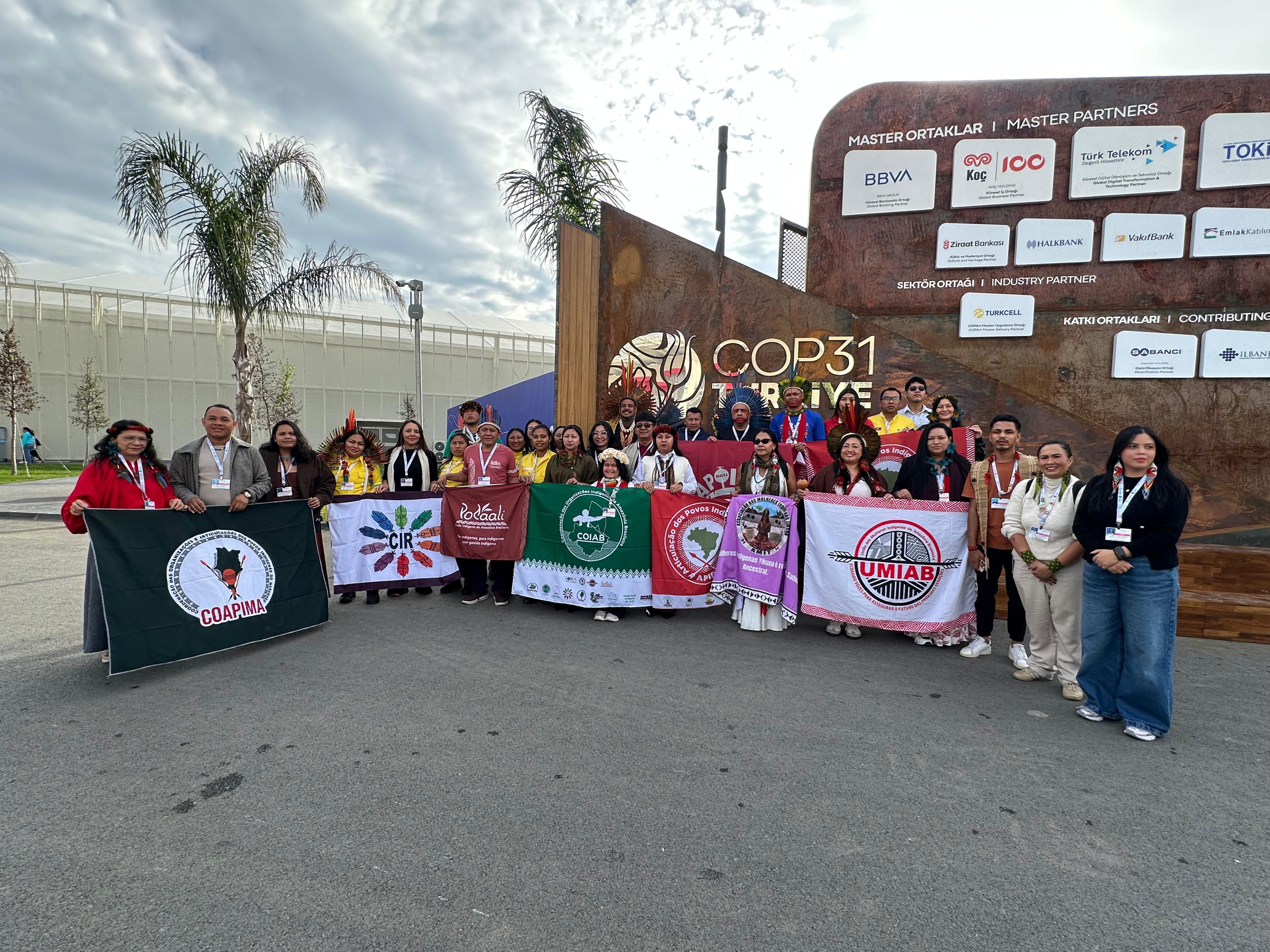
Traditional knowledge and new technologies in fire prevention
Roraima's experience in preventing and combating forest fires was also present in international discussions. At the TED Countdown House, Sineia shared the work developed by CIR since 2010, highlighting the importance of community actions and traditional knowledge in caring for territories.
The work of indigenous brigades, including women's work in fire prevention and fighting, showed how the communities themselves have been building responses to environmental challenges.
The experience presented shows that the protection of territories does not begin only when a fire appears. It involves knowledge of the land, monitoring of the areas, prevention, community organization, and the commitment of those who live in the territory and understand their needs.
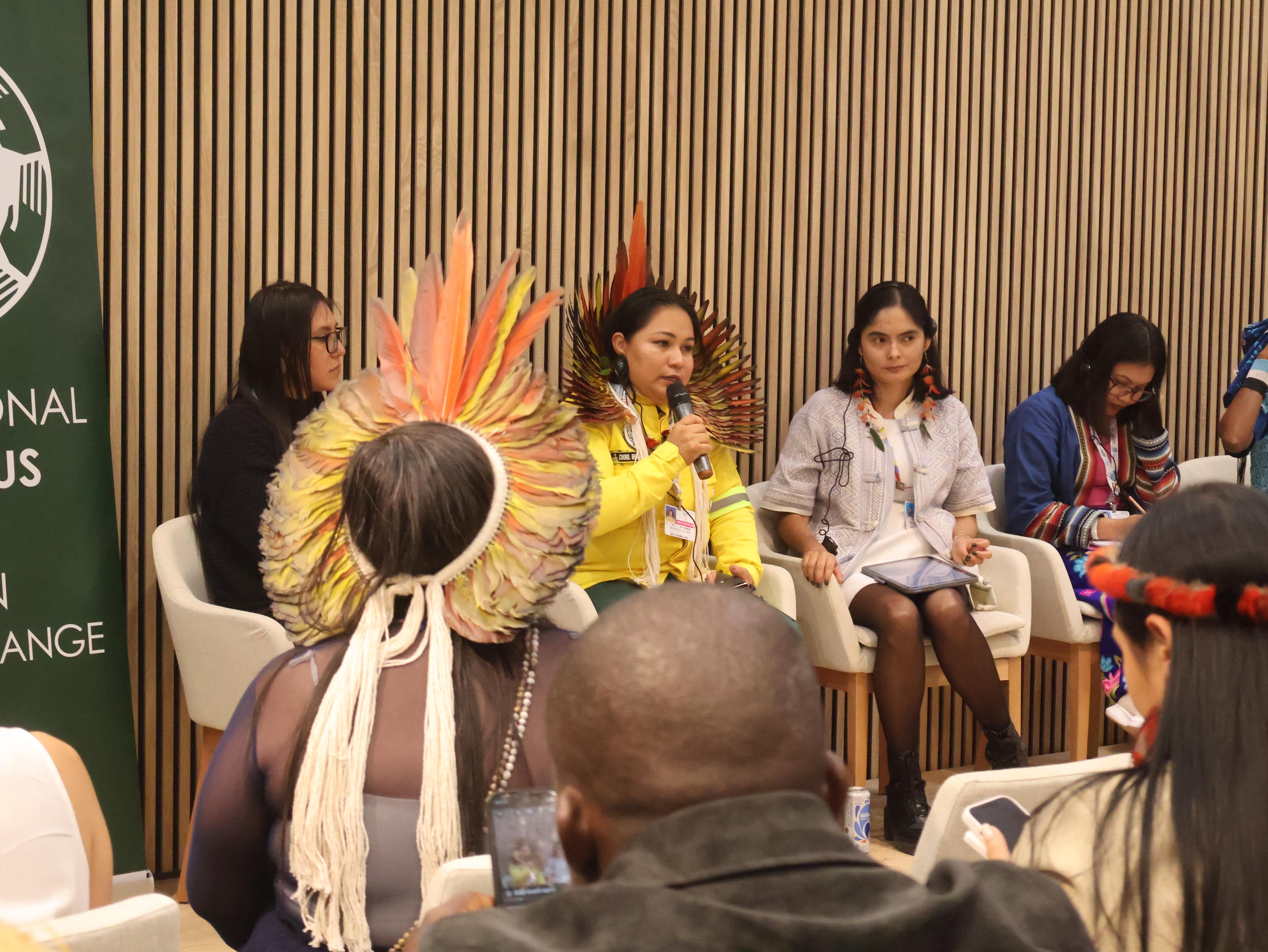
Sineia also participated in the panel "Climate Justice and Environmental Racism: from Planning to Action in Vulnerable Territories," held at the Brazil Pavilion. The debate brought reflections on inequalities in environmental impacts and the need for policies that consider the realities of the most vulnerable populations.
At another point in the program, the vice-chair of the Intergovernmental Panel on Climate Change (IPCC), Professor Ramón Madruga, presented information about the Panel's upcoming reporting cycle (AR7), highlighting the importance of expanding the participation of indigenous peoples and incorporating different knowledge systems into scientific assessments. On the occasion, Sineia advocated that traditional knowledge be recognized and considered in dialogue with science.
Among the topics that gained space on the agenda was indigenous peoples' access to resources intended to combat climate change. Sineia do Vale participated in a dialogue with Eleni Kyrou, representative of the Green Climate Fund (GCF), about the possibilities of expanding direct access for organizations and indigenous peoples to climate finance.
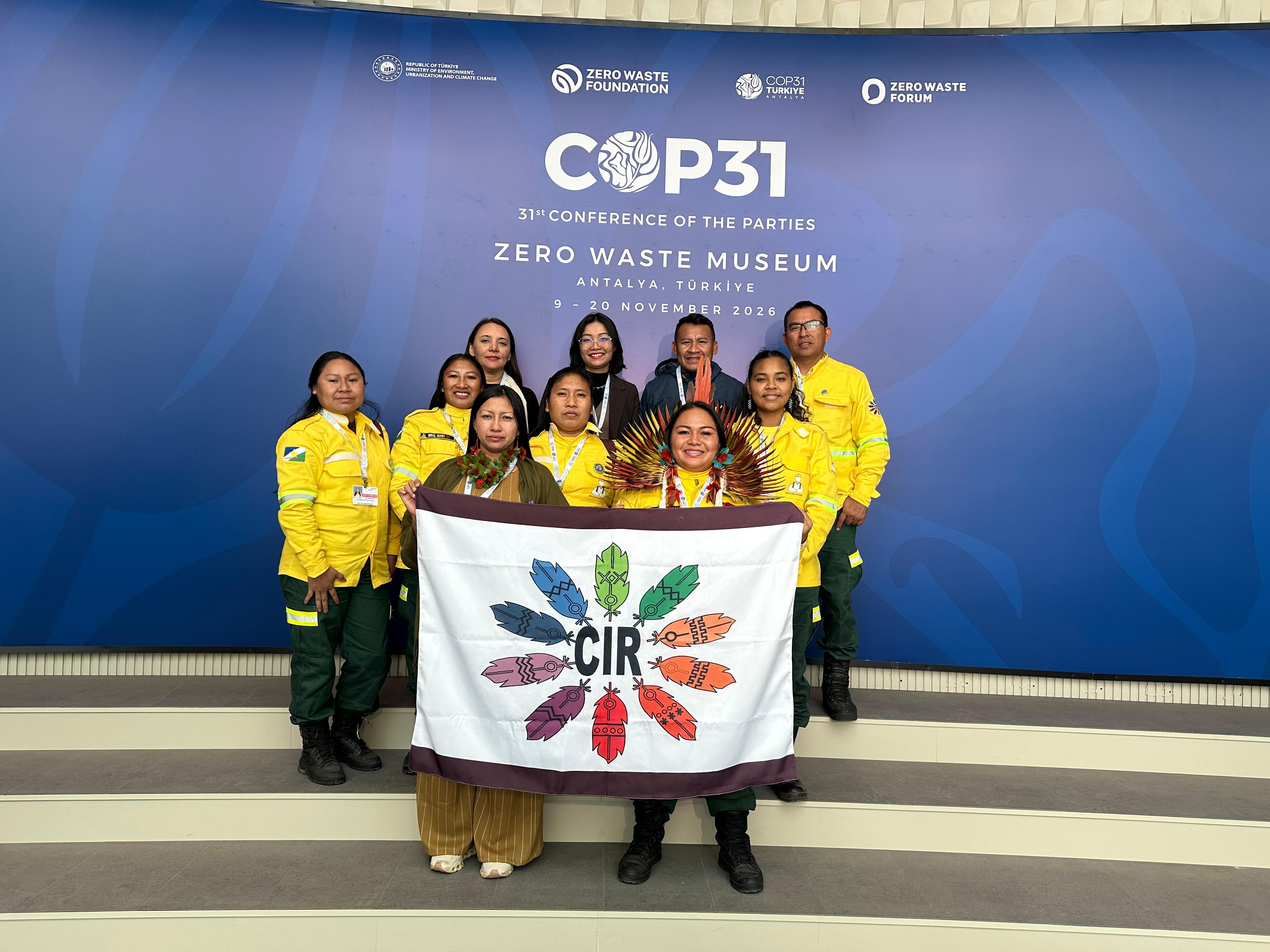
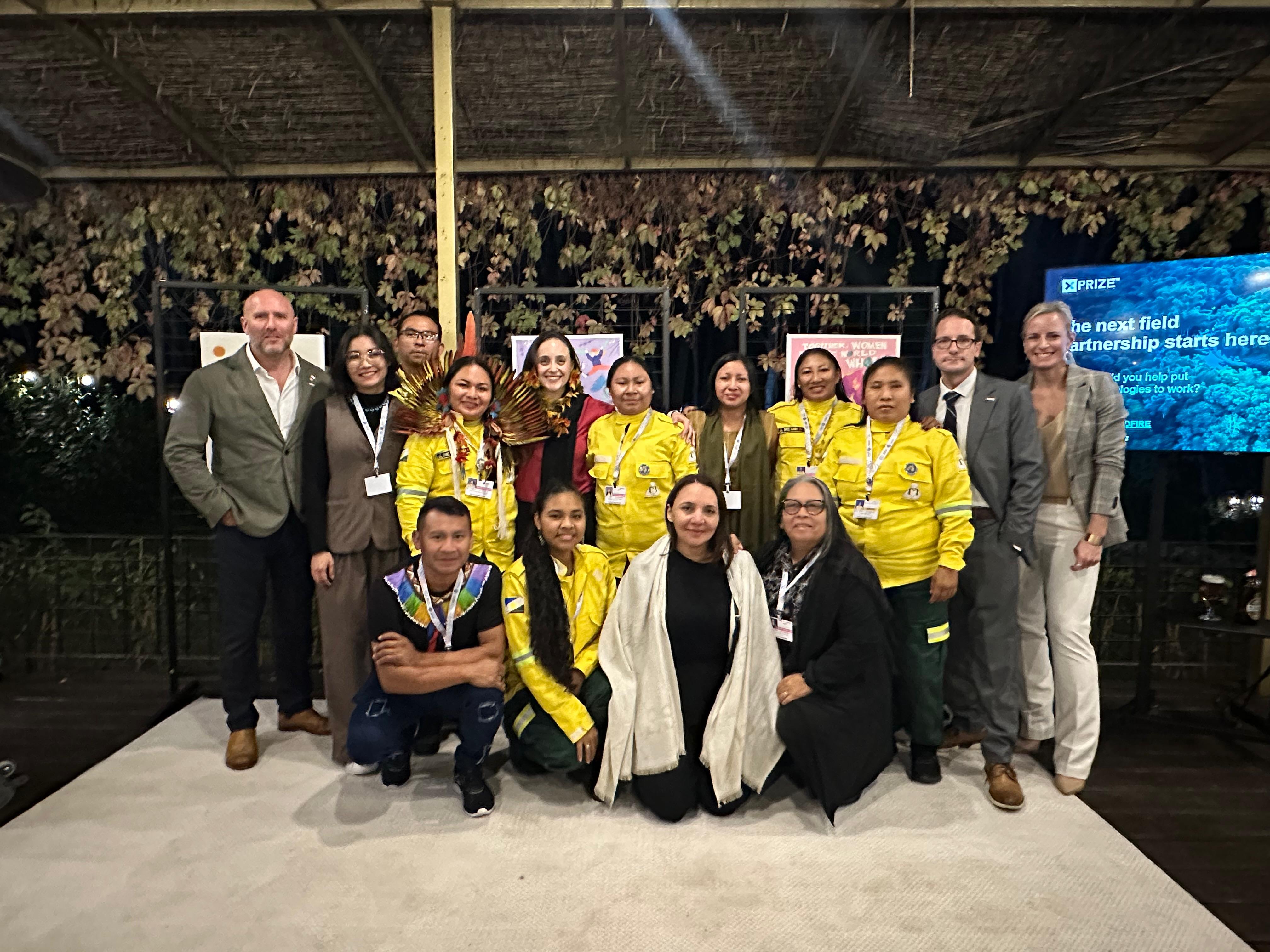
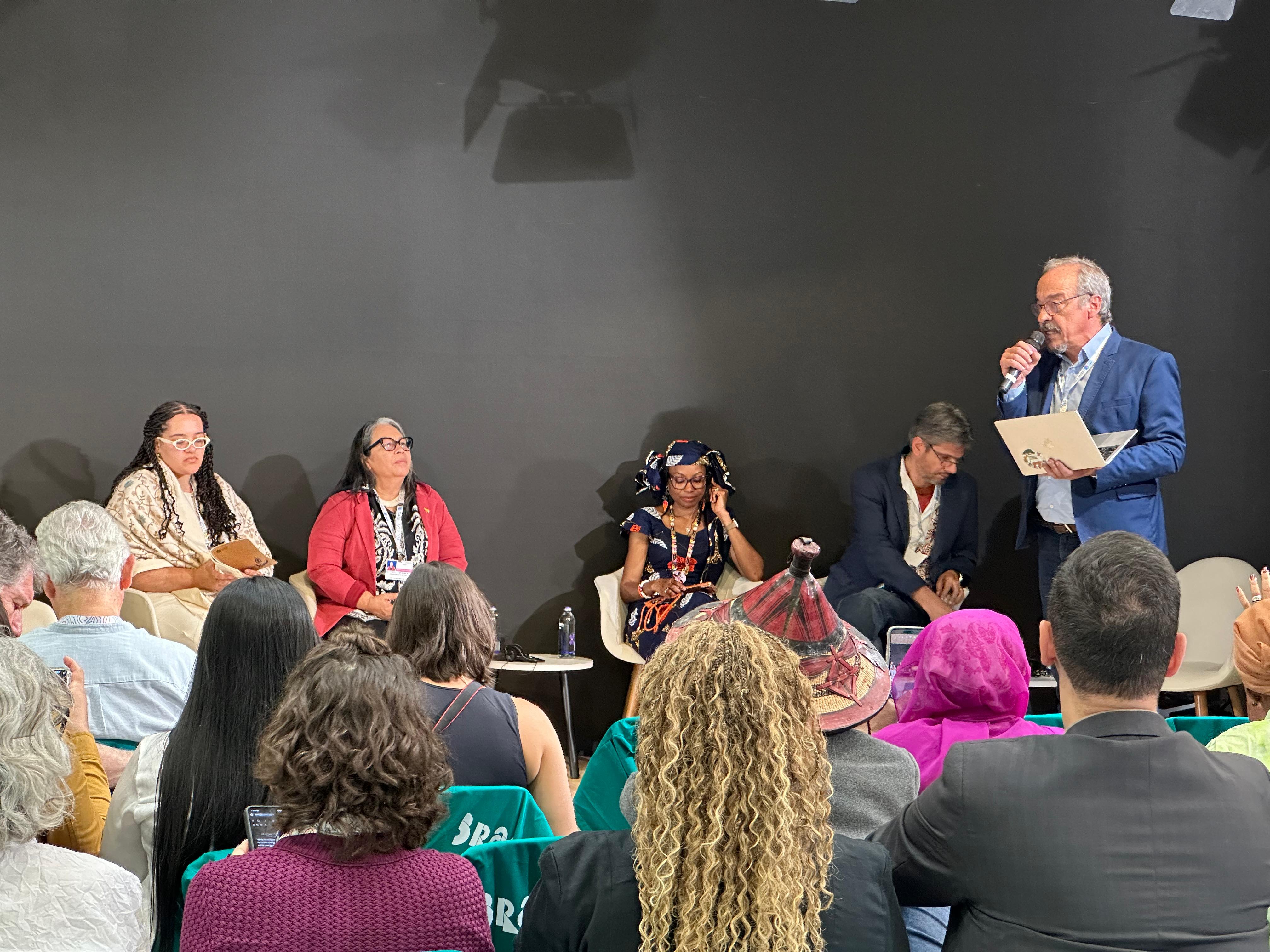
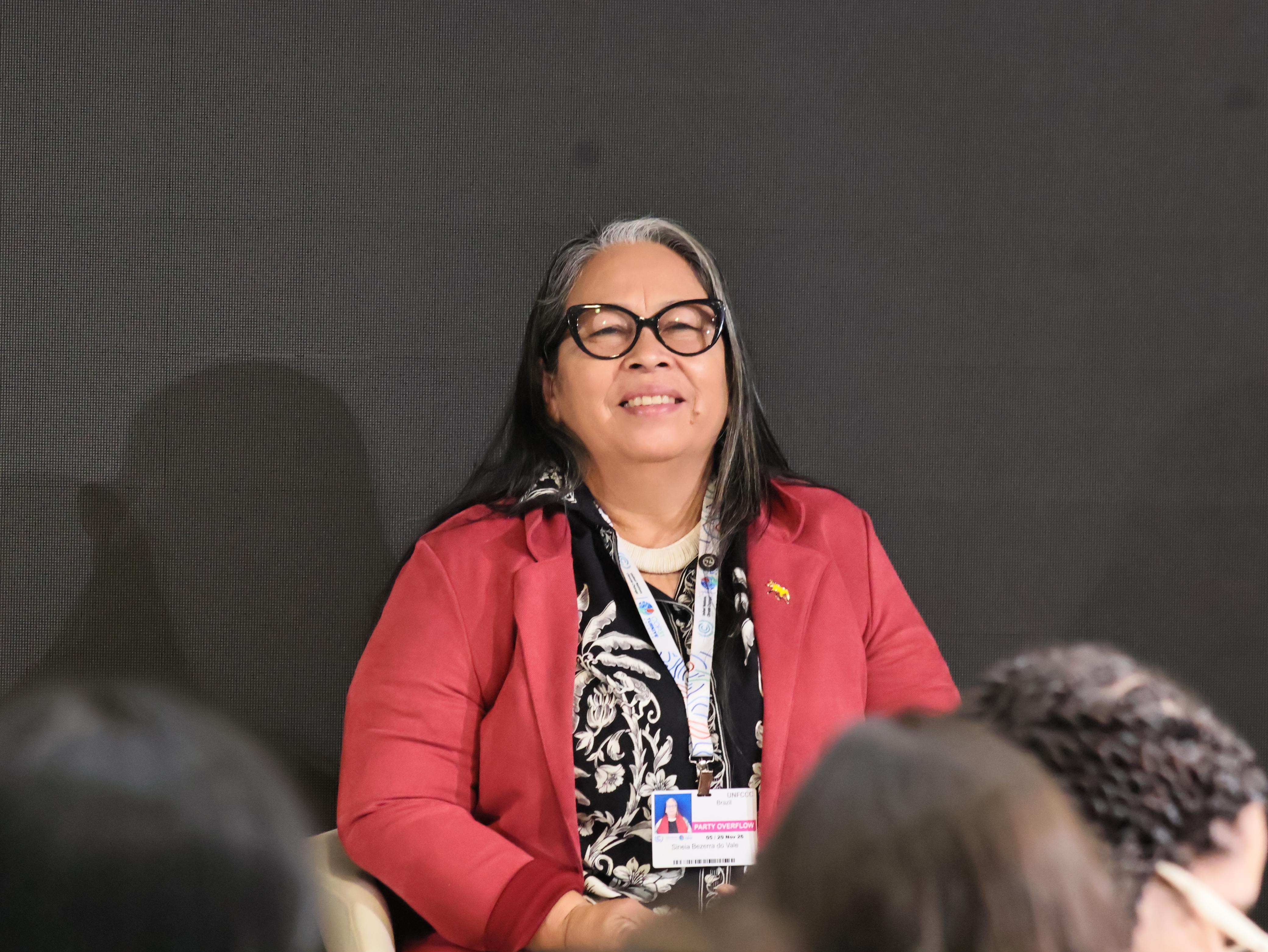
At the meeting, updates were presented on the review of the accreditation model and efforts to facilitate access to resources, including through indigenous funds and procedures that respect the specific forms of organization of peoples.
The discussion reinforced a fundamental issue: those who live in and protect the territories need to have real conditions to put their own initiatives into practice. For this reason, more accessible and flexible financing mechanisms were advocated, capable of supporting indigenous plans for adaptation to climate change.
The message conveyed by CIR was that indigenous peoples need to be recognized as protagonists in building and implementing climate solutions, and not just as beneficiaries of projects developed by other institutions.
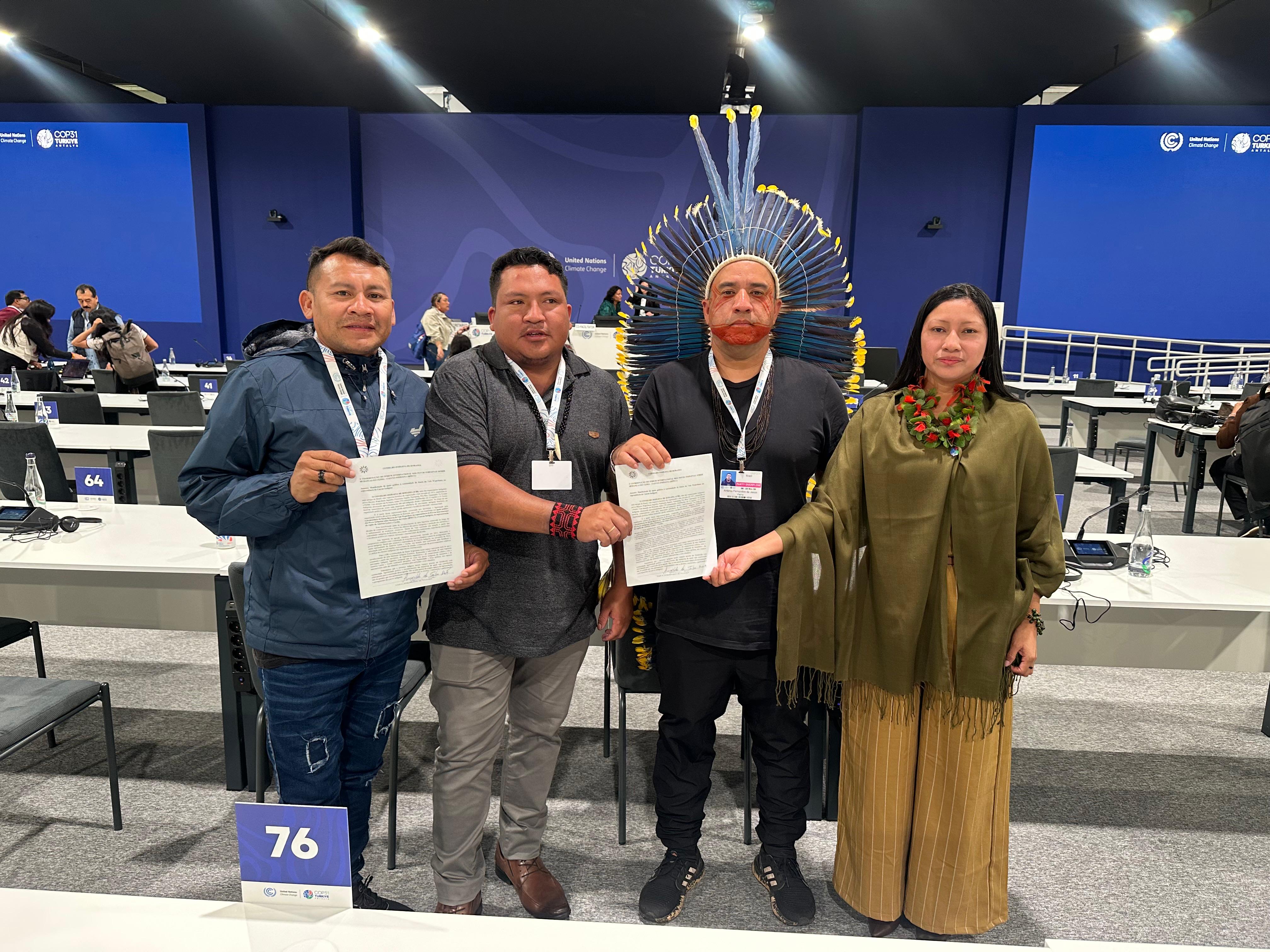
COP31 was also a space for political advocacy. The General Tuxaua of the CIR, Amarildo Macuxi, participated in a meeting with representatives of civil society and the Secretary-General of the Presidency of the Republic, as representative of the Articulation of Indigenous Peoples of Brazil (APIB).
On that occasion, he raised concerns and demands from the indigenous movement related to guaranteeing constitutional rights, protecting territories, and advancing threats that directly affect communities.
"We, indigenous peoples, continue fighting to defend the territory and increasingly see bills advancing against the rights of indigenous peoples and against indigenous territories. We also see invasions advancing within territories, causing harm to the health of the indigenous population and the environment.", said Amarildo.
The demonstration reinforces a concern that accompanies the indigenous struggle: environmental protection cannot be separated from the guarantee of territorial rights. Defending the forest, rivers, and biodiversity also means defending the life, culture, and future of the peoples who live in these places.
During the agenda, Amarildo also delivered an invitation letter from the 56th General Assembly of Indigenous Peoples of Roraima to the President of the Republic of Brazil, bringing to national and international spaces the importance of this meeting for organization, dialogue, and strengthening of the indigenous movement.
Indigenous women occupying spaces and making a difference
Women's participation was another important point of CIR's presence at COP31. The General Tuxaua of the Indigenous Women's Movement of Roraima, Kelliane Wapichana, brought the experiences and demands of indigenous women to the conference spaces, highlighting the need to ensure they participate in decisions involving their territories and communities.
"We brought our voice as indigenous women, beyond our demands. We are here to echo our voice, which is very important in these spaces", Kelliane stated.
The delegation brought together women with different experiences and areas of activity, including leaders, lawyers, administrators, and firefighters. This diversity showed that female participation in the defense of territories happens on different fronts and that indigenous women have contributed directly to community organization, management, and the construction of responses to climate challenges.
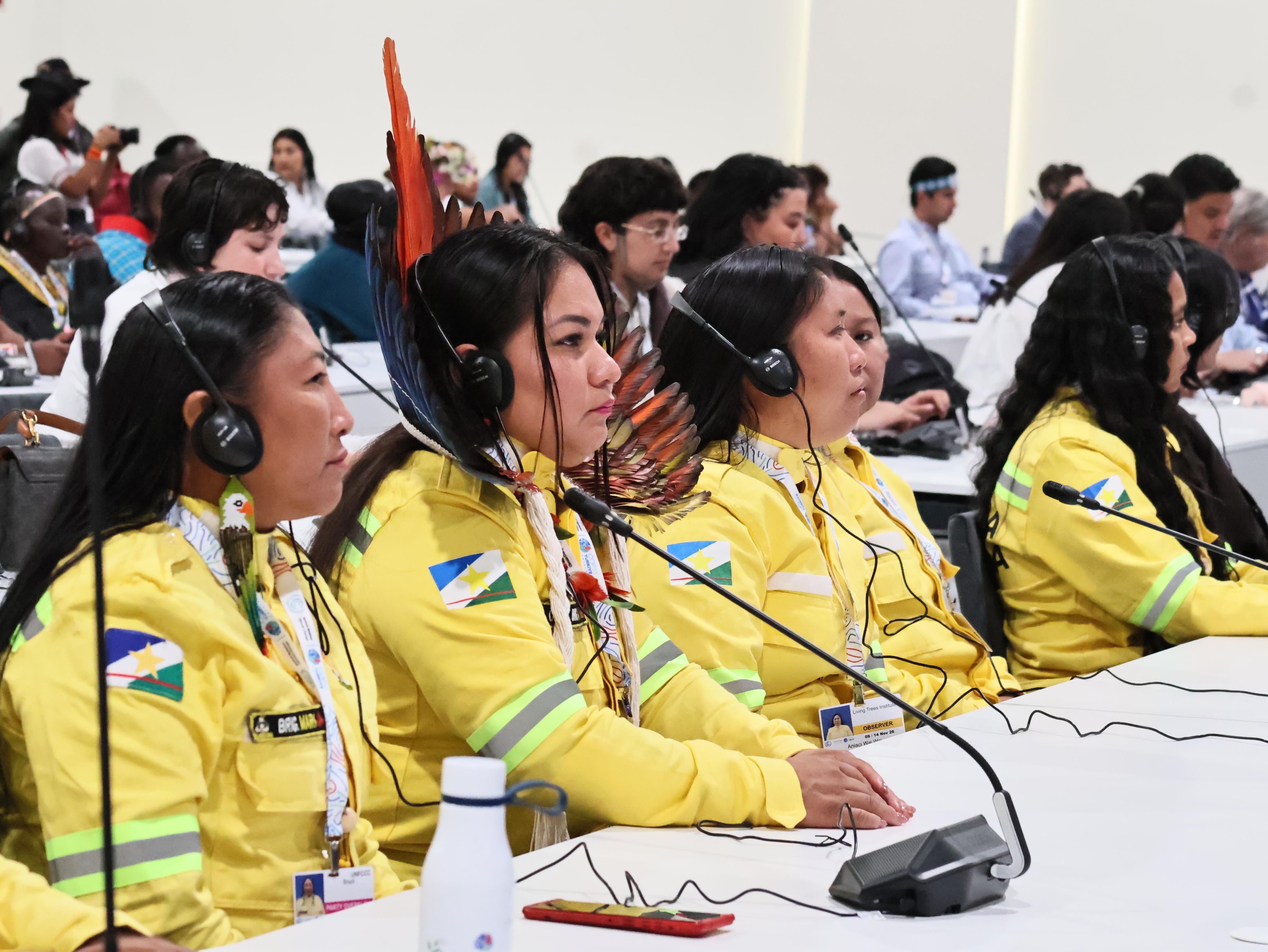
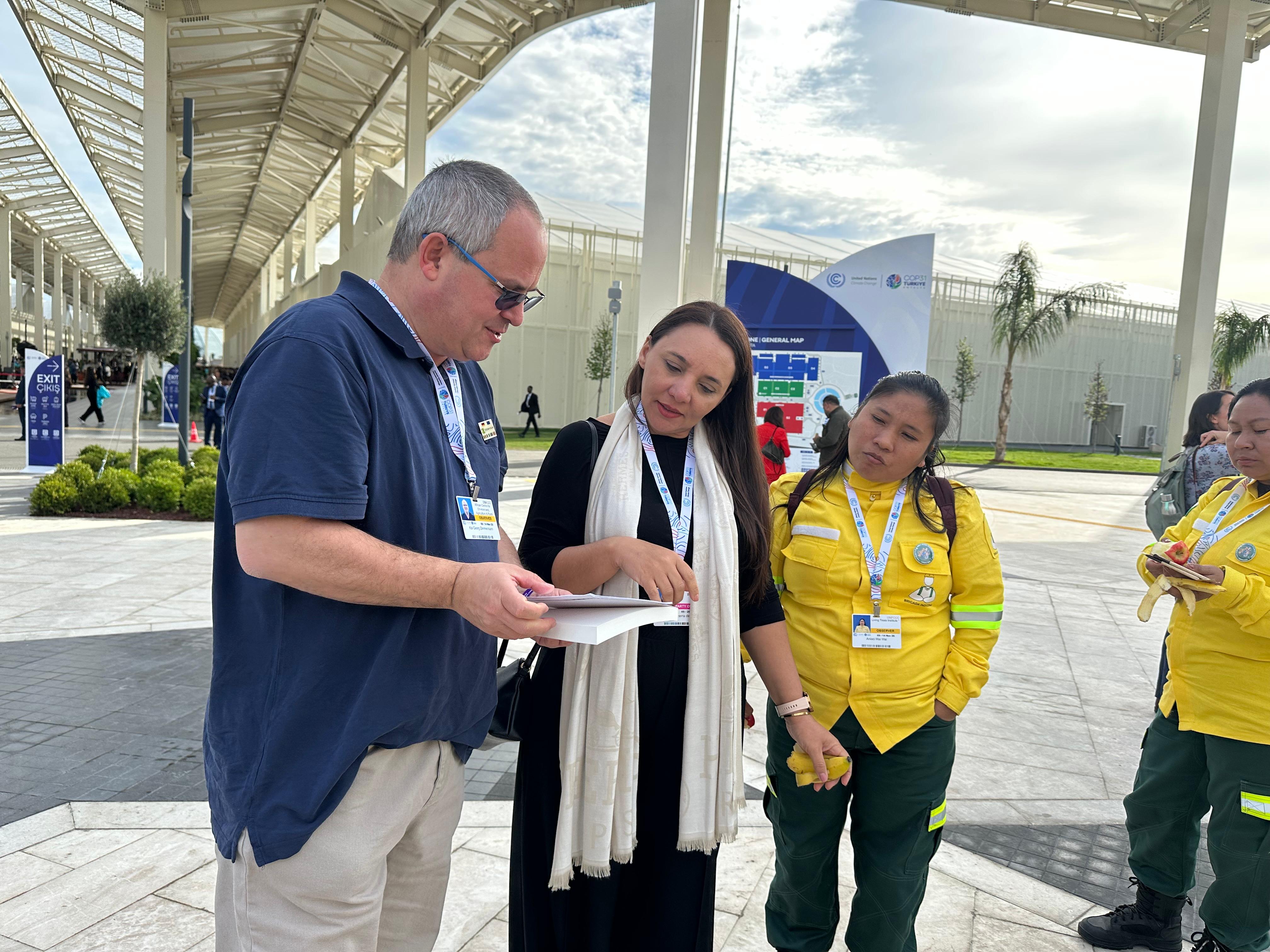
The Pataxibas firefighters also presented the work carried out in Roraima in the prevention and fight against forest fires. Their presence at the international conference gave visibility to an activity that often happens far from the major decision-making spaces, but plays a fundamental role in protecting the territories.
At the Indigenous Peoples Pavilion, Ana Paula Levi, from the Wapichana people and coordinator of the Indigenous Community Brigade of the CIR, participated in the panel "The systems behind the solutions: indigenous peoples' responses to climate-related environmental disasters." The activity presented experiences of indigenous communities that develop their own strategies to address environmental disasters.
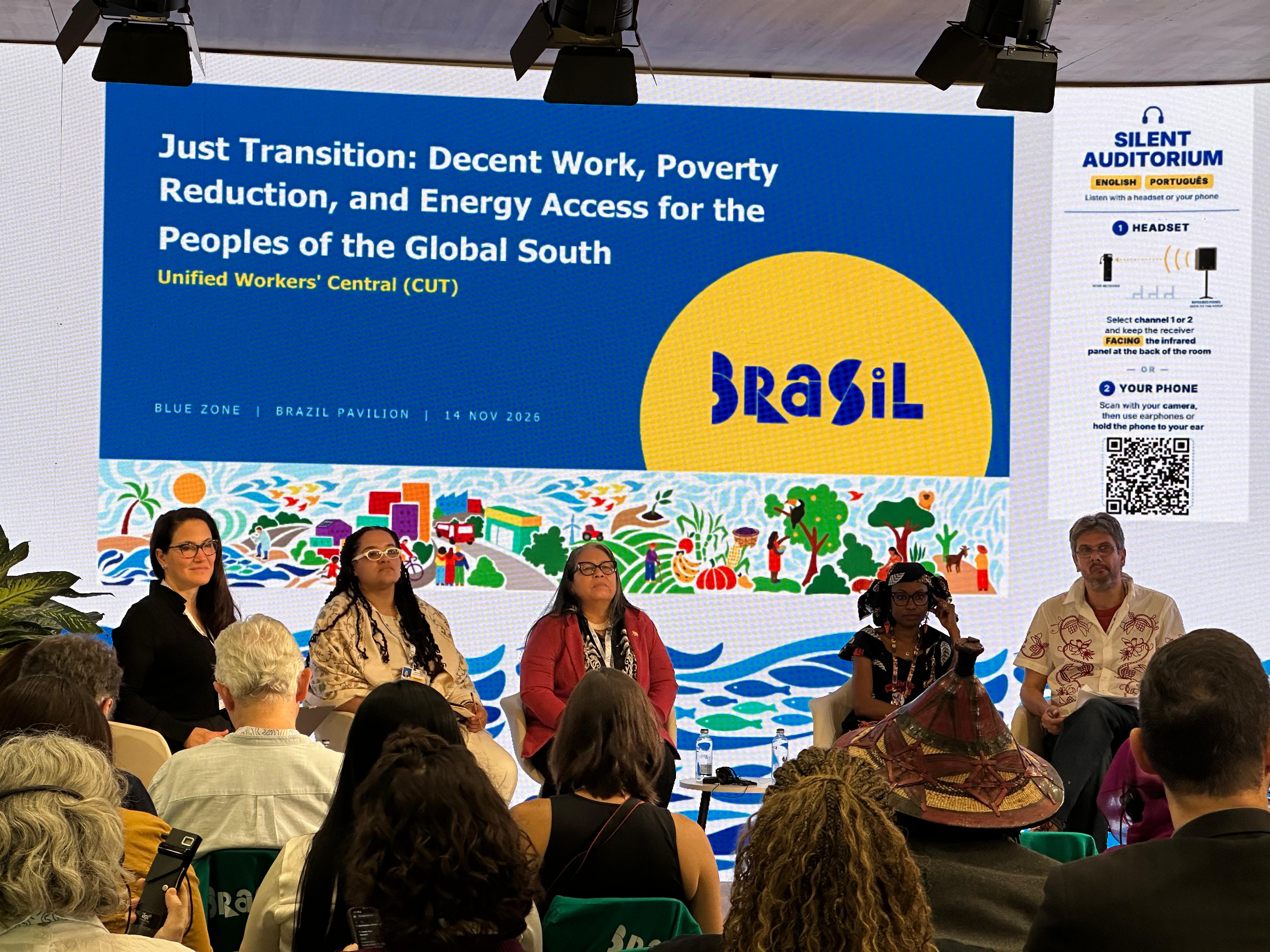
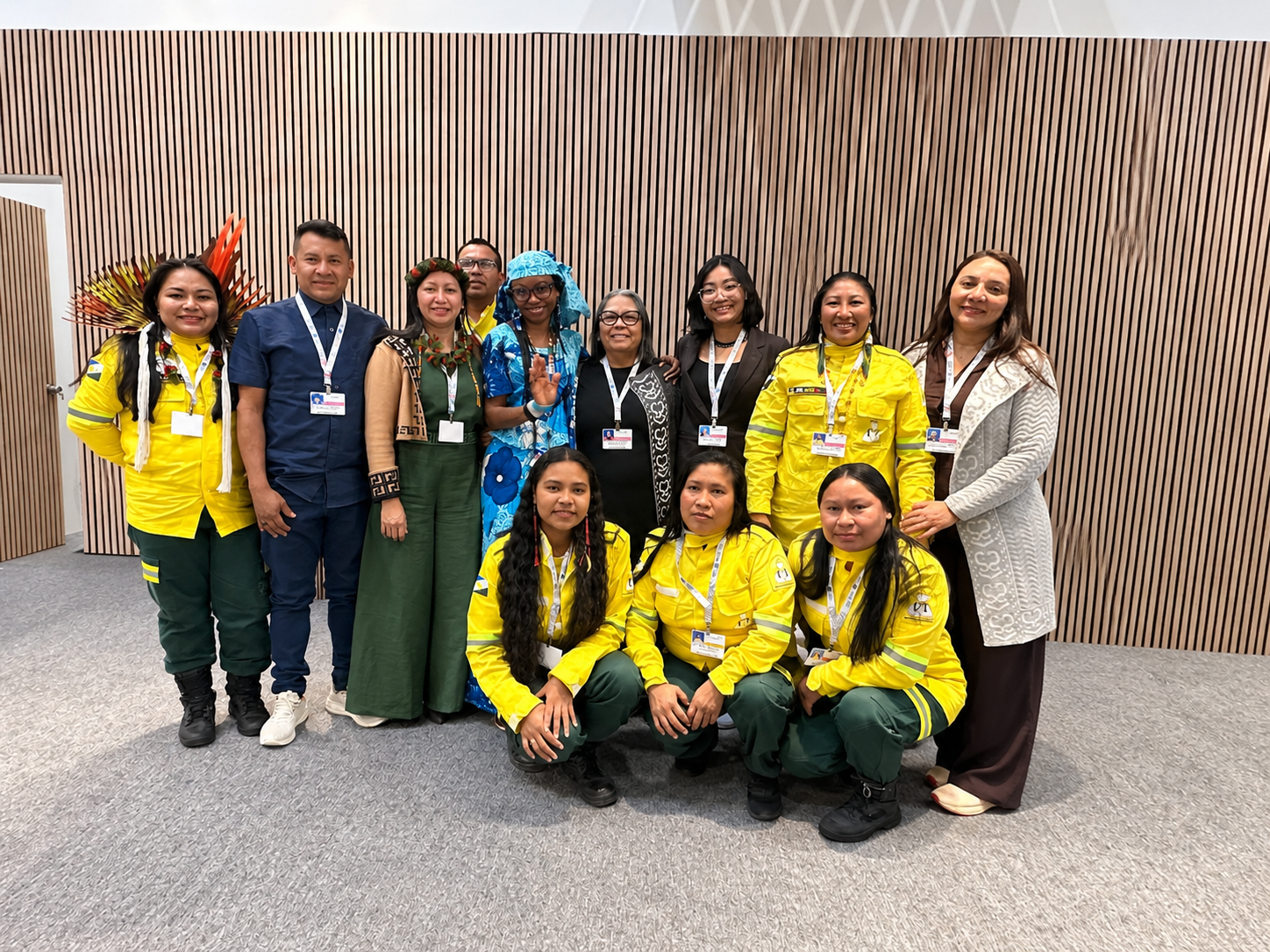
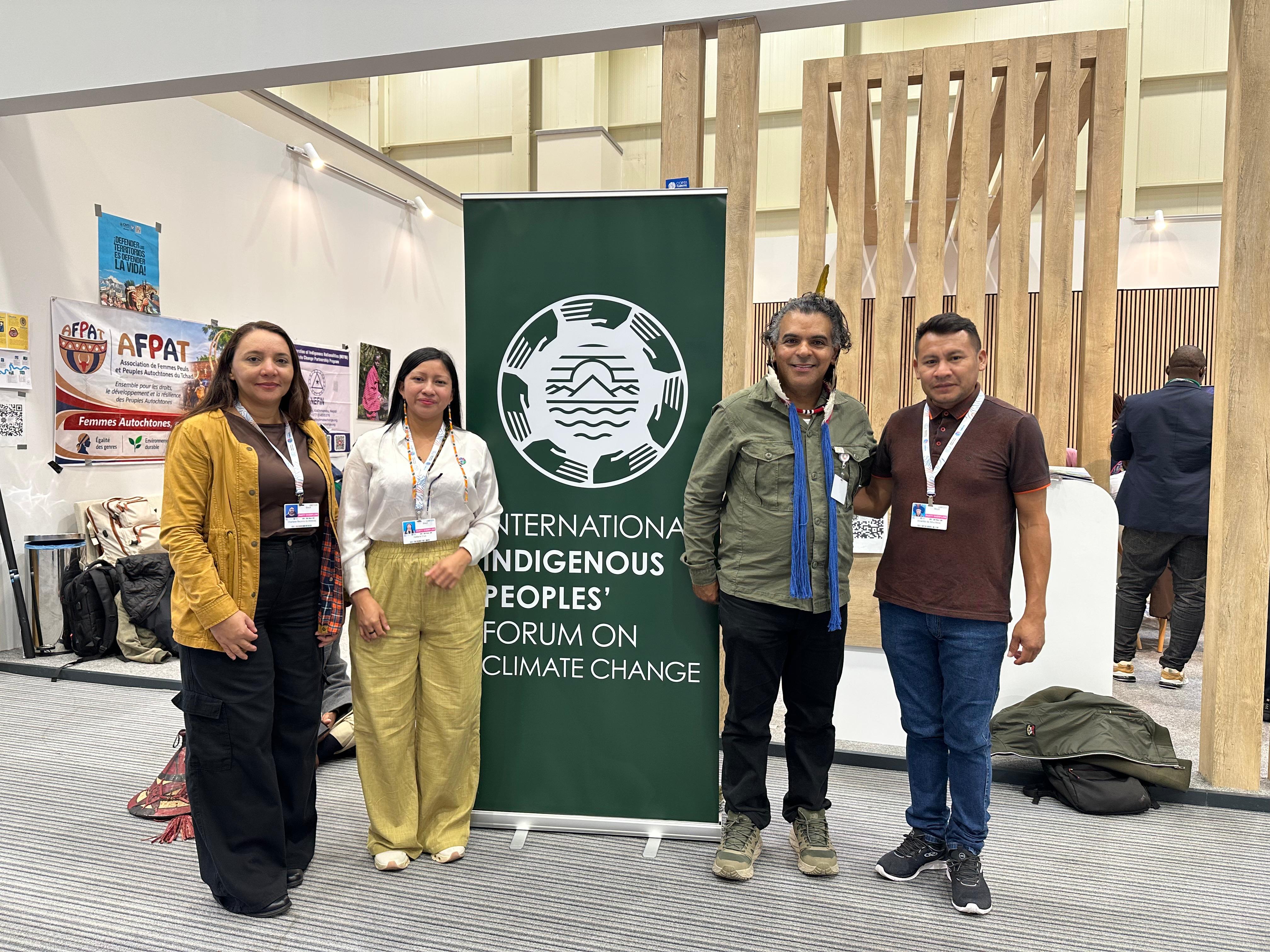
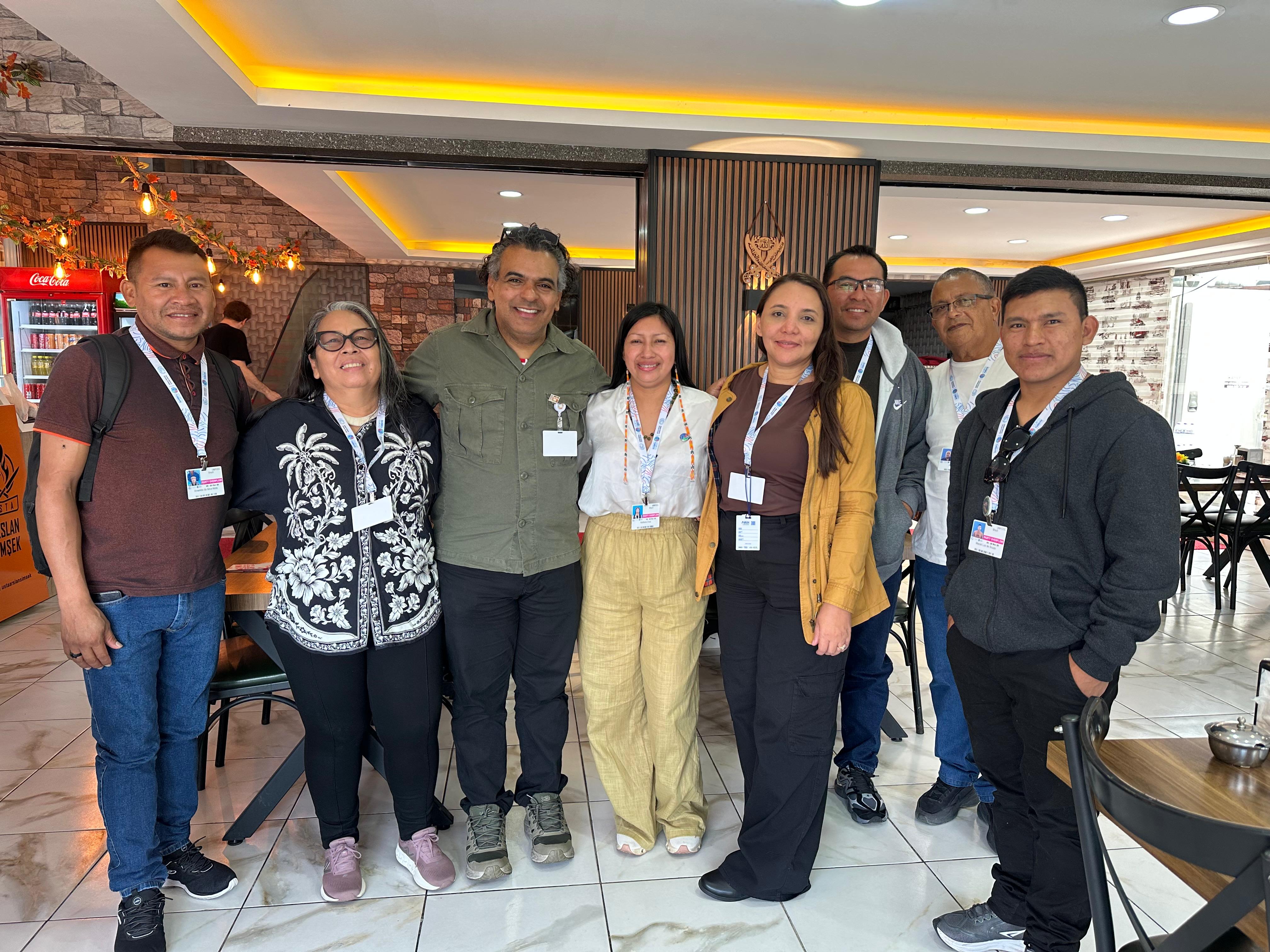
At the TED Countdown House, five Pataxiba indigenous firefighters participated in discussions on fire management, prevention, and the use of new technologies. The meeting allowed traditional knowledge to be brought closer to the technological tools being developed for monitoring and fighting fires.
During the program, initiatives were presented within the scope of XPRIZE, with solutions aimed at detecting and extinguishing fires in up to ten minutes. The dialogue highlighted the importance of bringing innovation and community experience closer together, without neglecting the particularities and knowledge of each territory.
Indigenous articulation and participation in climate decisions
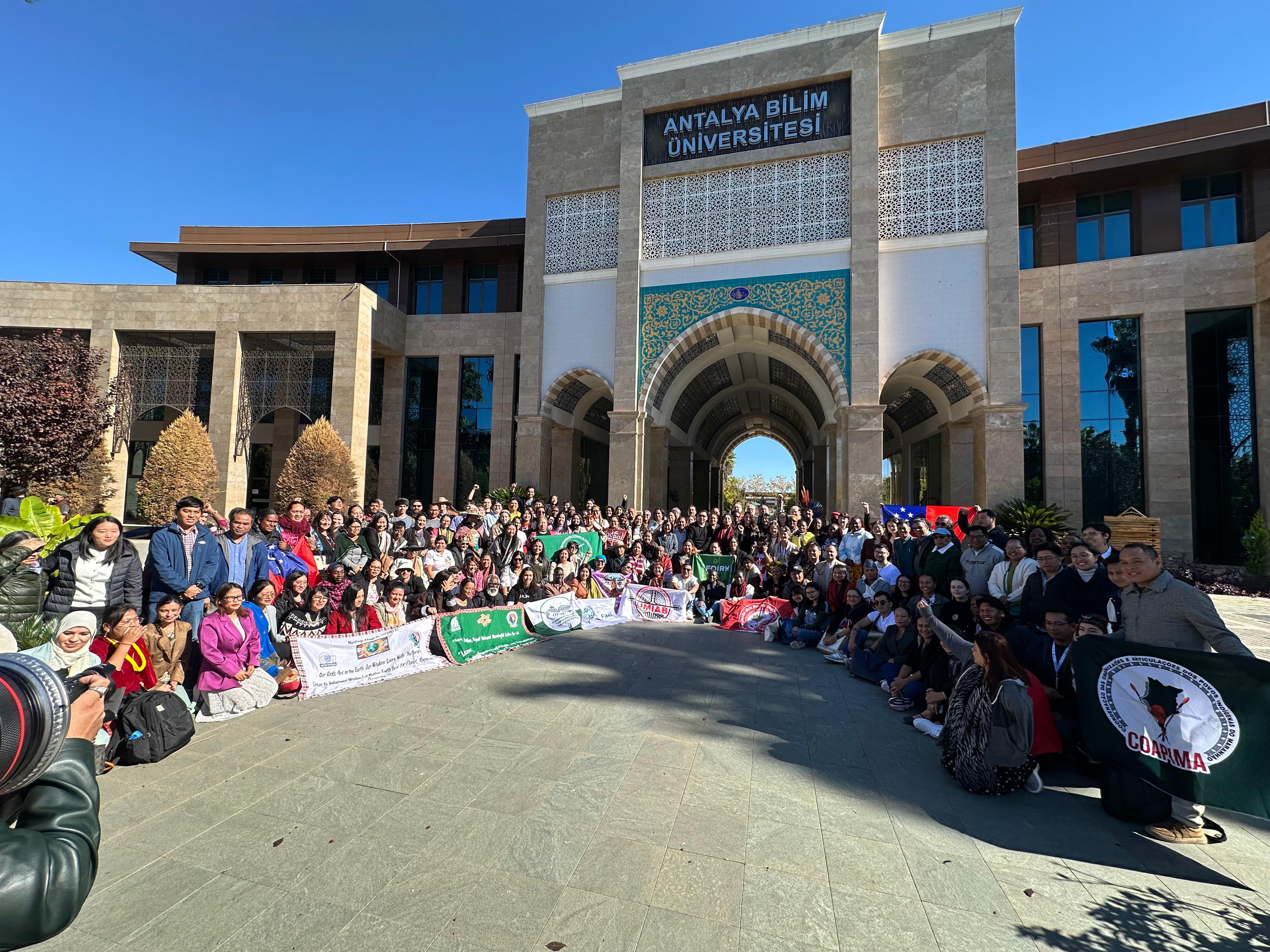
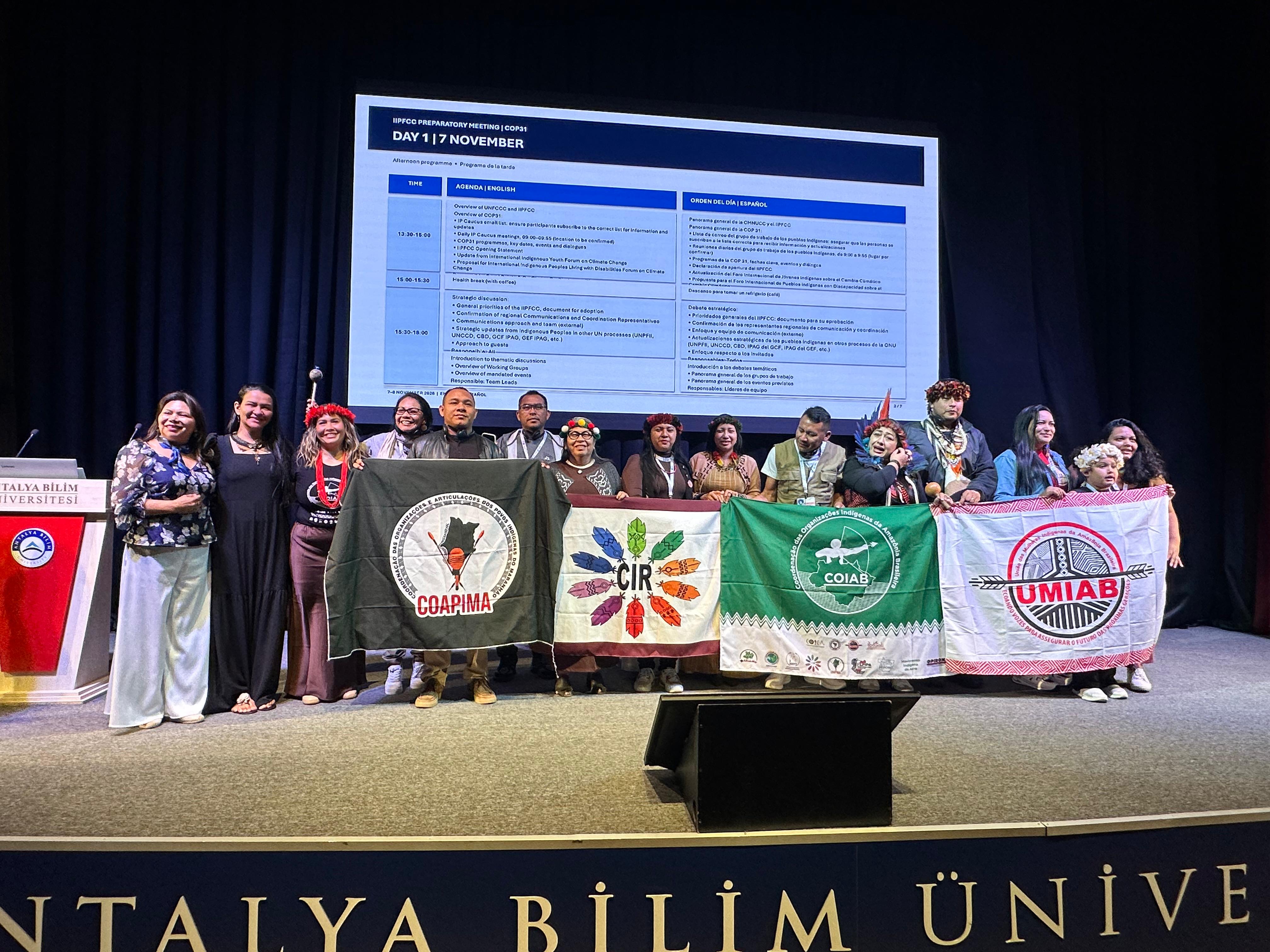
The agenda began even before the official opening of the conference. On November 7 and 8, CIR representatives participated in the preparatory meeting of the Indigenous Caucus, held at Antalya University of Sciences. The meeting brought together representatives from the seven sociocultural regions of the world: Africa, Arctic, Asia, Latin America and the Caribbean, North America, Pacific and Central and Eastern Europe, Russian Federation, Central Asia, and Transcaucasia.
It was a moment of coordination among indigenous leaders from different parts of the planet, aiming to align proposals and strengthen the participation of peoples in climate negotiations. Among the topics discussed were indigenous rights, political participation, climate financing, and the work of the working groups of the International Forum of Indigenous Peoples.
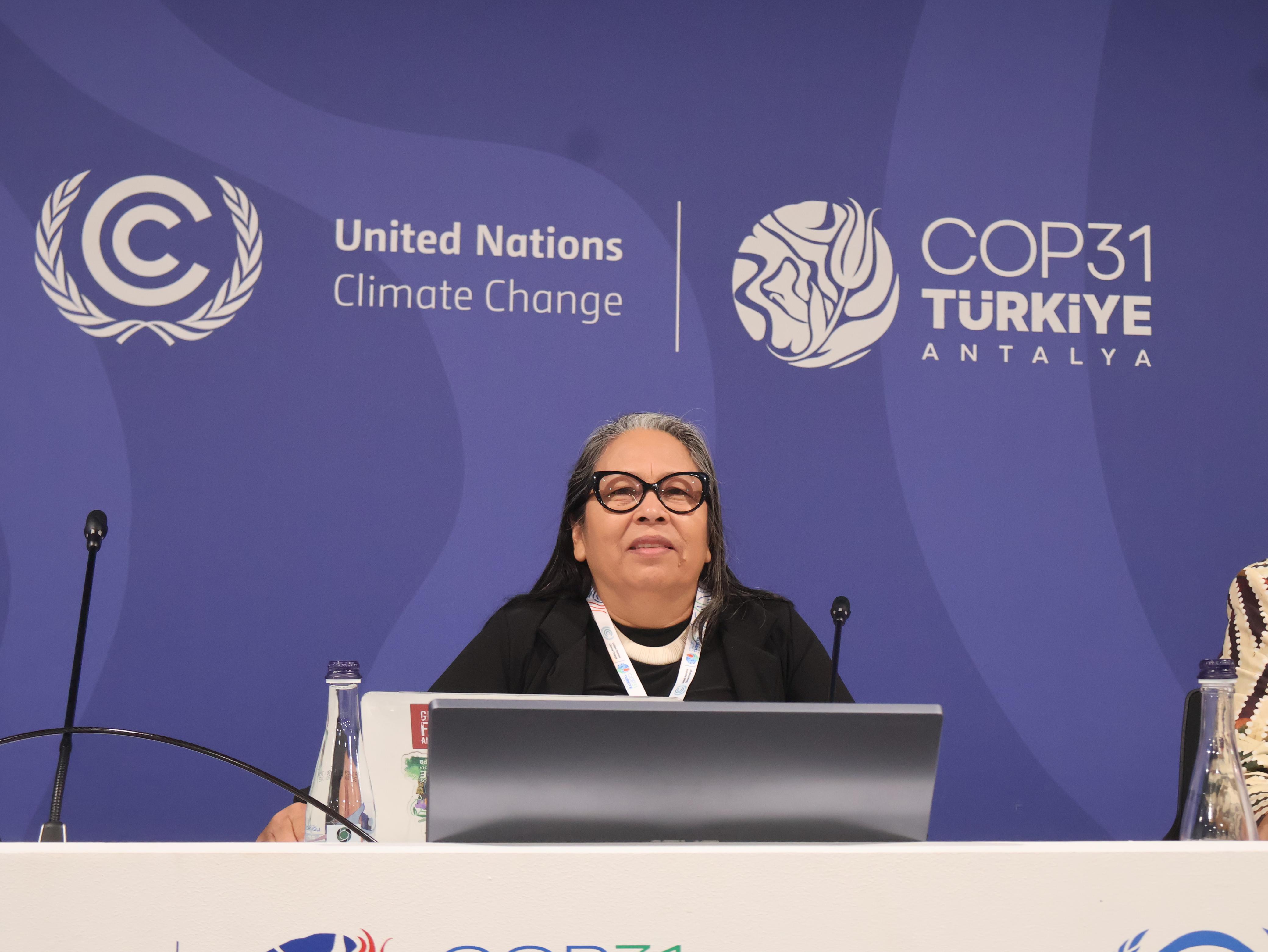
In this space, Sineia do Vale played a prominent role as co-chair of the Indigenous Caucus, representing Latin America and the Caribbean. His work reinforced the importance of ensuring that indigenous peoples are not only heard but have effective participation in decisions involving the climate and future of their territories.
"We are here at COP31, in Turkey, in the city of Antalya, but our agenda started well before COP31, with the Indigenous Caucus, where I am co-chair for Latin America and the Caribbean. My organization is the Indigenous Council of Roraima. So, it is important for us to be in these spaces, where we have the opportunity to bring our voices at this moment, in this context of COP31. It is a moment when we also have coordination with our partnerships. So, the entire CIR team here at COP31 is coordinating in various spaces, whether on climate change, on fires, financing, or women.", Sineia pointed out.
Participation also paved the way to strengthen partnerships and expand dialogue on issues that are part of the daily life of Roraima's indigenous communities.
The CIR delegation was composed of Amarildo Macuxi, General Tuxaua of CIR; Kelliane Wapichana, General Tuxaua of the Indigenous Women's Movement of Roraima; Sineia do Vale, co-president of the Indigenous Caucus and coordinator of the Department of Territorial, Environmental Management and Climate Change (DGTAMC); Charlane Almeida, coordinator of the Administrative and Financial Department (DAF); Dr. Fernanda Félix Wapichana, legal advisor of CIR; Jonatas Firmino, supervisor of the Indigenous Community Brigade; Ana Paula Levi, coordinator of the indigenous brigades of CIR; the indigenous women brigadists Pataxibas; and Maciel Makuxi, photojournalist responsible for recording the delegation's participation.
The presence of leaders in the COP31 spaces reaffirms that indigenous peoples need to be where decisions are made, because they are a fundamental part of the solutions to face climate change and ensure a future for the next generations.
COP32 (32nd United Nations Climate Change Conference) is scheduled to take place in Addis Ababa, Ethiopia, from November 8 to 19, 2027.
Review: Helena Leocádio and Charles Taurepang.