
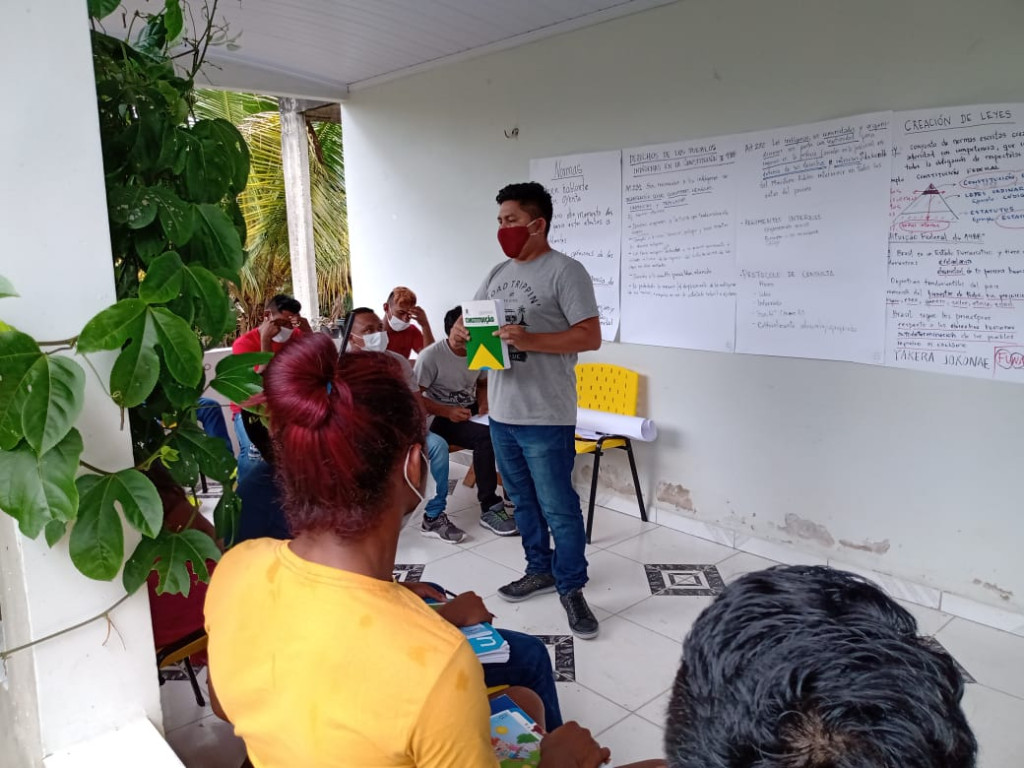
The Indigenous Council of Roraima (CIR) in partnership with the United Nations Children's Fund
(UNICEF) held on January 21 and 22 the First Workshop of Law Operators with indigenous people
Venezuelans of the Warao ethnic group who live in the Janokoida shelter in Pacaraima. The training of Law Operators aims to train young Warao community agents to act in the protection and promotion of the rights and interests of their communities. Topics such as the constitution and the administrative legal structure of the Brazilian state,
legal system, the Statute of the Child and Adolescent and International Treaties on rights
indigenous peoples to which Brazil is a signatory.
The objectives of this first workshop were to make a basic study on the Brazilian laws that deal with
of indigenous issues and deal with experiences and the history of the indigenous movement of Roraima.
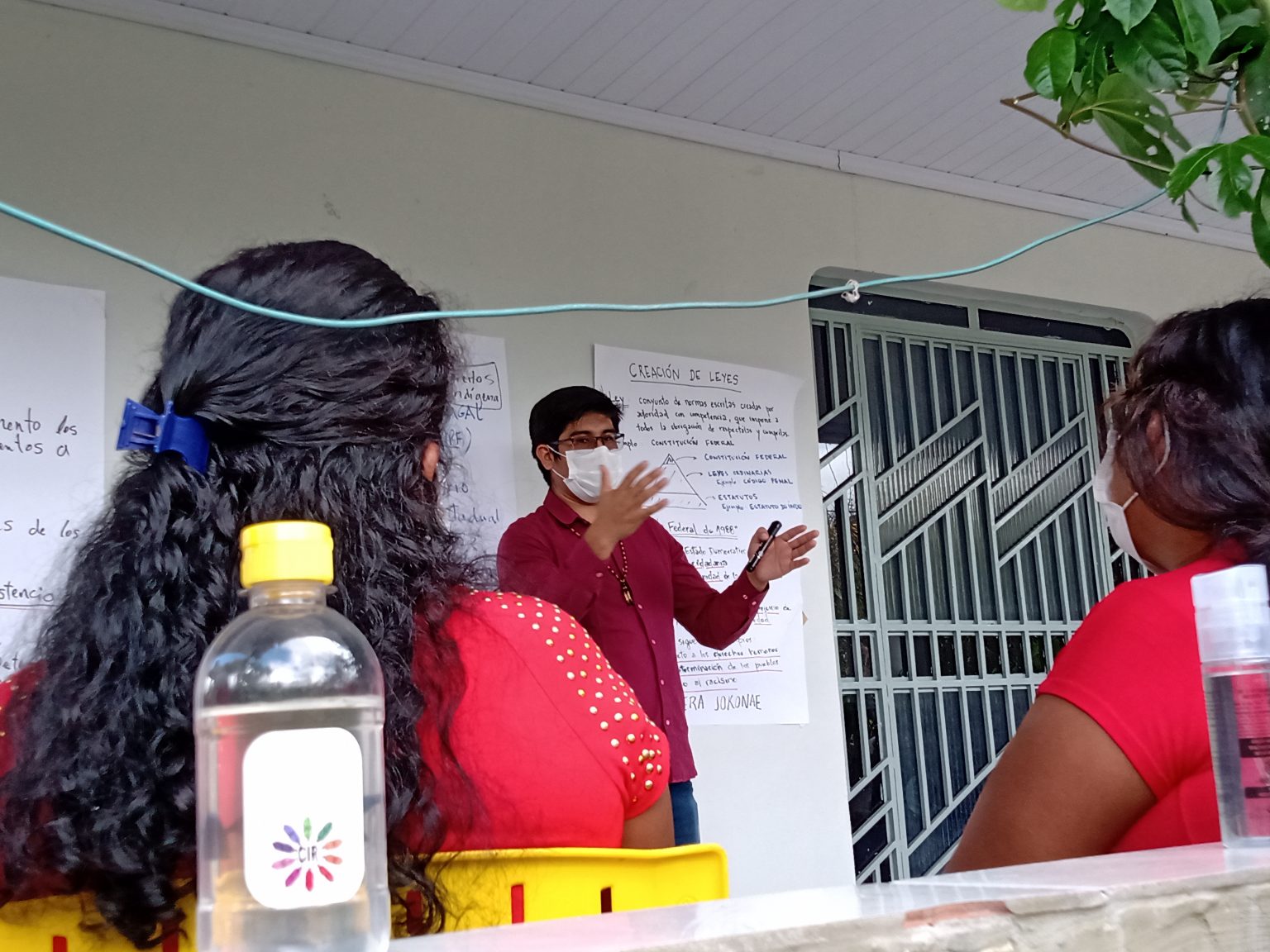
The workshop was given by the legal advisors of the CIR, Junior Nicácio and Ivo Cipio, with the support of a
translator. The methodology adopted took into account the cultural specificities of the indigenous people
Warao. The initiative is one of the actions between CIR and UNICEF in the "Súper Panas" project. 21 young indigenous people participated, which was also attended by Warao leaders and Direct Operators
Indigenous people from local communities. All those present wore masks and hand sanitizer, following all medical recommendations to avoid contamination of Covid-19.
On the first day, there were moments to share stories and personal trajectories of the struggle of the
participants, their communities, and their peoples. On the second day, topics on the
formation of the Brazilian state, legislative process, and the fundamental rights and rights of peoples
that are guaranteed by the Federal Constitution of 1988.
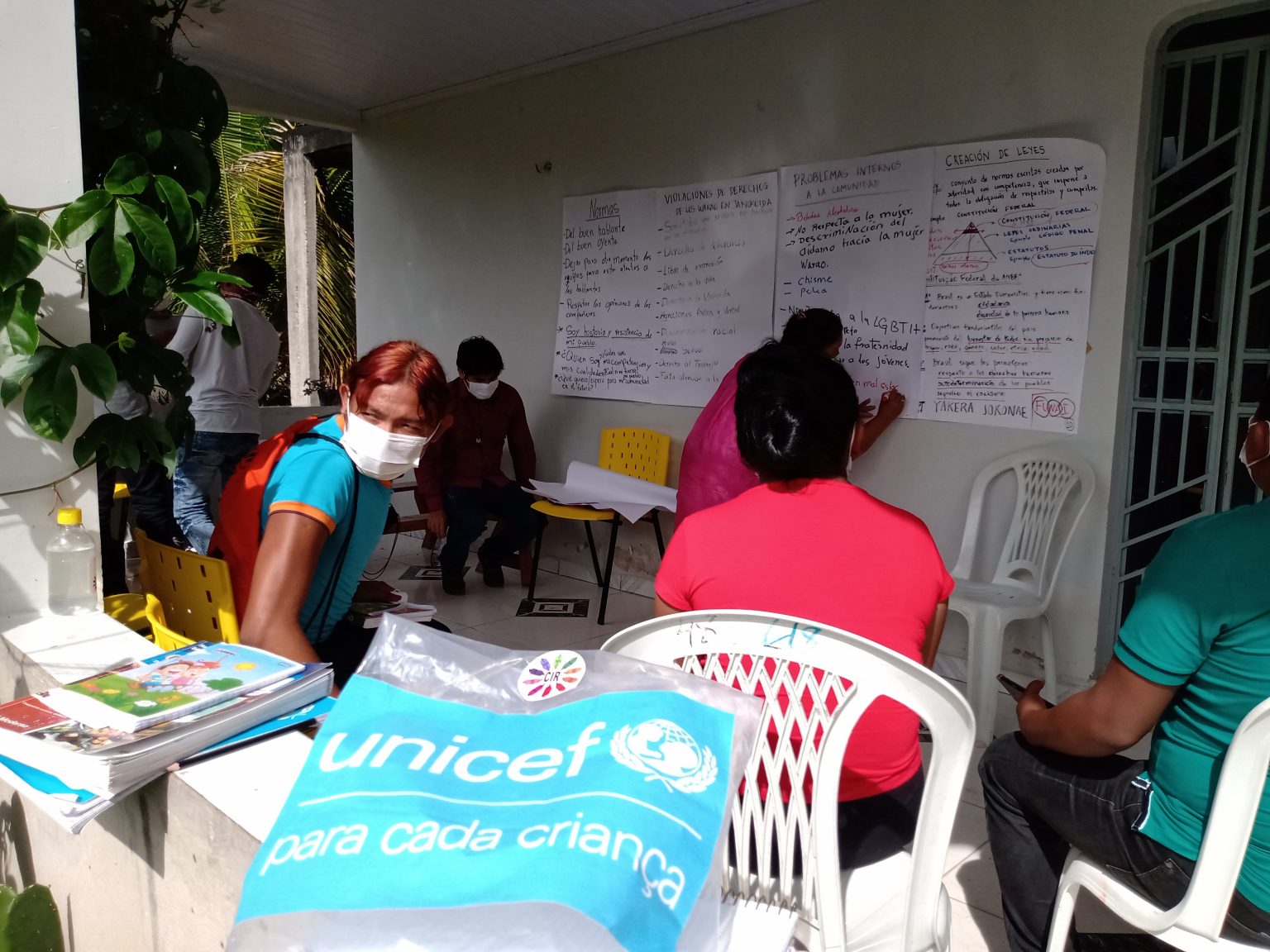
Junior Nicácio, legal advisor who acted as an instructor, highlighted the importance of the workshop. "The idea
of this first workshop is to know the reality of the Warao indigenous people who are in a situation of
vulnerability, listening to their life stories and expectations, and thus building collectively
instruments that can help defend their rights," he explained. "At the same time, we want to
share the experiences of the struggle of the indigenous peoples of Roraima for land and policies
differentiated." He concluded.
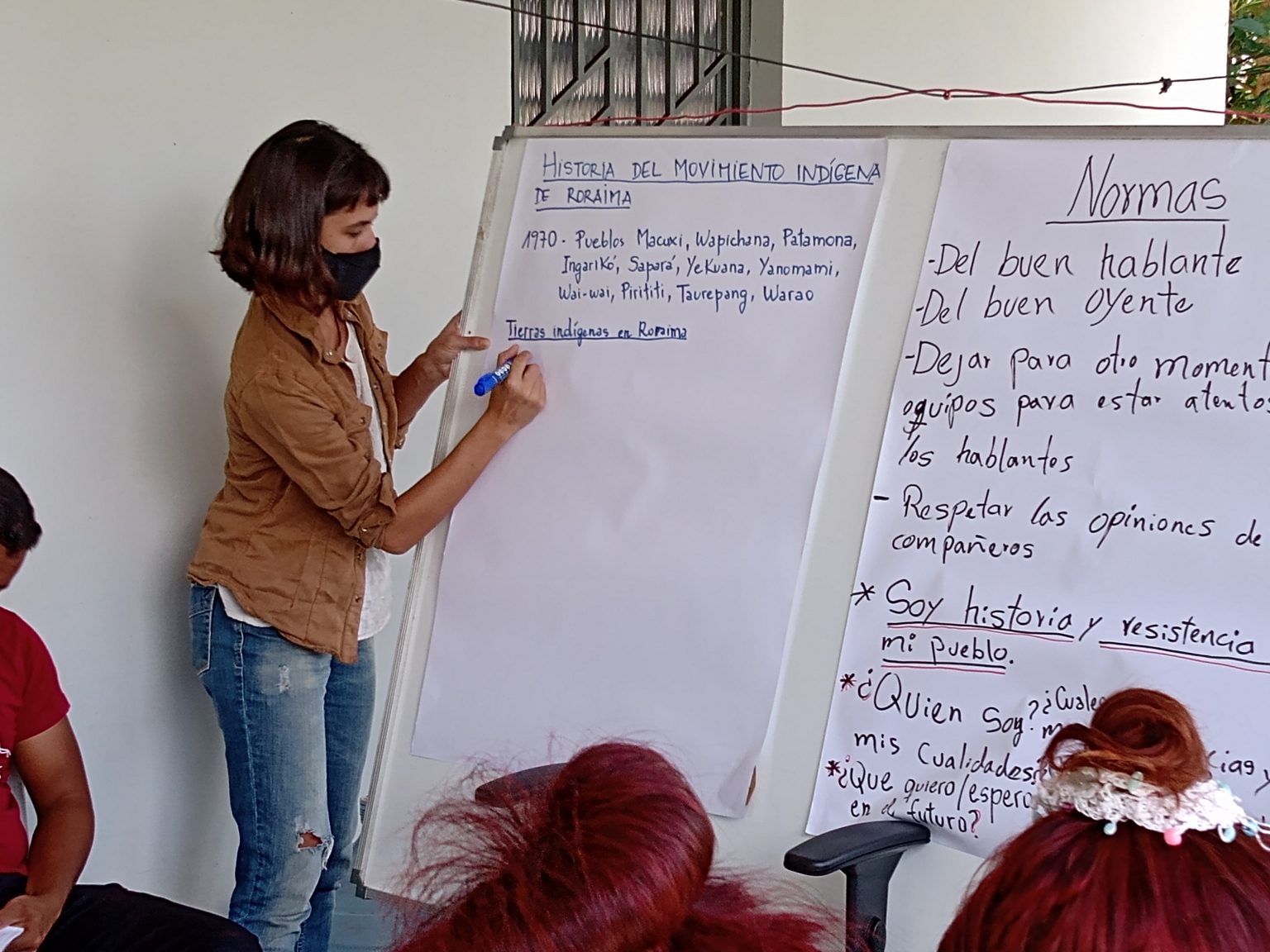
Marissela Moraleda, one of the participants, of the Warao ethnic group, told a little about her struggles and achievements to learn
Spanish, train as a teacher, and promote the recognition of the Warao indigenous people of their community
before the authorities, also reporting a little of the struggle of the Warao women.
"I know how to speak and fight! I am an encourager of my community in the fight for rights. I value mainly studying," she said.
Another participant, Francinete Fernandez Garcia, of the Macuxi ethnic group, who acted as coordinator of
legal operators from the Novo Paraíso community, Surumu region - T.I Raposa Serra do Sol, also
He highlighted the importance of the exchange of knowledge between peoples. "It was an exchange of experience
gratifying, because we were able to learn about the history of the Warao people and their lives," he said.
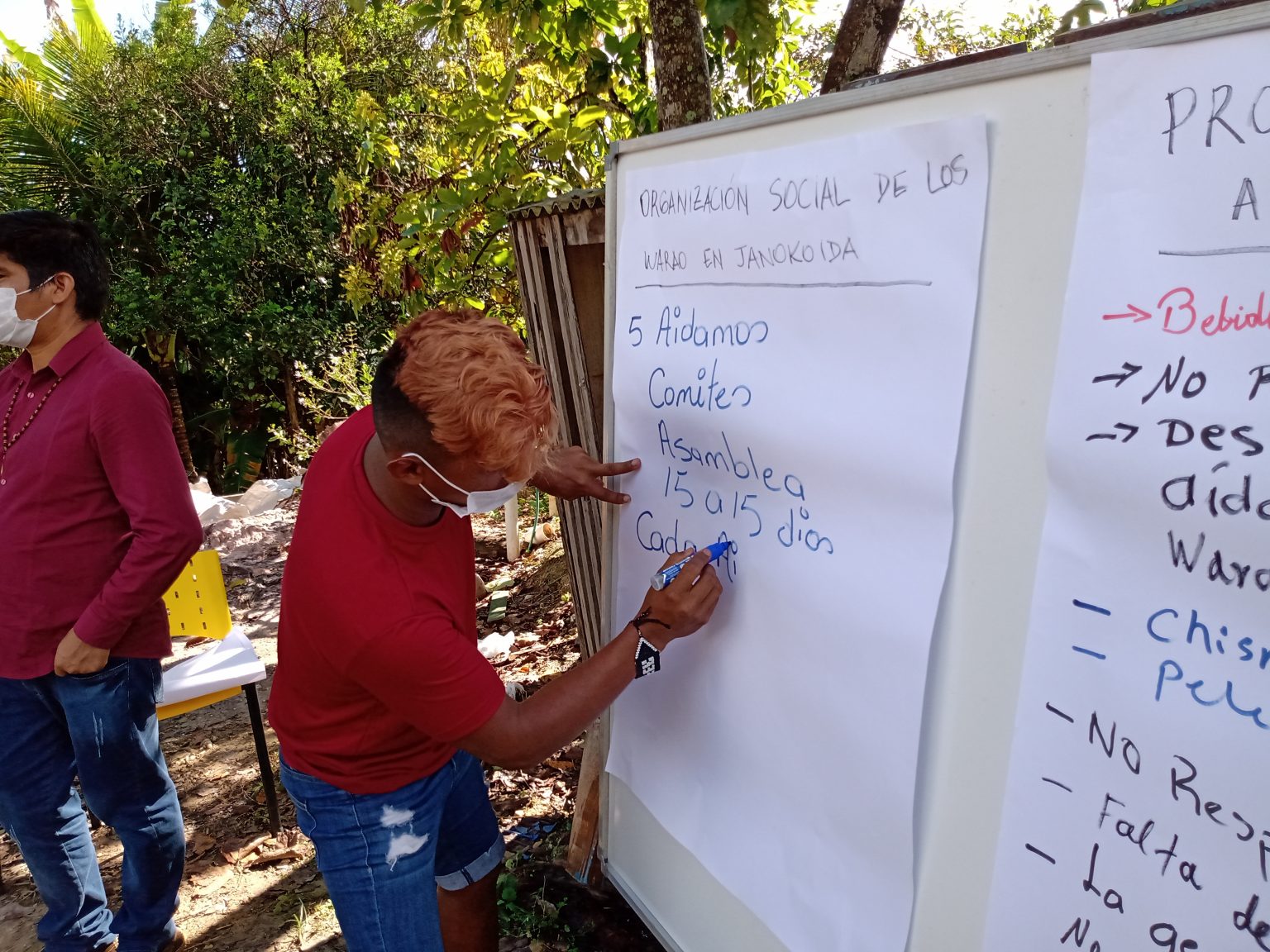
One of the Aidamos (Warao leader) Felipe Moraleda who lives in the Janokoida shelter, said that through the meeting he was able to feel the support of other indigenous peoples, and also learn about the Brazilian and international legal bases that protect indigenous rights. "We are studying, preparing and that is why we are grateful for this initiative."