
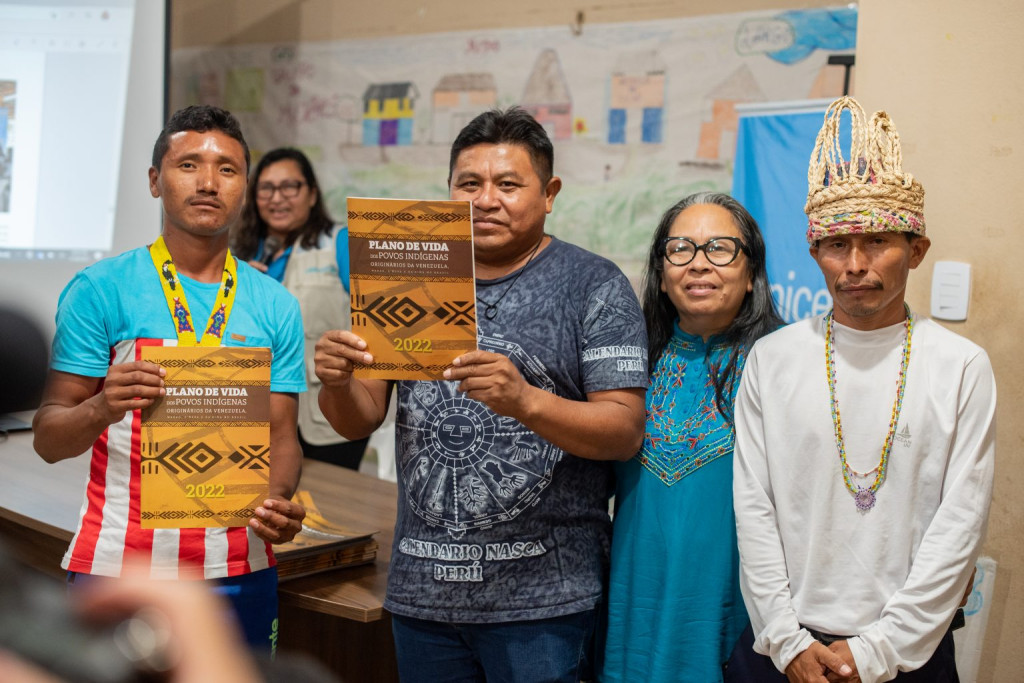
The Indigenous Council of Roraima (CIR) and the United Nations Children's Fund (UNICEF) launched on Friday (14) in the Vovó Lindalva auditorium at the organization's headquarters, the Life Plan for the Warao, E’ñepa and Ka’riña peoples. The Plan was built by indigenous leaders originating from Venezuela under their perspective and viewpoint. The document will serve five shelters in Boa Vista: the indigenous people of the Jardim Floresta, Nova Canaã, Tancredo Neves, Pintolândia and Janokoida shelters, and also the municipality of Pacaraima.
Sixty people participated, including partners from Operation Welcome, the International Organization for Migration (IOM), UNHCR, the Federal University of Roraima (UFRR), the National Foundation for Indigenous Peoples (FUNAI), the Public Prosecutor's Office (MP), the Ministry of Labor (MT), and the Federal Public Defender's Office (DPU).
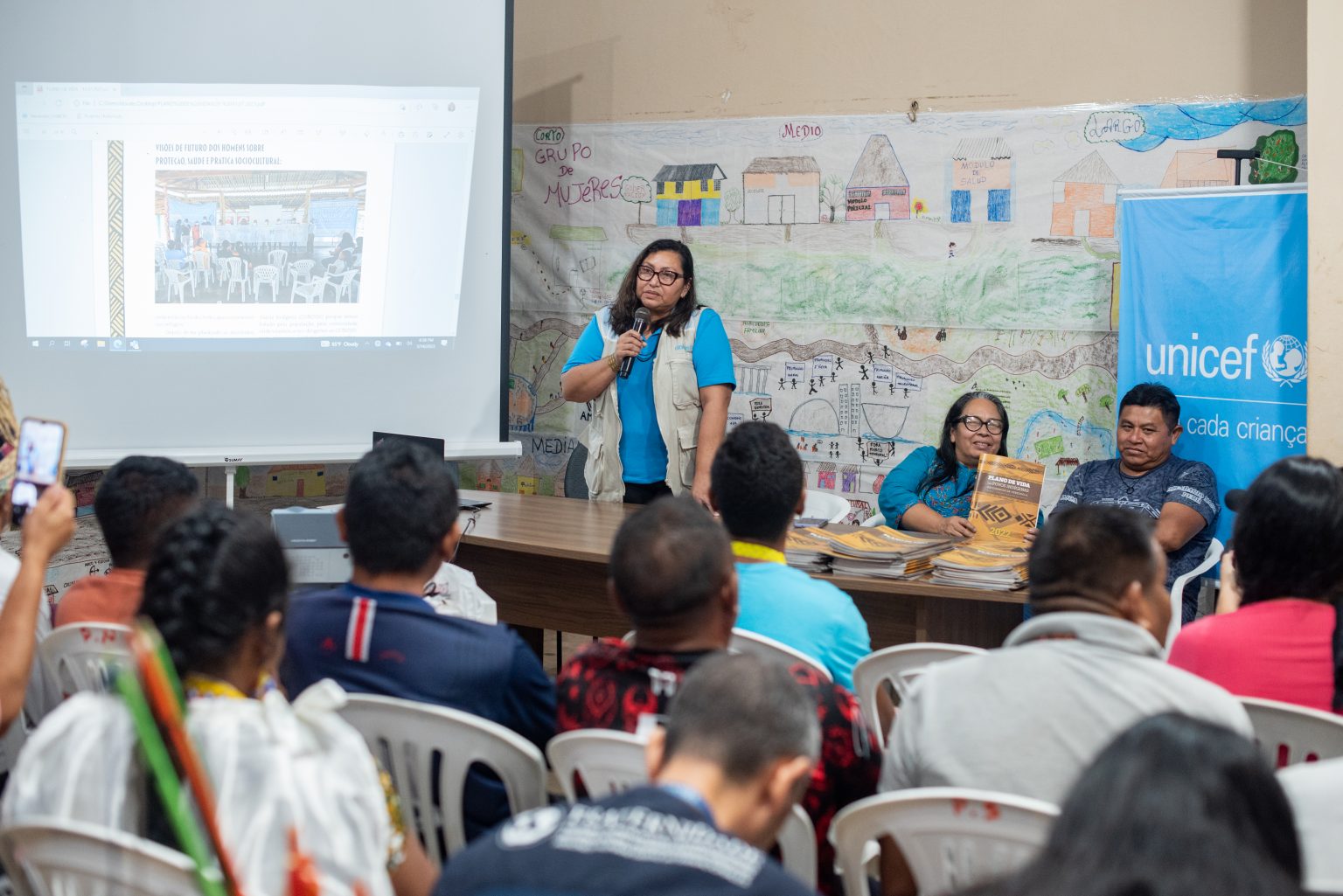
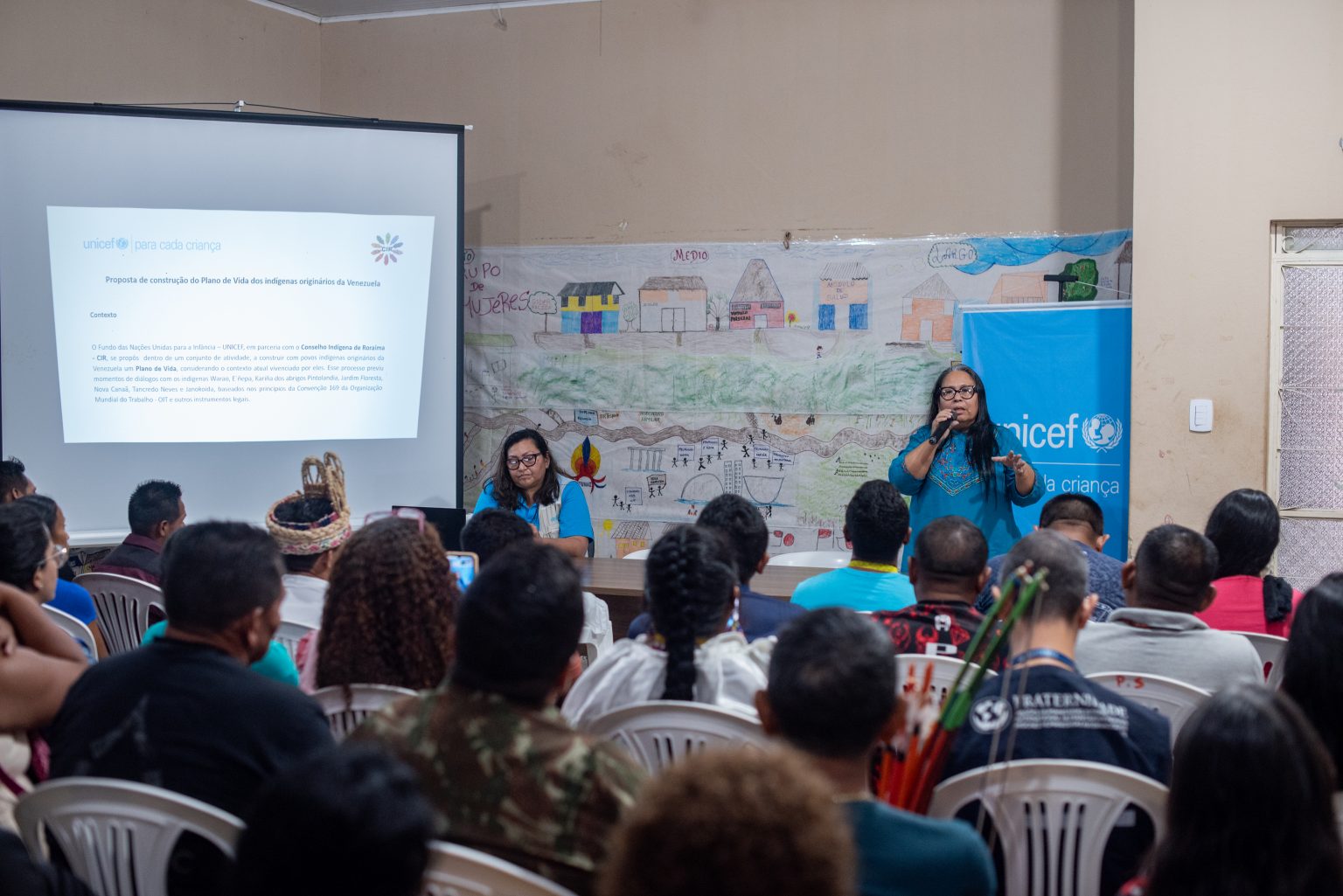
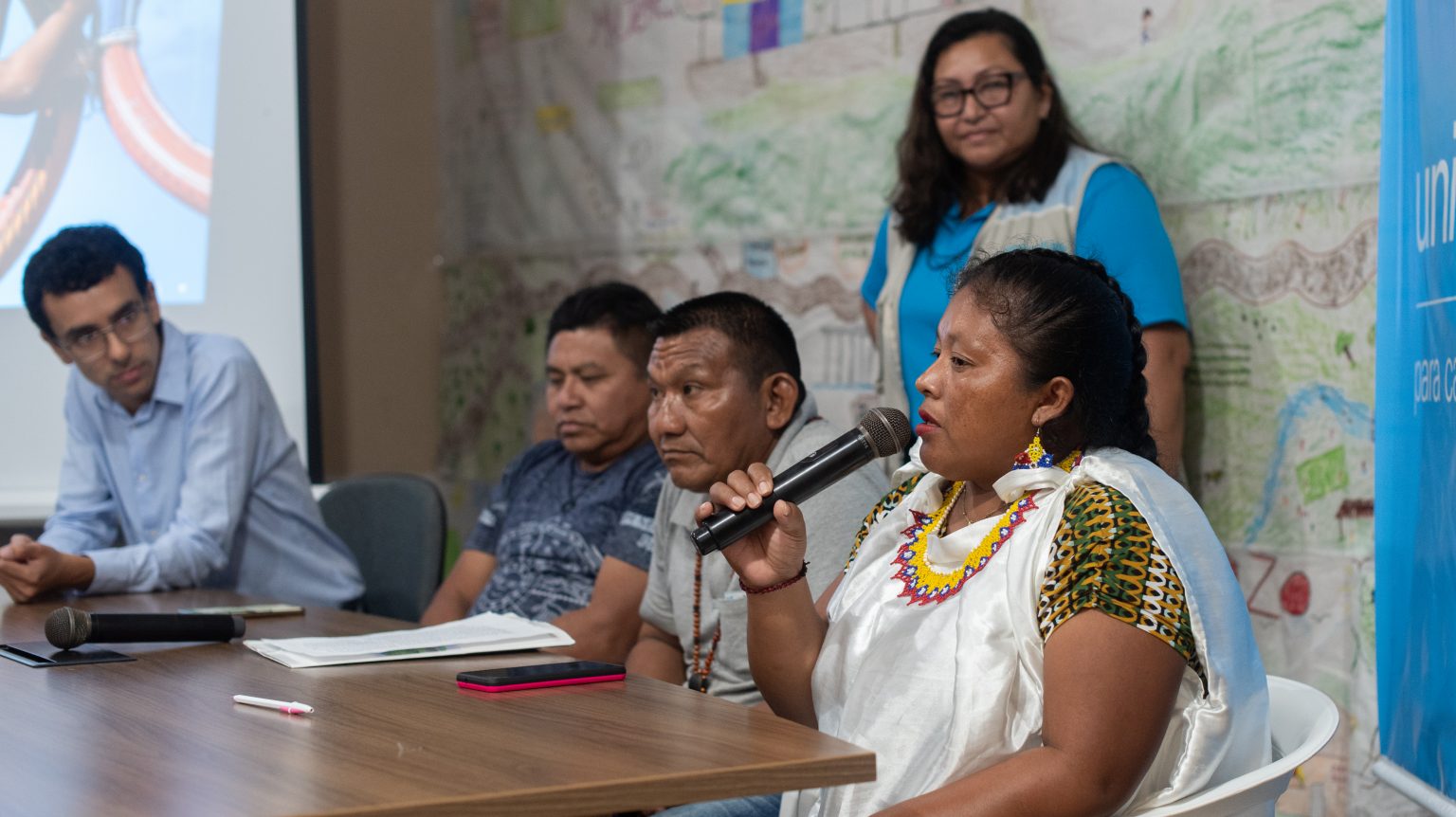
Moments from the participants' speeches. Photos: UNICEF/Brazil.
According to the coordinator of the Territorial Management Department (DGTA) of CIR, Sineia Wapichana, the Plans are in the minds of indigenous leaders. “Indigenous peoples work in community, and when we do this exercise of building a life plan/management plan, it is the communities that say how they want to manage health, education, their culture, and ways of life,” Sineia emphasized.
Sineia emphasized to the leaders present that the plans are for their exclusive use (the Warao, E’ñepa, and Ka’riña). “The plan is yours, for you to use as you wish; we are here only to say that everyone is a winner because they have the strength to continue,” she concluded. The plan was developed over the last two years (2021-2022), suffering delays due to the COVID-19 pandemic, and had the support of the Centro de Formación de la cooperación Española en Montevideo and European Civil Protection and Humanitarian Aid Operations.
The general coordinator of CIR, Edinho Macuxi, recalled that among the indigenous peoples and communities, also highlighting CIR's participation in the plan's development, "we are indigenous people from the same sacred land who are now joining together to continue strengthening ourselves, and for us it is a joy," stated the coordinator.
Leia do Vale, who is UNICEF's head of protection, highlighted that this is the first Life Plan being delivered to the Warao, E’ñepa, and Ka’riña indigenous peoples, a document of utmost importance.
“This plan brings together aspirations, dreams, and demands so that it can be considered by both public authorities and non-governmental institutions. And when the discussion to build this plan began, the main objective was to gather their demands, to bring their voices into one document,” Leia stated.