
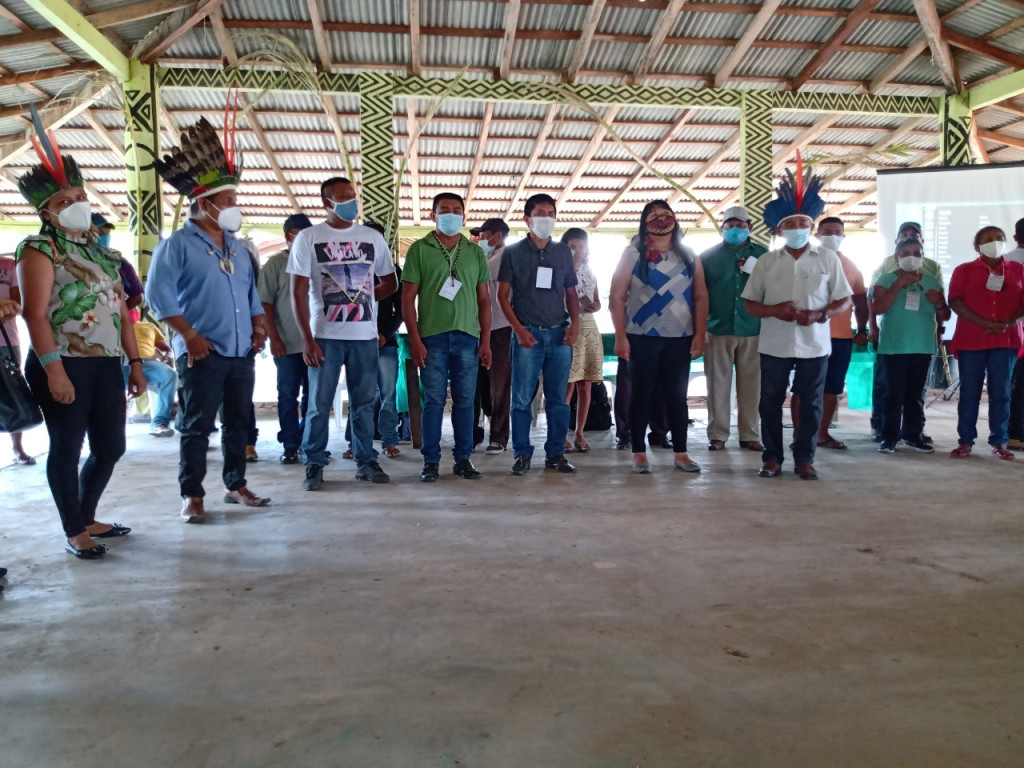
Law No. 1,453, of February 8, 2021, proposed and sanctioned without vetoes by the governor of Roraima Antonio Denarium (No Party) on February 8, was already expected by indigenous communities. The Law provides for an extension of 200 hectares of the area that can be requested for mining activity, in addition to allowing the use of mercury, which is a highly toxic material, and the possibility for the state environmental agency to issue a Direct Operating License, without the due licensing process already provided for in Brazil.
In a meeting on January 14, the organizations CIR, OPIR, APTSM, ODIC, KAPOI, requested federal deputy Joenia (REDE), legal measures against the bill that, on that date, had been approved with 18 votes in favor by the state deputies. The deputy heard from the coordinators the risks and threats of the Law for indigenous lands. And on Tuesday (09), the REDE party, the deputy's party, filed a Direct Action of Unconstitutionality (ADI), in the Federal Supreme Court (STF), against state law 1.453/2021.
One of the main grounds presented in the ADI was the threat that the Law represents to the protection of the environment, a flagrant violation of article 225 of the Brazilian Constitution of 1988. "The Constitution establishes that everyone has the right to an ecologically balanced environment, a good for the common use of the people and essential to a healthy quality of life, imposing on the Government and the community the duty to defend and preserve it for present and future generations”,declared REDE.
"It is an action to safeguard the constitutional rights of all," said the Federal Deputy, Joenia Wipichana.
For indigenous leaders, the governor's speech that the Law does not apply to indigenous lands is a farce. Because its approval will further incite illegal exploitation, violence and tension within the Indigenous Lands. Therefore, it is a risk to the indigenous peoples of the state, whose population is, proportionally, the largest in the country.
"We in the indigenous movement are against this Law because we consider that it kills, destroys, poisons, pollutes and ends the lives of our peoples," said the deputy coordinator of the CIR, Edinho Batista.
Historically, the indigenous communities of Roraima have suffered from the advance of illegal mining over their territories. Among the Yanomami and Ie'kuana peoples, the illegal activity of hundreds of miners causes daily conflicts, kills, spreads diseases and threatens the lives of indigenous people.
It is no different with other indigenous lands, for example the TI. Raposa Serra do Sol is the target of miners who invade and illegally exploit mineral resources. Recently, one of the main waterfalls located in the Uiramutã community, in the Serras region, was hit by products of the miners' activity, changing the color of the water.
Another community that is heavily affected by mining is the Raposa II community, Raposa region, the residents suffer from the impact located close to their homes, threatening not only the territories but also the life in the communities.