
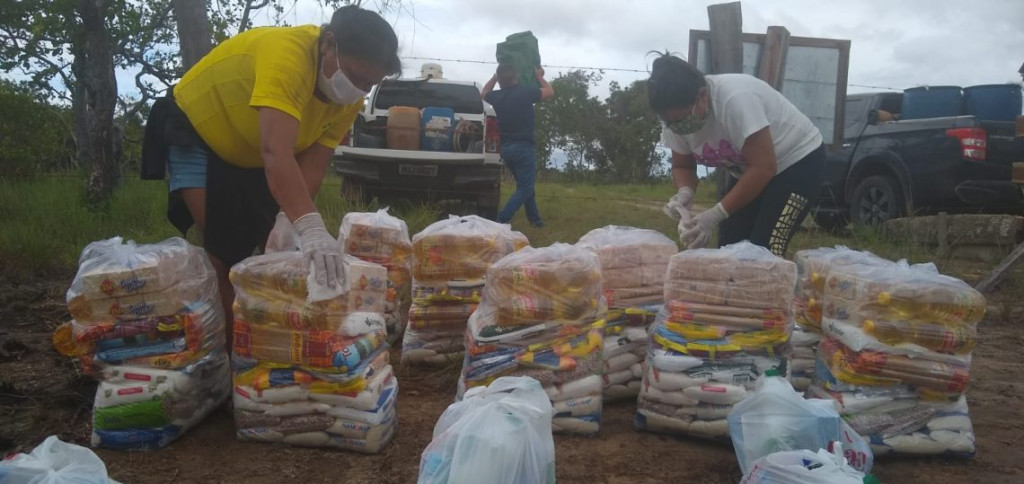
The Indigenous Council of Roraima (CIR) ended on Wednesday (6) the second stage of the campaign to distribute 178 basic food baskets, hygiene kits and hand sanitizer to the families of indigenous leaders who are at the sanitary barriers to protect the state's communities. The distribution began on May 22. The aid is for family members of the Territorial Protection Group (GPVITI) and the families of leaders who have organized themselves to carry out prevention monitoring in the fight against the new coronavirus.
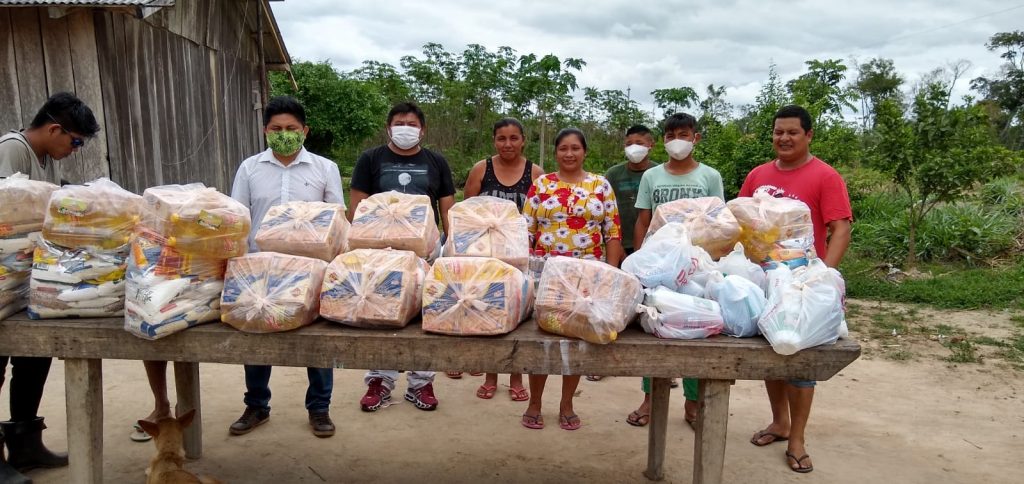
In order to protect the residents of the Nova Vida community, in the Amajari region, the volunteers of the protection group control the flow of people at the sanitary barriers that operate 24 hours a day. The guidance to stay in the communities during the pandemic period came from the Special Secretariat for Indigenous Health (SESAI), of the Ministry of Health.
According to the community leaders, once a week the exit is allowed for those who want to go buy food in the municipality, but it is only allowed to circulate with the necessary prevention measures. The initiative for control is the community's own. The groups are formed by parents, teachers, women, young people and leaders.
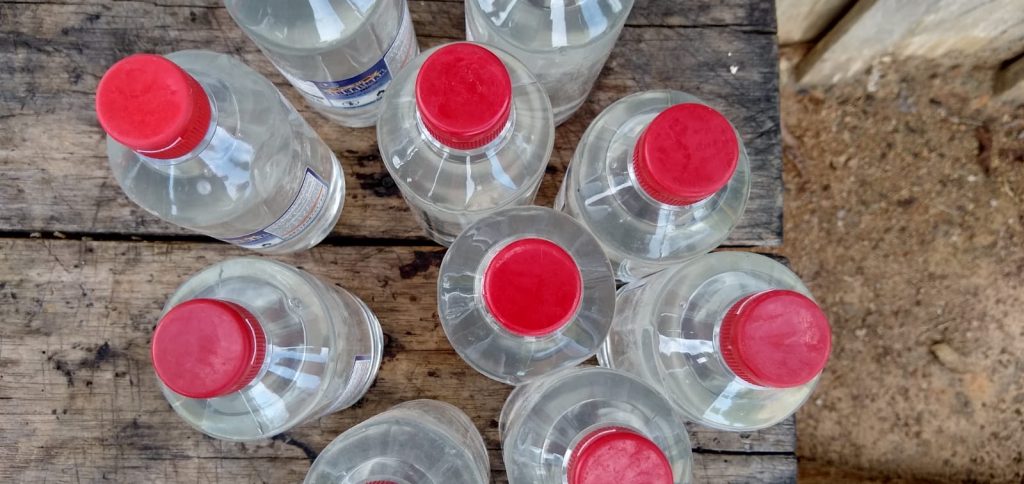
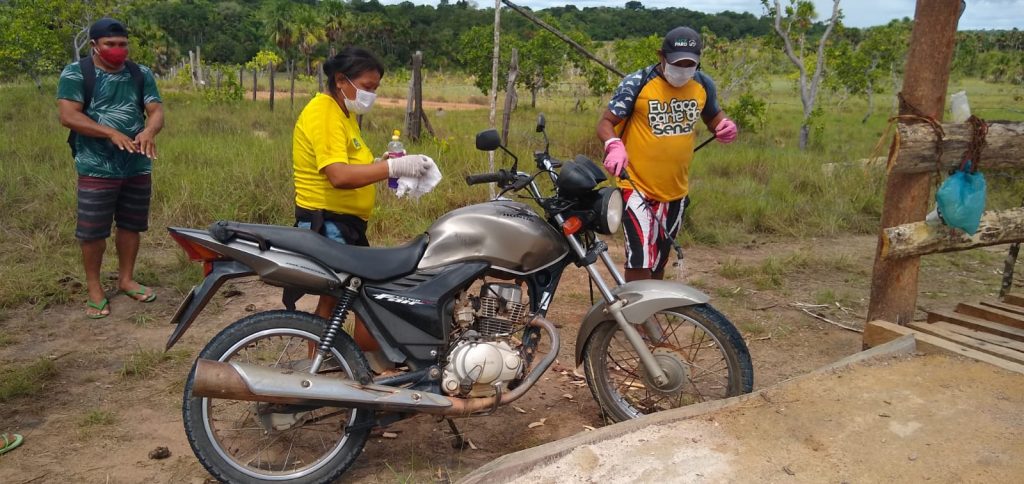
As soon as a resident arrives at the sanitary barrier, he has to wash his hands with soap and water to prevent the virus from entering the community. Motorcycles, bicycles and cars also undergo fumigation. The basic food baskets and hygiene kits taken by the CIR were sanitized by the members who were at the community barrier even before they were delivered to the families.
According to the general coordinator of the indigenous council of Roraima (CIR) Enock Taurepang, the baskets aim to serve families who have relatives working voluntarily at the sanitary barriers. "For a father of a family who goes out of the house one day, he stops going to the fields, stops fishing, hunting. That's why we thought of giving this support," he explained.
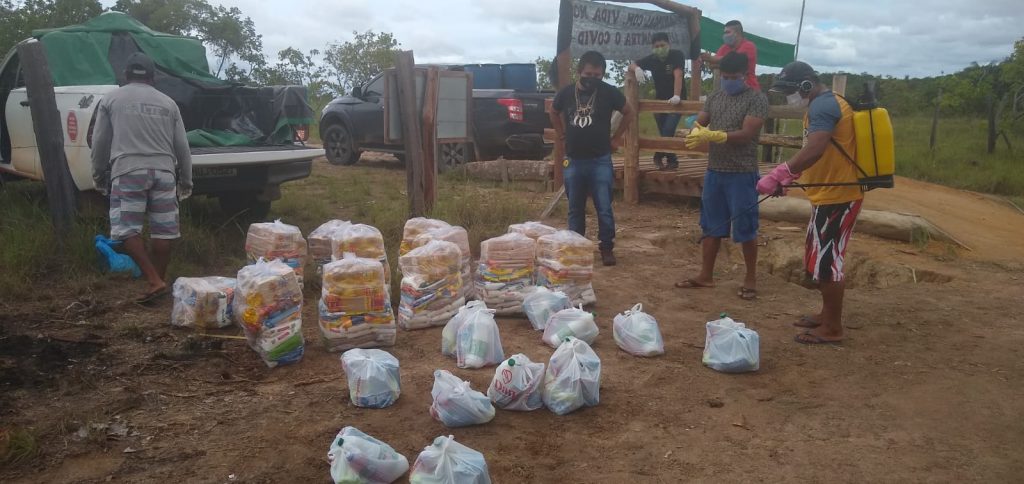
"The baskets come to help our families who are at home, while we are here fighting for our children and they hope that we will return healthy," said Auxiliadora Ribeiro, of the Macuxi ethnic group, who is deputy regional coordinator of women and is in this activity at the barrier.
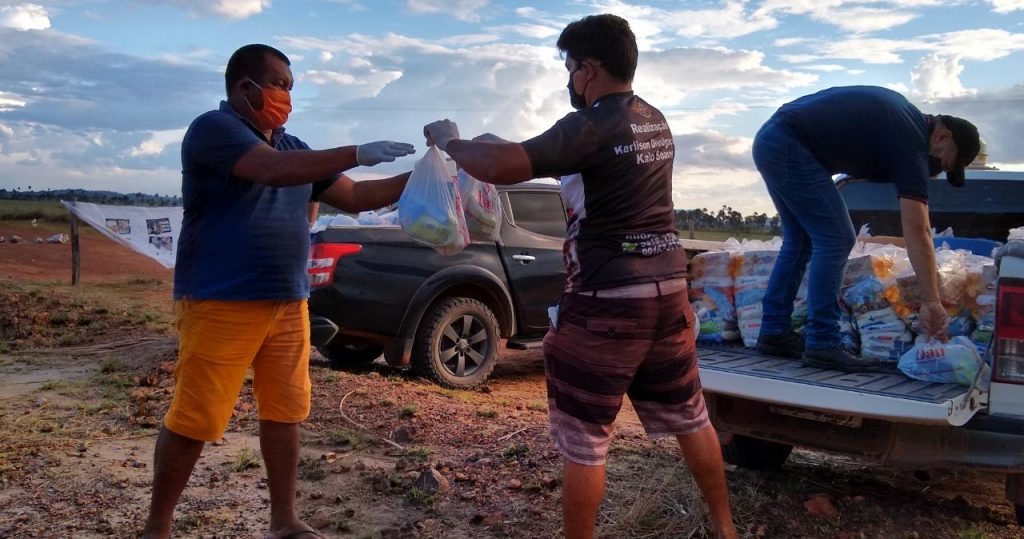
Another community that received donations in this second stage was the Jacamim community, Serra da Lua region, municipality of Bonfim. With all preventive measures such as the use of masks, gloves and alcohol gel to sanitize hands, the CIR team followed 160 km from Boa Vista to the community's sanitary barrier.
Upon arriving in Jacamim, the team was welcomed by the coordinator of the GPVITI, Benedito das Chagas. He painted his face with the annatto blessed by the shaman, which according to him serves to scare away the evil spirit, and then prayed in the baskets he would receive.
The community's sanitary barrier is made up of 12 GPVTIs. They take turns between day and night. In addition to restricting the entry of people who do not live in the community, residents also use traditional medicine as a means of prevention.
"Here we use traditional medicine and one of them is the annatto blessed by the shaman, this scares away the evil spirit and any disease. As for food donations, they will help us a lot," he said.
In the Tabaio region, the communities of Livramento, Anta I and Anta II, also received assistance. The Tuxaua of the Livramento Community Sebastião Malheiro recognized the importance of this help. "It is for the well-being of our community that we are here at the entrance of our community".
The sanitary barriers of the communities that received the aid supported by the CIR, ICS and COIAB were: Serra da Lua region: Alta Arraia, Manoá Pium Indigenous land, Muriru and Jacamim community.
Murupu Region: Anzol community and Serra da Moça indigenous land
Amajarí Region: Guaruba, Mutamba and Nova Vida
Photos: Márcia Fernandes