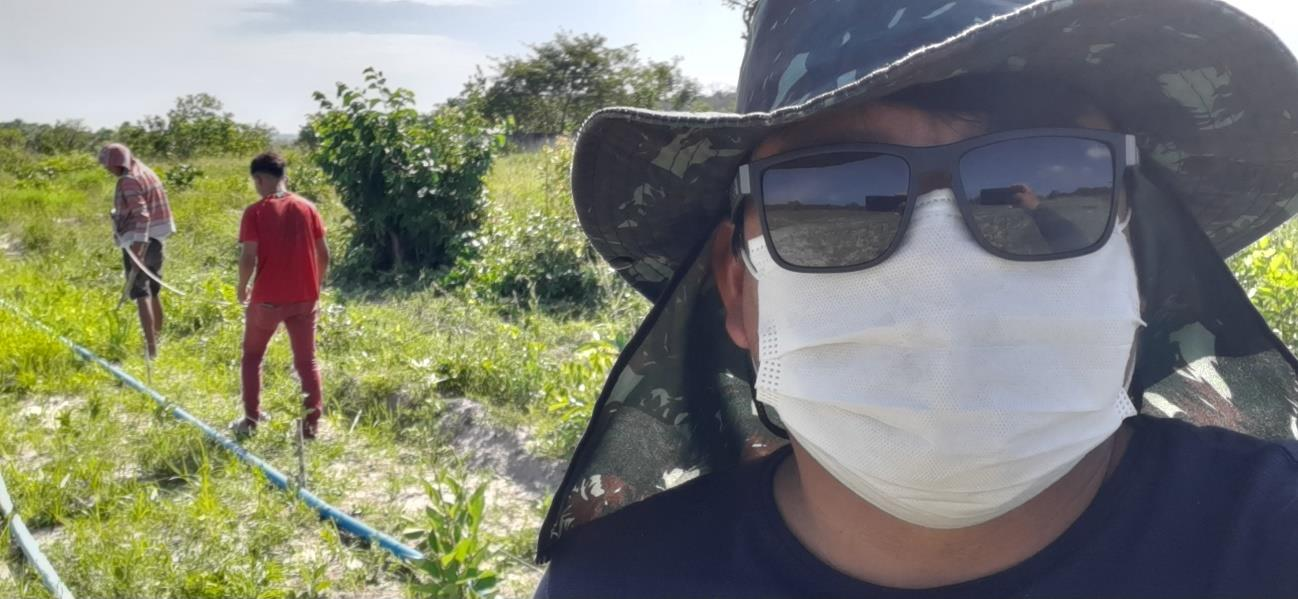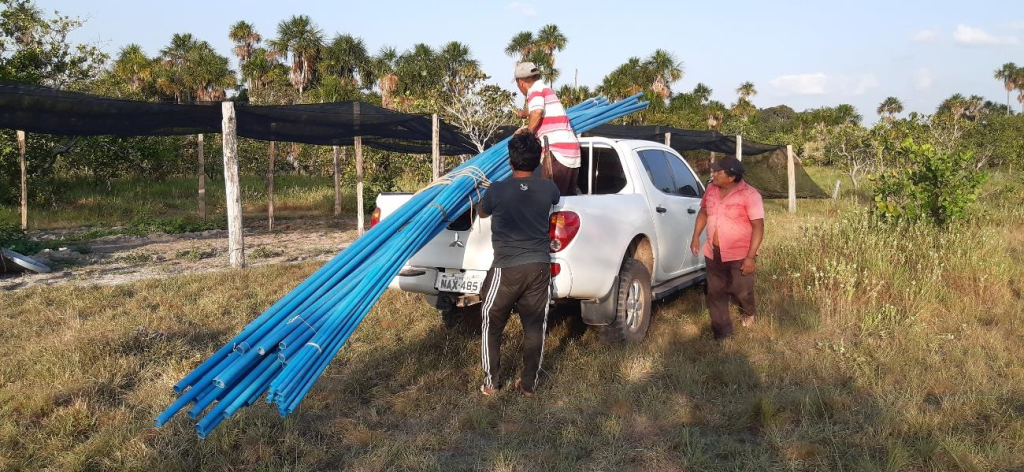
The Nova Vida and Aningal communities, both in the Aningal Indigenous Land, in Roraima, benefited from the installation of irrigation systems for organic agricultural production. The activity took place between January 25 and 27 through the Bem Viver dos Povos Indígenas de Roraima project.
The actions, which are part of the implementation of the Territorial and Environmental Management Plan (PGTA) of the Aningal Indigenous Land, were defined in 2020. The delivery of materials and installation in the field was carried out with attention to Covid-19 prevention protocols, such as the use of masks and hand sanitizer by the participants.
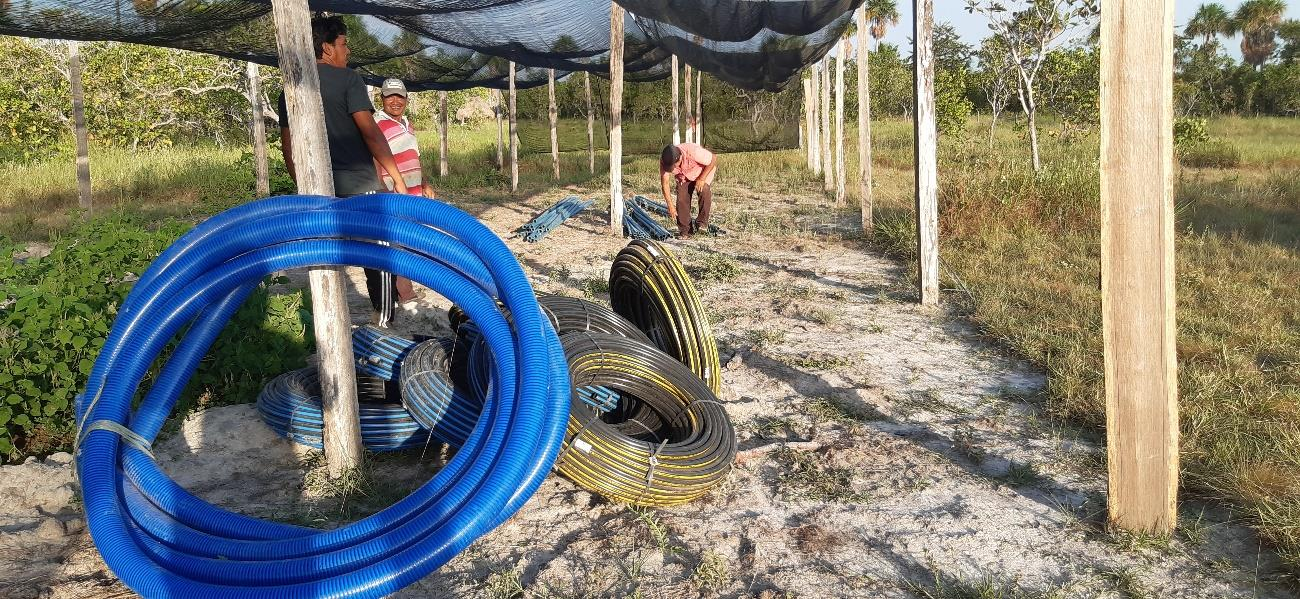
In the first stage, the Nova Vida community received the installation of the irrigation system for seedling nursery and banana planting. Subsequently, the Aningal community also benefited from the irrigation system for watermelon production, which also included the installation of a water tank.
According to agronomist Giofan Mandulão, who accompanied the activities, the communities were heard before the field work. "First we started by recognizing the area, seeing the needs of each community, since the choice of which type of crop to work with is up to the community, and it is also made from the previous study," he said.
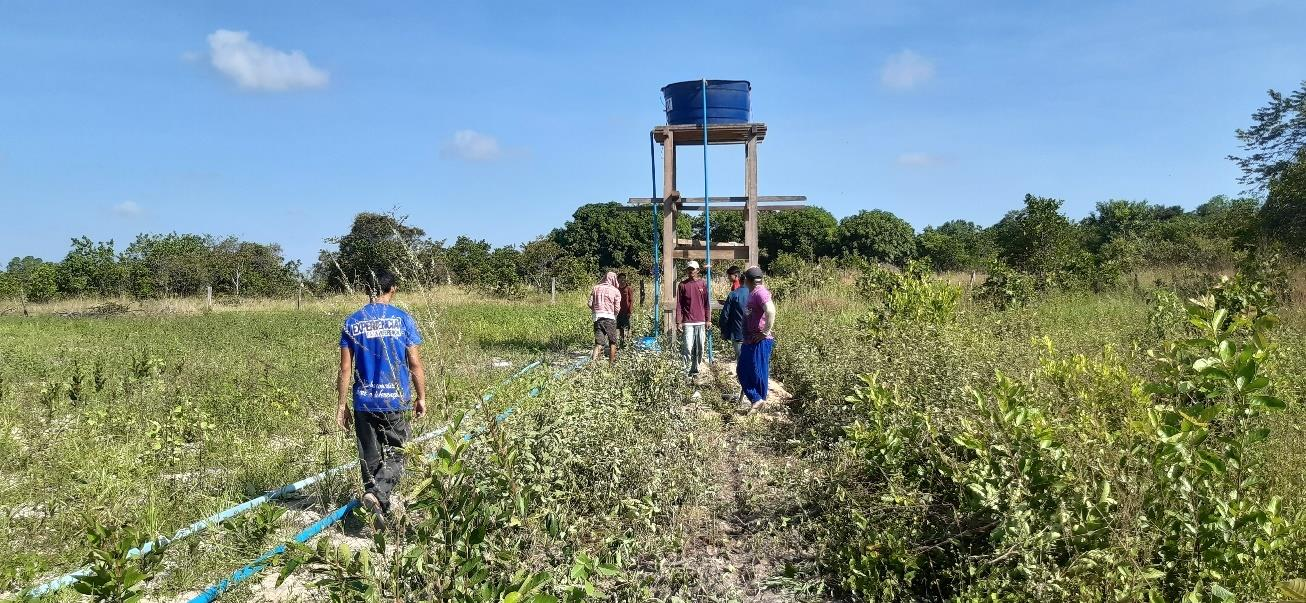
The tuxauas of the respective communities and residents, most of them young people, participated in the activities. One of them was the communicator Vanderson Wapichana, from the Aningal community. He highlighted the importance of supporting the community, especially through the assistance of a professional in the field of agronomy.
"Previously we did not have a professional in the area of agronomy, now with technical monitoring, we will work first with watermelon, and we are committed to making it work. " The tuxaua of the Aningal community, Raildo Sapará, always seeks opportunities for youth who have no income and this proposal for organic farming is feasible to be implemented," he said.
The Bem Viver Project is promoted by the International Institute of Education of Brazil (IEB), Nature and Culture International (NCI), and the Indigenous Council of Roraima (CIR) and with support from USAID, and aims to improve territorial governance and environmental management of indigenous lands in Roraima and to promote income generation through the sustainable development of the cattle production chain, conserving its territory.