
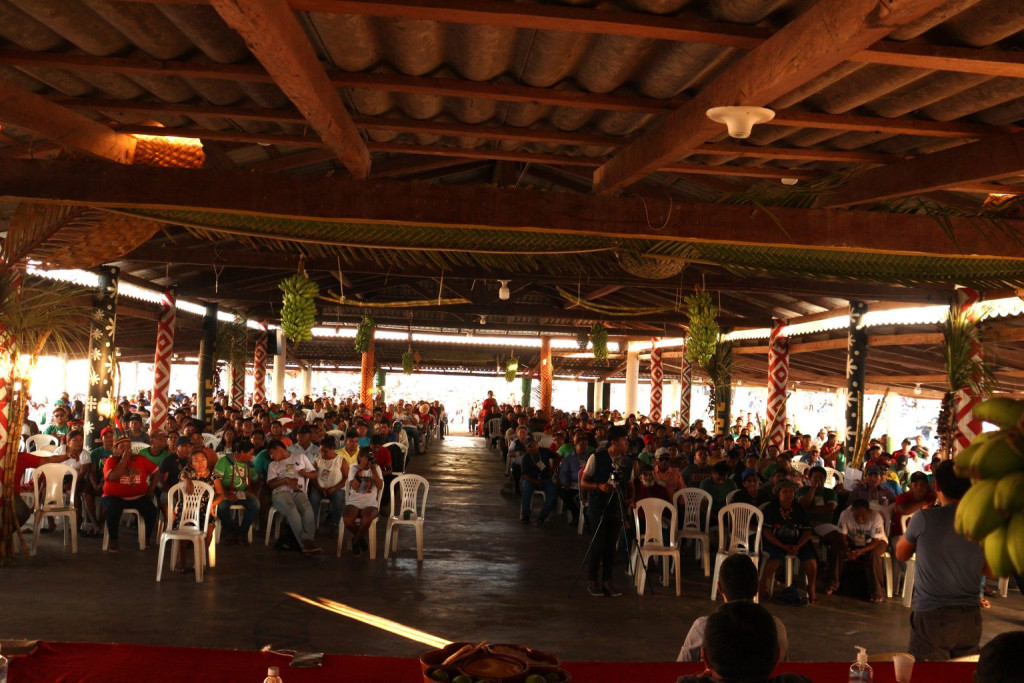
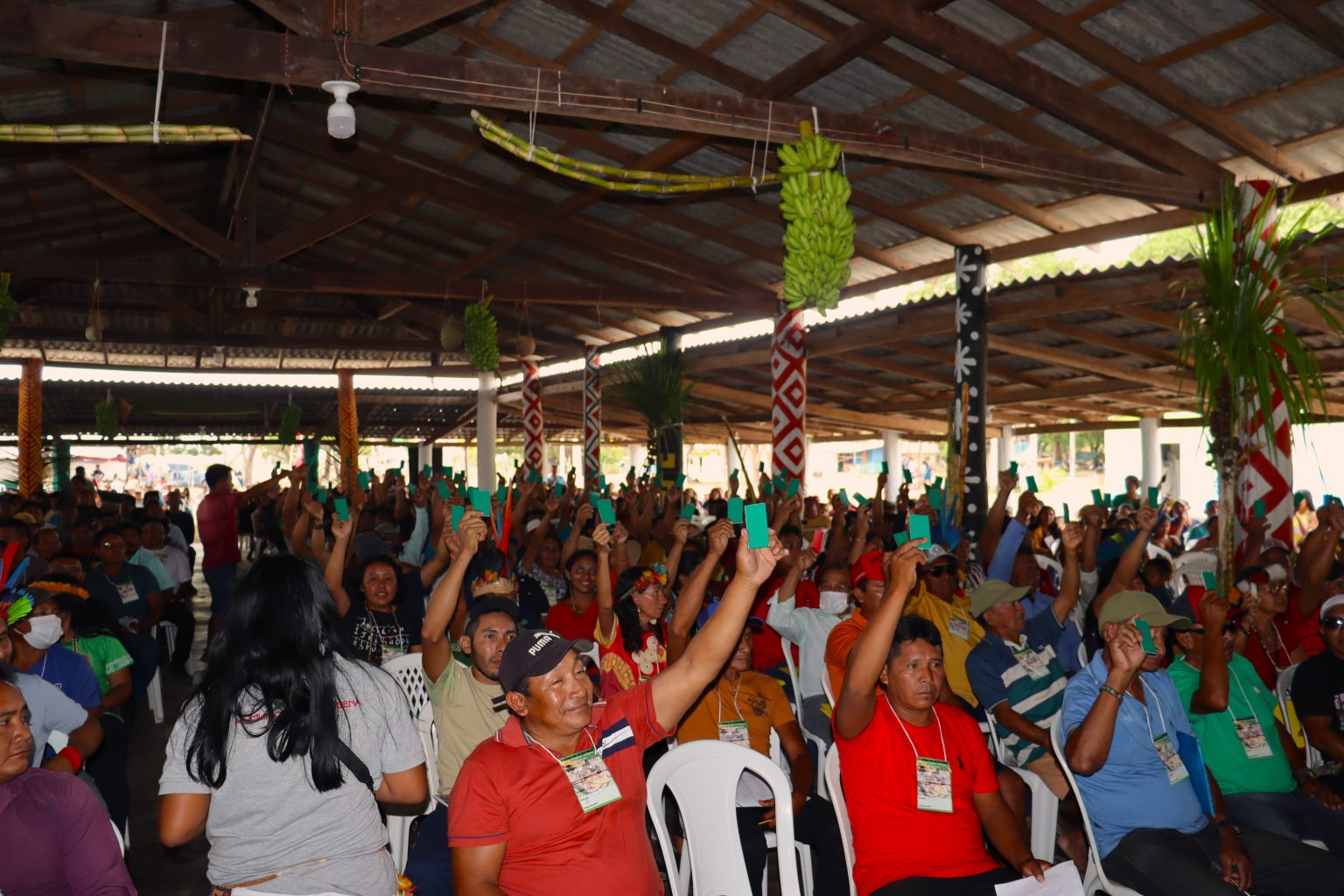
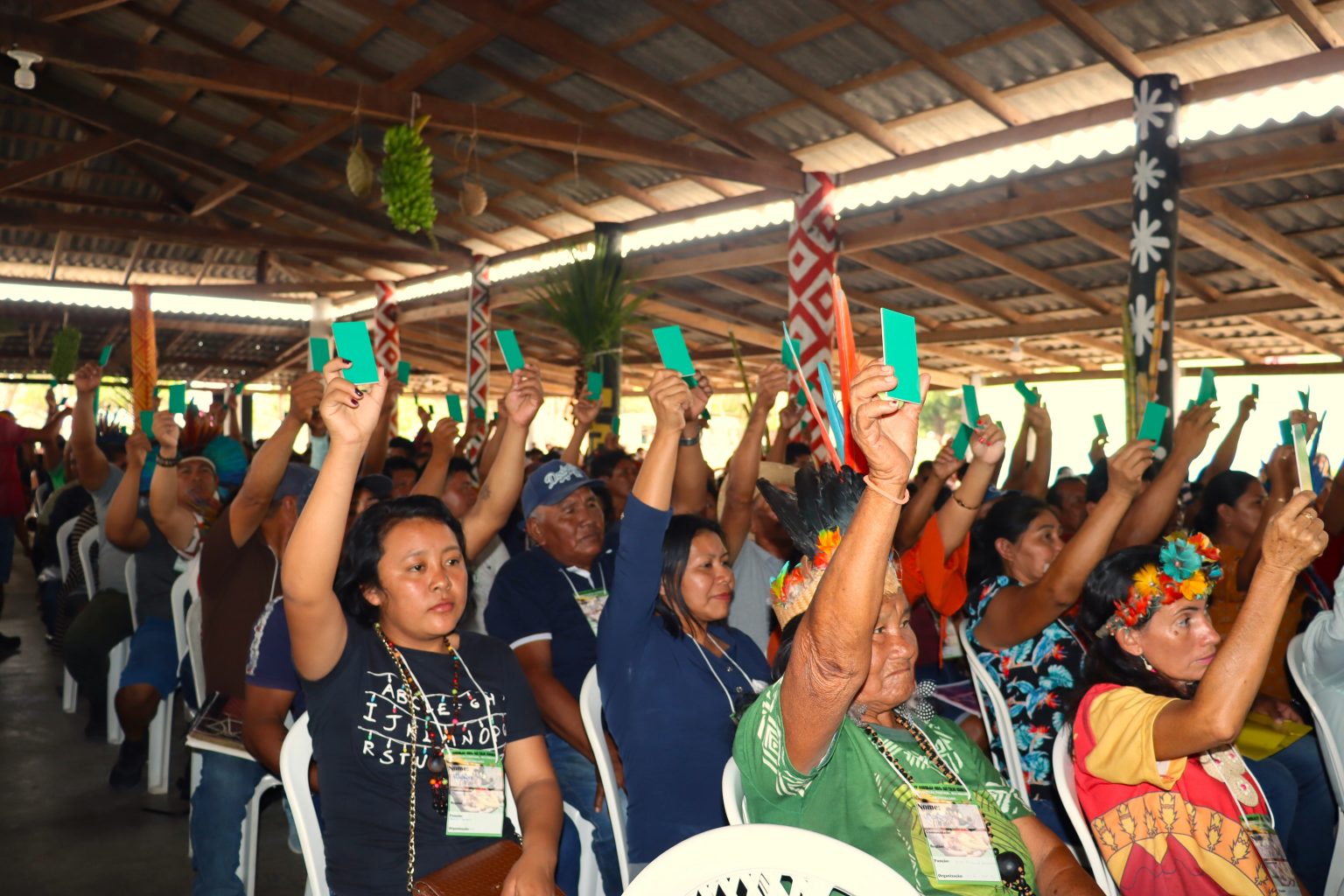
Between March 11th and 14th, the 52nd General Assembly of Indigenous Peoples of Roraima was held, with the theme: "Territorial Protection, Environment and Sustainability", at the Lago Caracaranã Regional Center, Raposa region, Raposa Serra do Sol Indigenous Land, municipality of Normandia.
The event was attended by 2,500 indigenous people from the following groups: Macuxi, Wapichana, Taurepang, Wai Wai, Ingaricó, Patamona, Ye’kuana, Sapará, and Yanomami. During the assembly, there was extensive discussion, evaluation, and questioning about the situation of the indigenous peoples of Roraima. The first day included the selection of...new secretaryGeneral of the Indigenous Women's Movement of the Indigenous Council of Roraima (CIR).
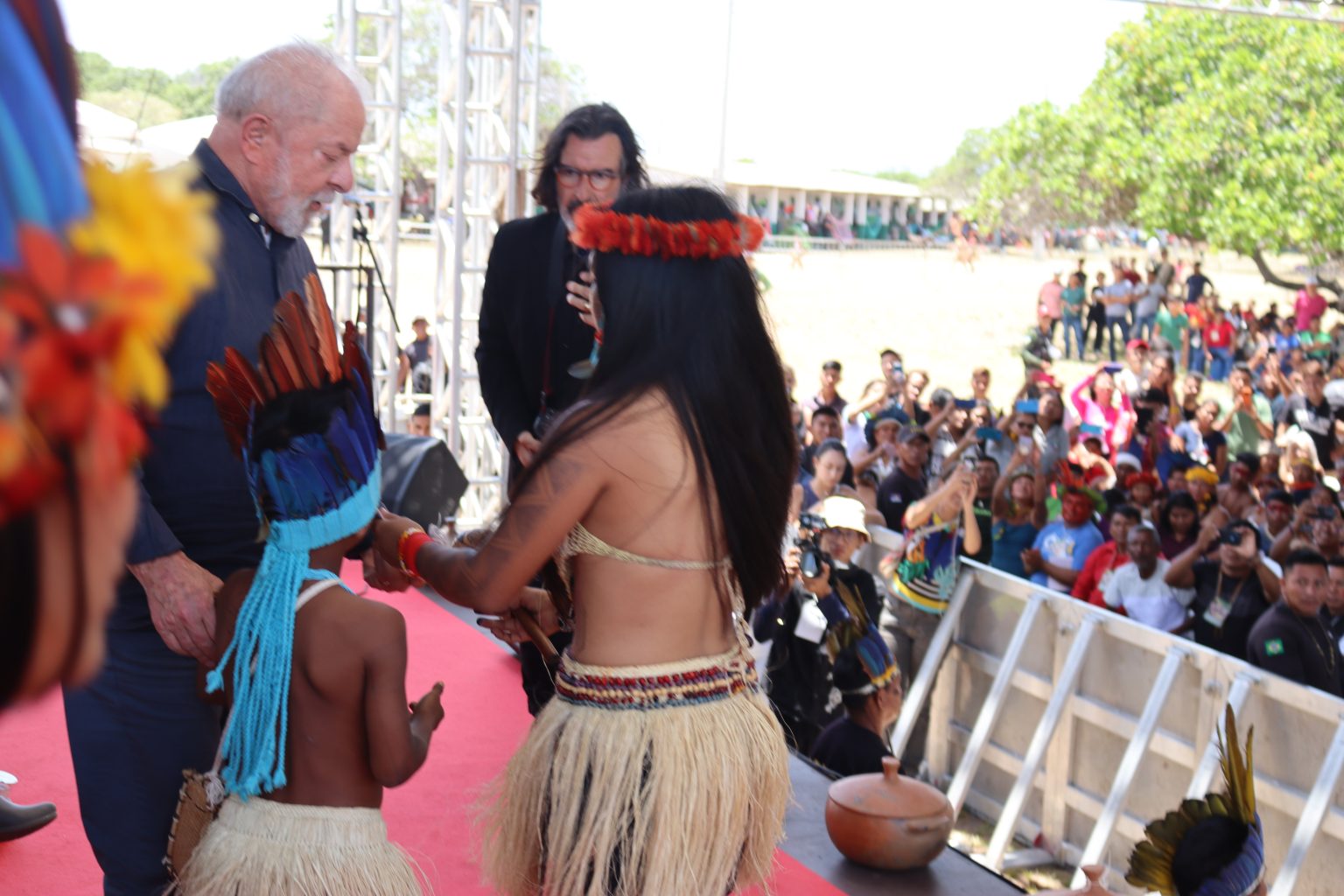
One of the landmark and historic moments, for the first time a President of the Republic participates in an indigenous assembly in Roraima. He was there on the third day of the assembly(13) accompanied by his delegation of state ministers. More than 3,000 indigenous leaders, partners and guests followed the participation of President Luiz Inácio Lula da Silva in the assembly, who had already been to the Raposa Serra do Sol Indigenous Territory 13 years ago.
On that occasion, a letter outlining the demands of the indigenous peoples of Roraima regarding health, education, traditional medicine, territorial protection, the removal of illegal miners, the appreciation of their culture, traditions, territory, and indigenous sustainability was handed to the president.
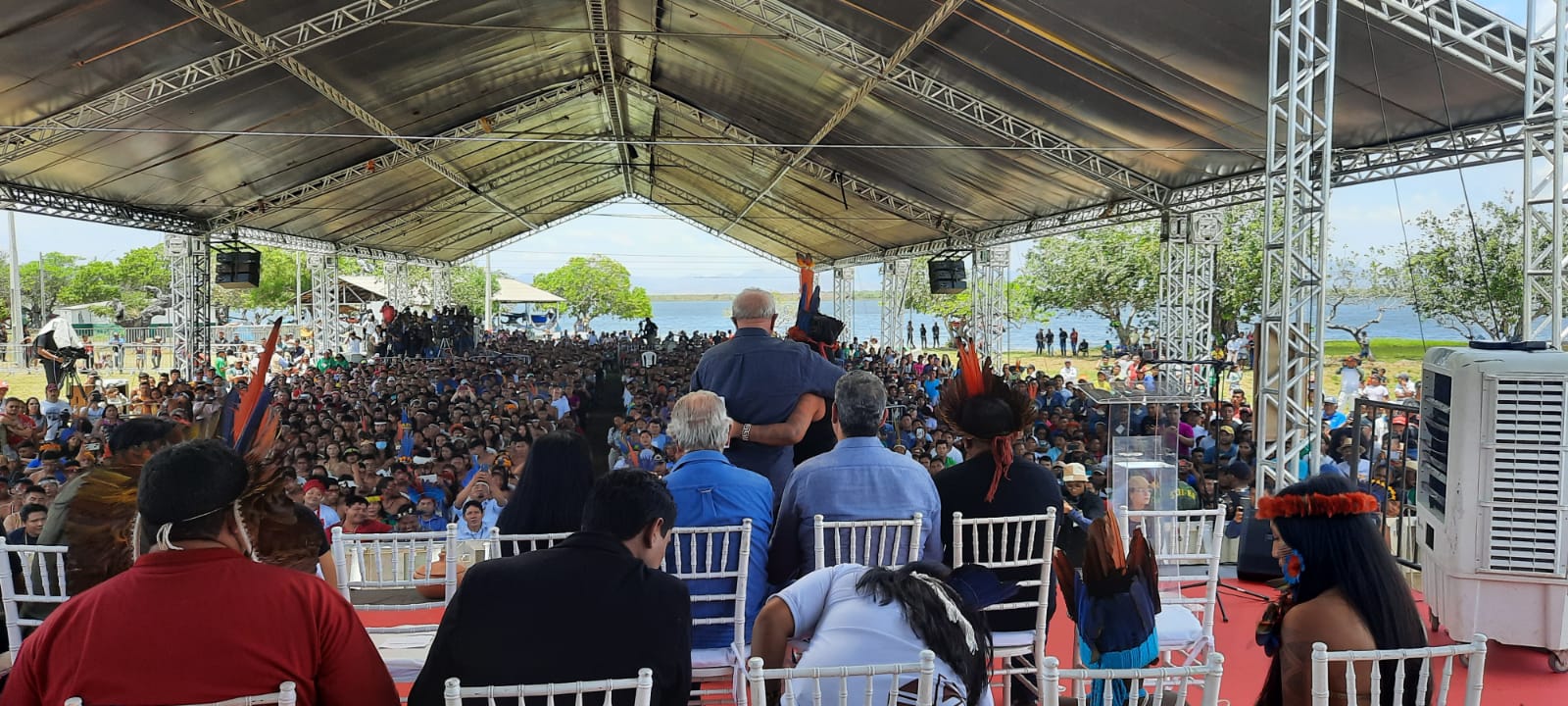
The General Coordinator of the Indigenous Council of Roraima (CIR) assessed the context positively. It marks a journey of more than 50 years towards strengthening the indigenous movement. “We consider it very positive. Because it was the moment to bring the president into our debate, in which we also very wisely discussed three major themes: territorial protection, the environment, and sustainability. We managed to get Brazil and the world to pay attention, while we, the indigenous peoples, continue to organize ourselves, growing to strengthen the politics of the indigenous movement and continue to achieve, so that the Brazilian State respects the life, dignity, and freedom of indigenous peoples,” highlighted the coordinator.
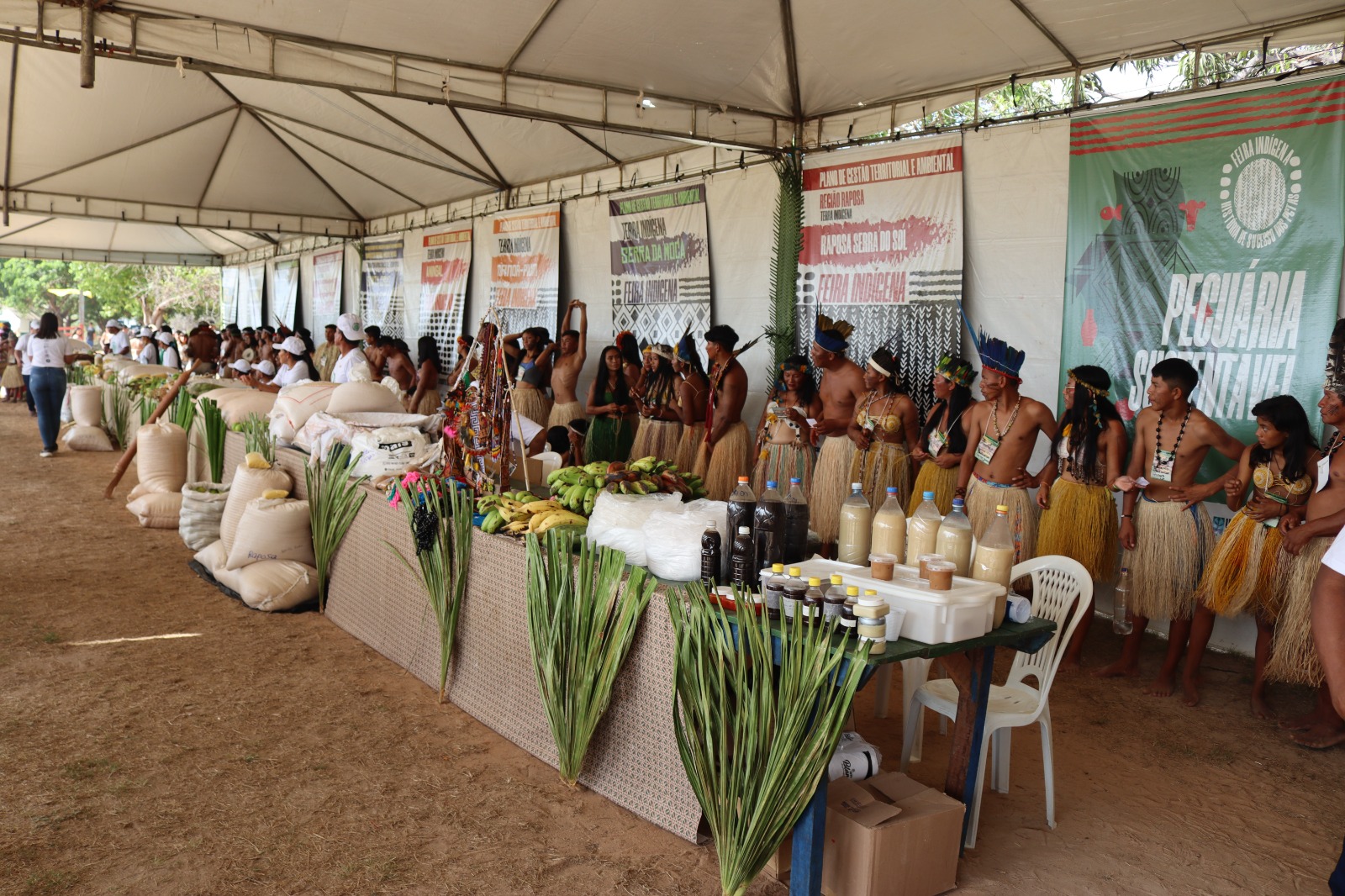
The President visited the indigenous organic produce fair, a result of the Territorial and Environmental Management Plans (PGTA) for the Indigenous Lands of Roraima. He was received by Sineia Wapichana, Environmental Manager of CIR, and a group of indigenous producers.
"He praised the stance of the leaders for conducting their organic artisanal production together with their partners, without public investment, and also committed to activating investments in productions within the Indigenous Territories. But first he will listen to all the leaders," said Sineia Wapichana, who presented all the products of the fair to President Lula and his entourage.
The assembly also featured the distinguished participation of the president of the National Foundation for Indigenous Peoples (Funai), Joenia Wapichana, as well as Minister Sonia Guajajara and other ministers.
In the end, the leaders of the Amajarí, Tabaio, Murupu, Serra da Lua, Serras, Alto Cauamé, Surumú, Baixo Cotingo, Raposa and Yanomami regions approved a document outlining the main demands and priorities of the indigenous peoples.
The letter
In the 15-page thematic document: TTerritory, Demarcation and Environment, Well-being and Sustainability, Indigenous School Education and Health, Justice and LawIndigenous leaders participating in the assembly began by requesting that the President of the Republic coordinate with the Supreme Federal Court (STF) to urgently resume the judgment of the "Marco Temporal" (Time Framework), which was suspended in 2021, as it puts hundreds of lives of indigenous peoples in Brazil at risk.
The Yanomami/Ye’kwana Indigenous peoples are facing the largest invasion in their history. The removal of illegal miners from the Yanomami Indigenous Territory must be a priority and can no longer be postponed, and they are demanding punishment for those who support illegal mining activity. “We ask that the Ministry of Justice and the Federal Police act to hold those involved accountable, including former President Bolsonaro and the Governor of Roraima, Antônio Denarium, both of whom have supported the miners and encouraged the invasions. We are against amnesty for the miners. Mining on Indigenous land is a crime,” says an excerpt from the letter.
The assembly assessed that the Federal government needs to prioritize the demarcation and regularization of all indigenous lands in Roraima and Brazil, and develop a plan to curb and remove all invaders from the territories. “Our lands are necessary for our lives, culture, customs, and traditions. It is on them that we cultivate our crops, which are extremely necessary for our collective well-being.”
The Brazilian State's obligation does not end with the demarcation or homologation; this recognition only begins a new phase in the lives of indigenous peoples. All 32 indigenous lands in Roraima have a Life Plan, and 8 have already been implemented. “It is in the Territorial and Environmental Management Plans (PGTA) that we discuss, evaluate, and deliberate on our choices for the future of our communities and forms of protection and production in our territories. We also have our Consultation Protocols, which must be recognized and respected by the government whenever it adopts any administrative or legislative measure that affects our lives and our territory. The government can no longer choose the development model for indigenous peoples.”
Indigenous school education and health deserve special attention from the Federal government. The indigenous movement supports and recognizes the demands and complaints made at the 1st Unified Assembly on school education and health of the Indigenous Movement of the State of Roraima. Among these demands, they request that the Indigenous Health Secretariat (SESAI), the Special Indigenous Health District of Eastern Roraima (DSEI/Leste/RR), the Ministry of Education and Culture (MEC), and the Ministry of Health (MS) address and prioritize the demands of the 1st State Assembly on Indigenous Health and Health of the Indigenous Movement of Roraima.
They consider it important to create a Secretariat for Indigenous School Education, guaranteeing the right of indigenous peoples to participate in bodies that control, monitor, and decide on this policy, in order to facilitate coordination between state and municipal governments and the federal government.
Finally, through the letter they expressed solidarity and alliances with other indigenous peoples who remain in the struggle for the demarcation and homologation of their territories; with those who face the violence of invasions on their lands, threats and assassinations; and with the peoples who live in voluntary isolation. "We demand that the new Federal Government immediately resume, without delay, the policy of demarcation and territorial protection until all indigenous lands in Brazil are recognized, free, and their peoples living in peace according to their own forms of social and cultural organization," they concluded.
FINAL LETTER FROM THE 52ND AGPIRR_OFFICIAL (1)
Letter delivered to President Lula
Photos: Wakywai Network.