
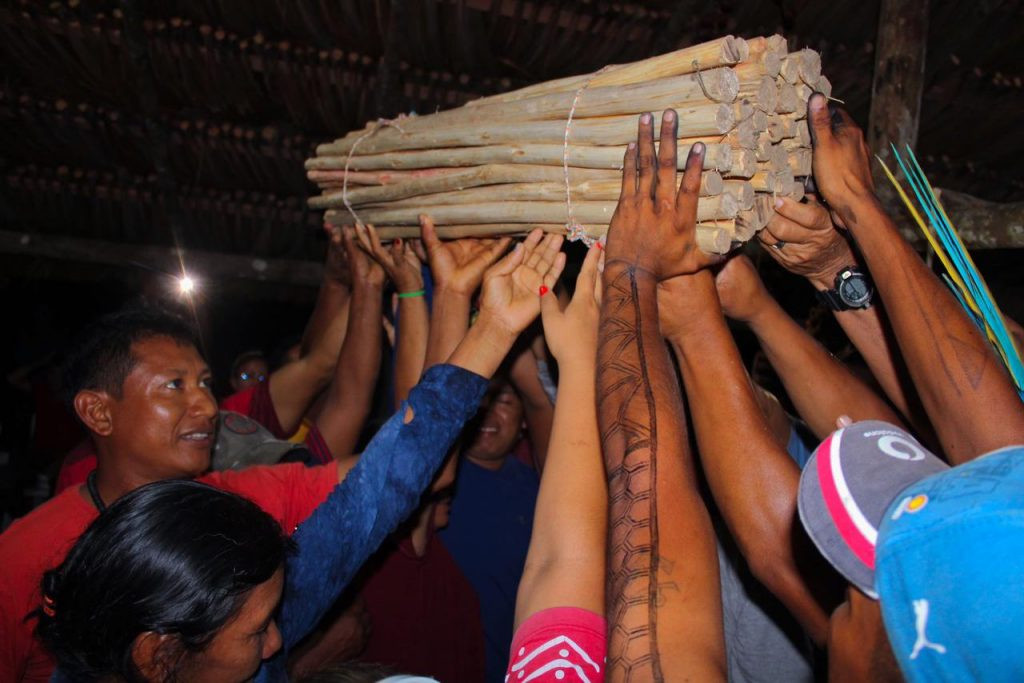
With a beam of stick, a symbol of union and resistance of indigenous peoples, the II Expanded Meeting of the Indigenous Council of Roraima (CIR), ended this Thursday (7), with an act of resistance in defense of indigenous rights, in addition to the approval of proposals in the territorial sphere, health, education and sustainability.
The Expanded with the theme "Reclaiming Our Territory to Guarantee Life on the Planet", took place over three days,5 to 7, bringing together counselors, indigenous leaders and guests, in the Arapuá indigenous community, Arapuá indigenous land, municipality of Alto Alegre. A territory of struggle, resistance and conquest.
On the last day, the legal advisor of the Indigenous Council of Roraima (CIR), Ivo Makuxi, addressed the evaluation of the Time Frame and analysis of the presidential veto. He warned that the ruralist caucus is trying to overturn the veto, scheduled to be considered in the Federal Congress, on the 14th.
These are challenges that we have before the Brazilian State. In the face of these attacks, where they try to take away our original rights," said Makuxi.
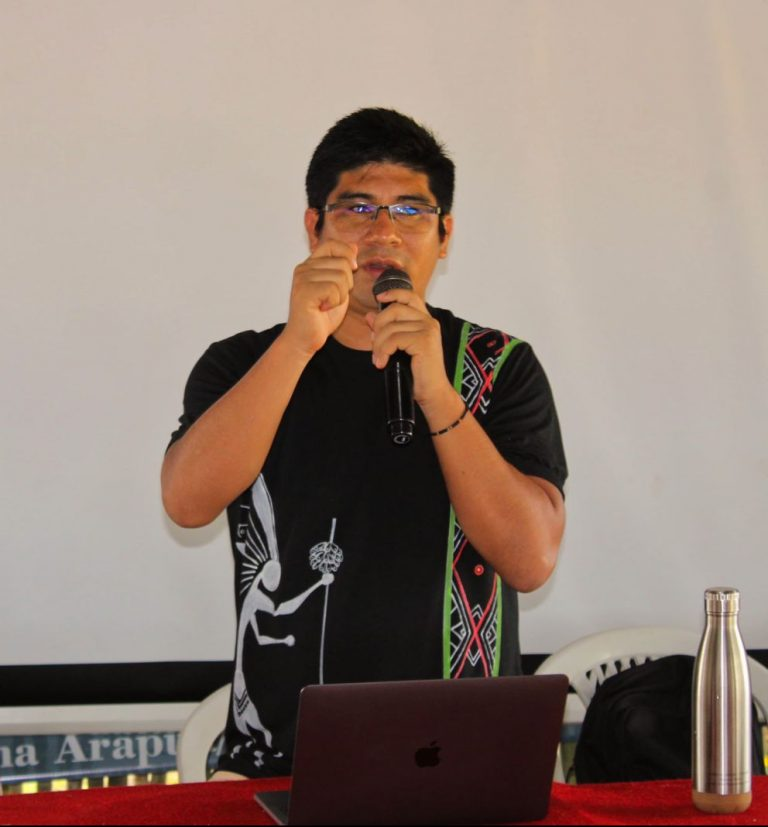
The cases of indigenous lands, with requests for demarcation and restudy of the land, were also addressed. Among the indigenous lands, he mentioned Arapuá, Tabalascada, Jacamim, Serra da Moça, and others. Lázaro Wapichana, tuxaua of the Pium indigenous community, Manoá Pium indigenous land, Serra da Lua region, reported that the areas near the community are deforested for grain plantation.
This is very sad for us, to see our caims, mirixis, our area from which we make our living, being destroyed by farmers to plant grains," said Wapichana.
The Indigenous Council of Roraima (CIR) is a historical landmark, a symbol of struggle and resistance, which has supporters such as the Indigenous Missionary Council (CIMI), which participated in the table with the presence of the regional coordinator, Gilmara Fernandes. Fernandes congratulated the actions of the CIR, in favor of the defense of indigenous rights, citing as an example the mobilizations against the Time Frame and Free Land Camp (ATL), which in addition to CIMI, had the support of other partner institutions.
"The actions you do at the grassroots are essential to strengthen the struggle, to change the scenario that exists in Roraima, and especially the autonomy and sustainability of indigenous peoples," said Gilmara.
The situation of the Yanomami people, reported by Júnior Hekurari, is nothing new. For a long time, the president of Urihi has denounced the neglect of Yanomami health and territorial security as a result of the invasion of illegal miners who are returning at full speed.
"Urihi is without support, we have the support of Cir who delivered tools, my relatives did a lot of farming. But we are still vulnerable, in August I was in the community, took pictures, and brought with me children in a state of malnutrition," said Júnior.
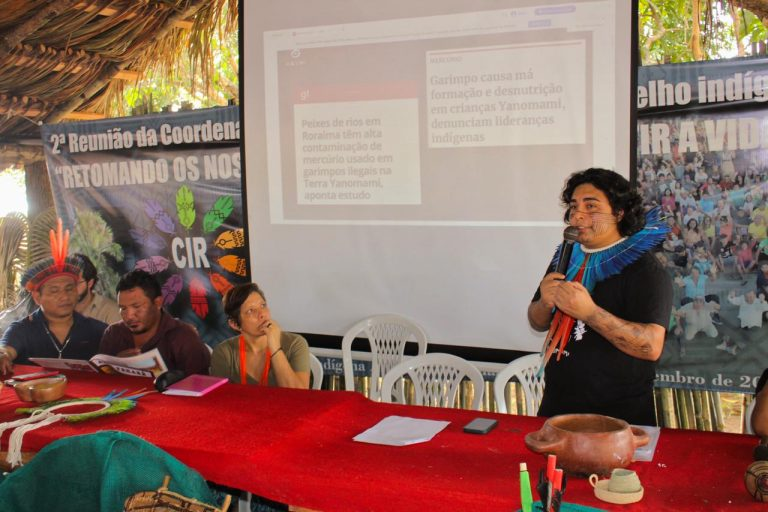
The deputy coordinator of COIAB, Alcebias Constantino, spoke of the incidences he participated in Brasília and other states, defending original rights. He also explained about the challenges, which can still be faced by the lack of support in the national congress.
We need to be strong my relatives, in congress the majority are in favor of the Time Frame and agribusiness. And we no longer have Deputy Joenia Wapichana to defend us," said Sapará.
Fifty years ago, the indigenous peoples of Roraima did not have differentiated education and health, conquered thanks to the struggle and union of all, as highlighted by Edinho Batista, general coordinator of the CIR.
To continue conquering our spaces, we need to be firm at the bases, an example was the mobilization that we did not ask for anything from the government, and it increasingly shows our strength and unity", concluded the coordinator.
Students from the Indigenous Center for Formation of Raposa Serra do Sol Culture (CIFCRSS), were also at the Ampliada, presenting the activities developed on site, with the purpose of training new indigenous leaders. All knowledge acquired at the Center is taken to the base.
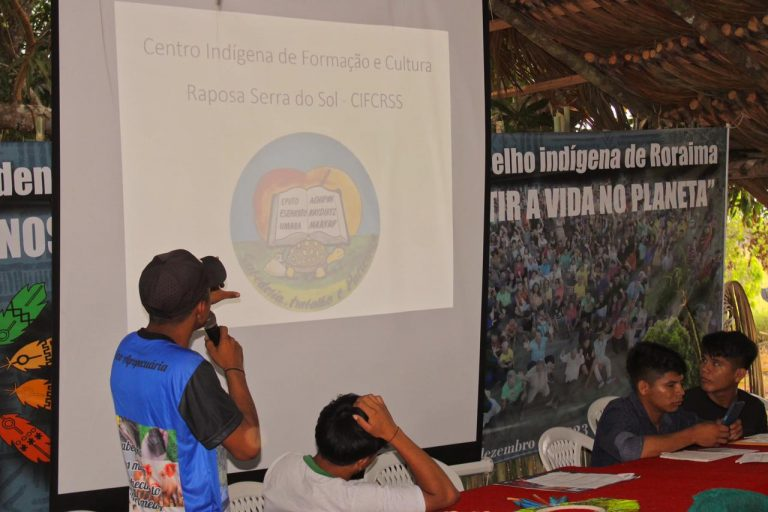
Currently, the CIR has made inquiries in the Ministries of Education (MEC), Ministry of Agrarian Development (MDA) and State Department of Education, to seek strengthening of the place, such as the restructuring of the Center and the approval of the Pedagogical Plan (PP), and the right to a diploma, for a differentiated education, a symbol of struggle and resistance.
Brazil is indigenous land, said the deputy coordinator of the CIR, Enock Taurepang, and stressed that it is necessary to continue fighting for the rights to life and territory, and not to bow our heads in the face of intimidation and difficulties.
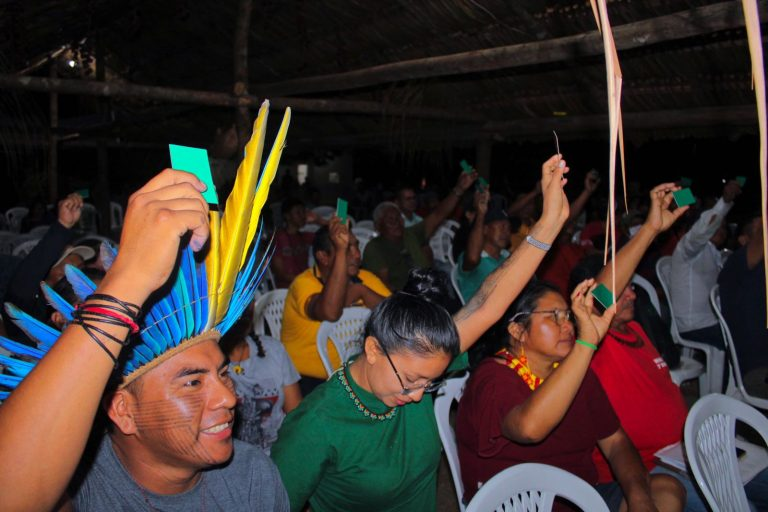
In the end, the councilors approved the dates of the first extended meeting of 2024, to be held in the Arapuá indigenous community in July, and on March 15 an extraordinary assembly to reformulate the bylaws of the CIR.
In addition, they approved deliberations, such as training of indigenous filmmakers, and support for communicators, GPVTI, Training Center and legal operators, and the Rutu indigenous fund. They also approved advocacy in Brasilia against bills that violate indigenous rights, support for the Yanomami people, and other actions.
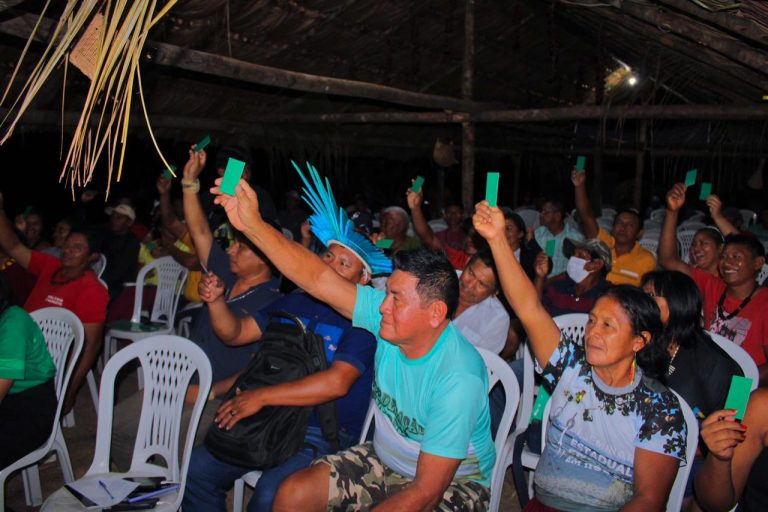
They approved the final letter of the II Expanded containing support for the demarcation of the Arapuá indigenous land, reinforcing the other existing requests in Roraima, and other contexts at the local, regional and national levels.
Edinho Batista, general coordinator of the CIR, thanked everyone for their presence in that sacred territory.