
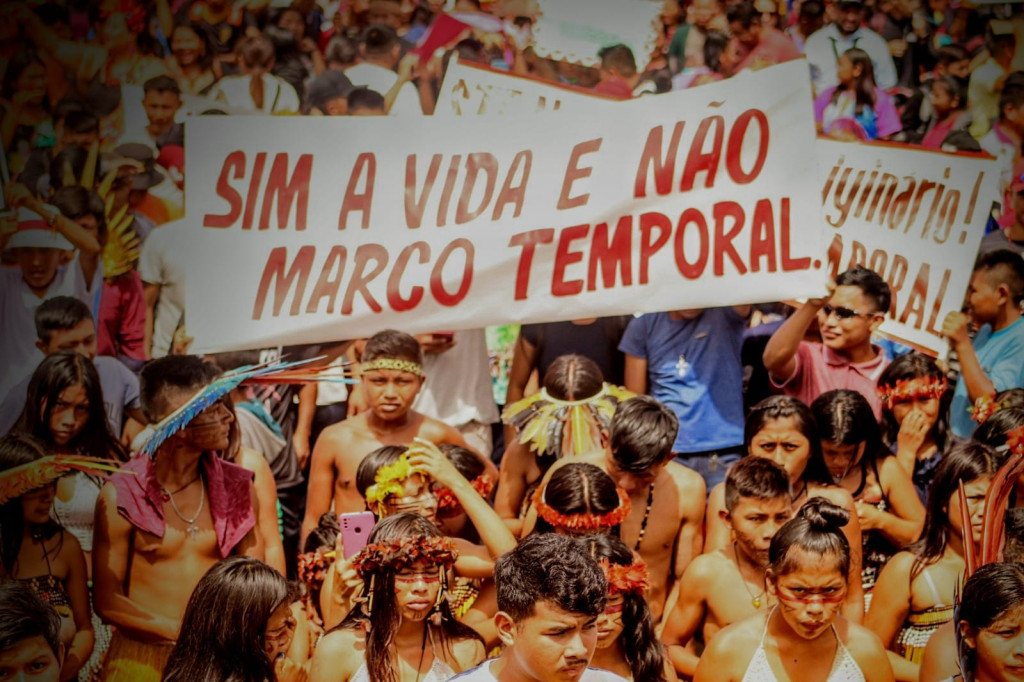
In Roraima, the mobilization against the temporal framework brought together more than 4,000 indigenous people in Ovelário Tames Square, in Boa Vista, from June 5th to 9th, consolidating itself as one of the largest indigenous mobilizations in the state. There was also a mobilization at the Makunaima Center, in the São Marcos Indigenous Land.
For five days, indigenous peoples Wapichana, Macuxi, Taurepang, Patamona, Sapará, Yanomami, Ye`kuana, Wai-Wai and Ingaricó, both from the regions and those living in the city of Boa Vista, marched through the main streets of the Roraima capital against the temporal framework, but also against Bill No. 490/2007, which is now in the Senate called 2903/2023.
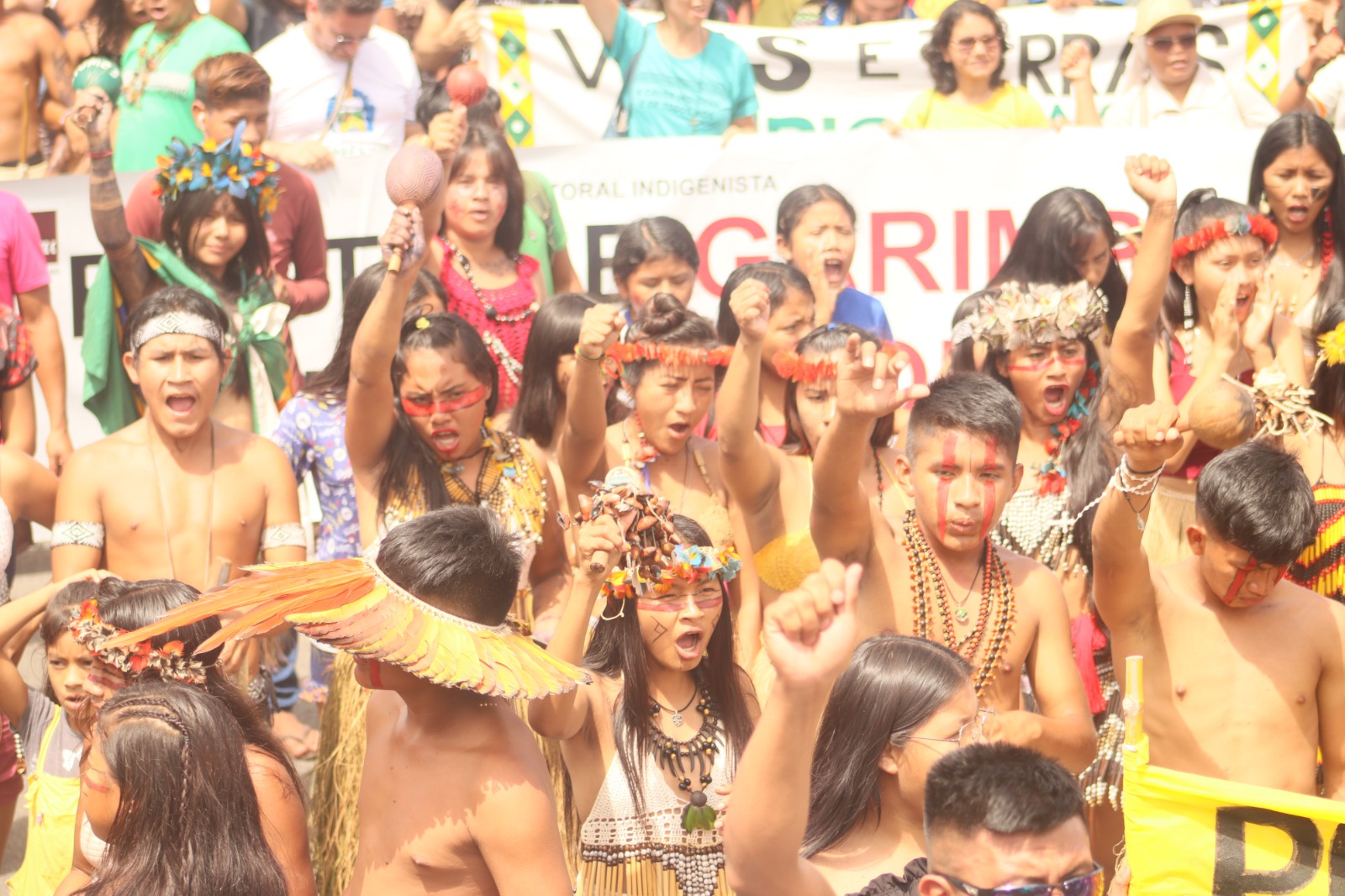
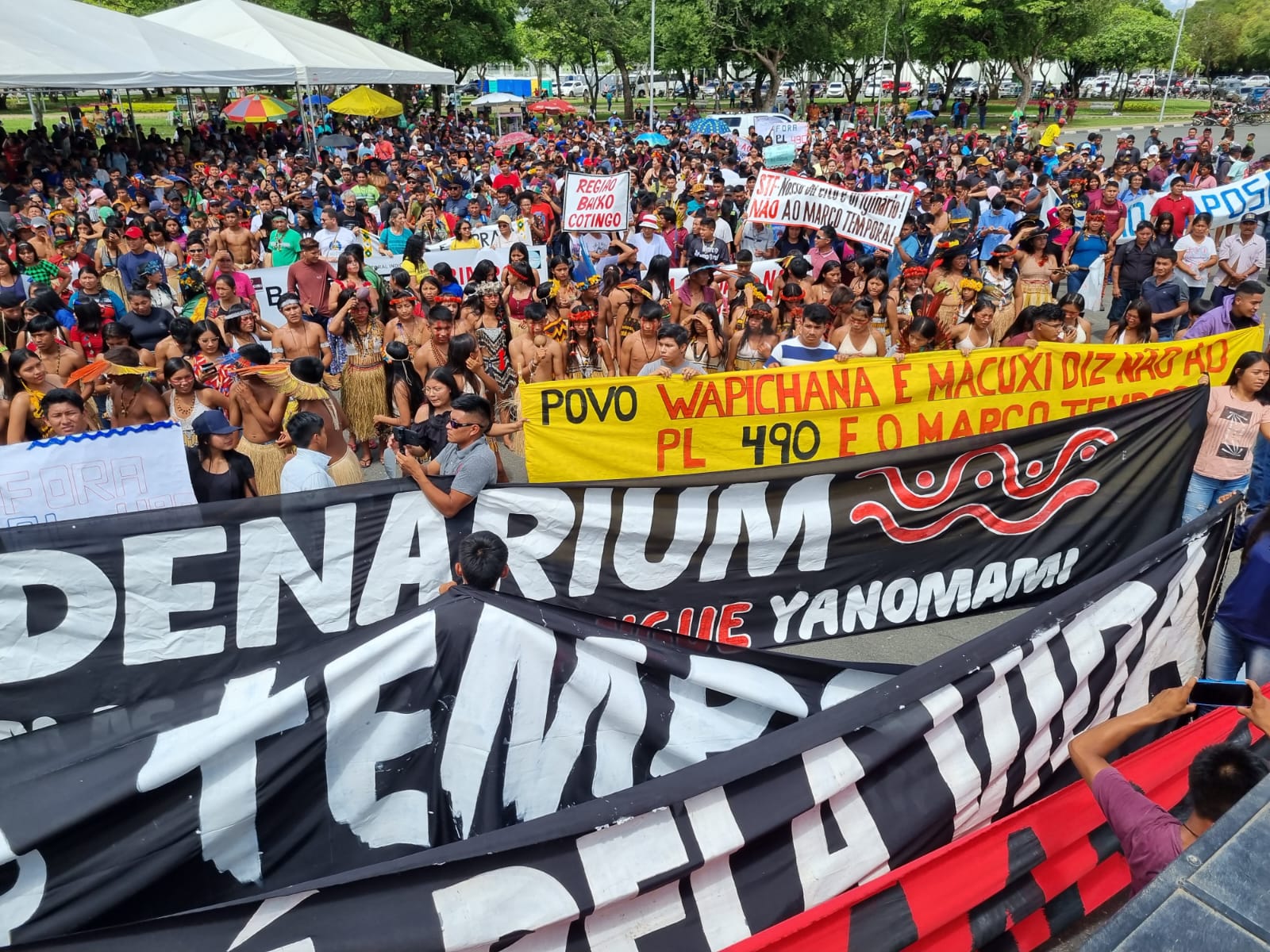
Indigenous peoples of Roraima march against the temporal framework. Photos: ASCOM/CIR
The trial of Extraordinary Appeal 1,017,365, known as the "time frame" case, on June 7th at the Supreme Federal Court (STF), was the main focus of the mobilization. On that day, a large screen was set up to follow the trial, which resulted in another victory, with the dissenting vote of Minister Alexandre de Moraes.
The mobilization also recalled the violence and impacts on territories in the state, such as illegal mining, the expansion of agribusiness, and invasions of indigenous lands. As a symbolic act of struggle and resistance, young people, women, and even children lit candles and hung banners around them expressing: "We fight for life" and "Out with the Temporal Framework." The vigil was accompanied by traditional and spiritual songs.
Voting Day - June 7th
The tension was high. Amidst the vote of Minister Alexandre de Moraes, who voted against the Temporal Framework, following the rapporteur, Minister Edson Fachin, and the request for a review (more time to analyze the process) by Minister André Mendonça, the judgment was once again suspended. The indigenous movement attentively followed the voting.
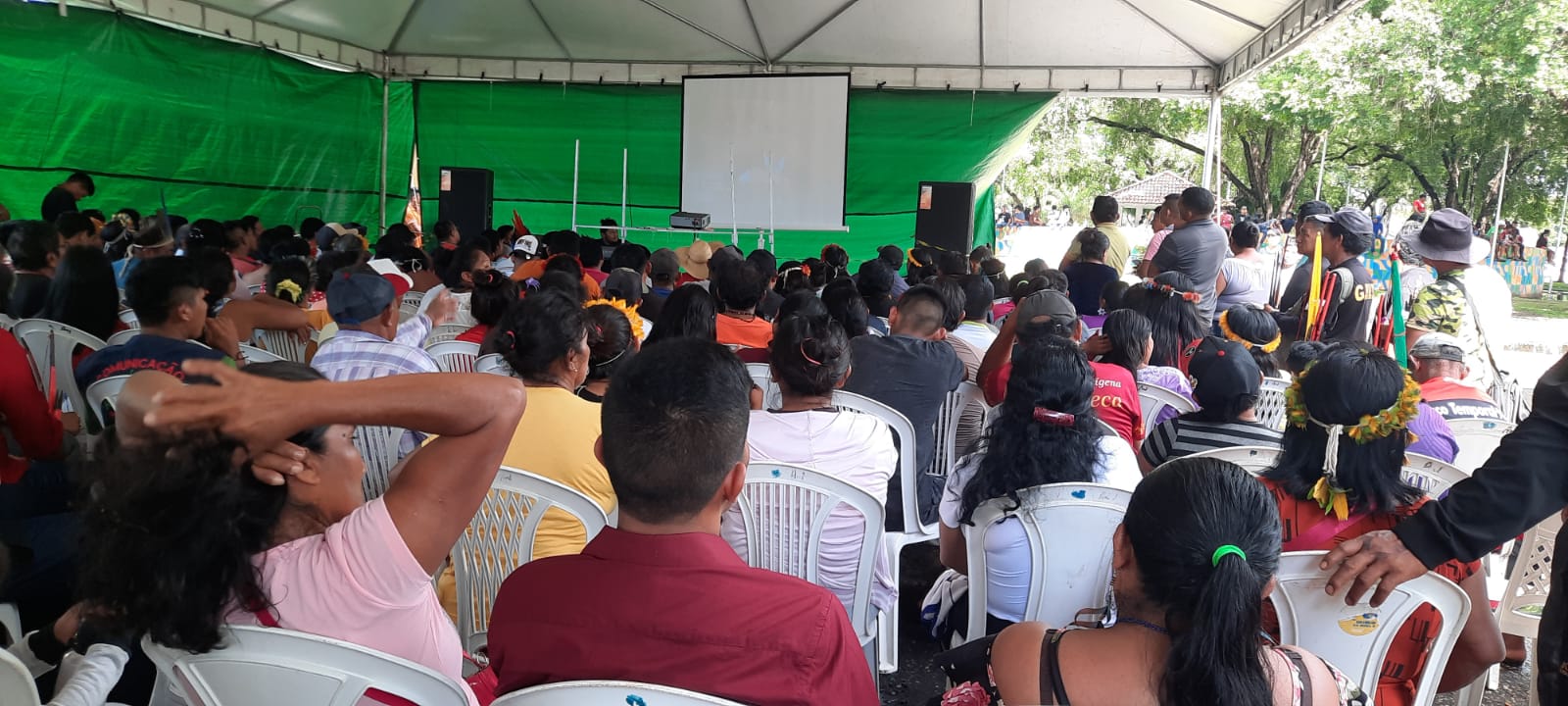
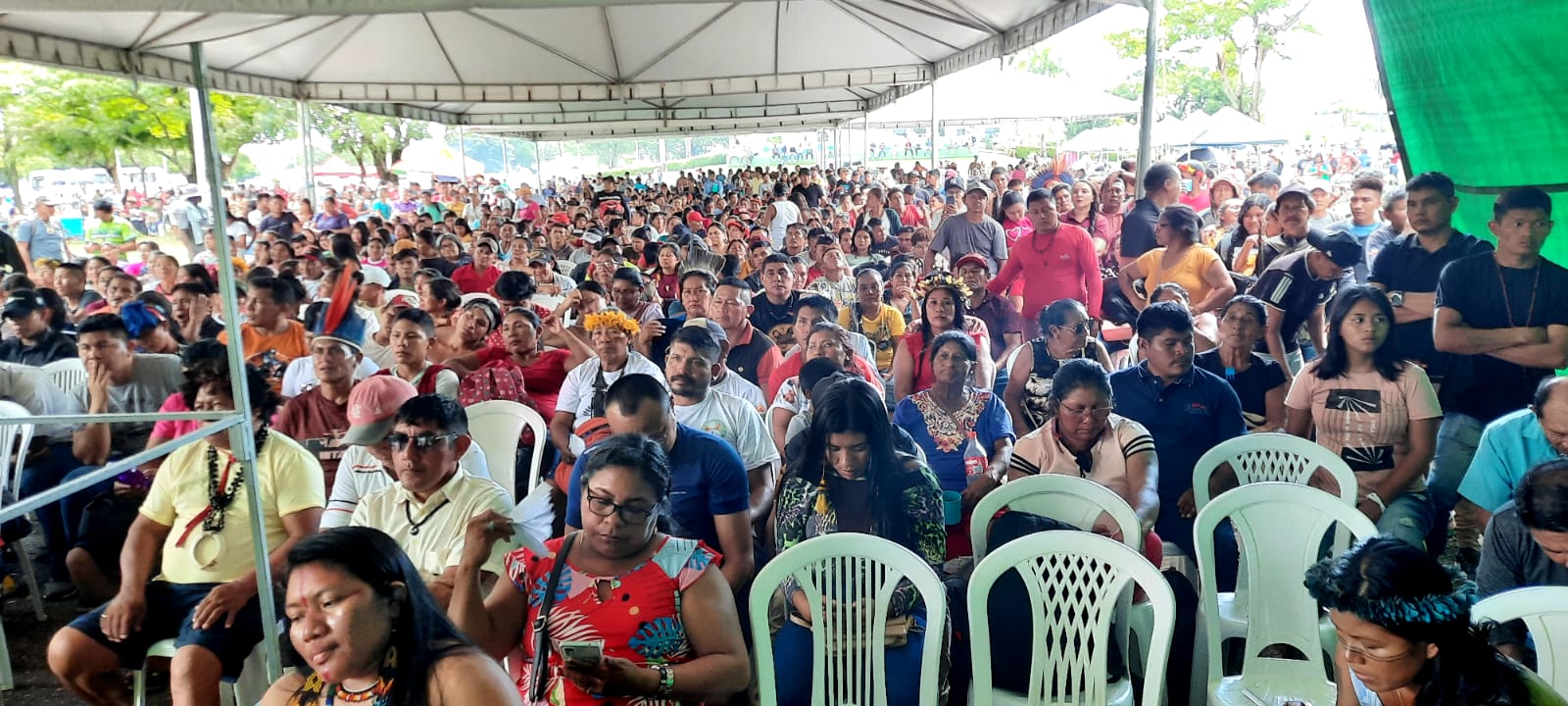
On the day of the trial, the indigenous communities of Roraima followed the resumption of the Temporal Framework trial. Photos: Ascom/CIR
In Brasília, the delegation of indigenous leaders, composed of regional coordinators, women, and youth, also followed the trial in front of the National Congress. The legal advisor of the Indigenous Council of Roraima (CIR), Ivo Cípio, and the regional coordinator of the Serras region, from the Raposa Serra do Sol Indigenous Land, Amarildo da Silva Mota, followed the trial directly from the Supreme Court's plenary hall.
After the trial, Ivo said, “We were once again on a mission to continue saying that we are against the Temporal Framework; it contains several very bad things for us indigenous peoples, but we made some progress in the discussion, for example, with the vote of Minister Alexandre de Moraes, who followed the rapporteur Minister Edson Fachin. Moraes introduced modifications to the thesis and tried to influence the other ministers by citing the Xokleng people who suffered violence in the struggle for their territory.”
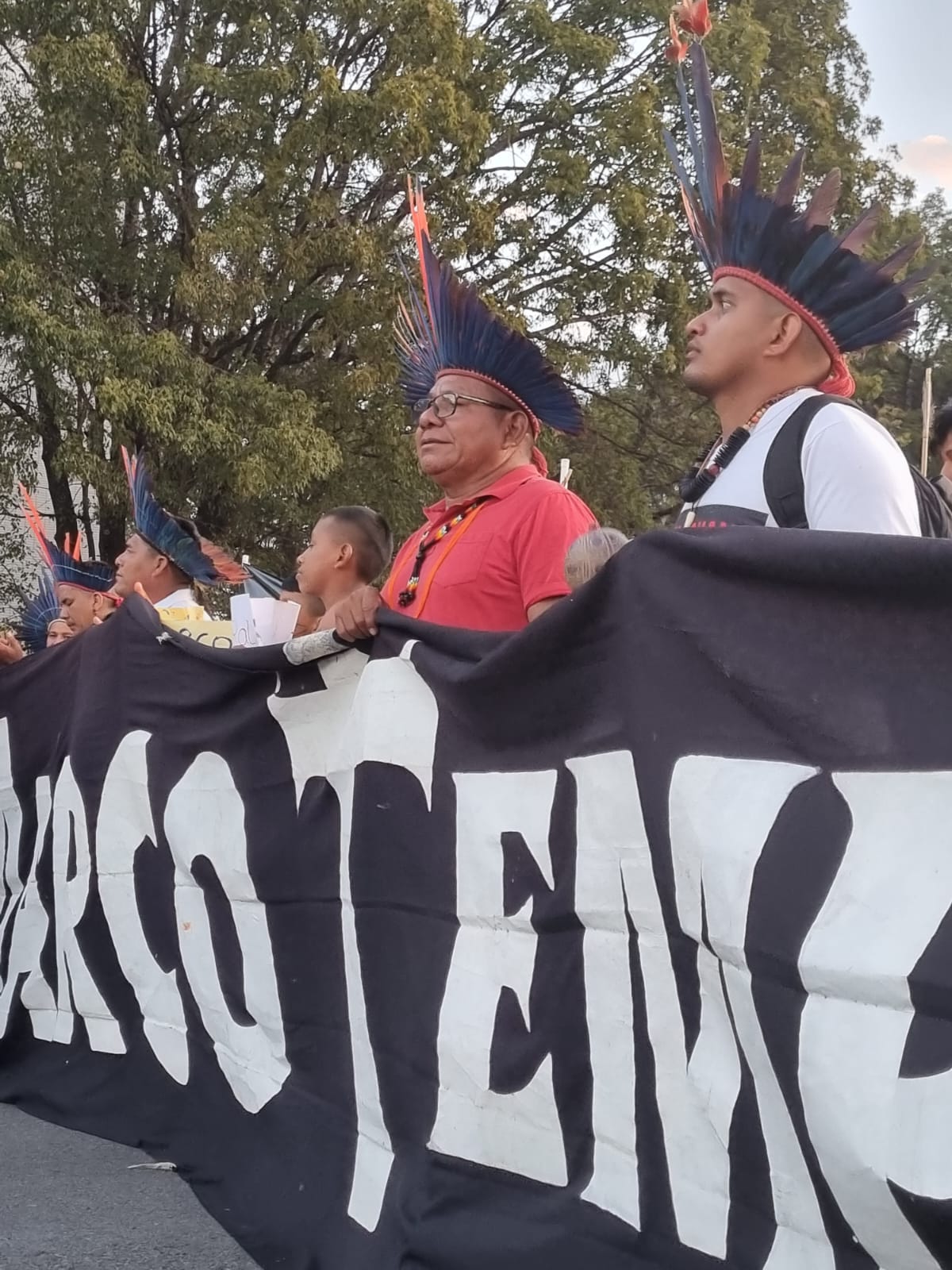
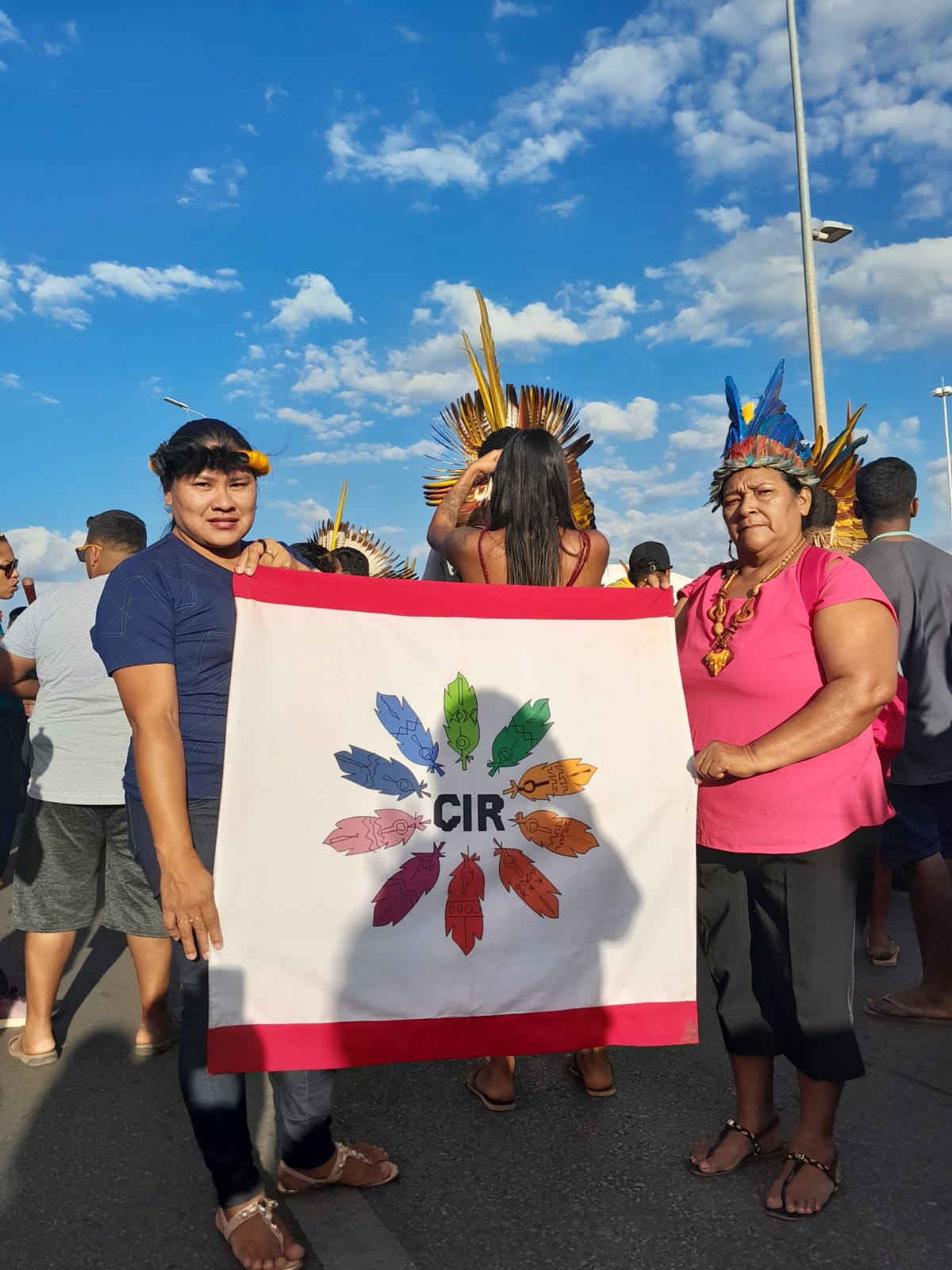
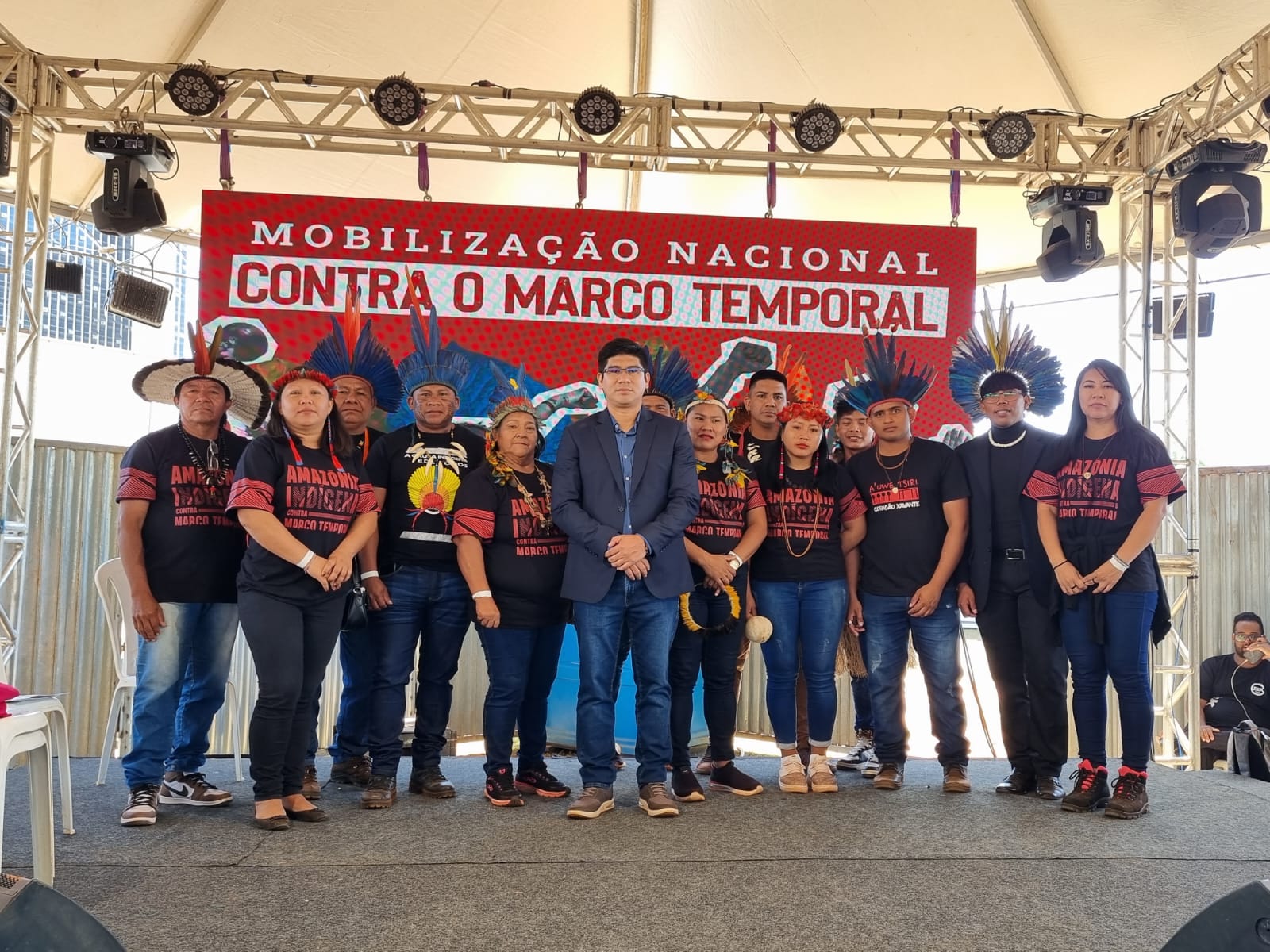
Commission of indigenous leaders who participated in the mobilization in Brasília. Photos: Ascom/CIR and Ascom; CIMI
According to Ivo, the deadline to analyze the process is 90 days, but the trial can be resumed sooner, and he reinforces the importance of the unity of the Indigenous Movement of Roraima, which must be prepared for when this happens. “We are well-positioned to maintain the movement without needing the government or politicians because we have shown our independence, our autonomy, and our strength against what harms us. No state or federal deputy or senator has any say here, and they have no right to speak for us.”
In addition to attending the trial, the delegation participated in the march against Opinion 001/17 of the Attorney General's Office (AGU) and the march in support of the Ministries of Indigenous Peoples and the Environment, institutions that were heavily attacked as a result of the approval of Provisional Measure 1/154/23. These two ministries suffered losses of important responsibilities, such as the demarcation of indigenous lands, which was removed from the Ministry of Indigenous Peoples (MPI) and returned to the responsibilities of the Ministry of Justice.
At the national mobilization plenary session, the delegation also participated in events, including a seminar on indigenous rights and a Q&A session about the temporal framework. Professor Cristiele Lima, from the Wapichana people of the Murupu region, stated that she will share her experience from the demonstration in Brasília with her people, "I will take all the information about the Temporal Framework to my students and community, so that we can seek greater unity against this evil," she affirmed.
The fight continues.
Amarildo Macuxi, a leader from the Serras region, Raposa Serra do Sol indigenous territory, followed the trial in the plenary of the Supreme Federal Court, and analyzed the vote of Minister Alexandre de Moraes as positive for indigenous peoples, despite the request for review which is a cause for concern.
“We are still concerned about Bill 490, which is being processed in the Senate as Bill 29/03; therefore, we remain firm in the fight for our original rights guaranteed in the federal constitution,” he stated, calling on the indigenous movement to remain mobilized.
Since the beginning of the trial in 2021 and now in 2023, the result remains 2-1, with 2 votes against the time frame and one in favor, and the request for review of the process made by Minister André Mendonça, which means the suspension of the trial.
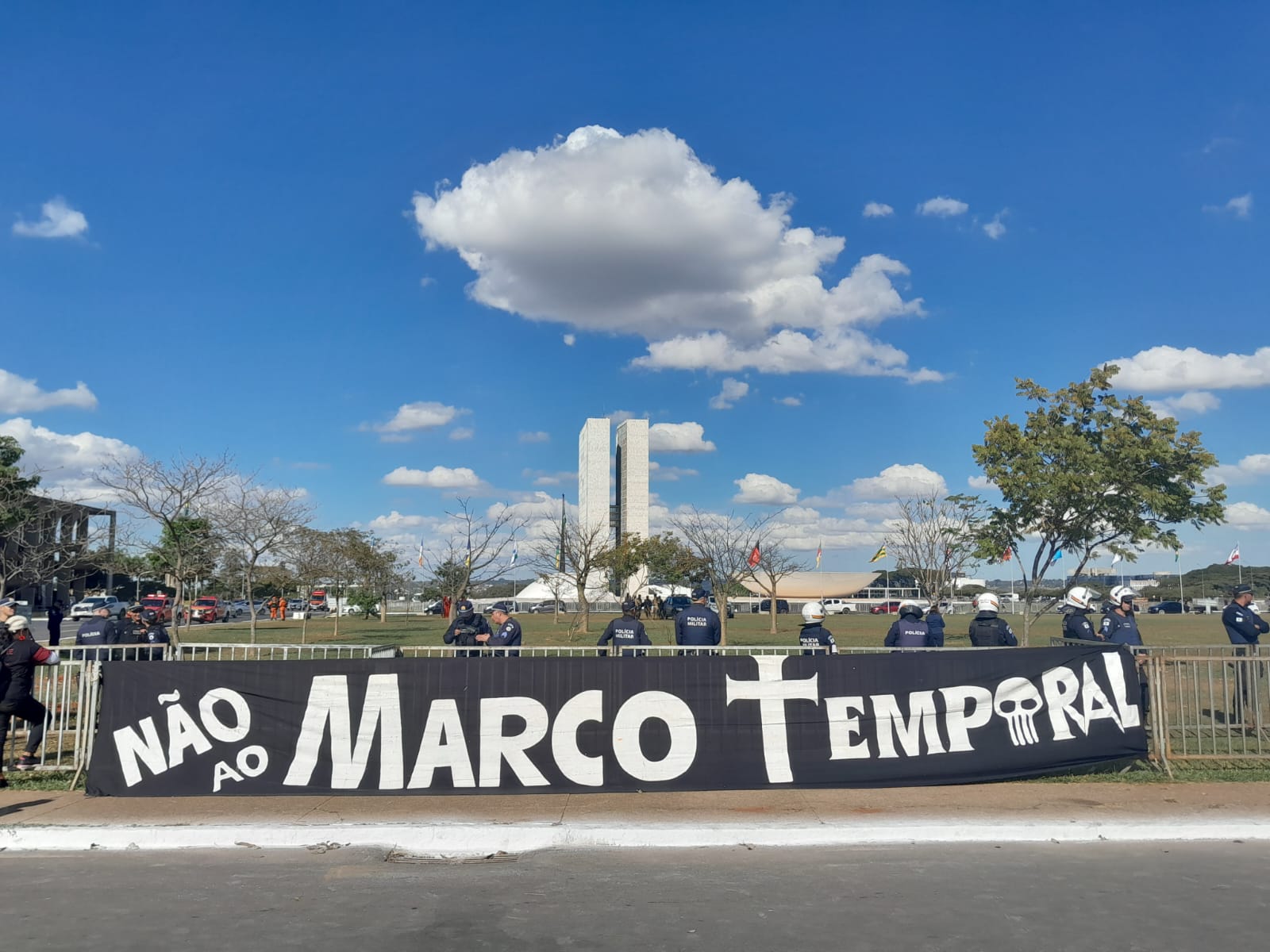
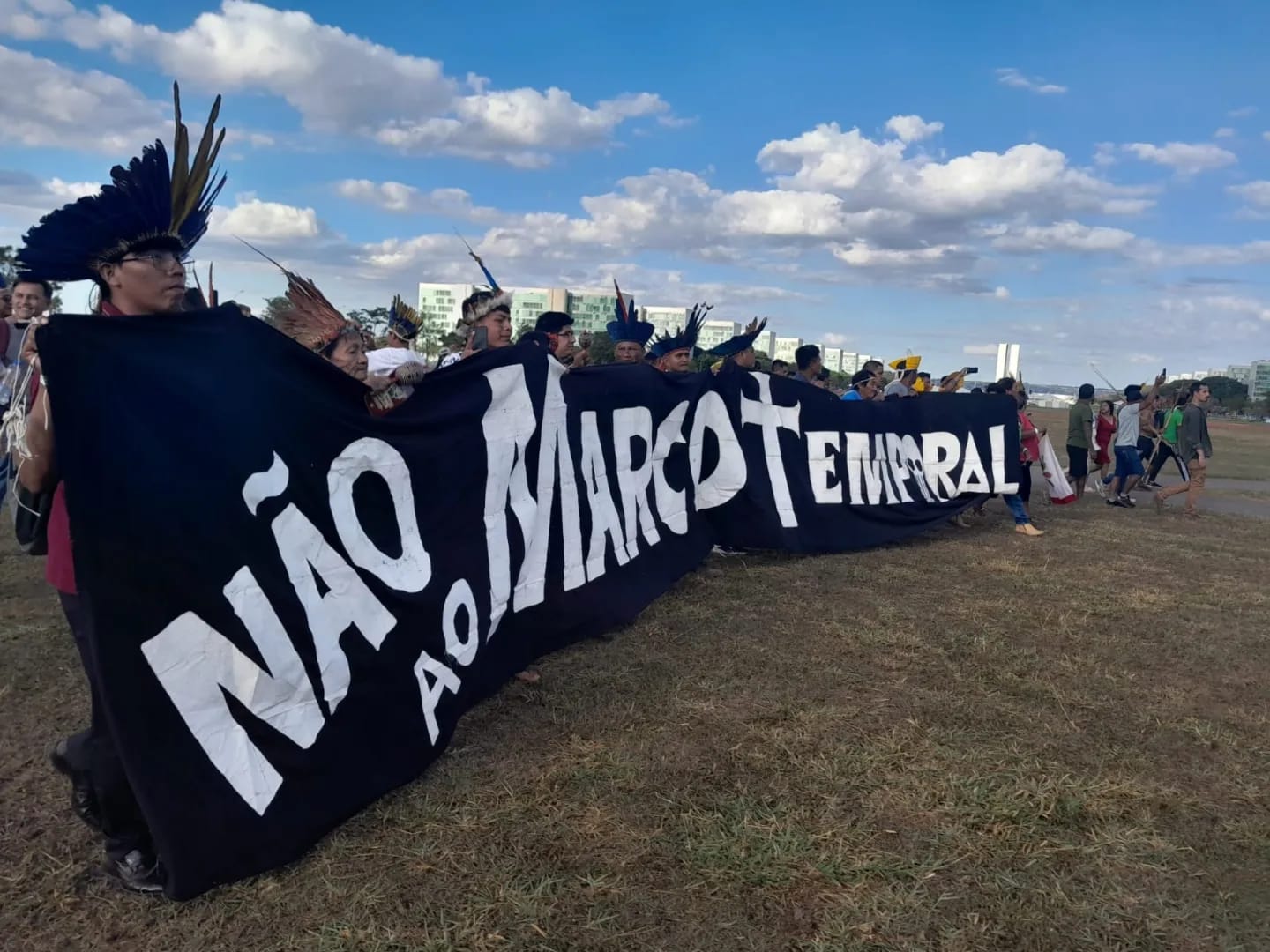
Mobilization in Brasília: Photos: ASCOM/CIR
With the possible resumption of voting on the time frame in the Supreme Federal Court (STF), within 90 days or even before the established period, the Indigenous Movement of Roraima will continue with articulations and strategies to face days of struggle, and to echo to the world why they are against the time frame. The indigenous movement is the result of the union of the indigenous peoples of Roraima, who have always fought tirelessly for the guarantee of rights, especially territorial rights, to occupy more and more spaces and be protagonists of their own histories. A centuries-old history.
Temporal Framework in the Senate
Bill 490/2007, approved in the Chamber and now numbered 2903/2023, which also establishes the Temporal Framework thesis, as the name suggests, determines that indigenous lands are those occupied by the original peoples on the date the constitution was promulgated, that is, on October 5, 1988.
The proposal aims to limit the demarcation of indigenous lands, as well as enabling the exploitation of the territory. Another point is the contact between non-indigenous peoples and isolated groups for the purpose of exploiting the land. The rural caucus, which forms the majority in the federal senate, is in favor of the temporal framework and wants the bill to be approved quickly. The bill means the end of the demarcation of indigenous lands, since the law transfers this responsibility, which under the law belongs to the Union (the Executive branch), to the Legislative branch (the National Congress), in addition to opening indigenous lands to various forms of exploitation.