

The news awaited by the indigenous peoples of Brazil, the resumption of the trial of Extraordinary Appeal (RE) 1,017,365, better known as the "Temporal Framework" case, in the Supreme Federal Court (STF), was given this Wednesday, the 19th, by the Chief Justice of the STF, Rosa Weber, during the National Forum of the Judiciary for monitoring and effectiveness of demands related to Indigenous Peoples, promoted by the National Council of Justice (CNJ), in Brasília. The event was attended by the Minister of Indigenous Peoples, Sônia Guajajara, who reinforced the urgency of resuming the trial.
"It is important to note that we will continue the trial of the extraordinary appeal regarding the time frame, and I am making this announcement here in response to the request of Minister Sônia Guajajara, on June 7th," said Minister Rosa Weber.
The judgment refers to Extraordinary Appeal (RE) 1017365, with general repercussion, which discusses whether the date of the promulgation of the Federal Constitution, October 5, 1988, should be adopted as the temporal benchmark for defining the traditional occupation of land by indigenous peoples.
So far, two votes have been cast: that of the rapporteur, Minister Edson Fachin, who spoke against the temporal framework, and that of Minister Nunes Marques, in favor. A majority must be formed against the thesis.
During the events of April 19th - Indigenous Peoples' Day - the communities received the news with celebration and resistance. Chief Lázaro, from the Pium Indigenous community in the Manoá-Pium Indigenous Territory, which has been reclaimed since February, reinforced the urgency of resuming the trial, but also the resistance and expectation that the ministers will vote in favor of the lives of Indigenous peoples.
“If the time frame is in favor of the farmers, it will mean the extinction of the indigenous people. But the indigenous people have never lost a battle, and we will not lose a fight because of the time frame ruling. We sincerely hope that it will be in our favor and that it will work out. May it be in favor of life and Mother Earth,” Lazáro claimed.
The regional coordinator of Murupú, Alessandro das Chagas, also emphasized the importance of the resumption and hopes that the ministers will have the sensitivity to vote against the time frame.
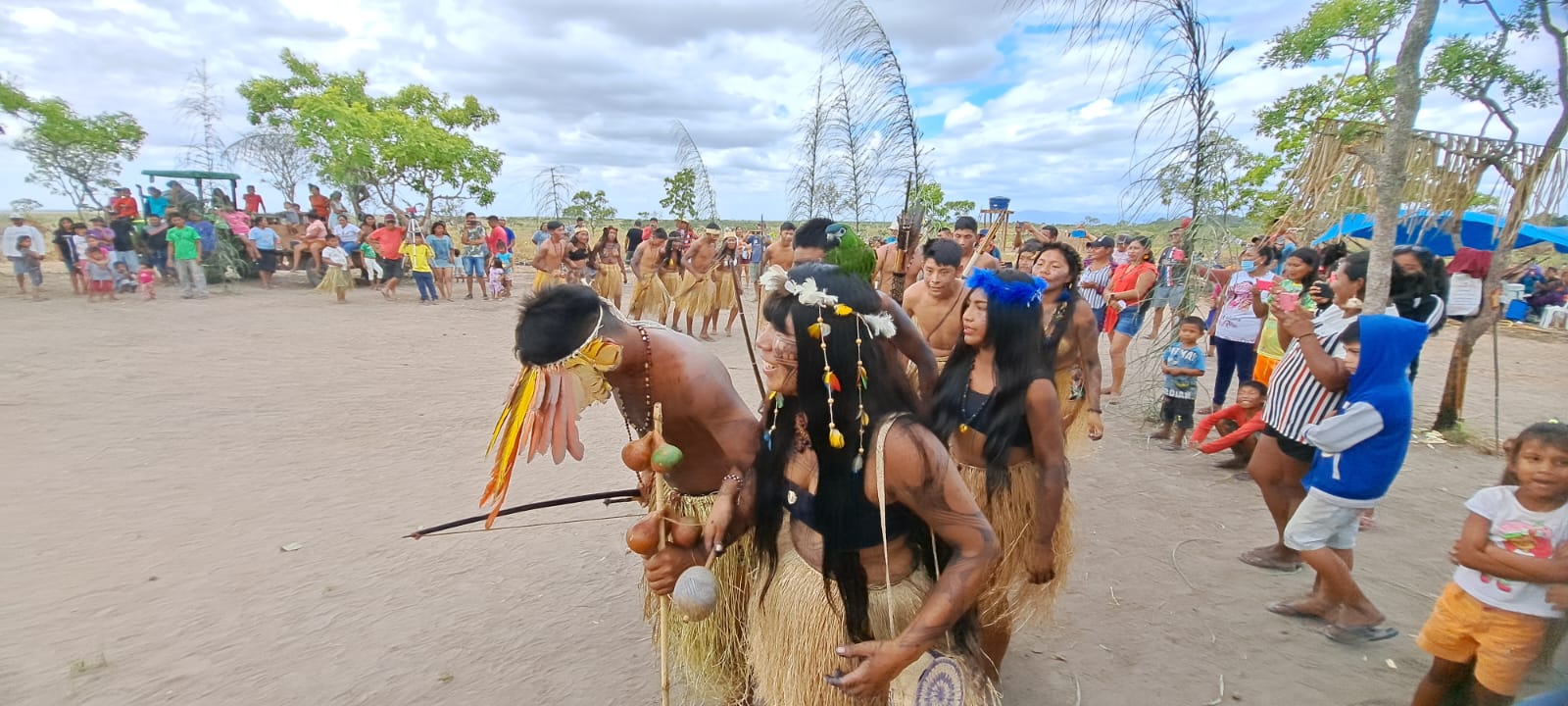
Community leaders celebrate the date of the Temporal Framework trial - T.I. Manoá Pium
“We hope that the ministers’ votes will be favorable to the indigenous peoples, their territories, and their culture, in accordance with the Constitution, and that we can win. The battle continues, it hasn’t stopped, and we remain firm,” emphasized the coordinator, who works in a region with two indigenous lands depending on this judgment: the Anzol and Lago da Praia indigenous lands.
The vice-coordinator of the Indigenous Council of Roraima (CIR), Enock Taurepang, commented on the anxiety surrounding the resumption of the trial, which will impact the lives and well-being of indigenous peoples, but also on the fear of its approval.
“I was anxious for the resumption because it is indeed a decision that will directly impact our lives and our well-being within the communities. Until this decision is made and a concrete position is taken, we live in this impasse, where at any moment this thesis could be accepted and we run the risk of being evicted,” commented Enock regarding his concern about a decision in favor of the thesis.
As an "amicus curiae," meaning "friend of the court," CIR was represented by its legal advisor, Ivo Makuxi, in the first phase of the trial held in September 2021, who made the oral argument during the trial.
"The Temporal Framework Thesis signifies the continuation of a colonizing idea in relation to indigenous peoples through a restrictive interpretation of the constitution," he emphasized.
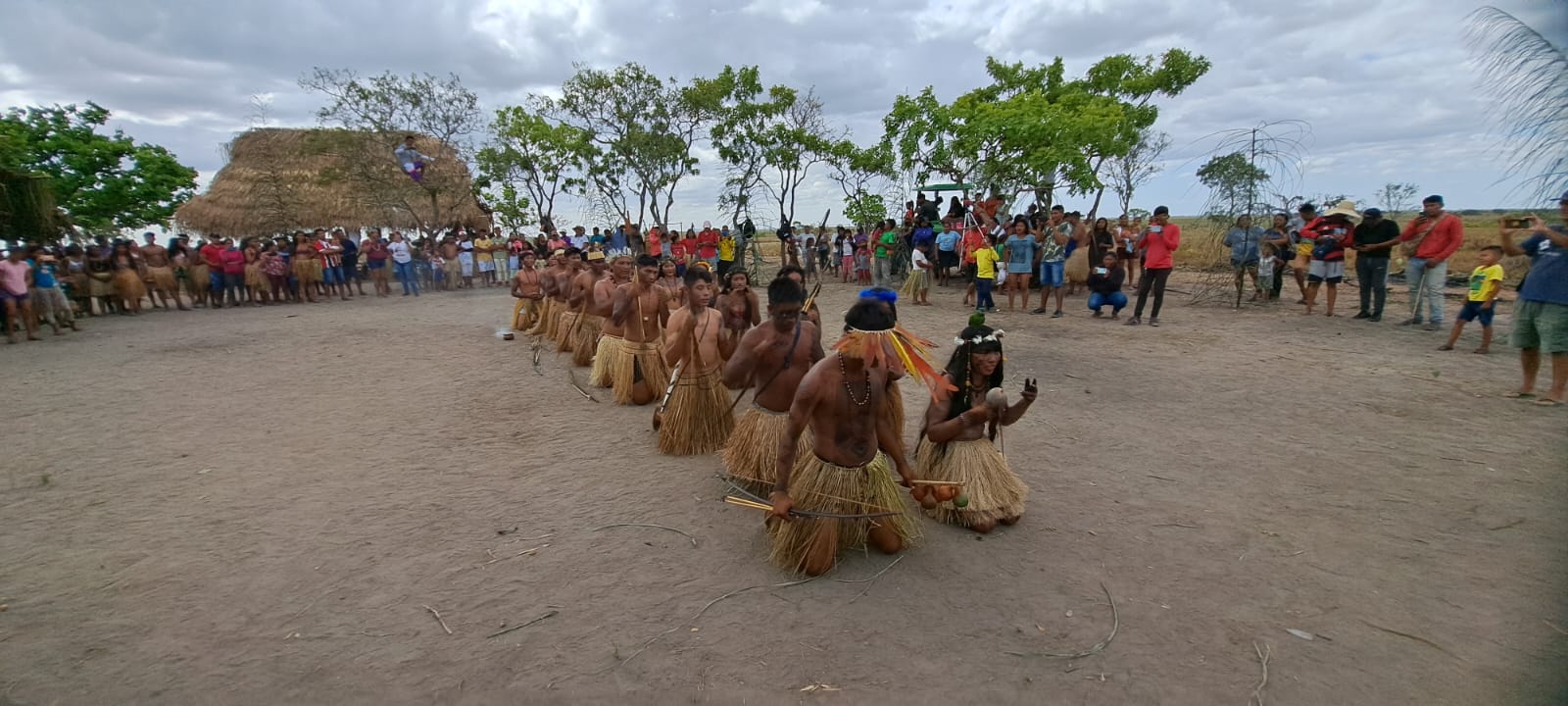
Pium Community / T.I Manoá Pium
Territorial disputes in Roraima
In Roraima, there are pending territorial recognition issues by the federal government regarding the indigenous lands of Anzol, Arapuá (Alto Cauamé), Anzol (Murupu), and the isolated Pirititi people in the south of the state. These lands have been requested for recognition, but the identification process has not yet begun. During the 52nd Assembly of Indigenous Peoples of Roraima, leaders requested that the National Foundation for Indigenous Peoples (Funai) create a Working Group to initiate these actions.
Furthermore, there are 23 requests for the re-evaluation of areas formalized with Funai, but without any action being taken. These are the lands: Pium, Anta, Barata-Livramento, Boqueirão, Mangueira, Sucuba and Raimundão, Araçá, Aningal, Ponta da Serra Cajueiro and Ananás, Malacacheta, Jabuti, Canauanim, Tabalascada, Moscou, Muriru, Bom Jesus and Manoá-Pium, Serra da Moça and Truaru da Cabeceira.
The resumption of the trial signals hope that institutions from both the executive and judicial branches will also respond to these requests that have been presented for years amidst conflicts and violence against indigenous peoples.
ATL 2023
The trial regarding the temporal framework will be one of the main focuses of the 2023 Free Land Camp (ATL), whose theme this year will be "The Indigenous future is today - without demarcation there is no democracy". In Roraima, the mobilization will take place from April 24th to 29th, at the Civic Center Square in Boa Vista.